Baby Crying in Sleep: Why It Happens and Whether You Should Pick Them Up
See Your Baby's Sleep Pattern Emerge
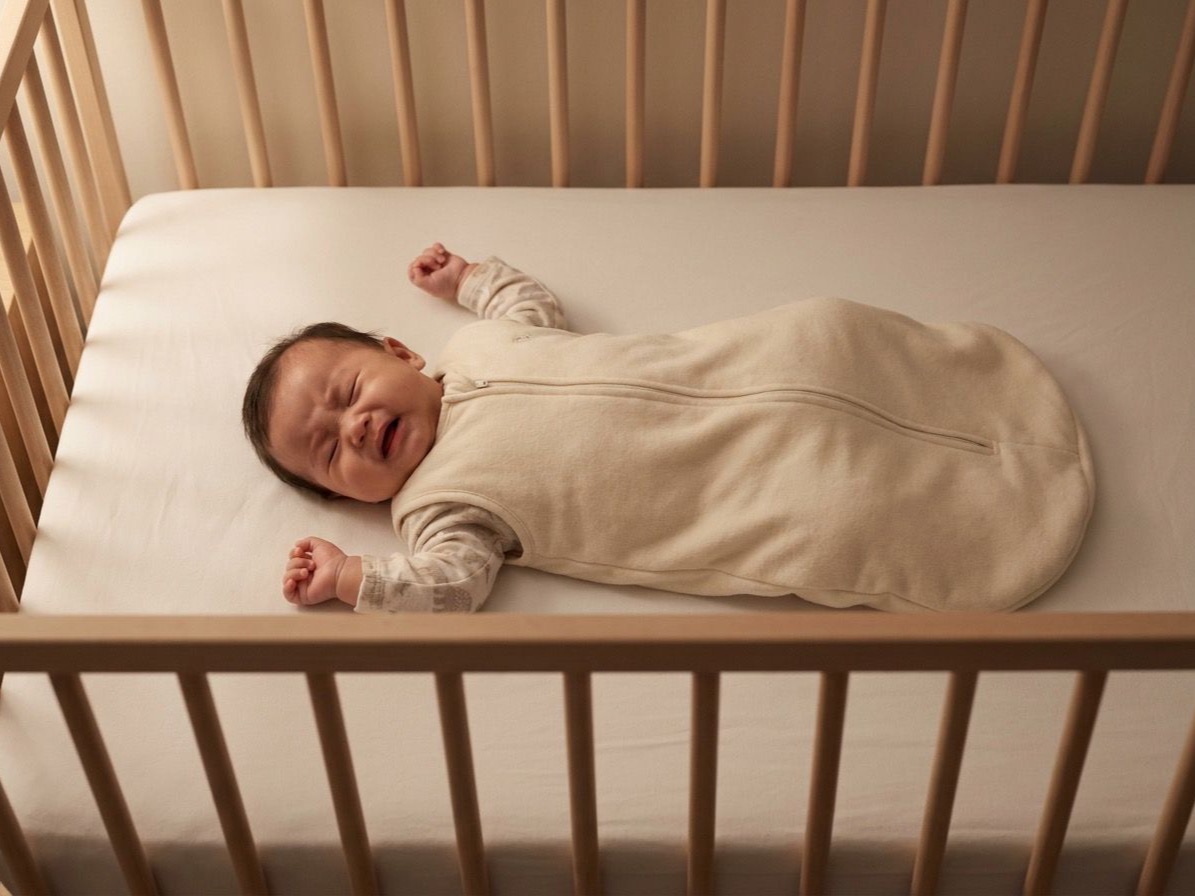
Get Started FreeYour baby lets out a cry at 3 a.m., but their eyes are still closed. Should you scoop them up? Babies spend a lot of time in light sleep and move through short sleep cycles, so whimpers and brief cries in the night are common. In a London study that filmed 101 babies overnight with infrared cameras, about 1 in 4 at both 5 weeks and 3 months woke during the night and settled back to sleep without a parent touching, holding or talking to them. So when you hear a cry, take a moment to look and listen before you pick your baby up. In the first few months, though, babies often wake because they're hungry, so if the crying builds, go to them and comfort or feed them. Here's why babies cry in their sleep, how to tell whether they're actually awake, what to do at each age, and when not to wait.
💡 If your baby is only grizzling, leave the lights off, pause for a moment and try a soft "shh." If the crying builds, pick them up and comfort them, and feed them if a feed is due. Don't wait if your baby has a fever or a shrill cry that doesn't sound like them.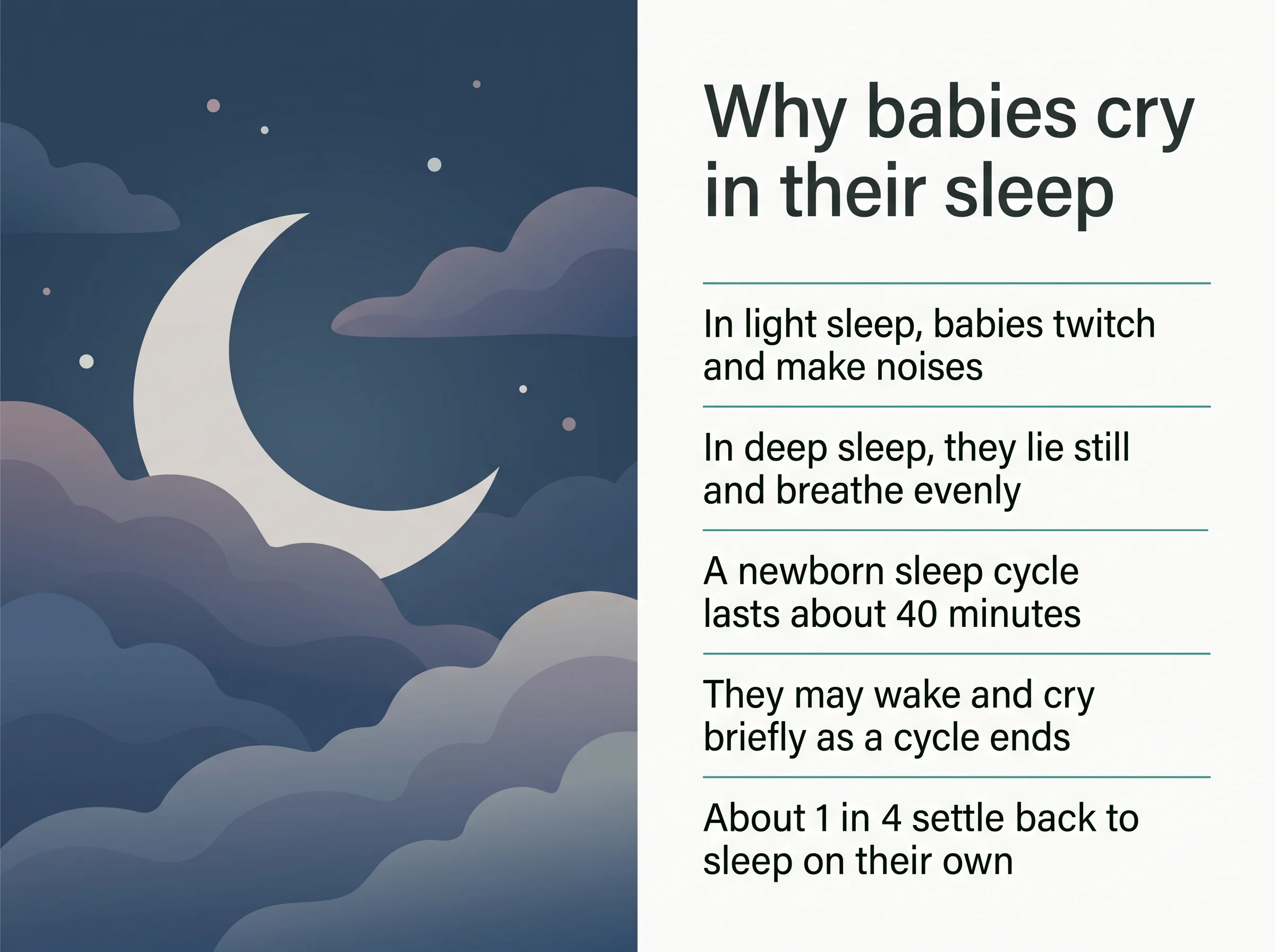
Why Babies Cry in Their Sleep
Light sleep and deep sleep take turns
Babies have two kinds of sleep. In active sleep, the light kind, they move around a lot, twitch, make sucking movements and make noises, and they wake easily. In quiet sleep, the deep kind, they lie still, breathe deeply and evenly, and are less likely to wake (Raising Children Network). So your baby may grunt or whimper and still be asleep.
A newborn sleep cycle lasts about 40 minutes
Newborns go through a cycle of active and quiet sleep about every 40 minutes. At the end of each cycle they wake for a little while and may grizzle or cry, and sometimes they need help settling into the next cycle (Raising Children Network). The AAP notes that babies don't have regular sleep cycles until about 4 months of age, and that newborns may sleep 16 to 17 hours a day but only 1 or 2 hours at a time.
Older babies wake briefly too
From about 6 months, sleep cycles include REM and non-REM sleep. The second half of the night has more REM and light sleep, so children wake more easily then. Waking briefly at the end of a cycle is normal, and all children do it, often without being aware of it or remembering it in the morning. Some, though, call out when they wake and need help settling again (Raising Children Network). Cycles lengthen with age, to about 60 minutes by age 3 and about 90 minutes, the adult length, by about age 5.
Many babies settle themselves back to sleep
In the London study (St James-Roberts and colleagues, 2015), 27 babies at 5 weeks and 23 at 3 months, out of about 100, woke in the night and went back to sleep with no touching, holding or talking from a parent. Just over half of them settled without making a sound; others fussed or cried briefly and then resettled on their own. That crying lasted a little over a minute on average (1 minute 8 seconds at 5 weeks, 1 minute 19 seconds at 3 months). Parents often didn't know these wakings had happened. The families were mostly highly educated London parents, filmed for a single night at each age, so the results may not apply to every baby.
Sleep talking and night terrors, where a child screams in their sleep, are covered in baby sleep behaviors, and grunting with every breath in newborn grunting at night.
Awake or Still Asleep?
When you hear crying, first look at what your baby is doing. This table pulls together advice from Raising Children Network, the AAP and Nemours.
| If you see this | Try this |
|---|---|
| Eyes closed, twitching, grunting or grizzling | They may be in light sleep. Leave the lights off and watch for a moment |
| The grizzling keeps going | Say "shh" or "I'm here, time to sleep" softly |
| The crying is building | Pick them up and comfort them. Once calm, lay them back down on their back |
| It's been a while since the last feed | They may be hungry. Feed them |
| A fever, or a shrill cry that's unusual for them | Don't wait. Check on them right away |

- Grizzling isn't the same as crying: Raising Children Network suggests gently saying "I'm here. Time to sleep" or making "sh, sh" sounds if your baby grizzles after waking at night. If your baby starts crying, though, help them settle, for example in your arms or by patting them in the crib.
- Think about hunger first: newborns generally wake up hungry and crying, and a hunger cry can turn into a wail if you're not quick to respond (AAP). Breastfed newborns often feed every 2 to 3 hours, and formula-fed newborns every 3 to 4 hours (Nemours).
- Keep it dark and quiet: when you feed or change your baby at night, try not to stimulate them, and speak softly if you speak at all (AAP). A soft night light is enough to help your baby recognize the room when they wake (Raising Children Network).
What to Do at Each Age
0 to 3 months: look first, then comfort quickly
In the first months, babies need to feed often, day and night, and for most babies the ability to settle by themselves comes later, when they're developmentally ready (Raising Children Network). The AAP says the best way to handle crying is to respond promptly during the first few months. You can't spoil a young baby with attention, and babies whose calls for help are answered cry less overall. So at this age, keep the pause for grizzling only; if the crying builds, go to your baby, pick them up and feed them. In the same London study, the share of babies who slept 5 hours or more at a stretch rose from 10% at 5 weeks to 45% at 3 months.
From 4 months: no need to rush in
For babies 4 months and older, the AAP advises against rushing in to soothe a crying baby. Babies need time to learn to fall back asleep on their own, and it is normal for a 6-month-old to wake during the night and go back to sleep after a few minutes. Of course, feed your baby, change a dirty diaper or comfort them if they're sick.
From 4 months, the AAP also recommends putting babies to bed drowsy rather than asleep. Babies who are held or rocked to sleep may struggle to fall back asleep when they wake at night. If your baby wakes the moment you lay them down, see baby won't sleep unless held. For other reasons babies wake more around this time, see the 4-month, 6-month and 8-month sleep regression guides.
Start With the Gentlest Step
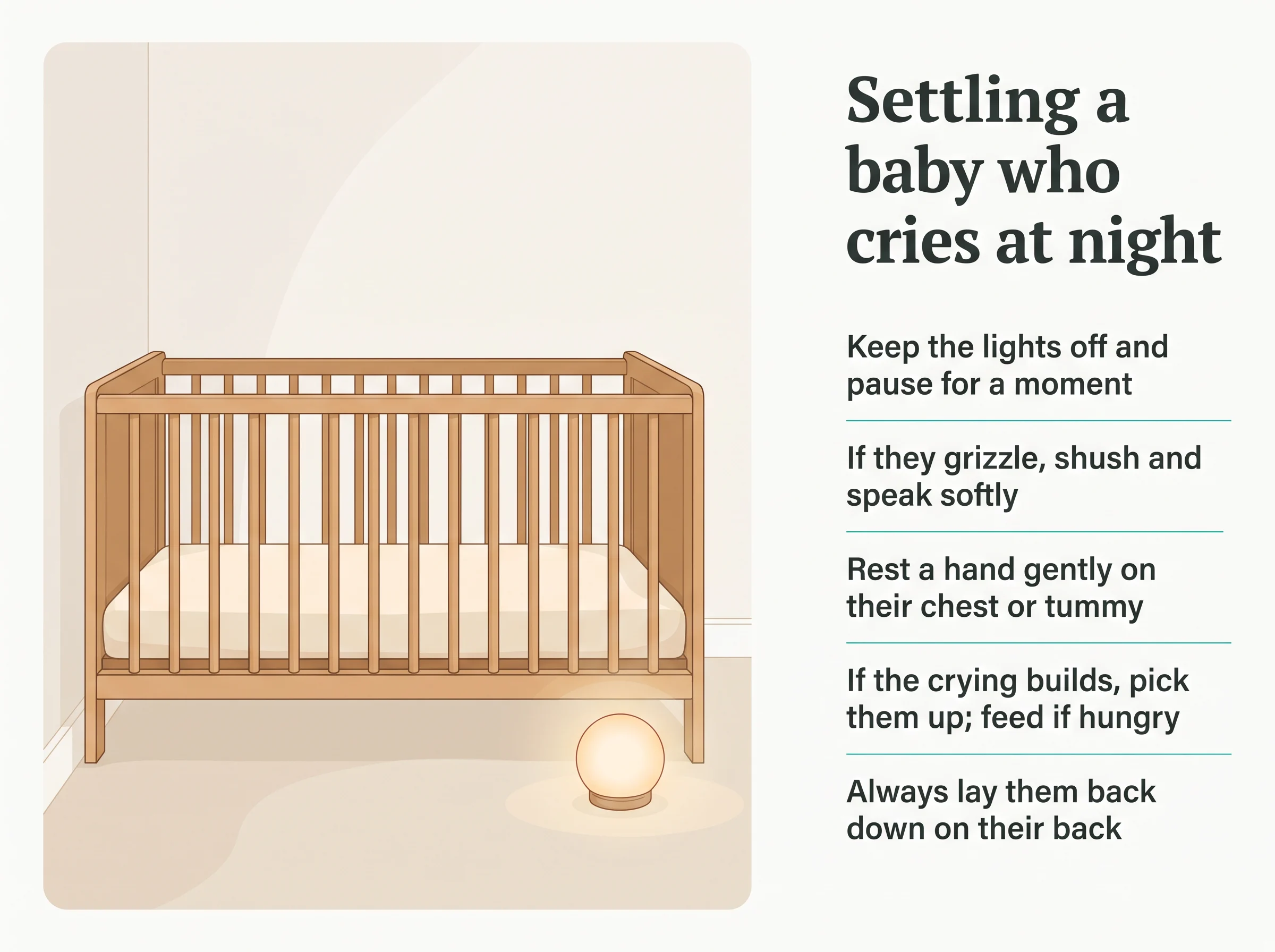
It's natural to want to pick your baby up the moment they cry. If your baby isn't hungry, in pain or overtired, the AAP suggests trying one step at a time and pausing to see how your baby responds, starting with just your voice and working up to holding and feeding.
- Eye contact and a quiet voice: let your baby see your eyes and talk to them softly.
- A hand on the chest or tummy: rest your hand there gently to reassure them.
- Hold, then rock: if they're still crying, pick them up and hold them still for a moment, then rock them slowly.
- Feed: if they seem hungry, feed them.
When a baby is very upset, try one approach for about 5 minutes before moving to the next. Trying several things at once can overstimulate them (AAP). Once your baby is calm, lay them back down in the crib on their back (Raising Children Network).
When Not to Wait
- Crying you can't soothe: your baby may be sick. Take their temperature; a rectal temperature of 100.4°F (38°C) or higher can mean an infection, so call your pediatrician (AAP). For how to take a temperature, see the baby fever guide.
- A shrieking or panicked cry: check whether clothing is bothering them or a hair is wrapped around a finger or toe (AAP).
- Breathing that looks wrong: call 911 right away if your baby stops breathing for more than 20 seconds or their skin turns pale, bluish or grayish (AAP). If your baby grunts with every breath, see newborn grunting at night.
- When you're at your limit: if you feel you can't cope, put your baby down somewhere safe, like their crib, and get help from a family member or friend. No matter how angry you feel, never shake or hit your baby. Shaking an infant hard can cause blindness, brain damage or even death (AAP).
If your baby is awake and cries for long stretches day after day no matter what you do, it may be colic. See the baby night crying guide.
Laying Your Baby Back Down Safely
- On their back: place your baby on their back for every sleep until age 1 (AAP).
- An empty crib: use a firm, flat mattress with a fitted sheet only, and keep blankets, pillows, toys and bumpers out (AAP).
- Not on the couch: if there's any chance you might fall asleep during a night feed, avoid feeding your baby on a couch or armchair (AAP).
For the full checklist, see SIDS prevention and safe sleep.
Track Night Wakings with BebeSnap
A few nights of notes on when your baby wakes, feeds and falls back asleep will show whether they're waking from hunger or just crying briefly between sleep cycles. Log sleep and wake times in the BebeSnap app to see the day's sleep at a glance, and show the log to your pediatrician if they ask for a sleep diary.
- Today's total sleep: naps and night sleep added together
- Nap count: how many naps your baby took today
- Average bedtime: when your baby usually falls asleep
- Family sharing: everyone who cares for your baby sees the same log
👉 See how BebeSnap sleep tracking works
Frequently Asked Questions (FAQ)
Q: Should I pick up my baby when they cry in their sleep?
A: If your baby's eyes are closed and they're only grizzling, leave the lights off, pause and try a soft "shh." Brief cries during light sleep or between sleep cycles are common, and in a London video study, babies who resettled on their own cried for a little over a minute on average. If the crying builds or a feed is due, pick them up, comfort and feed them.
Q: How long is a newborn sleep cycle?
A: Newborns go through a cycle of active (light) sleep and quiet (deep) sleep about every 40 minutes, according to Raising Children Network. At the end of a cycle they may wake briefly and grizzle or cry. Cycles lengthen as children grow, to about 60 minutes by age 3 and about 90 minutes by age 5.
Q: At what age can I stop rushing in when my baby cries at night?
A: The AAP advises not rushing in to soothe babies 4 months and older, so they have time to learn to fall back asleep on their own. It is normal for a 6-month-old to wake at night and go back to sleep within a few minutes. In the first few months, when babies often wake hungry, respond to crying promptly.
Q: When does crying in sleep need a doctor?
A: If you can't soothe your baby, take their temperature and call your pediatrician for a rectal reading of 100.4°F (38°C) or higher. For an unusual, shrieking cry, check their clothing and look for a hair wrapped around a finger or toe. Call 911 if breathing stops for more than 20 seconds or your baby turns pale, bluish or grayish (AAP).
References
- AAP HealthyChildren - Getting Your Baby to Sleep
- AAP HealthyChildren - Responding to Your Baby's Cries
- AAP HealthyChildren - Self-Soothing: Help Your Baby Learn This Life Skill
- AAP HealthyChildren - A Parent's Guide to Safe Sleep
- AAP HealthyChildren - Safe Sleep Tips for Sleep-Deprived Parents
- AAP HealthyChildren - Sleep Apnea in Children
- Raising Children Network - Newborn Sleep: What to Expect
- Raising Children Network - Sleep Patterns and Cycles at Different Ages
- Raising Children Network - Responsive Settling for Babies 0-6 Months
- Nemours KidsHealth - Sleep and Your Newborn
- St James-Roberts et al., J Dev Behav Pediatr (2015) - Video Evidence That London Infants Can Resettle Themselves Back to Sleep
See Your Baby's Sleep Pattern Emerge
Track sleep and watch wake windows and night stretches appear as clear graphs.
See what the app does firstMedical Disclaimer: This article is for informational purposes only and does not replace professional medical advice. If you have concerns about your baby's health, please consult a pediatrician.
You Might Also Like
Kaup Index (Baby BMI): How to Calculate It and What's Normal by Age
Wonder Weeks Calculator: Your Baby's 10 Mental Leaps From the Due Date
Baby Weight Gain Calculator: Grams Per Day From Two Weigh-Ins
Baby Impetigo: Golden Crusts, Antibiotic Treatment, and When Nursery Is Safe Again
You Might Also Like
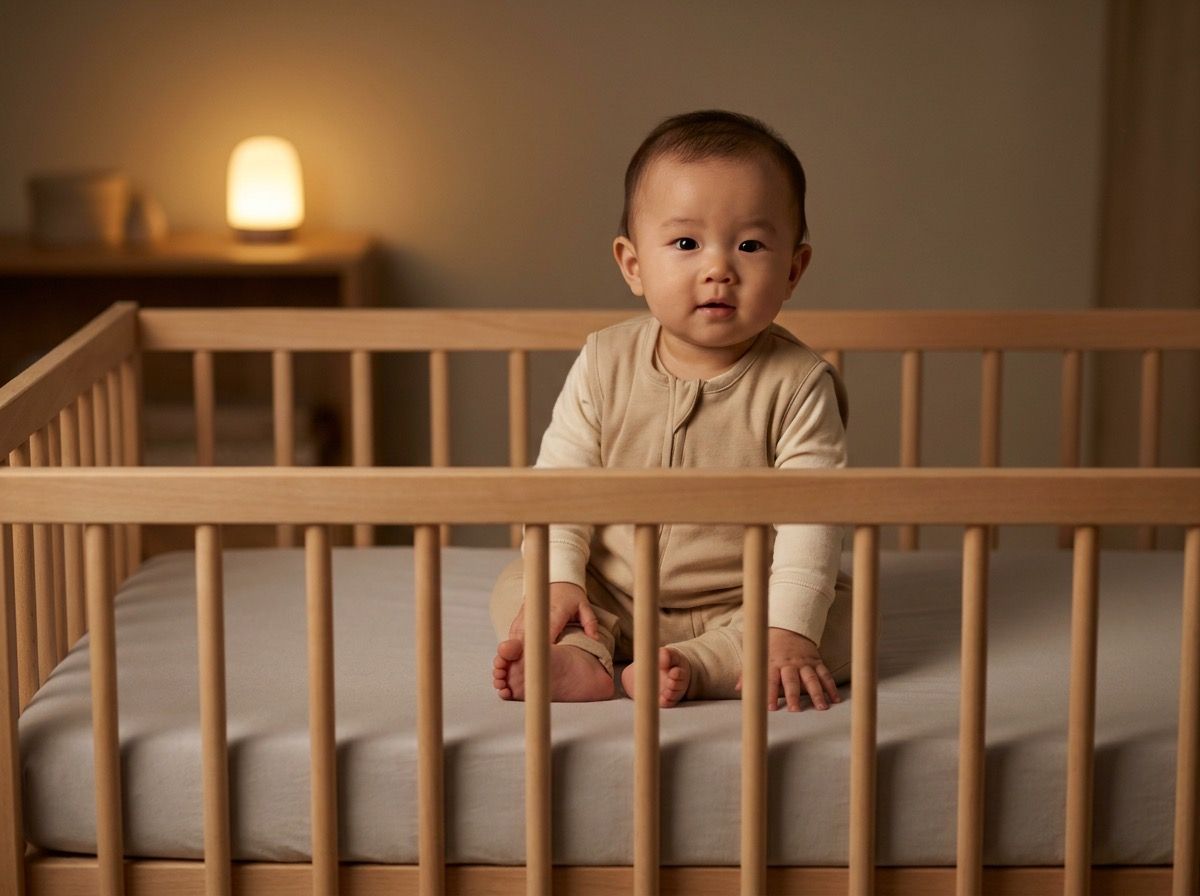
6-Month Sleep Regression: Why Your Baby Is Waking Again and How Much Sleep They Need
Is your 6-month-old waking at night again? About 4 in 10 babies this age don't yet sleep 6 hours straight, and the AAP says it is normal for a 6-month-old to wake and fall back asleep within a few minutes. Babies 4 to 12 months need 12 to 16 hours of sleep a day, naps included. Here are the common causes, what helps, and how to keep sleep safe once your baby rolls.

Baby Cup Training Guide: When to Start, Cup Types & Bottle Weaning Tips
Start cup training at 6 months. Compare open cups, straw cups, sippy cups & 360 cups. Step-by-step guide by age plus bottle weaning strategies for 12-18 months.
When Do Kids Stop Napping? Signs Your Toddler Is Ready to Drop the Nap
Most children stop napping between ages 3 and 5. Fewer than 2.5% stop before age 2, 33% have stopped by around age 3, and 94% after age 5 (2020 meta-analysis). Here's how to tell whether your child still needs a nap, and what to do instead.