Complete Guide to 4-Month Sleep Regression: Causes, Signs & Solutions

See Your Baby's Sleep Pattern Emerge
Get Started FreeIs your baby suddenly waking up at night after sleeping well? Learn about the causes and symptoms of 4-month sleep regression and effective strategies to get through it.
What is the 4-Month Sleep Regression?
The 4-month sleep regression is a temporary disruption in sleep patterns that typically occurs between 3-5 months of age. Your previously good sleeper may suddenly wake frequently at night, take shorter naps, and seem generally more unsettled.
This period marks an important developmental milestone as your baby's brain matures and their sleep cycles transition to adult-like patterns. While challenging, it's actually a sign of healthy development.
Signs of 4-Month Sleep Regression
Nighttime Signs
- Waking every 2-3 hours
- Taking longer to fall asleep
- Fully waking in the early morning
- Only falling asleep when held
Daytime Signs
- Short naps (30-45 minutes)
- Irregular nap schedule
- Difficulty settling for naps
Behavioral Changes
- Increased fussiness
- Distracted during feeds
- Fighting sleep despite being tired
Why Does the 4-Month Sleep Regression Happen?
1. Sleep Cycle Changes
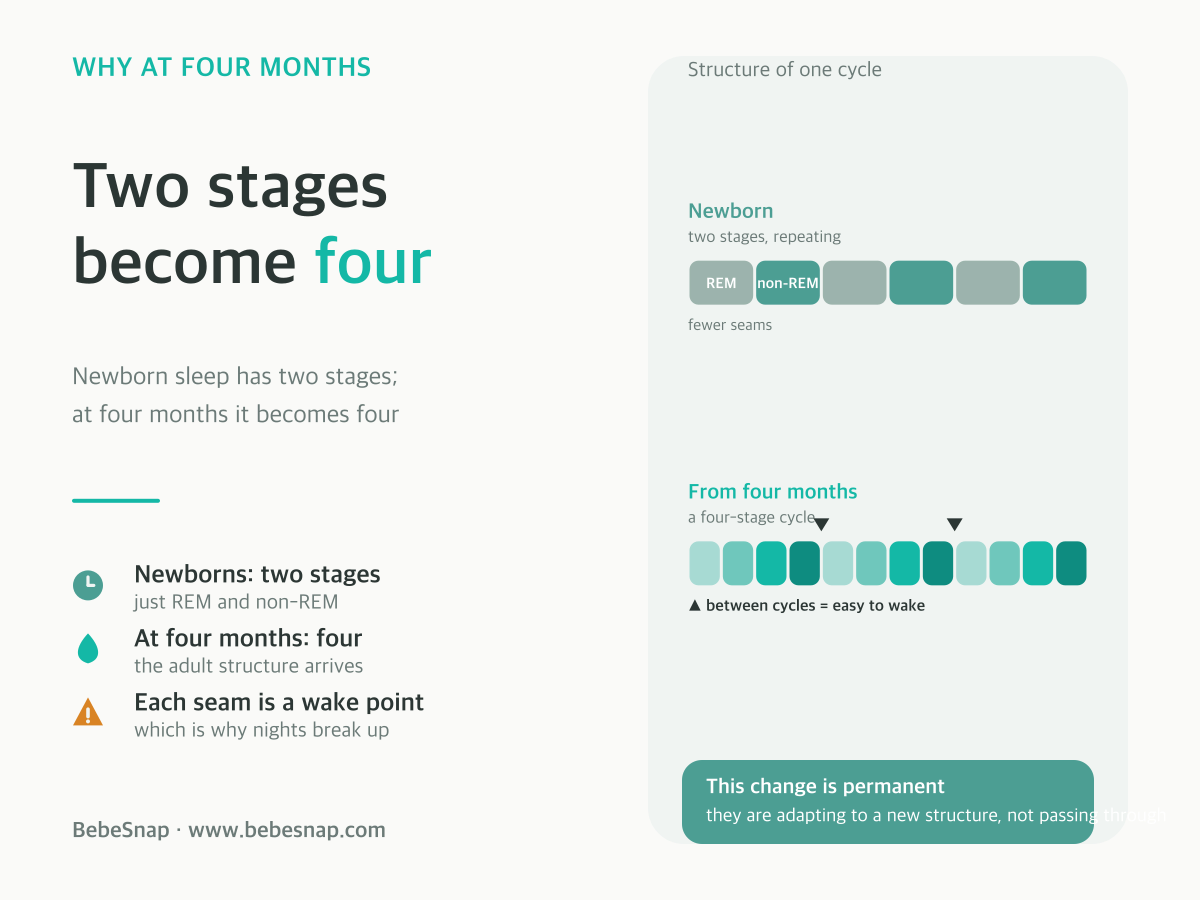
Newborns only have REM and non-REM sleep, but around 4 months, babies develop 4-stage sleep cycles like adults. This transition causes more frequent wake-ups between cycles.
2. Brain Development
Your baby's brain is developing rapidly during this time. Processing new information and skills can overwhelm their system, affecting sleep.
3. Physical Development
Learning new skills like rolling over and discovering their hands makes babies want to practice instead of sleep.
4. Circadian Rhythm
Melatonin production stabilizes, establishing day-night rhythms.
How to Survive the 4-Month Sleep Regression
Create a Consistent Bedtime Routine
A predictable bedtime routine signals to your baby that sleep is coming.
Sample Routine:
- Bath time (15 minutes)
- Massage & lotion (5 minutes)
- Pajamas
- Feeding (in dim room)
- Lullaby or white noise
- Into crib
Optimize the Sleep Environment
- Dark room: Use blackout curtains
- Cool temperature: 68-72°F (20-22°C)
- White noise: Mimics womb sounds
- Safe sleep space: Firm mattress, empty crib
Put Baby Down Drowsy But Awake
If you always put your baby down fully asleep, they'll be confused when they wake up in a different situation. Practice putting them down drowsy but still awake to help them learn to self-settle.
Manage Daytime Sleep
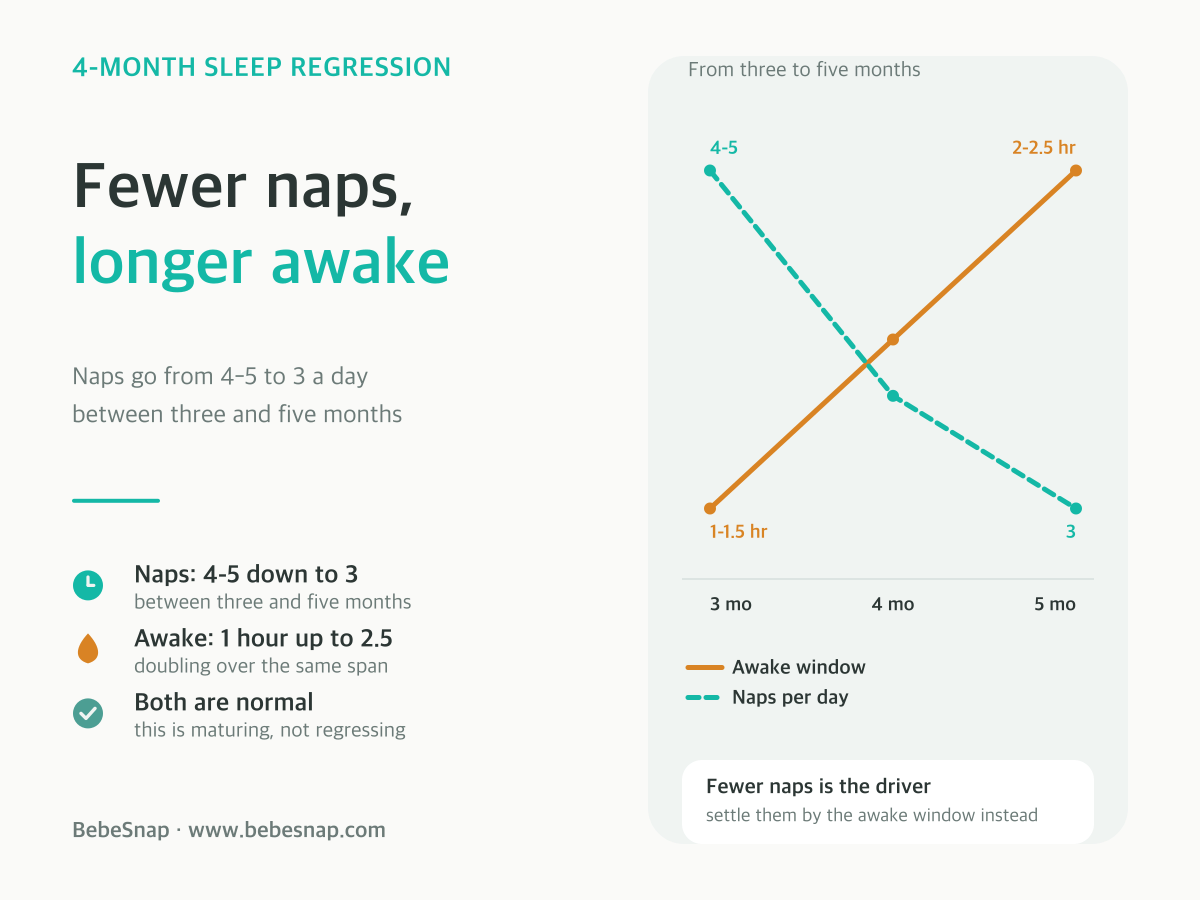
| Age | Number of Naps | Total Nap Time | Wake Window |
|---|---|---|---|
| 3 months | 4-5 | 4-5 hours | 1-1.5 hours |
| 4 months | 3-4 | 3-4 hours | 1.5-2 hours |
| 5 months | 3 | 3-3.5 hours | 2-2.5 hours |

How Long Does It Last?
The 4-month sleep regression typically lasts 2-6 weeks. Every baby is different, and some may experience shorter or longer disruptions.
Tips for Getting Through:
- Stay consistent with routines
- Avoid overstimulation
- Ensure adequate daytime feeds
- Take care of yourself too
Track Sleep Patterns with BebeSnap
During the 4-month sleep regression, tracking your baby's sleep patterns is crucial. Use BebeSnap to easily log sleep times and review weekly reports to monitor changes.
Sleep tracking helps you:
- Find optimal bedtime
- Analyze nap patterns
- Track regression duration
- Monitor improvements
👉 Learn more about BebeSnap Sleep Records
FAQ
Q: Do all babies experience the 4-month regression?
A: No, not all babies show a noticeable sleep regression. About 30% of babies pass through this period without significant changes in their sleep, so don't worry if your baby seems unaffected. The regression is driven by a permanent change in sleep cycles, but how visibly it disrupts sleep varies from baby to baby.
Q: Should I start sleep training?
A: Starting during the middle of the regression isn't recommended. It's better to wait until things settle and your baby is more stable, usually around 5-6 months of age. Trying to train while sleep is already disrupted often adds stress for both baby and parents.
Q: Should I increase night feeds?
A: During a growth spurt your baby may genuinely wake from hunger, so it's fine to feed when needed. Just make sure daytime feeds are adequate to prevent night feeding from becoming a habit. Offering full feeds during the day helps keep most calories in daylight hours.
Q: Can I keep my baby sleeping in the same room?
A: Yes. The AAP recommends room-sharing for at least 6 months, and ideally up to 12 months, as it can lower SIDS risk. However, your baby should sleep on a separate surface such as a bassinet or crib, not in the same bed with you.
References
See Your Baby's Sleep Pattern Emerge
Track sleep and watch wake windows and night stretches appear as clear graphs.
See what the app does firstMedical Disclaimer: This article is for informational purposes only and does not replace professional medical advice. If you have concerns about your baby's health, please consult a pediatrician.
You Might Also Like
Wonder Weeks Calculator: Your Baby's 10 Mental Leaps From the Due Date
Baby Weight Gain Calculator: Grams Per Day From Two Weigh-Ins
Baby Impetigo: Golden Crusts, Antibiotic Treatment, and When Nursery Is Safe Again
Baby Mouth Sores (Stomatitis): Causes, How to Tell Them Apart, and Dehydration Signs
You Might Also Like
Baby Sleep While Traveling: Settling Them in a New Place and Resetting After
Worried a trip will wreck your baby's sleep? The first night is the hardest, and most babies reset within 3-7 days at home. What to pack, naps on the move, and safe sleep away.

8-Month-Old Daily Schedule: 2 Naps, 3 Solid Meals & a Sample Timetable
Wondering what an 8-month-old's day looks like? Here's a sample daily timetable built on 2 naps, 2.5-3.5 hour wake windows, 11-12 hours of night sleep, and 3 solid meals.

Complete Guide to Sleep Training Methods: Ferber, Chair, Fade-Out
Which sleep training method is right for your baby? Compare the pros and cons of popular methods.