7-8 Month Baby Development: Independent Sitting, Crawling, and Stranger Anxiety
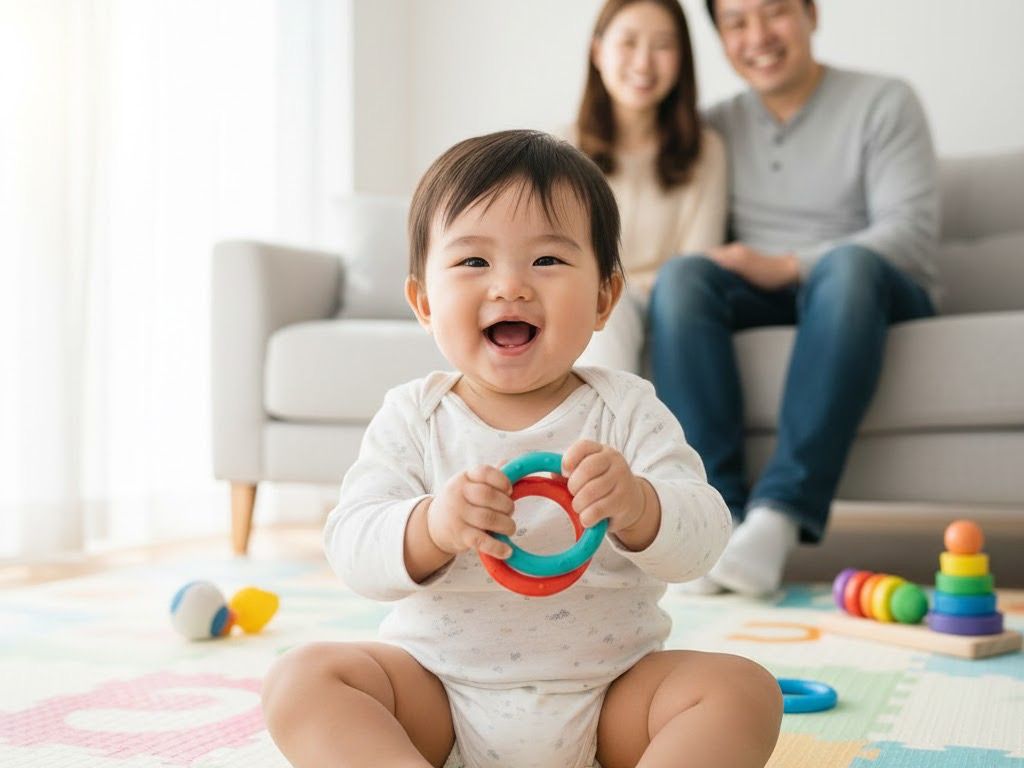
Keep Every Growth Milestone
Get Started FreeAt 7 months, babies can sit independently, and by 8 months they start army crawling and crawling. This is when mobility increases and curiosity explodes, while stranger anxiety and separation anxiety become stronger. Here's your guide to 7-8 month developmental milestones and how parents can help.
7-Month Development Milestones
Gross Motor Skills
Independent sitting is the biggest milestone at 7 months.
- Sitting alone: Can maintain seated position without support
- Playing while sitting: Manipulates toys with both hands while seated
- Rolling mastered: Rolls both directions freely
- Preparing to crawl: Attempts to move forward while on tummy
Fine Motor Skills
- Hand-to-hand transfer: Moves objects from one hand to the other
- Raking grasp: Picks up objects by raking with whole palm
- Finger use: Begins pointing at or pressing things with index finger
- Holds two objects: Can hold an object in each hand
Cognitive Development
- Object permanence begins: Starts understanding objects exist even when hidden
- Cause and effect: Learns pressing buttons makes sounds
- Imitation: Copies simple actions
- Problem solving: Removes cloth to find hidden toy
Language Development
- Varied babbling: Increased consonant combinations like "mama," "baba," "dada"
- Understanding tone: Distinguishes happy vs. angry tones
- Name response: Reacts when name is called
- Gestures begin: Starts waving, clapping along
8-Month Development Milestones
Gross Motor Skills
Army crawling and crawling are the signature developments at 8 months.
- Army crawling: Moves by pulling with arms while belly on floor
- Crawling begins: Starts crawling on hands and knees (varies by baby)
- Pulling to stand: Attempts to pull up on furniture
- Sitting mastered: Maintains balance when turning or leaning while seated
Fine Motor Skills
Pincer grasp development is the key fine motor milestone at 8 months.
- Pincer grasp begins: Starts picking up small objects with thumb and finger
- Finger exploration: Pokes fingers into small holes
- Releasing objects: Intentionally drops or releases items
- Finger foods: Picks up food and brings it to mouth
Social Development
Stranger anxiety and separation anxiety peak around 8 months.
- Heightened stranger anxiety: Cries or clings to parents with strangers
- Separation anxiety: Becomes distressed when parent leaves sight
- Expressing preferences: Clear preferences for certain people and toys
- Emotional expression: Shows frustration, joy, and various emotions
Language Development
- Meaningful sounds: Begins sounds with meaning like "mama," "dada"
- Using gestures: Points at desired objects
- Simple instructions: Understands meaning of "no"
- Imitative speech: Copies parents' speech intonation
Development-Stimulating Play for 7-8 Months
Gross Motor Play
1. Encouraging Crawling
- Place favorite toys just out of reach
- Create obstacle courses with tunnels and cushions
2. Pull-to-Stand Practice
- Encourage pulling up at low tables or couches
- Let them explore freely in safe environments
3. Sitting Ball Play
- Roll balls back and forth while sitting
- Develops balance and hand-eye coordination
Fine Motor Play
1. Finger Foods
- Puffs, soft fruit pieces for self-feeding
- Excellent for pincer grasp practice
2. Stacking Play
- Stack soft blocks and knock them down
- Cup stacking and nesting
3. Container Play
- Put objects in and take out of containers
- Practice opening and closing lids
Cognitive and Language Play
1. Extended Peek-a-boo
- Hide toys under blankets for baby to find
- Helps develop object permanence
2. Reading Books
- Point at pictures in board books while naming them
- Use sound words to engage interest
3. Songs with Movements
- Nursery rhymes with hand motions
- Clapping, waving together
Handling Stranger and Separation Anxiety
What is Stranger Anxiety?
This is a normal developmental phase that starts around 6-8 months and peaks at 12-18 months.
Coping Strategies
1. Gradual Introduction
- Don't suddenly leave baby alone with strangers
- Let new people approach slowly while baby is in your arms
2. Consistent Response
- Comfort baby when anxious
- Say "It's okay, mommy/daddy is right here"
3. Separation Practice
- Practice short separations
- Say "I'll be back" and leave briefly, then return
- Show positive reaction when you come back
4. Transitional Objects
- Let baby carry a favorite stuffed animal or blanket
- Security objects help ease separation anxiety
7-8 Month Development Checklist
7-Month Baby
- [ ] Can sit without support
- [ ] Transfers objects from hand to hand
- [ ] Responds to own name
- [ ] Can hold objects in both hands
- [ ] Responds to simple peek-a-boo
8-Month Baby
- [ ] Attempts army crawling or crawling
- [ ] Tries to pull up on furniture
- [ ] Beginning pincer grasp
- [ ] Wary of strangers
- [ ] Understands "no"
Warning Signs to Watch For
Consult your pediatrician if you notice these signs.
| Age | Warning Signs |
|---|---|
| 7 months | Can't sit even with support, doesn't reach for objects, no response to sounds |
| 8 months | Can't roll over, no babbling, avoids eye contact |
| Both | Loss of previously acquired skills (regression), uses only one hand |

What Parents Should Know
Solid Food Progress
At 7-8 months, babies transition from purees to foods with more texture in the intermediate solid food stage.
Teething Time
Typically, bottom front teeth emerge between 6-10 months. Baby will want to chew on everything due to itchy gums.
Sleep Changes
Naps may reduce to twice daily, and night feedings may decrease or stop. Separation anxiety may cause more night wakings.
Track 7-8 Month Development with BebeSnap
- Development tracking: Record milestones like sitting, crawling
- Solid food log: Track new foods and allergy reactions
- Sleep patterns: Monitor nap frequency and nighttime changes
- AI analysis: Check health through stool photo analysis
Frequently Asked Questions (FAQ)
Q: What development happens at 7 months?
A: The biggest milestone at 7 months is independent sitting. Your baby can hold a seated position without support and manipulate toys with both hands while sitting. They transfer objects from one hand to the other, respond when their name is called, and begin to understand object permanence; that objects still exist even when hidden.
Q: Do babies start crawling at 8 months?
A: Yes, the signature developments at 8 months are army crawling and crawling. Babies move by pulling with their arms while their belly is on the floor, then begin crawling on hands and knees, though this varies by baby. The pincer grasp also develops, where they pick up small objects with thumb and finger, and they start trying to pull up on furniture.
Q: My baby has strong stranger anxiety at 8 months, is this normal?
A: Yes, stranger anxiety and separation anxiety peak around 8 months. This is a normal developmental phase that starts around 6-8 months and peaks at 12-18 months. Stranger anxiety is actually evidence of healthy attachment with parents, and it naturally decreases with time.
Q: When should I see a doctor about possible developmental delay?
A: Consult your pediatrician if at 7 months your baby can't sit even with support or doesn't reach for objects, or if at 8 months they can't roll over, don't babble, and avoid eye contact. The same applies if they lose previously acquired skills (regression) or use only one hand.
References
Keep Every Growth Milestone
Log height, weight, and milestones. The growth curves are drawn for you.
See what the app does firstYou Might Also Like
Apple for Babies: Stage-by-Stage Portions and When Raw Apple Is Safe
Spinach for Babies: When to Start, Why Boiling Matters, and the One Time to Skip It
Potato for Babies: When to Start, Safe Shapes, and Why Never to Blend It
Introducing Fish to Your Baby: When to Start, What Order, What to Avoid
You Might Also Like
Wonder Weeks Calculator: Your Baby's 10 Mental Leaps From the Due Date
Enter your due date and get all 10 leap dates. They land at weeks 5, 8, 12, 19, 26, 37, 46, 55, 64 and 75, each lasting 1 to 2 weeks.
9-Month Baby Development: Crawling, First Words, Separation Anxiety
At 9 months, babies crawl and start saying first words like 'mama' and 'dada'. Learn about development and safety tips.

Baby Walking Development: From First Steps to Walking Practice
Babies typically take their first steps between 9-15 months. Learn about walking development stages from pulling up to independent walking, plus safe practice tips.