White Noise for Baby Sleep: Safe Volume Levels & How to Use
See Your Baby's Sleep Pattern Emerge
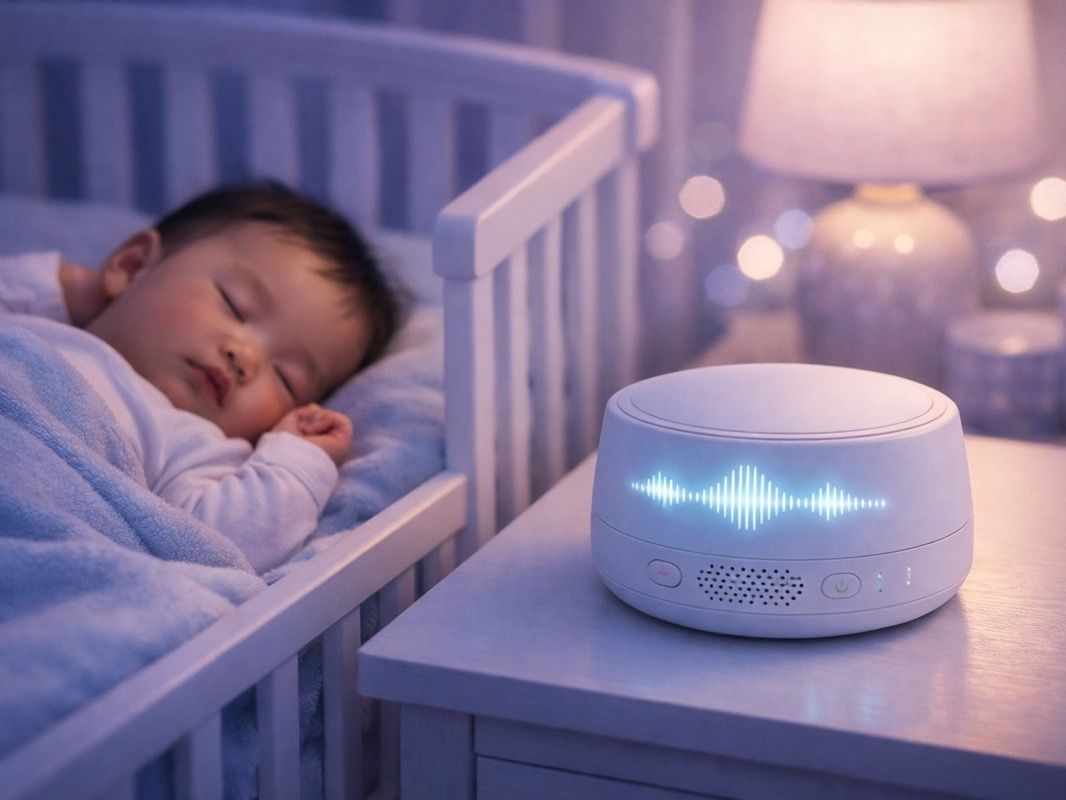
Get Started FreeDoes white noise really help babies sleep? According to research supported by the American Academy of Pediatrics(AAP), white noise can help babies fall asleep faster and sleep longer. But it must be used correctly. Here's everything you need to know about safe volume levels, proper distance, and usage duration.
Why White Noise Works for Baby Sleep
Mimics the Womb Environment
For babies, especially newborns, silence can feel uncomfortable. The womb is far from quiet.
| Sounds in the Womb | Decibel Level |
|---|---|
| Mother's heartbeat | About 80-90dB |
| Blood circulation | About 70-80dB |
| Digestive sounds | About 60-70dB |
| External sounds (filtered) | About 50-60dB |
White noise recreates this womb environment, providing comfort and security.
Research-Backed Benefits
A UK study divided 40 newborns into two groups:
- White noise group: 80% fell asleep within 5 minutes
- Silent group: Only 25% fell asleep within 5 minutes
The American Academy of Pediatrics(AAP) acknowledges that white noise can help with sleep induction and reducing crying.
AAP Safety Guidelines
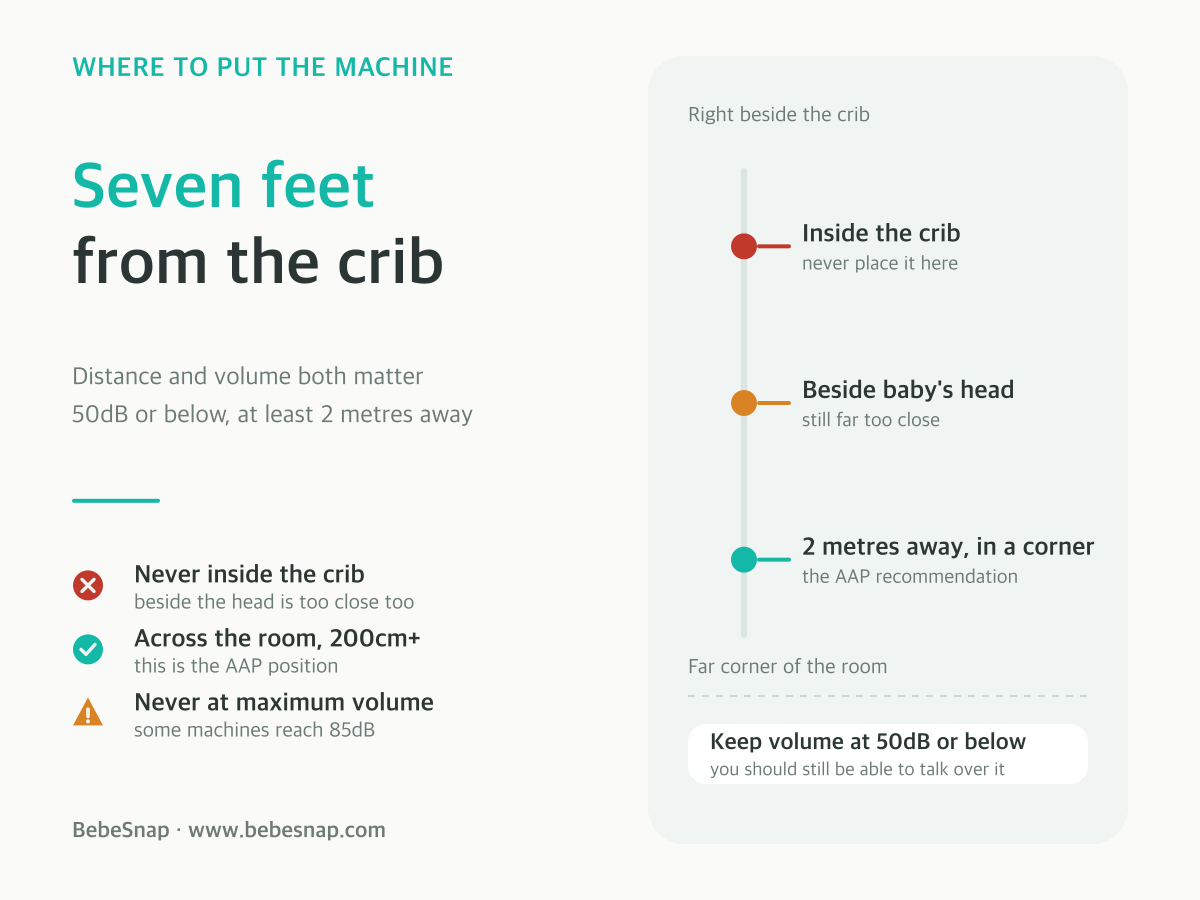
💡 Key AAP recommendation: Place white noise machines at least 7 feet (2 meters) from baby's crib and keep volume at or below 50 decibels.Three Rules for Safe Use
1. Maintain Distance
- At least 7 feet (200cm) away
- Place in corner of room, not near baby's head
- Never inside the crib
2. Appropriate Volume
- Keep at 50dB or below (about shower-level sound)
- Never use maximum volume (some devices reach 85dB)
- You should be able to have a conversation over it
3. Duration
- Ideally use only until baby falls asleep
- Same applies for naps
- Gradually reduce as baby adjusts
Volume Level Comparison
| Decibels | Comparable Sound | Suitability for Baby Sleep |
|---|---|---|
| 30dB | Whisper | Too quiet |
| 50dB | Quiet office, rain | ✅ Optimal |
| 60dB | Normal conversation | ⚠️ Upper limit |
| 70dB | Vacuum cleaner | ❌ Too loud |
| 85dB | City traffic | ❌ Hearing damage risk |

Types of White Noise
Effective Sounds
- Pink noise: Emphasizes low frequencies, similar to heartbeat
- Brown noise: Deeper, softer tone
- Fan/AC sounds: Consistent mechanical hum
- Rain sounds: Natural white noise
- Shushing sounds: Similar to womb blood flow
Sounds to Avoid
- Music with melodies (brain tries to recognize patterns)
- Irregular nature sounds (birdsong, thunder)
- Sounds that change suddenly
- TV or radio
White Noise by Age
Newborns (0-3 months)
Most effective during this period.
- Maximum calming effect due to womb similarity
- Use as part of sleep routine
- Also effective for soothing crying
Infants (4-12 months)
- Use as sleep association tool
- Blocks external noise
- Especially useful for naps
After 12 months
- Watch for dependency
- Gradually reduce volume
- Give opportunities to adapt to environmental sounds
Choosing a White Noise Machine
Features to Look For
| Feature | Importance | Reason |
|---|---|---|
| Volume control | Essential | Must be able to set at 50dB or below |
| Timer | Recommended | Auto shut-off setting |
| Multiple sounds | Optional | Find what works for your baby |
| Portability | Optional | Useful for travel |
| Loop function | Recommended | Seamless continuous play |
Frequently Asked Questions (FAQ)
Q: Will my baby become dependent on white noise?
A: Some dependency may develop, but most babies naturally outgrow the need, and it can actually be helpful during travel or environment changes. If you're concerned, gradually reduce the volume over time.
Q: Can I leave it on all night?
A: According to the Sleep Foundation, using it only until your baby falls asleep is ideal. If overnight use is needed, maintain a low volume, and consider turning it off after your baby is in deep sleep.
Q: Can it affect hearing?
A: It's safe when used correctly. It's safe at 50dB or below and at 2 or more meters distance, but dangerous at maximum volume up close. Following AAP guidelines is key.
Q: When can I start using it?
A: You can start from birth. White noise is actually most effective for newborns because it mimics the womb environment, which is far from quiet, the mother's heartbeat alone reaches about 80-90dB. Just follow the safety rules from the start: keep the volume at 50dB or below and place the machine at least 2 meters from the crib.
Track Sleep Patterns with BebeSnap
Want to see how white noise affects your baby's sleep?
- Record daily sleep start/end times
- Track night wakings
- AI analysis identifies sleep patterns
- Objectively measure white noise effectiveness
👉 Learn more about BebeSnap Sleep Records
References
See Your Baby's Sleep Pattern Emerge
Track sleep and watch wake windows and night stretches appear as clear graphs.
See what the app does firstMedical Disclaimer: This article is for informational purposes only and does not replace professional medical advice. If you have concerns about your baby's health, please consult a pediatrician.
You Might Also Like
Wonder Weeks Calculator: Your Baby's 10 Mental Leaps From the Due Date
Baby Weight Gain Calculator: Grams Per Day From Two Weigh-Ins
Baby Impetigo: Golden Crusts, Antibiotic Treatment, and When Nursery Is Safe Again
Baby Mouth Sores (Stomatitis): Causes, How to Tell Them Apart, and Dehydration Signs
You Might Also Like
Baby Sleep While Traveling: Settling Them in a New Place and Resetting After
Worried a trip will wreck your baby's sleep? The first night is the hardest, and most babies reset within 3-7 days at home. What to pack, naps on the move, and safe sleep away.

Baby Won't Sleep Unless Held: How to Put Them Down
A baby who only sleeps when held isn't spoiled; it's the Moro reflex, and it's normal. Hold 20 more minutes for deep sleep, then lower feet-first and slowly to beat the put-down wake.

Baby Night Crying Guide: From Colic to Sleep Regression Solutions
Baby crying every night? Colic peaks at 6 weeks and improves by 3-4 months. Learn causes, solutions, and when to see a doctor.