8-Month Sleep Regression: Separation Anxiety, Crawling & Sleep Solutions

See Your Baby's Sleep Pattern Emerge
Get Started FreeIf your baby who was sleeping well suddenly starts waking up at night and refusing naps, you might be experiencing the 8-month sleep regression. This is a natural phenomenon that occurs as your baby's brain and body undergo rapid development. While challenging, it's a temporary phase that you can navigate successfully by understanding the causes and responding appropriately.
What Is the 8-Month Sleep Regression?
Sleep regression refers to a period when a baby who was sleeping well suddenly experiences disrupted sleep patterns. The 8-month sleep regression typically lasts 2-6 weeks and can vary in timing and duration for each baby.
According to the Sleep Foundation, the 8-month sleep regression generally occurs between 8-10 months and is closely related to developmental milestones.
Main Causes of 8-Month Sleep Regression
1. Physical Development Growth Spurt
Around 8 months, babies experience various physical developments:
- Starting to crawl: Learning to army crawl or hands-and-knees crawl makes them want to practice even at night
- Pulling to stand: The excitement of mastering new skills keeps them stimulated
- Sitting independently: Once sitting becomes stable, they may resist lying down
2. Onset of Separation Anxiety
Eight months marks the beginning of separation anxiety. As babies start understanding object permanence (the concept that mom and dad will return after leaving) their anxiety about being alone increases.
3. Teething
Most babies get their first teeth between 6-10 months. Gum pain can be worse at night, disrupting sleep.
4. Changes in Sleep Cycles
The sleep structure of an 8-month-old becomes more similar to adults, making them more likely to wake between sleep cycles.
Signs of 8-Month Sleep Regression
If several of these symptoms appear simultaneously, it's likely a sleep regression:
- Frequent night wakings with crying
- Taking longer to fall asleep
- Refusing naps or taking shorter naps
- More fussy and irritable than usual
- Unable to fall back asleep without being held
- Waking early in the morning wanting to play
How to Overcome 8-Month Sleep Regression
Maintain Consistent Sleep Routines
💡 Consistency is key. Even when your baby is struggling, maintain your regular sleep routine.- Start bedtime preparation at the same time every day
- Create predictable sequences like bath → massage → feeding → reading
- Dim lights and create a quiet environment 30 minutes before bedtime
Provide Plenty of Practice Time During the Day
Let your baby practice new motor skills during the day. This reduces the urge to practice at night.
- Allow free crawling in safe spaces
- Arrange furniture for pulling-to-stand practice
- Ensure plenty of tummy time and playtime
Ease Separation Anxiety
- Play peek-a-boo to teach the concept of "disappearing and returning"
- Practice leaving and returning to the room briefly
- Offer a comfort object like a lovey or blanket (use caution under 12 months for safety)
Adjust Nap Schedule Appropriately
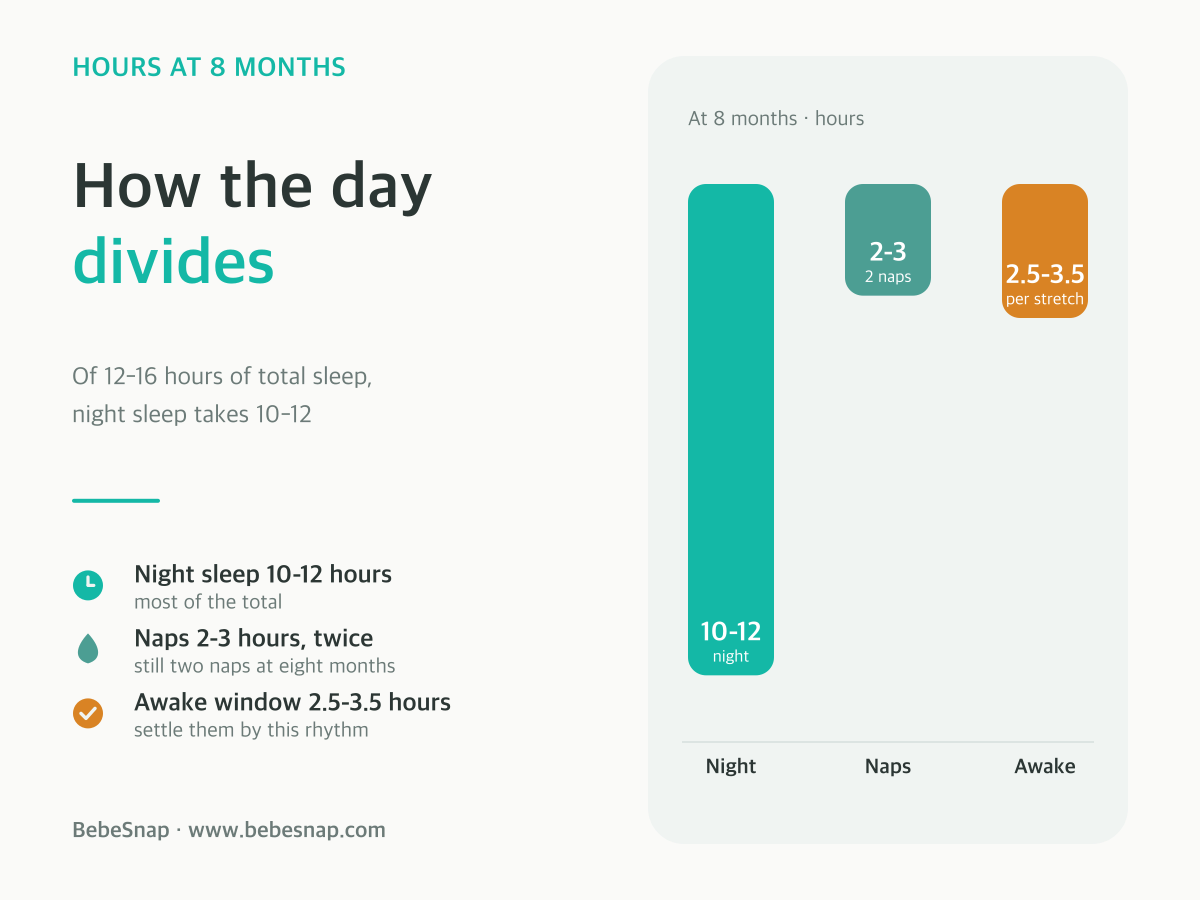
Recommended sleep for 8-month-old babies:
| Category | Recommended Time |
|---|---|
| Total Sleep | 12-16 hours/day |
| Night Sleep | 10-12 hours |
| Daytime Naps | 2-3 hours (2 naps) |
| Wake Windows | 2.5-3.5 hours |

Manage Teething
- Offer a cold teething toy before bed
- Consider appropriate pain relief after consulting your pediatrician
- Gently massage the gums
What NOT to Do
Things to avoid during sleep regression:
- Don't create new sleep habits: Rocking to sleep or feeding to sleep can persist even after the regression ends
- Don't start sleep training: Starting new sleep training during this period is not recommended
- Don't respond excessively: Rushing in every time your baby cries makes it harder for them to learn self-soothing
When to See a Pediatrician
Consult your pediatrician if you notice:
- Sleep problems lasting more than 6 weeks
- Accompanying fever
- Significant decrease in appetite
- Excessive lethargy during the day
- Signs of breathing difficulties
Track Sleep Patterns with BebeSnap
During sleep regression, recording and analyzing your baby's sleep patterns is important. BebeSnap makes this easy:
- Sleep logging: Record sleep time, wake time, and sleep quality
- Sleep statistics: Analyze sleep patterns weekly and monthly
- Nap reminders: Set appropriate nap time alerts
- AI parenting consultation: 24/7 support for sleep-related questions
👉 Learn more about BebeSnap Sleep Records
Frequently Asked Questions (FAQ)
Q: How long does the 8-month sleep regression last?
A: The 8-month sleep regression typically lasts 2-6 weeks, though the timing and duration can vary from baby to baby. It generally occurs between 8 and 10 months and is closely tied to developmental milestones. With consistent handling, it's a temporary phase that passes naturally.
Q: Why does the 8-month sleep regression happen?
A: The main causes are a growth spurt in physical development like crawling and pulling to stand, the onset of separation anxiety, teething, and changes in sleep cycles. During this period babies begin to understand object permanence, which increases their anxiety about being alone.
Q: Should I start sleep training during a sleep regression?
A: It's not recommended. Starting new sleep training, or creating new sleep habits like rocking or feeding to sleep during this time, can persist even after the regression ends. The most important thing is to keep your regular sleep routine consistent.
Q: When should I see a doctor about the 8-month sleep regression?
A: Consult your pediatrician if sleep problems last more than 6 weeks, if there's an accompanying fever, a significant decrease in appetite, excessive daytime lethargy, or any signs of breathing difficulties.
References:
See Your Baby's Sleep Pattern Emerge
Track sleep and watch wake windows and night stretches appear as clear graphs.
See what the app does firstMedical Disclaimer: This article is for informational purposes only and does not replace professional medical advice. If you have concerns about your baby's health, please consult a pediatrician.
You Might Also Like
Wonder Weeks Calculator: Your Baby's 10 Mental Leaps From the Due Date
Baby Weight Gain Calculator: Grams Per Day From Two Weigh-Ins
Baby Impetigo: Golden Crusts, Antibiotic Treatment, and When Nursery Is Safe Again
Baby Mouth Sores (Stomatitis): Causes, How to Tell Them Apart, and Dehydration Signs
You Might Also Like
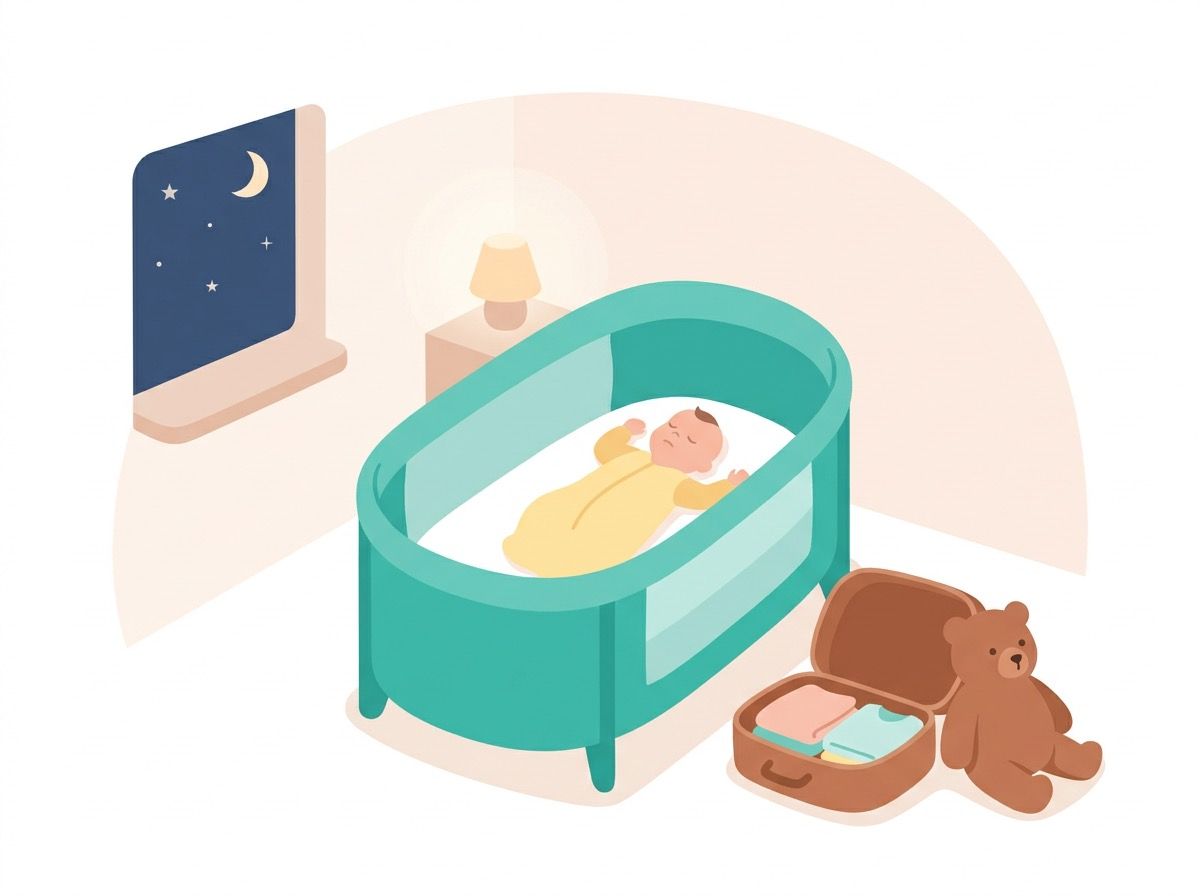
Baby Sleep While Traveling: Settling Them in a New Place and Resetting After
Worried a trip will wreck your baby's sleep? The first night is the hardest, and most babies reset within 3-7 days at home. What to pack, naps on the move, and safe sleep away.

9 to 12 Month Baby Meal Schedule: Sample Feeding Routine for Solids, Milk, and Snacks
Use this 9 to 12 month baby meal schedule to plan 3 meals, 2 to 3 snacks, and regular milk feeds without crowding out breast milk or formula.

How to Get Baby to Sleep Through the Night: Night Weaning & Tips
When will my baby sleep through the night? Most babies can by 4-6 months. Learn about night weaning and tips to help.