Baby Food Portion Size Guide | How Much Solids by Age (6-12 Months)
Stop Trying to Remember Feed Times
Get Started FreeHow much baby food should I give? This is the most common question when starting solids at 6 months. This guide covers baby food portion sizes by age (early, middle, late stages), feeding frequency, how to increase portions, and milk intake adjustment.
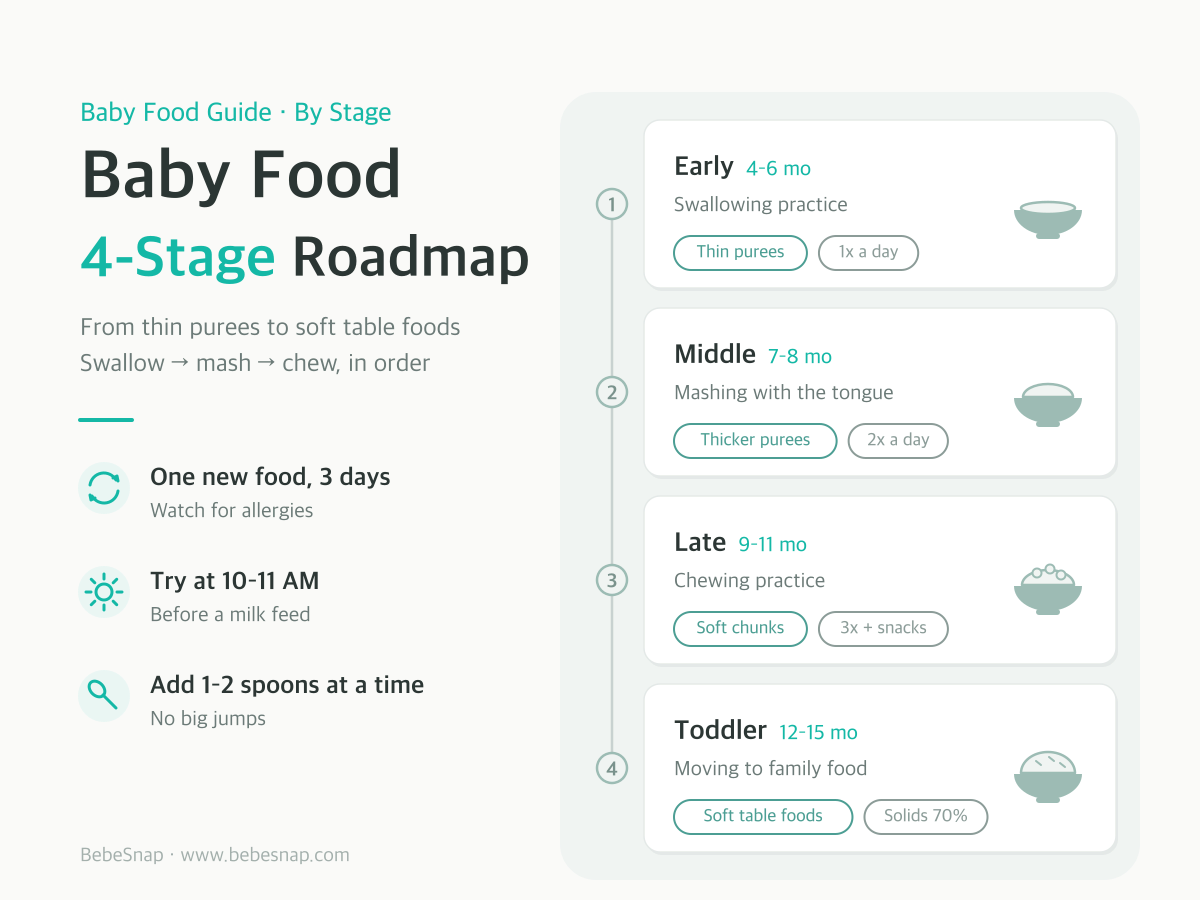
Baby Food Stages Overview
Baby food is typically divided into 4 stages:
| Stage | Age | Focus | Texture |
|---|---|---|---|
| Early | 4-6 months | Swallowing practice | Thin purees |
| Middle | 7-8 months | Mashing with tongue | Thicker purees, mashed |
| Late | 9-11 months | Chewing practice | Soft chunks, finger foods |
| Toddler | 12-15 months | Transition to family food | Soft table foods |
Early Stage Portions (4-6 Months)
This is when baby first starts solids. The goal is getting used to food other than milk.
6 Month Baby Food Amount
| Week | Per Feeding | Frequency | Milk Intake |
|---|---|---|---|
| Week 1 | 1-2 tsp (5-10ml) | 1x/day | As usual |
| Week 2 | 1-2 tbsp (15-25ml) | 1x/day | As usual |
| Week 3-4 | 2-3 tbsp (30-50ml) | 1x/day | As usual |
| Week 5-8 | 3-5 tbsp (50-80ml) | 1-2x/day | Slightly less |
Early Stage Foods
- Grains: Rice cereal, thin porridge
- Vegetables: Sweet potato, squash, carrots, peas
- Fruits: Apple, pear, banana (small amounts)
Early Stage Tips
- Introduce one new food at a time, wait 3 days for allergies
- Try feeding around 10-11 AM before milk
- If baby refuses spoon, wait a few days and try again
Middle Stage Portions (7-8 Months)
Baby can now mash food with tongue. Start feeding solids twice a day.
7 Month Baby Food Amount
| Food Group | Per Meal | Daily Total |
|---|---|---|
| Grains (thick porridge) | 50-80g (3-5 tbsp) | 100-160g |
| Vegetables/Fruits | 20-30g (1-2 tbsp) | 40-60g |
| Protein (tofu) | 30-40g | 60-80g |
| Protein (meat/fish) | 10-15g | 20-30g |
8 Month Baby Food Amount
| Food Group | Per Meal | Daily Total |
|---|---|---|
| Grains | 80-100g (5-6 tbsp) | 160-200g |
| Vegetables/Fruits | 30-40g (2-3 tbsp) | 60-80g |
| Protein (tofu) | 40-50g | 80-100g |
| Protein (meat/fish) | 15-20g | 30-40g |
Middle Stage Frequency & Milk
- Solids frequency: 2x/day (morning + afternoon)
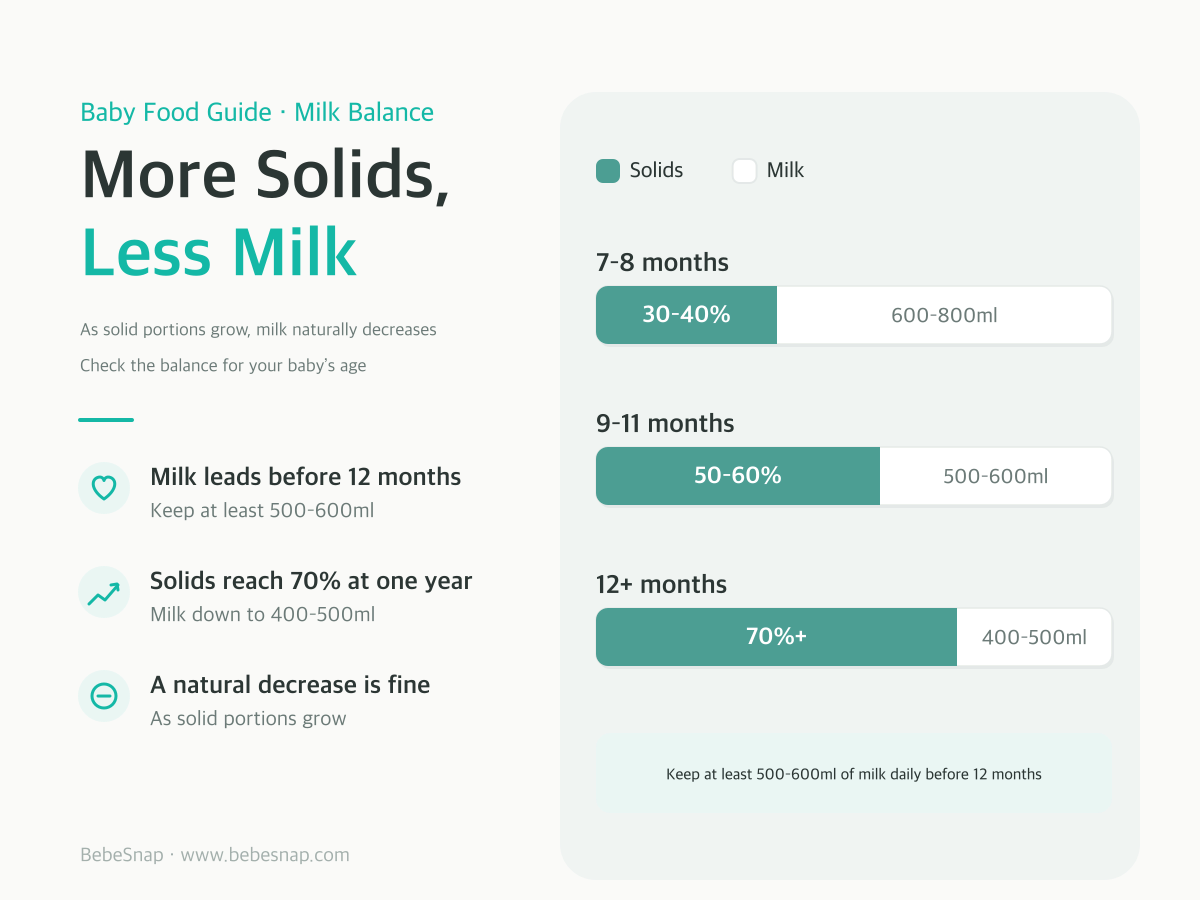
- Milk intake: 600-800ml/day (3-4 bottles)
- Nutrition ratio: Solids 30-40% : Milk 60-70%
Middle Stage Tips
- Start meat now (important for iron)
- Begin introducing lumpy textures
- Introduce finger foods for self-feeding
Late Stage Portions (9-11 Months)
Baby can chew with gums. Start feeding solids three times a day.
9-10 Month Baby Food Amount
| Food Group | Per Meal | Daily Total |
|---|---|---|
| Grains (soft rice) | 90-100g | 270-300g |
| Vegetables/Fruits | 30-40g | 90-120g |
| Protein | 20-30g | 60-90g |
Late Stage Frequency & Milk
- Solids frequency: 3x/day + 1-2 snacks
- Milk intake: 500-600ml/day (2-3 bottles)
- Nutrition ratio: Solids 50-60% : Milk 40-50%
Toddler Stage (12-15 Months)
Nearly eating family foods now.
12+ Month Portions
| Food Group | Per Meal | Daily Total |
|---|---|---|
| Grains | 100-130g | 300-400g |
| Vegetables/Fruits | 50-60g | 150-180g |
| Protein | 40-50g | 120-150g |
Toddler Stage Milk
- Milk intake: 400-500ml/day (whole milk OK)
- Nutrition ratio: Solids 70% : Milk 30%
How to Increase Baby Food Portions
If baby isn't eating much, try these tips:
Increasing Portions
- Add 1-2 spoonfuls at a time, gradually
- Mix favorite foods with new ones
- Offer solids before milk when hungry
When Baby Refuses Food
- Try different preparations (puree → soup → chunks)
- Adjust texture and temperature
- Eat together as a family to spark interest
- Let baby self-feed with finger foods
Track Feeding with BebeSnap
Why tracking baby food matters:
- Know how much baby is actually eating
- Track allergic reactions to new foods
- Provide accurate info for doctor visits
With BebeSnap:
- One-touch recording of portions, ingredients, time
- Automatic daily/weekly intake calculations
- Balance check with milk intake
- AI analysis of appropriate amounts for age
Frequently Asked Questions (FAQ)
Q: My baby eats very little solid food. Is that okay?
A: Yes, this is normal because appetite varies from baby to baby. As long as your baby's growth curve is normal and they are active, there's no need to worry. Rather than judging by a single day, check the average intake over 3 to 7 days.
Q: What time of day should I feed solids?
A: The first feeding is best given in the morning, around 10–11 AM. Feeding at this time means that if an allergic reaction occurs, you can still see a doctor during office hours.
Q: When can I start giving meat in solids?
A: Start at 6–7 months. Meat is especially important for breastfed babies at this stage, because they are prone to low iron and meat helps replenish it.
Q: If my baby eats a lot of solids, should I reduce milk?
A: Before 12 months, breast milk or formula is still the main source of nutrition, so keep at least 500–600ml per day. It's fine if milk intake decreases naturally as solid portions grow.
References
Stop Trying to Remember Feed Times
Log time, amount, and intervals. BebeSnap turns them into your baby's daily pattern.
See what the app does firstMedical Disclaimer: This article is for informational purposes only and does not replace professional medical advice. If you have concerns about your baby's health, please consult a pediatrician.
You Might Also Like
Wonder Weeks Calculator: Your Baby's 10 Mental Leaps From the Due Date
Baby Weight Gain Calculator: Grams Per Day From Two Weigh-Ins
Baby Impetigo: Golden Crusts, Antibiotic Treatment, and When Nursery Is Safe Again
Baby Mouth Sores (Stomatitis): Causes, How to Tell Them Apart, and Dehydration Signs
You Might Also Like
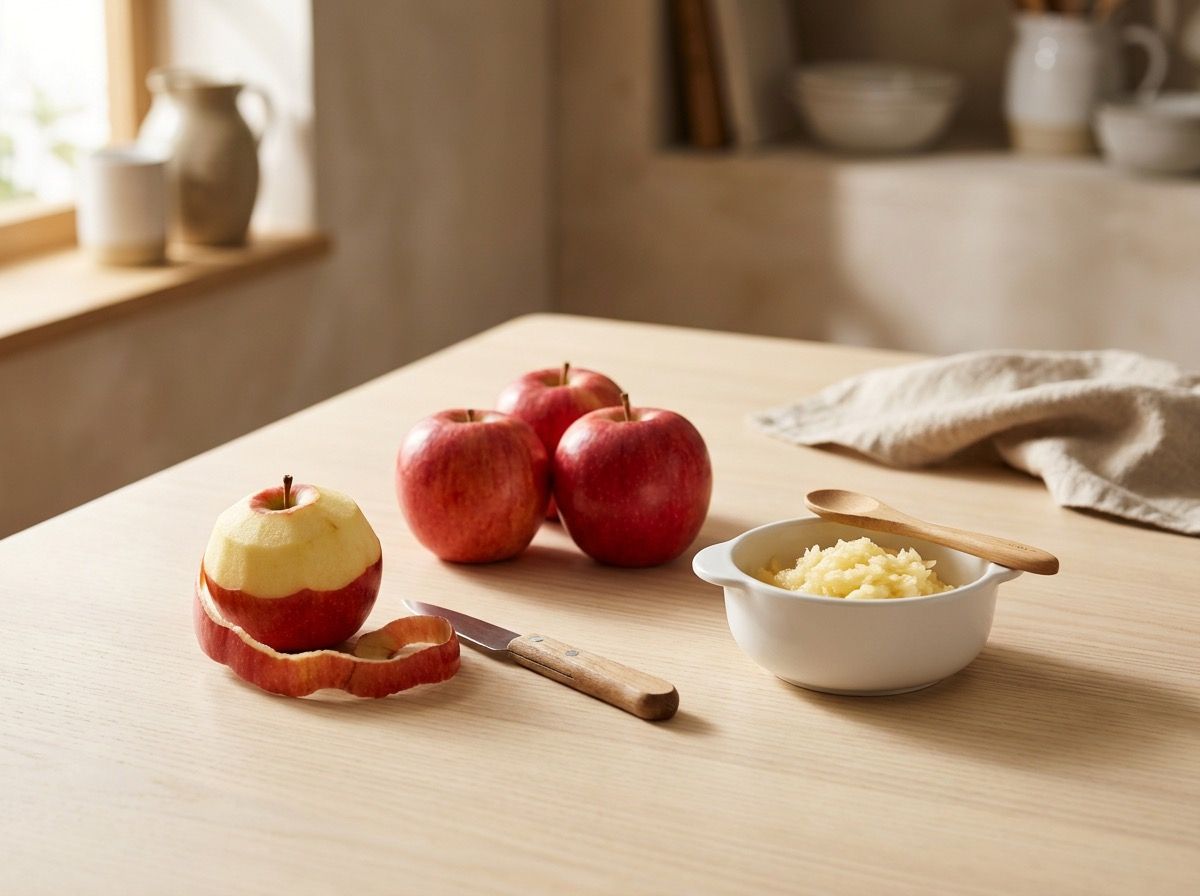
Apple for Babies: Stage-by-Stage Portions and When Raw Apple Is Safe
Apple can start in the first weaning stage, grated and cooked. Portions are 20-30g at 7-8 months and 30-40g at 9-11 months, counted together with vegetables. Front teeth bite, but the molars that grind only start coming in at the end of weaning.

Potato for Babies: When to Start, Safe Shapes, and Why Never to Blend It
Potato can start once your baby is used to first purees. But green patches carry over 13 times the glycoalkaloid of normal flesh, the skin layer around 96 times the centre, and cooking does not destroy it. Potato is also the one baby food you should never blend.
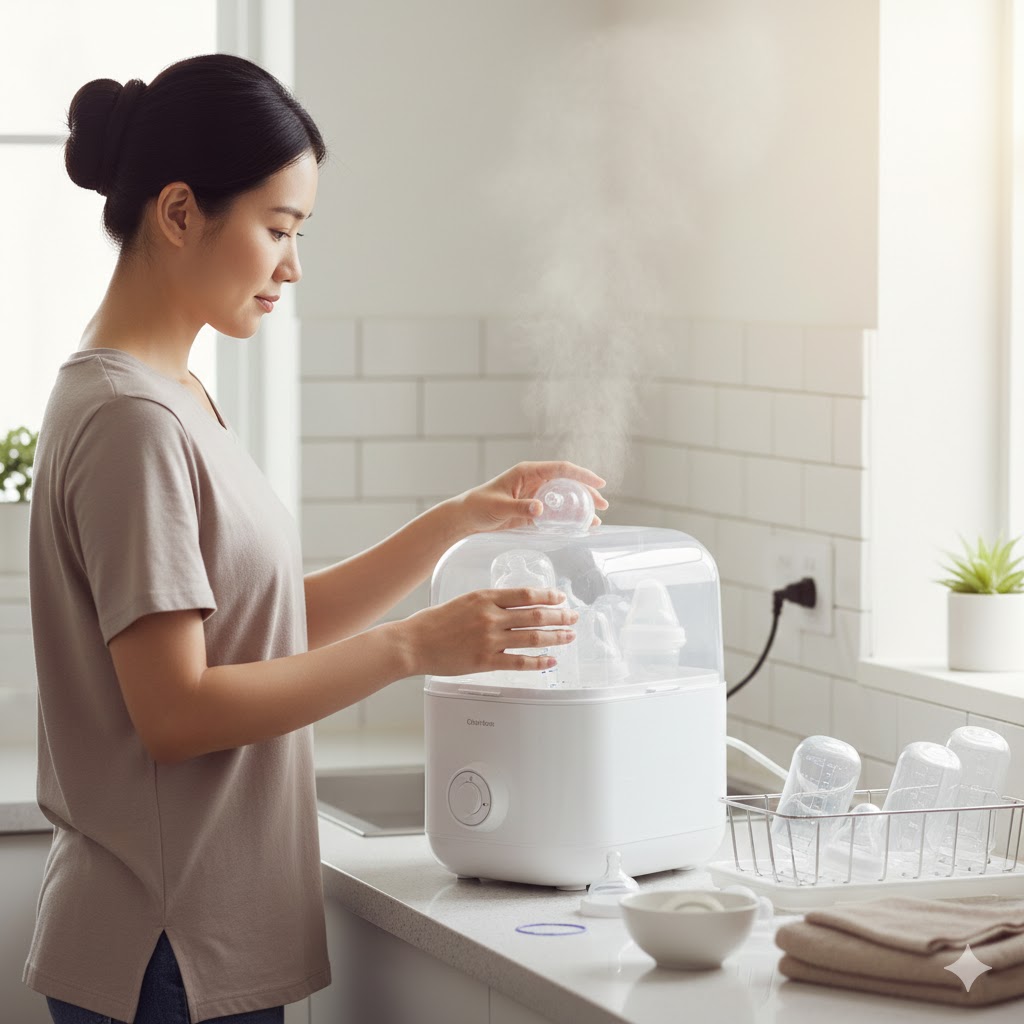
Baby Bottle Sterilization Guide | Boiling Time, When to Stop & Best Methods
How long should you sterilize baby bottles, and when can you stop? This guide answers the most common questions from new parents and covers boiling, steam, UV, and microwave sterilization.