Baby Bottle Sterilization Guide | Boiling Time, When to Stop & Best Methods
Stop Trying to Remember Feed Times
Get Started FreeHow long should I sterilize baby bottles? When can I stop? These are the most common questions from new parents. This guide covers bottle sterilization methods (boiling, steam, UV, microwave), boiling time, when to stop sterilizing, and sterilizer recommendations.
Why Bottle Sterilization is Important
Newborns have underdeveloped immune systems. Formula is nutrient-rich, meaning bacteria can multiply rapidly even in tiny residues left in bottles.
Problems without proper sterilization:
- Diarrhea, vomiting, and digestive issues
- Oral thrush (candidiasis)
- Gastroenteritis and food poisoning
When to Stop Sterilizing Baby Bottles
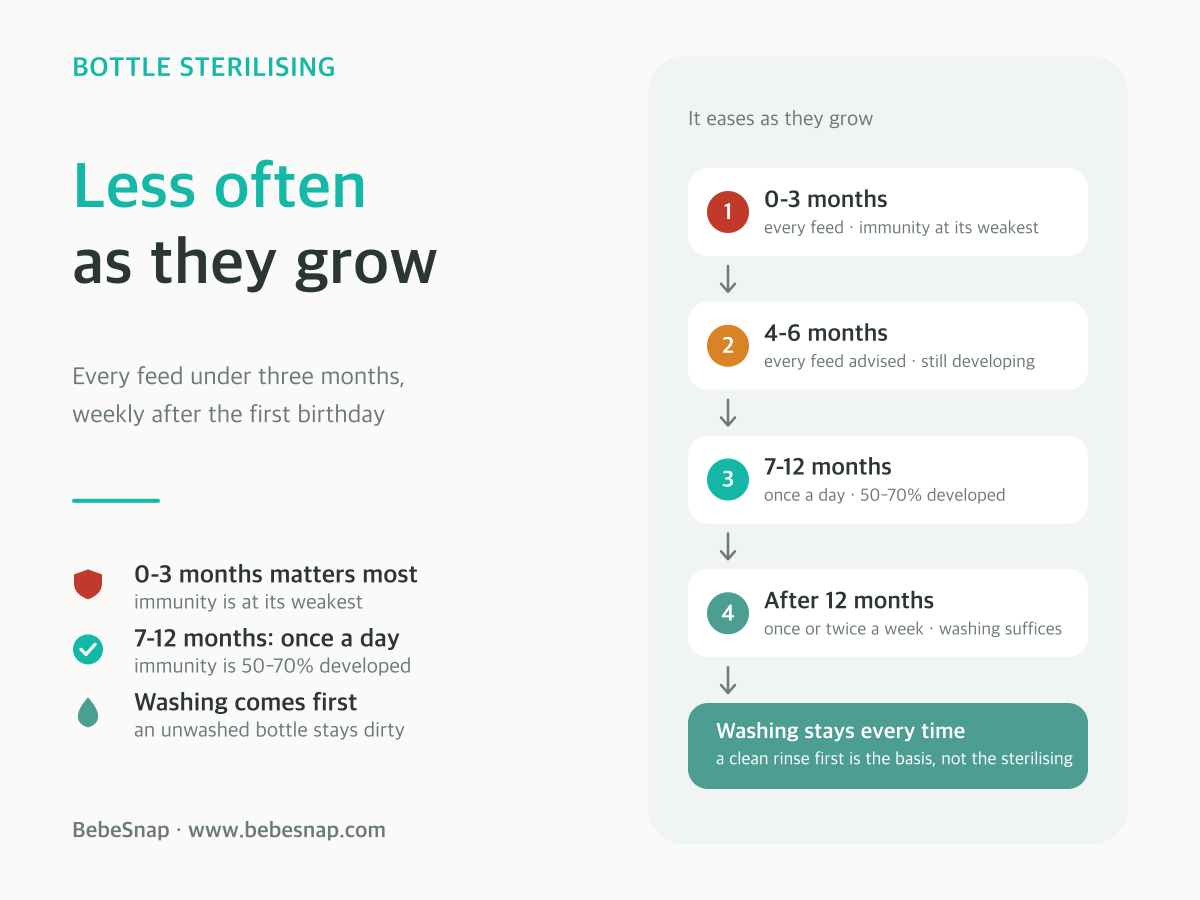
Here are the recommendations for sterilization duration:
| Age | Sterilization Need | Reason |
|---|---|---|
| 0-3 months | Every use (Required) | Weakest immunity period |
| 4-6 months | Every use (Recommended) | Immunity still developing |
| 7-12 months | Once daily | 50-70% immune development |
| After 12 months | 1-2 times per week | Regular washing is sufficient |
Signs It's Okay to Stop
- Baby starts putting floor objects in mouth
- Started solids and using various utensils
- Immune system is adequately developed (after age 1)
However, continue sterilizing when baby is sick or during summer months.
4 Baby Bottle Sterilization Methods
1. Boiling Method
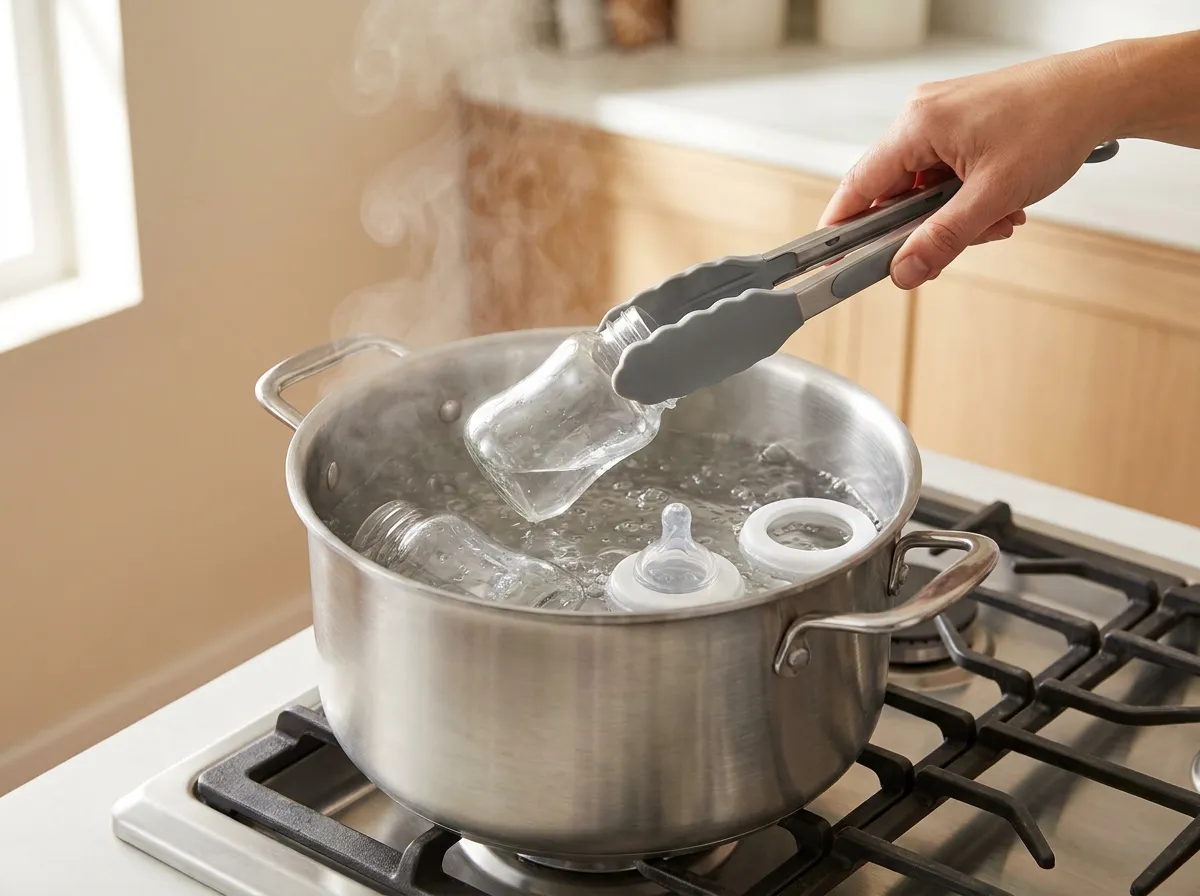
The most traditional and reliable sterilization method.
What you need:
- Deep pot (bottles must be fully submerged)
- Bottle tongs (silicone-coated recommended)
How long to boil baby bottles:
| Part | Boiling Time | Notes |
|---|---|---|
| Bottle body (glass) | 5-7 minutes | Start from cold water |
| Bottle body (plastic) | 2-3 minutes | Add after water boils |
| Nipples/caps | 30 seconds - 1 minute | Longer damages them |

Boiling steps:
- Clean bottles thoroughly
- Fill pot with enough water
- Glass bottles start in cold water; plastic added after boiling
- Sterilize bottle body first, add nipples for last 30 sec - 1 min
- Remove with tongs and air dry on rack
2. Steam Sterilizer
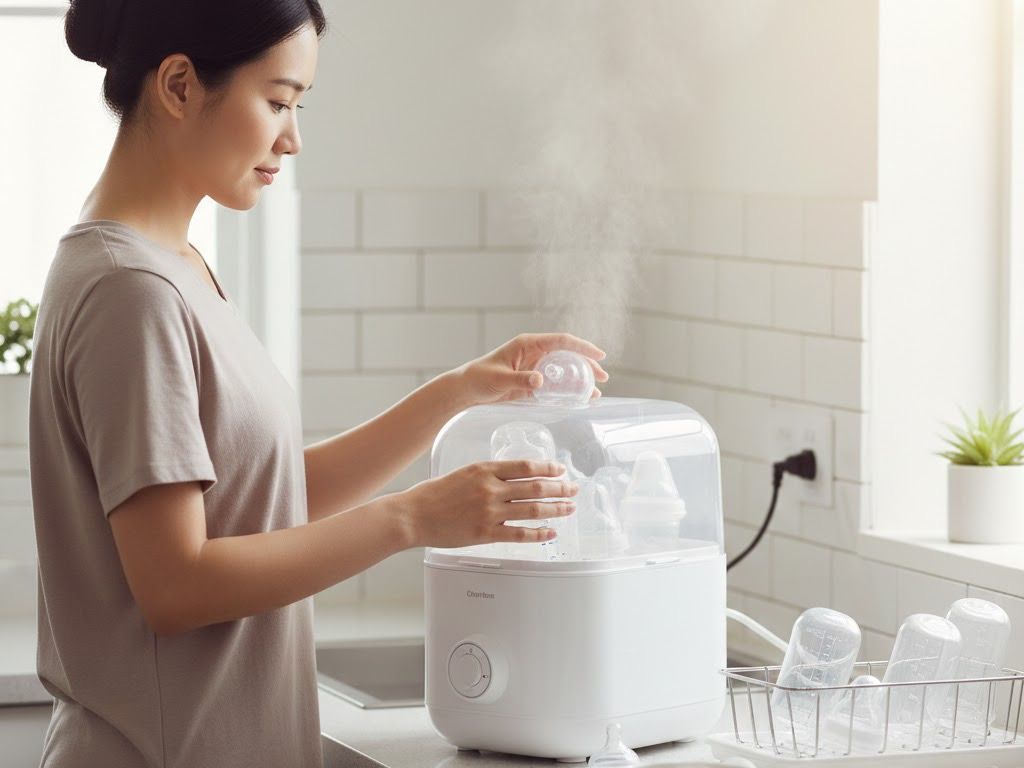
Using an electric steam sterilizer.
Advantages:
- More convenient than boiling
- Consistent temperature
- Lower burn risk
- Cheaper than UV
Sterilization time: 5-10 minutes (varies by product)
Notes:
- Prevent limescale buildup inside
- Remove all moisture after use
3. UV Sterilizer (Ultraviolet)
Uses UVC light to eliminate bacteria.
Advantages:
- One-button sterilization + drying + storage
- No burn risk
- Safe for heat-sensitive materials
- Multi-use (nipples, toys, teethers)
Disadvantages:
- More expensive
- May discolor PPSU bottles
- Shadow areas may not be fully sterilized
Sterilization time: 10-30 minutes (including drying)
4. Microwave Sterilization
Using specialized sterilizer bags or containers.
Microwave sterilization time:
- 500-700W: 3-5 minutes
- 800-1000W: 2-3 minutes
Important notes:
- Use only dedicated containers
- Remove metal parts
- Very hot immediately after - handle carefully
- Uneven heating may create hot spots
UV vs Steam Sterilizer: Which to Choose?
| Feature | UV Sterilizer | Steam Sterilizer |
|---|---|---|
| Method | Ultraviolet light | High-temp steam |
| Time | 10-30 min | 5-10 min |
| Drying | Yes | Some models |
| Storage | Yes | No |
| Price | $80-250 | $25-80 |
| Maintenance | Easy | Limescale cleaning |
| Best for | Convenience priority | Budget priority |
What to Look for in a Sterilizer
- Capacity: Fits 6-12 bottles
- Interior size: 25cm+ width/depth for comfort
- Double deck: Useful for multiple children
- Coverage: UV models should have no blind spots
How to Wash Bottles (Before Sterilizing)
Clean washing before sterilization is essential.
Washing steps:
- Rinse immediately after feeding (before formula dries)
- Use bottle-specific cleanser
- Scrub thoroughly with bottle brush
- Clean nipple holes carefully
- Rinse completely under running water
Cleaning tools:
- Bottle brush (silicone or sponge)
- Nipple brush
- Bottle cleanser (food-grade)
- Drying rack (well-ventilated)
Sterilizing Bottles While Traveling
You still need sterilization away from home.
Portable Options
1. Disposable sterilizer bags
- Microwave steam bags
- Easy to use at accommodations
2. Sterilizing tablets (chemical)
- Dissolve in water, soak for 1 hour
- Some don't require rinsing
3. Portable UV sterilizer
- Rechargeable for anywhere use
- Convenient for nipples and pacifiers
Track Feeding with BebeSnap
Recording feeds is as important as sterilization.
With BebeSnap:
- One-touch feeding amount and time recording
- Track formula vs breast milk separately
- Set bottle replacement reminders
- Comprehensive baby health management
Frequently Asked Questions (FAQ)
Q: Do I need to sterilize brand-new bottles?
A: Yes, new bottles can be contaminated during packaging and shipping, so you should always sterilize them before the first use. Boiling is reliable: glass bottles for 5-7 minutes and plastic for 2-3 minutes, with nipples and caps for just 30 seconds to 1 minute to avoid damage.
Q: Should I dry bottles after sterilizing them?
A: Air drying on a well-ventilated rack is best rather than wiping. Wiping with a cloth can transfer bacteria from the cloth onto the clean bottle, defeating the purpose of sterilizing. After boiling, remove bottles with tongs and let them air dry completely before the next feeding.
Q: What happens if I don't sterilize the bottles?
A: Because formula is nutrient-rich, bacteria can multiply rapidly in leftover residue and cause diarrhea, vomiting, oral thrush, and gastroenteritis. This is especially dangerous for newborns, whose immune systems are still weak; that's why sterilizing after every feeding is essential for the first 6 months.
Q: Can I boil PPSU bottles?
A: Yes, PPSU has good heat resistance, so boiling for 2-3 minutes after the water boils is fine. However, UV sterilization may cause PPSU bottles to discolor, so check the manufacturer's guidelines. Steam sterilizing for 5-10 minutes is another gentle option for this material.
Q: Should I sterilize pacifiers along with the bottles?
A: Yes, you should sterilize pacifiers, teethers, and everything else that goes in your baby's mouth together with the bottles. A UV sterilizer is especially handy here since it safely cleans nipples, toys, and teethers in one cycle, and portable UV models are convenient for pacifiers on the go.
References
Stop Trying to Remember Feed Times
Log time, amount, and intervals. BebeSnap turns them into your baby's daily pattern.
See what the app does firstMedical Disclaimer: This article is for informational purposes only and does not replace professional medical advice. If you have concerns about your baby's health, please consult a pediatrician.
You Might Also Like
Wonder Weeks Calculator: Your Baby's 10 Mental Leaps From the Due Date
Baby Weight Gain Calculator: Grams Per Day From Two Weigh-Ins
Baby Impetigo: Golden Crusts, Antibiotic Treatment, and When Nursery Is Safe Again
Baby Mouth Sores (Stomatitis): Causes, How to Tell Them Apart, and Dehydration Signs
You Might Also Like
Apple for Babies: Stage-by-Stage Portions and When Raw Apple Is Safe
Apple can start in the first weaning stage, grated and cooked. Portions are 20-30g at 7-8 months and 30-40g at 9-11 months, counted together with vegetables. Front teeth bite, but the molars that grind only start coming in at the end of weaning.
Complete Guide to Burping Your Baby: Positions, Timing, and Tips
Struggling to burp your baby? Learn 5 effective burping positions, optimal timing, and what to do when burps won't come out.
Baby Food Portion Size Guide | How Much Solids by Age (6-12 Months)
How much baby food should you offer? This guide covers portion sizes by age, feeding frequency, how to increase solids, and how to adjust milk intake when starting solids.