Baby Temperature Guide | Normal Range & Fever Management
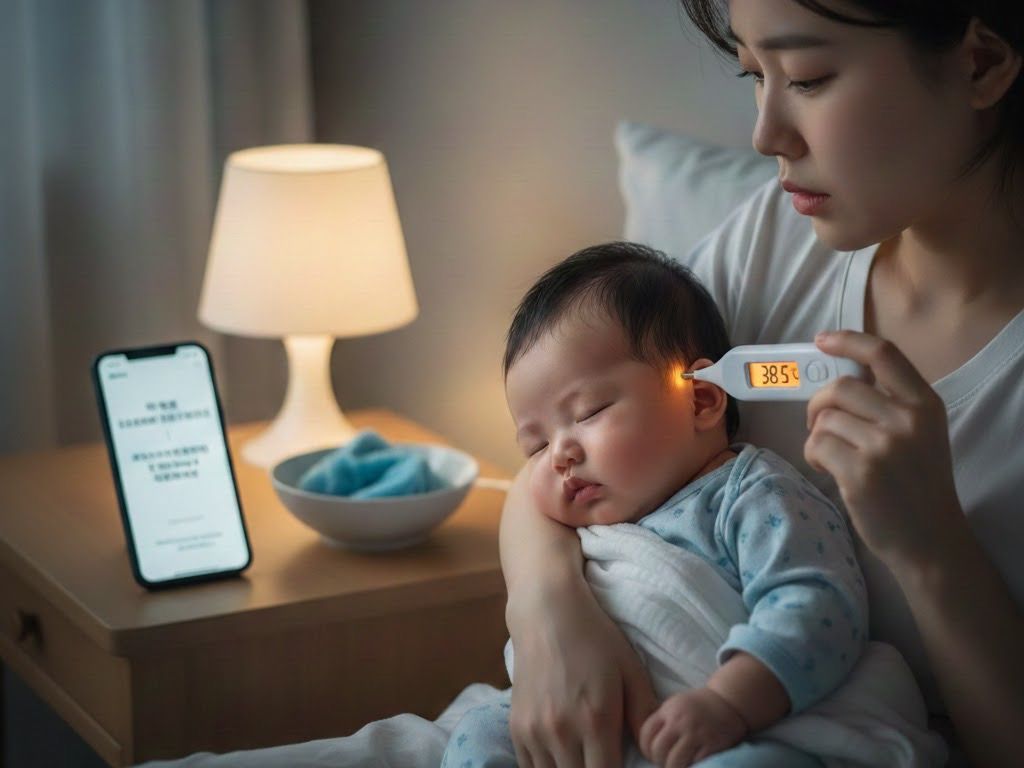
Check Your Baby's Health from One Photo
Get Started FreeWhen your baby has a fever, it's natural to feel worried. Babies have different normal temperature ranges than adults, and fever management requires special attention. This comprehensive guide covers everything from normal temperature ranges to when to seek medical care.
Normal Temperature Ranges for Babies
Normal temperature varies depending on where you measure.
| Measurement Site | Normal Range | Fever Threshold |
|---|---|---|
| Rectal | 97.9°F ~ 100.4°F (36.6°C ~ 38.0°C) | 100.4°F (38.0°C) or higher |
| Armpit (Axillary) | 96.4°F ~ 98.6°F (35.8°C ~ 37.0°C) | 99.1°F (37.3°C) or higher |
| Ear (Tympanic) | 97.5°F ~ 100.4°F (36.4°C ~ 38.0°C) | 100.4°F (38.0°C) or higher |
| Forehead (Temporal) | 96.8°F ~ 99.5°F (36.0°C ~ 37.5°C) | 100.4°F (38.0°C) or higher |
Temperature Measurement Methods
1. Rectal Temperature
- Most accurate method
- Recommended for newborns and infants
- Apply petroleum jelly to tip, insert about 1 inch
- Hold for 1 minute
2. Armpit (Axillary) Temperature
- Most convenient method
- Slightly less accurate
- Ensure armpit is dry before measuring
- Hold for 3-5 minutes
3. Ear (Tympanic) Temperature
- Quick and convenient
- Recommended after 6 months of age
- Gently pull ear back to straighten canal
- May be inaccurate with ear infections
4. Forehead (Non-contact) Temperature
- Can measure without waking baby
- May be affected by room temperature
- Good for screening
Why Babies Get Fevers
Infectious Causes
- Viral infections (cold, flu, RSV)
- Bacterial infections (UTI, ear infections)
- Roseola (6 months to 2 years)
Non-infectious Causes
- Post-vaccination reactions
- Hot environment or overdressing
- Dehydration
- Teething (mild fever only)
Fever Management by Age
Birth to 3 Months
Any fever of 100.4°F (38°C) or higher requires immediate emergency care. Fever at this age could signal serious infection.- Do not give fever reducers at home
- Dress baby lightly
- Seek immediate medical evaluation
3 to 6 Months
- 101°F (38.3°C) or higher: Contact pediatrician
- Give fever reducers only as directed by doctor
- Ensure adequate hydration
- Visit doctor if fever persists over 24 hours
6 Months and Older
- 102°F (38.9°C) or higher: Consider fever reducer
- Monitor activity level and appetite
- See doctor if fever lasts more than 3 days
- Seek care immediately if other symptoms develop
Home Fever Management
1. Maintain Comfortable Environment
- Room temperature: 68-72°F (20-22°C)
- Dress baby in light clothing
- Use thin blankets only
2. Keep Baby Hydrated
- Offer breast milk or formula frequently
- Babies over 6 months can have small amounts of water
- Watch for dehydration signs (fewer wet diapers, dry lips)
3. Lukewarm Sponge Bath
- Use lukewarm water (86-90°F / 30-32°C)
- Never use cold water or alcohol
- Stop if baby starts shivering
4. Fever Reducers
- Only use after 3 months of age
- Acetaminophen (Tylenol): From 3 months
- Ibuprofen (Advil): From 6 months
- Always dose by weight, not age
| Medication | Minimum Age | Dosing Interval |
|---|---|---|
| Acetaminophen | 3 months | Every 4-6 hours |
| Ibuprofen | 6 months | Every 6-8 hours |

When to Seek Emergency Care
Go to the emergency room immediately if:
- Fever of 100.4°F (38°C)+ in babies under 3 months
- Temperature reaches 104°F (40°C) or higher
- Febrile seizure occurs
- Fever persists more than 3 days
- Signs of dehydration (no urine for 6+ hours)
- Extreme fussiness or unusual lethargy
- Difficulty breathing
- Rash accompanies fever
- Stiff neck
Handling Febrile Seizures
Febrile seizures can occur in children 6 months to 5 years old, typically during rapid temperature rises.
What to Do During a Seizure:
- Place child safely on their side on the floor
- Do not put anything in their mouth
- Time the seizure duration
- Call emergency services if it lasts more than 5 minutes
- Go to ER after the seizure ends
Post-Vaccination Fever Care
Fever after vaccination is a normal immune response.
- Fever may occur 1-2 days after shots
- Give fever reducer if above 101.3°F (38.5°C)
- Cold compress on injection site is okay
- See doctor if fever lasts more than 48 hours
Track Temperature with BebeSnap
- Record exact temperature readings and times
- Log fever reducer doses and timing
- View fever patterns on easy-to-read graphs
- Share records easily with your doctor
👉 Get parenting advice from BebeSnap AI Chatbot
Frequently Asked Questions (FAQ)
Q: At what temperature is my baby considered to have a fever?
A: It depends on the measurement site. A fever is 100.4°F (38.0°C) or higher rectally, by ear, or on the forehead, and 99.1°F (37.3°C) or higher under the armpit. Rectal measurement is the most accurate, and for babies under 3 months, a rectal reading of 100.4°F (38°C) or higher requires immediate medical attention.
Q: When can I use fever reducers and which type?
A: Acetaminophen (Tylenol) can be used from 3 months at 4-6 hour intervals, and ibuprofen (Advil) from 6 months at 6-8 hour intervals. Always dose by weight, not age. For babies under 3 months, don't give fever reducers at home: seek medical care right away.
Q: How do I give a lukewarm sponge bath for a fever?
A: Gently wipe the body with lukewarm water at 86-90°F (30-32°C). Never use cold water or alcohol. Stop immediately if your baby starts shivering. It also helps to keep the room at 68-72°F (20-22°C) and dress your baby in light clothing.
Q: What should I do if my baby has a febrile seizure?
A: Febrile seizures can occur between 6 months and 5 years during rapid temperature rises. Place your child on their side on a safe surface and put nothing in their mouth. Time the seizure, and call emergency services if it lasts more than 5 minutes. Go to the ER once the seizure ends.
References
Check Your Baby's Health from One Photo
AI stool analysis reads color and texture, and keeps every health record in one place.
See what the app does firstMedical Disclaimer: This article is for informational purposes only and does not replace professional medical advice. If you have concerns about your baby's health, please consult a pediatrician.
You Might Also Like
Apple for Babies: Stage-by-Stage Portions and When Raw Apple Is Safe
Spinach for Babies: When to Start, Why Boiling Matters, and the One Time to Skip It
Potato for Babies: When to Start, Safe Shapes, and Why Never to Blend It
Wonder Weeks Calculator: Your Baby's 10 Mental Leaps From the Due Date
You Might Also Like
Baby Impetigo: Golden Crusts, Antibiotic Treatment, and When Nursery Is Safe Again
Golden-brown crusts spreading across your baby's skin? Impetigo is a common, highly contagious bacterial skin infection in young children. It stops being contagious 48 hours after treatment starts. Here is how to recognise it and when nursery is safe again.

Thumb-Sucking & Pacifier Weaning: When and How to Stop
Worried about thumb-sucking? Pacifier weaning is best by age 2-4. To avoid bite problems, most kids should stop before age 4.
Baby Cold Symptoms & Treatment: Complete Guide from Newborn to 12 Months
Is your baby showing cold symptoms? Learn age-specific symptoms, home care tips, and warning signs that require medical attention.