6-Month Sleep Regression: Why Your Baby Is Waking Again and How Much Sleep They Need
See Your Baby's Sleep Pattern Emerge
Get Started FreeWhen a baby who was sleeping well starts waking again around 6 months, it's natural to wonder whether a sleep regression has hit. Night waking at this age is common. The American Academy of Pediatrics (AAP) says it is normal for a 6-month-old to wake during the night and go back to sleep after a few minutes. In a Canadian study that followed 388 babies, about 4 in 10 six-month-olds did not yet sleep 6 hours straight, and whether they did had no link with later development. Here are the common reasons babies wake more often at 5 to 7 months, what helps, and how to keep sleep safe once your baby starts rolling.
💡 A 6-month-old who wakes at night and falls back asleep within a few minutes is normal. Not every baby has a sleep regression, and when one happens it usually eases within a few days or weeks. If your baby has started rolling, check the sleep space first.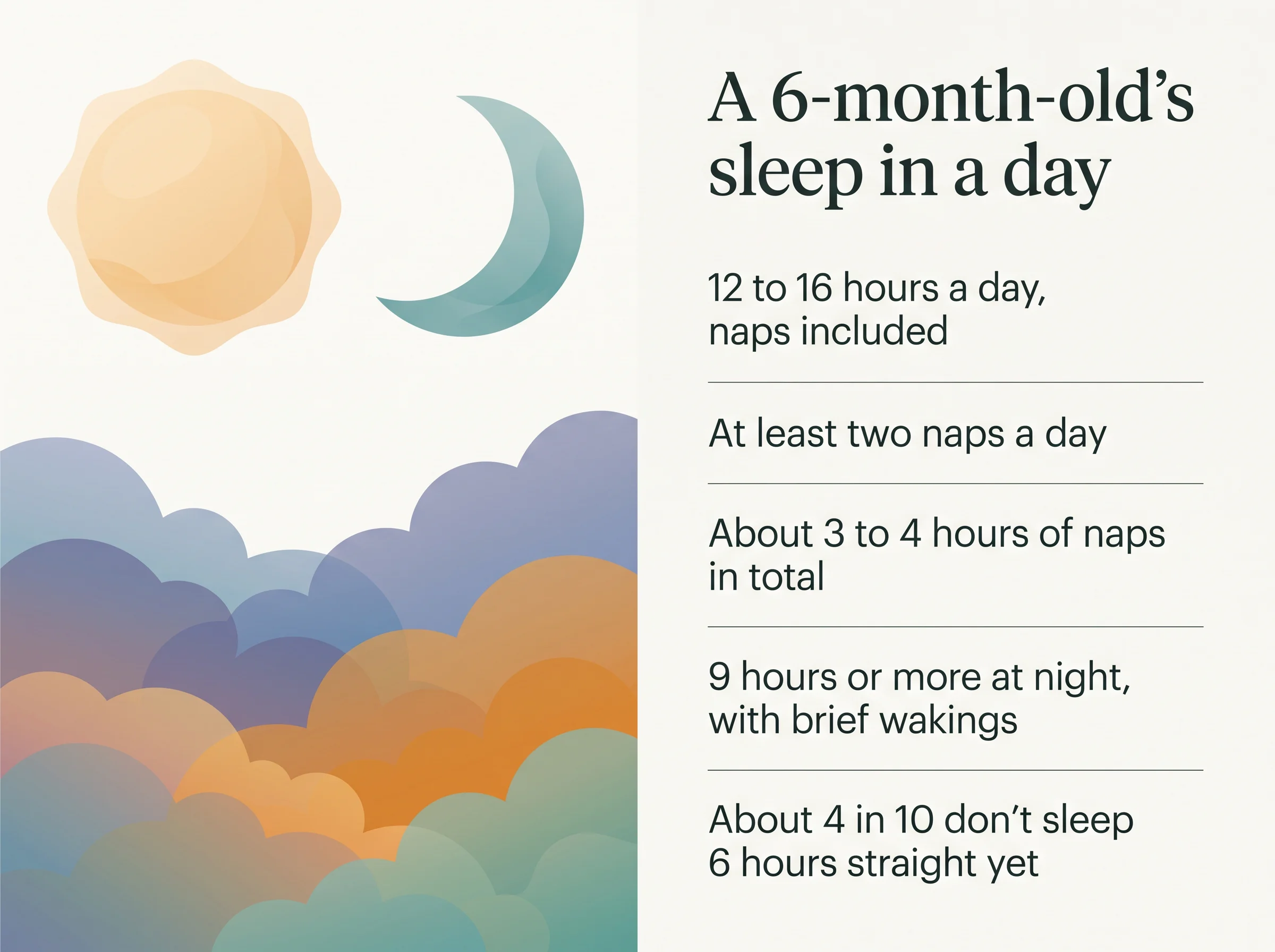
How Much Sleep Does a 6-Month-Old Need?
| What | Around 6 months |
|---|---|
| Total sleep | 12 to 16 hours a day, naps included |
| Naps | At least two a day |
| Daytime sleep | About 3 to 4 hours on average |
| Night sleep | Usually 9 hours or more, with brief wakings |
| 6 hours straight | About 6 in 10 babies; 4 in 10 not yet |

- 12 to 16 hours a day: This is what the American Academy of Sleep Medicine recommends for babies 4 to 12 months old, naps included. The AAP uses the same range.
- Naps and night sleep: Nemours, a US children's health system, says babies this age take at least two naps a day, with about 3 to 4 hours of daytime sleep on average. By 6 months, most sleep 9 hours or longer at night, with brief awakenings.
- Sleeping 6 hours straight varies: In the Canadian study above, about 6 in 10 six-month-olds slept 6 hours in a row. For more on timing, see When do babies sleep through the night?.
Why Your 6-Month-Old Is Waking Again
The Sleep Foundation says a 6-month sleep regression usually has no single cause. Your baby is growing fast, and several changes can affect sleep at once.
1. Rolling, Sitting and Other New Skills
Around 6 months, babies become more aware of sounds and their surroundings, and many learn to roll over or sit without support. The Sleep Foundation notes that these changes can affect a baby's activity during the day and sleep at night. If your baby rolls over in their sleep and wakes up crying, start with the safe sleep checklist below.
2. A Changing Nap Rhythm
As more sleep shifts to nighttime, families often adjust nap times and routines, and the Sleep Foundation says it may take a baby some time to get used to the change. Nemours expects at least two naps a day at this age. Watch for sleepy cues rather than the clock, and see our guide to baby wake windows for awake times by age.
3. Separation Anxiety
Some babies call out or cry in the middle of the night and settle as soon as a parent comes into the room. Nemours says this can be separation anxiety, a normal stage of development at this age.
4. Needing to Be Held or Fed to Fall Asleep
The AAP says babies who are held or rocked to sleep may struggle to go back to sleep when they wake at night. From 4 months, it recommends putting babies down when they are drowsy rather than already asleep. Nemours adds that cuddling, feeding or talking every time your baby wakes may prompt them to keep waking for that attention. If your baby falls asleep at the breast or bottle, see nursing to sleep.
5. Teething
First teeth usually come in between 6 and 10 months, but babies may feel teething discomfort weeks or even months earlier, possibly from 3 months. Sore gums can make a baby fussy, drool more and chew on anything (AAP).
- If your baby wakes and fusses, gently rub their gums with a clean finger or offer a chilled teething cloth. Avoid anything frozen solid, which can hurt tender gums.
- Don't use numbing gels with benzocaine or lidocaine, and don't use teething necklaces made of amber, wood, marble or silicone.
- Teething does not cause fever, diarrhea or a lot of extra crying. If you see these, call your pediatrician (AAP).
For more ways to soothe sore gums, see our teething guide.
Safe Sleep Once Your Baby Starts Rolling
When your baby starts rolling, check the sleep space first.
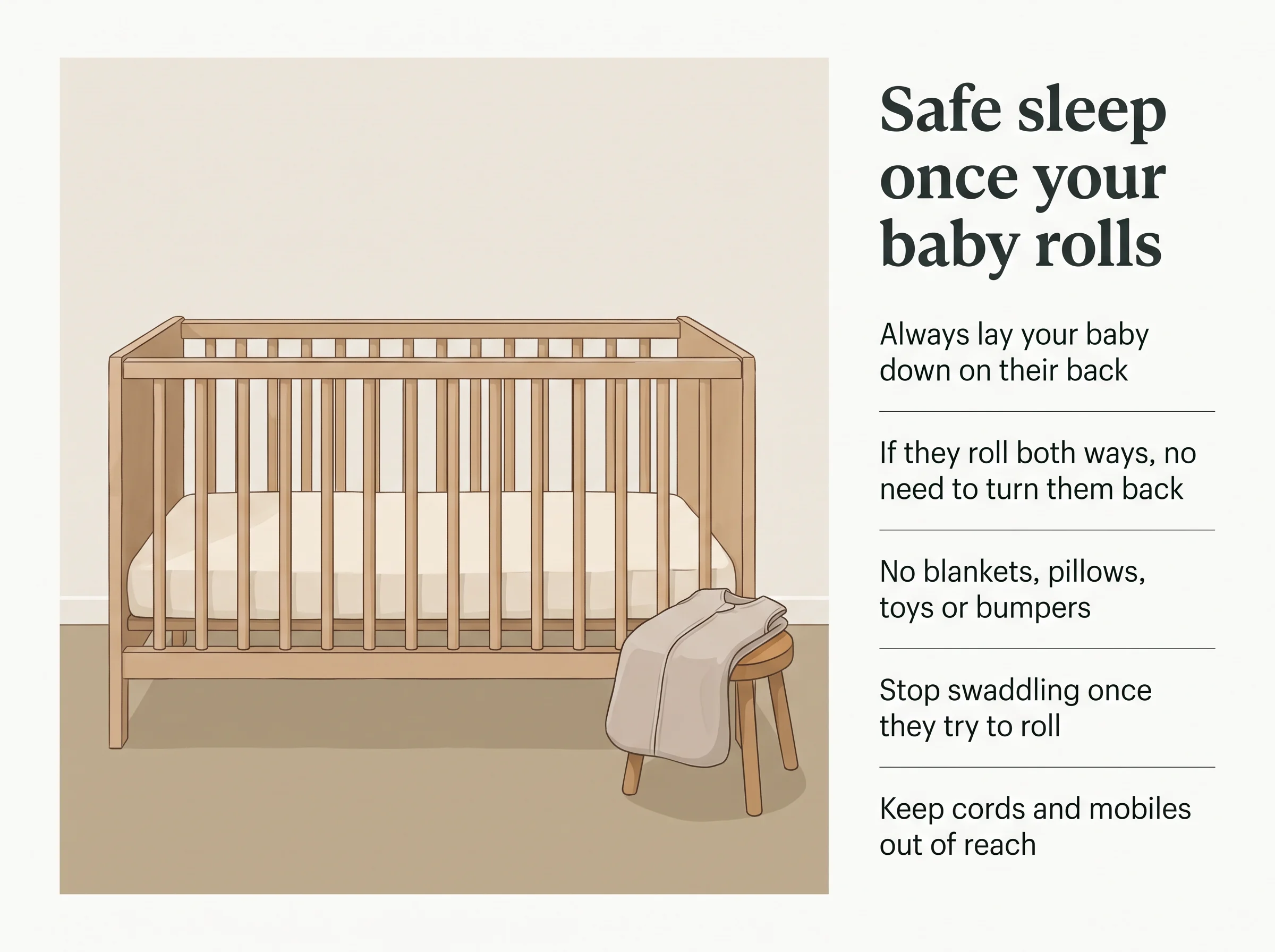
- Always on the back: The AAP says to place babies on their back for every sleep until age 1.
- Rolling both ways: If your baby is comfortable rolling from back to tummy and tummy to back, you don't need to keep turning them onto their back (AAP).
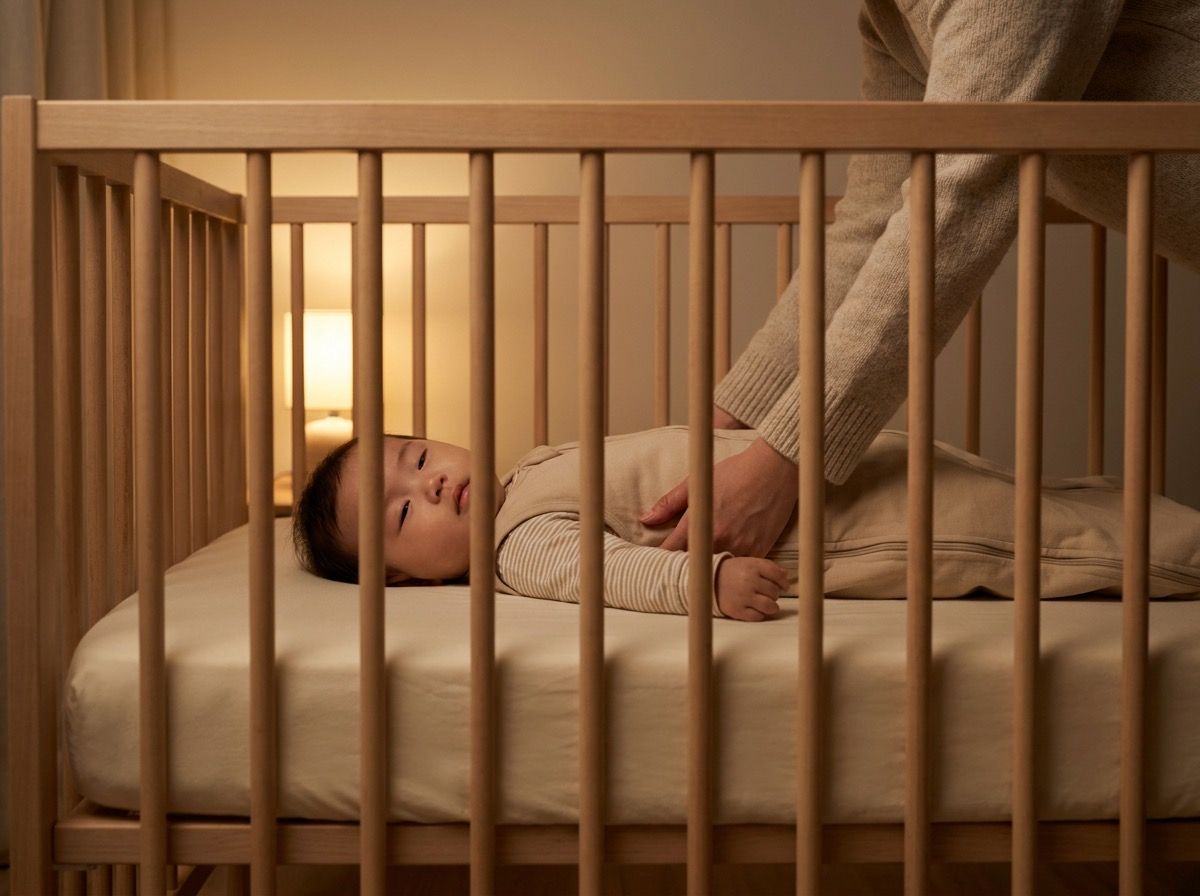
- Nothing else in the crib: Your baby could roll into blankets, pillows, stuffed toys or bumper pads and have their breathing blocked. Use a firm, flat mattress with a fitted sheet only, and if it's cold, use a wearable blanket instead of a loose one (AAP).
- Stop swaddling: Once your baby looks like they are trying to roll over, stop swaddling. The risk of suffocation is higher if a swaddled baby rolls onto their stomach. Rolling usually starts around 3 to 4 months but can happen earlier (AAP).
- Look for things within reach: Remove mobiles, window blind cords, curtains and anything with cords that your baby could reach from a sitting or standing position in the crib (Nemours).
For the full checklist, see SIDS prevention and safe sleep.
What to Do When Your Baby Wakes at Night
- Give it a few minutes: The AAP advises against rushing in to soothe a crying baby, since babies need time to learn to fall back asleep on their own.
- Keep it calm and quiet: During night feeds and diaper changes, try not to stimulate your baby, and speak softly if you speak at all (AAP). Keep light and sound to a minimum (Sleep Foundation). If the crying continues, you can reassure your baby for a moment without taking them out of the crib (Nemours).
- Meet real needs: If your baby is hungry, needs a clean diaper or seems unwell, it's fine to feed, change or comfort them (AAP).
- Down drowsy, not asleep: Put your baby to bed when they are drowsy rather than already asleep (AAP).
- Same routine every night: A calm sequence such as a warm bath followed by stories or singing signals the end of the day (Nemours).
- Play during the day: Talking, reading and playing together during the day helps babies sleep for longer stretches at night (AAP). Daytime activity with natural light helps babies learn that day is for play and night is for sleep (Sleep Foundation).
- Night feeds: If your baby is developing well, it's OK to think about phasing out night feeds from 6 months for bottle-fed babies and from 12 months for breastfed babies. If night feeds work for you, there's no hurry (Raising Children Network). See night weaning for how to cut back.
Changing how your baby falls asleep can take 3 days to 3 weeks, and there may be crying for the first few nights (Raising Children Network). For other ages, see the 4-month sleep regression and the 8-month sleep regression.
When to Call Your Pediatrician
The Sleep Foundation says sleep problems at 6 months don't usually need medical attention, but you should check with your baby's doctor if you also notice:
- Poor weight gain
- Feeding less than usual
- Fewer wet or dirty diapers
- Labored or unusual breathing
Fever, diarrhea or much more crying than usual are not signs of teething, so don't put them down to teeth. Call your pediatrician if diarrhea lasts more than a day (AAP). Call 911 right away if your baby stops breathing for more than 20 seconds or their skin turns pale, bluish or grayish (AAP). If snoring worries you, see baby snoring and sleep apnea.
Track Your Baby's Sleep with BebeSnap
When you can't tell whether it's a regression, a few days of notes on when your baby falls asleep, wakes and naps will show the pattern. Log sleep and wake times in the BebeSnap app to see the day's sleep at a glance, and show the log to your pediatrician if they ask for a sleep diary.
- Today's total sleep: naps and night sleep added together
- Nap count: how many naps your baby took today
- Average bedtime: when your baby usually falls asleep
- Family sharing: everyone who cares for your baby sees the same log
👉 See how BebeSnap sleep tracking works
Frequently Asked Questions (FAQ)
Q: How long does the 6-month sleep regression last?
A: It varies, but the Sleep Foundation says sleep problems at this age often resolve within a few days or weeks, and many babies never have a regression at all. If things aren't improving after a few weeks, or your baby is feeding poorly or not gaining weight, talk to your pediatrician.
Q: How much sleep does a 6-month-old need?
A: Babies 4 to 12 months old need 12 to 16 hours of sleep a day, naps included (American Academy of Sleep Medicine). At this age most take at least two naps, with about 3 to 4 hours of daytime sleep (Nemours). Waking at night and falling back asleep within a few minutes is normal (AAP).
Q: My baby rolls onto their tummy in their sleep. Should I turn them back?
A: Always lay your baby down on their back. If your baby can roll comfortably from back to tummy and tummy to back, the AAP says you don't need to keep turning them over. The crib should be firm and flat with no blankets, pillows, toys or bumpers, and swaddling should stop once your baby tries to roll.
Q: Is it OK to keep feeding my 6-month-old at night?
A: Yes. The AAP says it's fine to feed, change or comfort a baby who wakes at night if needed. If your baby is developing well, you can think about phasing out night feeds from 6 months for bottle-fed babies and from 12 months for breastfed babies, but there's no hurry if night feeds work for your family (Raising Children Network).
References
- AAP HealthyChildren - Getting Your Baby to Sleep
- AAP HealthyChildren - A Parent's Guide to Safe Sleep
- AAP HealthyChildren - Teething
- AAP HealthyChildren - Healthy Sleep Habits: How Many Hours Does Your Child Need?
- AAP HealthyChildren - Sleep Apnea in Children
- American Academy of Sleep Medicine - Recommended Amount of Sleep for Pediatric Populations (2016)
- Nemours KidsHealth - Sleep and Your 4- to 7-Month-Old
- Sleep Foundation - 6-Month Sleep Regression
- Pennestri et al., Pediatrics (2018) - Uninterrupted Infant Sleep, Development, and Maternal Mood
- Raising Children Network - How to Phase Out Baby Sleep Habits
See Your Baby's Sleep Pattern Emerge
Track sleep and watch wake windows and night stretches appear as clear graphs.
See what the app does firstMedical Disclaimer: This article is for informational purposes only and does not replace professional medical advice. If you have concerns about your baby's health, please consult a pediatrician.
You Might Also Like
Kaup Index (Baby BMI): How to Calculate It and What's Normal by Age
Wonder Weeks Calculator: Your Baby's 10 Mental Leaps From the Due Date
Baby Weight Gain Calculator: Grams Per Day From Two Weigh-Ins
Baby Impetigo: Golden Crusts, Antibiotic Treatment, and When Nursery Is Safe Again
You Might Also Like
When Do Kids Stop Napping? Signs Your Toddler Is Ready to Drop the Nap
Most children stop napping between ages 3 and 5. Fewer than 2.5% stop before age 2, 33% have stopped by around age 3, and 94% after age 5 (2020 meta-analysis). Here's how to tell whether your child still needs a nap, and what to do instead.

8-Month-Old Daily Schedule: 2 Naps, 3 Solid Meals & a Sample Timetable
Wondering what an 8-month-old's day looks like? Here's a sample daily timetable built on 2 naps, 2.5-3.5 hour wake windows, 11-12 hours of night sleep, and 3 solid meals.
Nursing to Sleep: Is It OK? Safe Lying-Down Feeds and How to Gently Stop
Nursing to sleep is common and not a bad habit. If you doze off feeding in bed, move your baby back to their own sleep space as soon as you wake, and once teeth arrive, brush after the last feed. To change it, feed first in the routine and put your baby down drowsy; it can take 3 days to 3 weeks.