How to Get Baby to Sleep Through the Night: Night Weaning & Tips

See Your Baby's Sleep Pattern Emerge
Get Started Free"When will my baby sleep through the night?" Every parent has wondered this at some point. For exhausted parents dealing with night feedings and frequent wakings, this guide explains when babies start sleeping through the night and how to help them get there.
What Does "Sleeping Through the Night" Mean?
For babies, "sleeping through the night" doesn't mean 8-10 hours like adults. It means 6-8 hours of continuous sleep. Even this much can dramatically improve parents' quality of life!
💡 Baby's "sleeping through the night" = 6-8 hours of continuous sleep. Remember this is different from an adult's 8-10 hours!When Do Babies Sleep Through the Night by Age
| Age | Continuous Sleep | Characteristics |
|---|---|---|
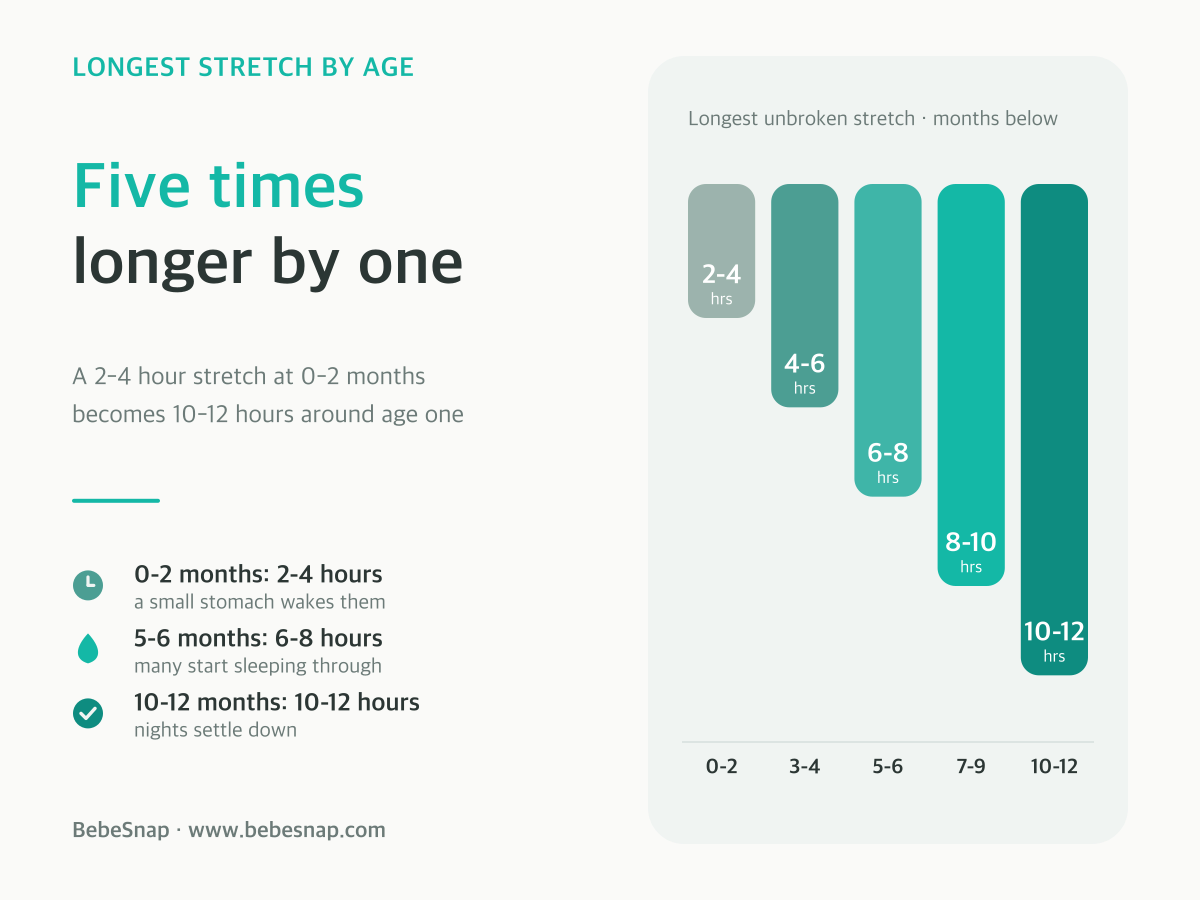
| 0-2 months | 2-4 hours | Small stomach, wakes often; no day/night distinction |
| 3-4 months | 4-6 hours | Longer night sleep becomes possible |
| 5-6 months | 6-8 hours | Many babies start sleeping through |
| 7-9 months | 8-10 hours | Most can sleep through the night |
| 10-12 months | 10-12 hours | Stable nighttime sleep |
Important: Every baby is different. Some sleep through at 3 months, others still wake at 12 months. Both are normal.
Why Newborns Wake Frequently
There are physiological reasons why newborns can't sleep through:
1. Small Stomach Capacity
- Newborn stomach size: cherry to egg-sized
- Can only hold small amounts, gets hungry often
2. Short Sleep Cycles
- Newborn sleep cycle: ~50 minutes (adults: 90 minutes)
- Easily wakes between cycles
3. Undeveloped Circadian Rhythm
- Body clock develops around 3-4 months
- Before that, they don't know night is for sleeping
Basic Principles for Sleeping Through
1. Put Down Drowsy But Awake
Key: Put baby down when drowsy, not fully asleep.
- When eyes start closing
- When movements slow down
- When yawning
This teaches baby to "fall asleep in bed." They can then self-soothe when waking at night.
2. Consistent Bedtime Routine
A consistent routine signals to baby's brain that it's "time to sleep."
Recommended Bedtime Routine (20-30 minutes):
- Bath (warm water for relaxation)
- Lotion/massage
- Change into pajamas
- Feeding (outside the bed)
- Reading/lullaby
- Lay in bed
3. Appropriate Bedtime
Timing bedtime with baby's natural rhythm is crucial.
| Age | Recommended Bedtime |
|---|---|
| 3-6 months | 7:00-8:00 PM |
| 6-12 months | 6:30-7:30 PM |
| 12+ months | 7:00-8:00 PM |

4. Differentiate Day and Night
During the day:
- Bright lights, normal household noise
- Active play and interaction
- Naps in lit areas
At night:
- Dim lights (even for feeding/diaper changes)
- Quiet, calm interactions
- Minimal stimulation
Age-Specific Strategies
0-3 Months: Building Foundation
Don't expect sleeping through at this stage. Focus on foundations:
- Establish eat-play-sleep pattern
- Start day/night differentiation
- Use white noise
- Create safe sleep environment
4-6 Months: Preparing for Sleeping Through
Many babies start sleeping through at this stage:
- Gradually reduce night feeds (consult doctor)
- Establish bedtime routine
- Organize nap schedule
- Consider sleep training if needed
7-12 Months: Stabilizing Sleep
Most babies can sleep through:
- Wean night feeds completely (if needed)
- Handle separation anxiety
- Overcome sleep regressions
- Consistency is key
How Long Should Night Feeding Continue?
| Age | Night Feeds | Notes |
|---|---|---|
| 0-3 months | 2-3 times | Essential, feed on demand |
| 4-6 months | 1-2 times | Gradually reducing |
| 6-9 months | 0-1 time | Decreases after starting solids |
| 9+ months | 0 possible | Nutritionally unnecessary |
Note: This varies based on growth, weight, and health. Always consult your pediatrician.
What Prevents Sleeping Through
Sleep Associations
Things baby needs to fall asleep:
- Feeding to sleep
- Rocking to sleep
- Falling asleep with pacifier
These habits mean baby needs parents to fall back asleep when waking at night.
Overtiredness
Paradoxically, overtired babies sleep worse:
- Increased cortisol (stress hormone)
- Difficulty falling asleep
- Frequent waking
Solution: Adequate naps and early bedtime
Hunger or Discomfort
Check basic needs:
- Was the last feeding enough?
- Is the diaper dry?
- Is temperature appropriate? (68-72°F / 20-22°C)
- Any signs of illness?
When Baby Wakes at Night
Wait and see (1-2 minutes)
- Check if baby can self-soothe
- Not every movement means "awake"
Minimal intervention
- Don't turn on lights
- Don't talk
- Only address needs (feeding, diaper)
Stay consistent
- Respond the same way each time
- Make it predictable for baby
When to Seek Professional Help
Consult your pediatrician if:
- Waking 3+ times every night after 6 months
- Snoring or sleep apnea symptoms
- Excessive daytime lethargy
- Slow weight gain
- Serious impact on parents' health
Track Sleep with BebeSnap
Recording your baby's sleep patterns reveals the path to sleeping through. Manage with BebeSnap:
- Sleep logging: Track sleep time, wake time, night wakings
- Pattern analysis: See if you're getting closer to sleeping through
- Night feed tracking: Record frequency and timing
- AI consultation: 24/7 sleep support
👉 Learn more about BebeSnap Sleep Records
Frequently Asked Questions (FAQ)
Q: At what age do babies typically start sleeping through the night?
A: Many babies start getting 6-8 hours of continuous sleep at 5-6 months, and most can sleep through the night by 7-9 months. That said, every baby is different; some sleep through at 3 months and others still wake at 12 months, and both are perfectly normal.
Q: Does "sleeping through the night" mean 8-10 hours like an adult?
A: No. For a baby, sleeping through the night means 6-8 hours of continuous sleep, which is different from an adult's 8-10 hours. Even this much can dramatically improve a parent's quality of life, so don't expect a much longer stretch.
Q: How long should night feedings continue?
A: Newborns 0-3 months need 2-3 feeds on demand, dropping to 1-2 at 4-6 months. From 6-9 months, as solids begin, it falls to 0-1, and after 9 months night feeds are often nutritionally unnecessary. This varies with your baby's growth and weight, so always consult your pediatrician.
Q: What should I do when my baby wakes at night?
A: First wait 1-2 minutes to see if your baby can self-soothe, since not every movement means they're awake. If you need to intervene, keep lights off, don't talk, and address only essentials like feeding or a diaper change: responding the same way each time for consistency.
References:
See Your Baby's Sleep Pattern Emerge
Track sleep and watch wake windows and night stretches appear as clear graphs.
See what the app does firstMedical Disclaimer: This article is for informational purposes only and does not replace professional medical advice. If you have concerns about your baby's health, please consult a pediatrician.
You Might Also Like
Wonder Weeks Calculator: Your Baby's 10 Mental Leaps From the Due Date
Baby Weight Gain Calculator: Grams Per Day From Two Weigh-Ins
Baby Impetigo: Golden Crusts, Antibiotic Treatment, and When Nursery Is Safe Again
Baby Mouth Sores (Stomatitis): Causes, How to Tell Them Apart, and Dehydration Signs
You Might Also Like
Baby Sleep While Traveling: Settling Them in a New Place and Resetting After
Worried a trip will wreck your baby's sleep? The first night is the hardest, and most babies reset within 3-7 days at home. What to pack, naps on the move, and safe sleep away.

Fixing Newborn Day-Night Confusion: Reset Circadian Rhythm in 2 Weeks
Sleeping all day, awake all night! Newborn day-night confusion naturally improves by 6-8 weeks. Learn how to speed up the process.

Creating a Baby Bedtime Routine: Help Baby Fall Asleep Independently
Bedtime battles every night? Try the AAP-recommended 'Brush, Book, Bed' routine to help your baby fall asleep independently.