Baby Wake Windows by Age: Complete Guide to Optimal Awake Time
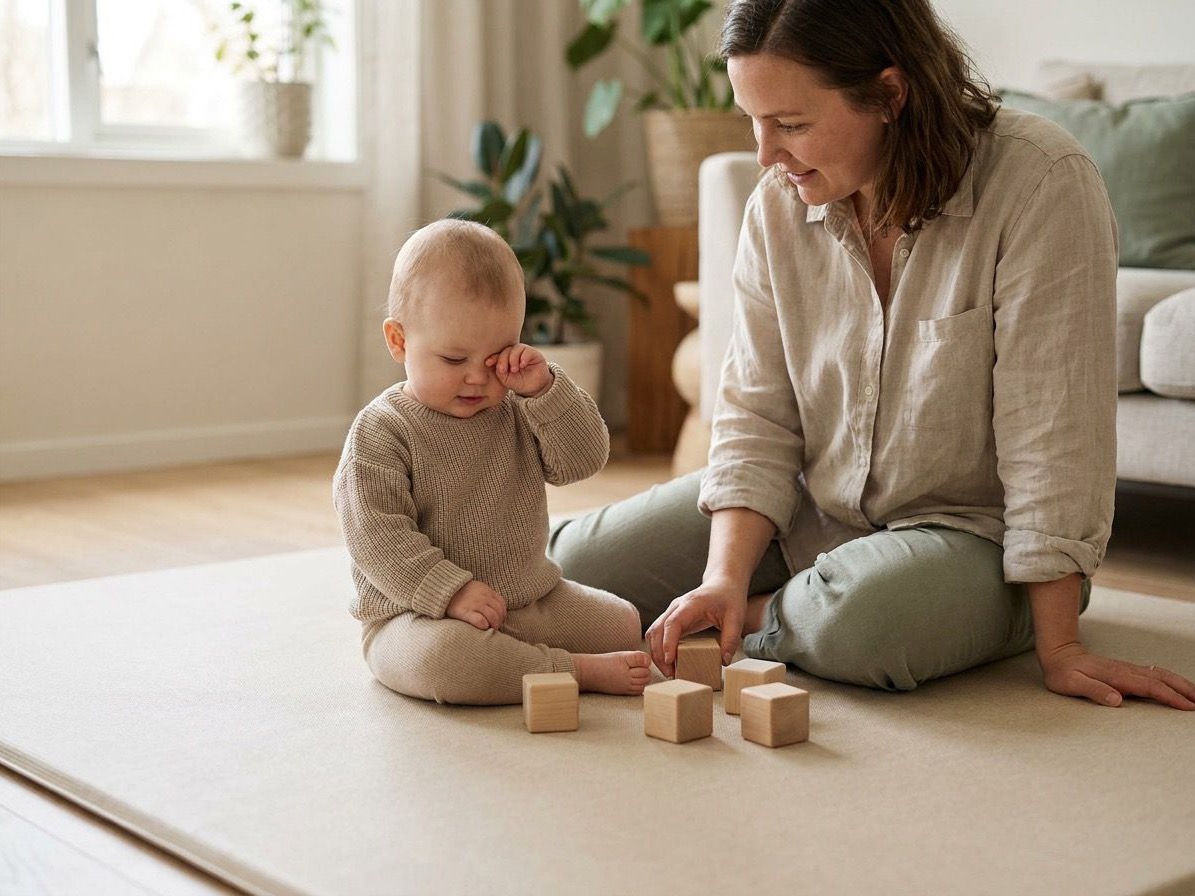
See Your Baby's Sleep Pattern Emerge
Get Started FreeEver spent an hour fighting to get your baby down for a nap when they clearly seemed tired? Here's a secret: the problem might be that they were awake too long. Babies can only handle being awake for a surprisingly short stretch (often called a wake window) before they need to sleep again. We're talking just 40 to 60 minutes for newborns, and even a 6-month-old is ready again after about 2 to 2.5 hours.
Push past that window, and your baby actually has a harder time falling asleep, not an easier one. It feels backwards; we assume an exhausted baby will just conk out: but babies work the opposite way. In this guide, I'll walk you through how long your baby can stay awake at their age, how to spot the sleepy signs, and how to time naps so they go down without the battle.
What Is a Wake Window, Exactly?
The name sounds technical, but the idea is simple. A wake window is just how long your baby is awake between sleeps, from the moment their eyes open until they drift off again.
Here's an example. Say your 5-month-old wakes at 7:00 AM. Their wake window at this age is around 2 hours, so they'll be ready to sleep again around 9:00 AM, and that's the sweet spot for the first nap. Once you know the window, you can glance at the clock and roughly predict the next nap, which makes the whole day feel less guessy.
💡 Wake Window = the time from when your baby wakes up until they fall asleep againWhy Does This Matter So Much?
You might think, "Won't they just sleep deeper if they play a little longer?" But a baby's body doesn't work like an adult's.
When a baby stays awake too long, their body releases stress hormones like cortisol and adrenaline. Instead of winding your baby down, these hormones rev them up into a kind of wired, overstimulated state. That's why an overtired baby tends to:
- Get extra fussy and cry more
- Take ages to fall asleep
- Wake frequently even after going down
- Take tiny naps under 30 minutes
- Wake more often during the night
The flip side is a problem too. Try to put a baby down before they're actually tired, and they'll play in the crib instead of sleeping, fight the nap, take more than 30 minutes to drift off, or wake up too early.
💡 Hit the right wake window, and your baby gets naturally drowsy and goes down with barely any fuss!How Long Can Your Baby Stay Awake?
The chart below shows typical wake windows by age. Every baby is a little different, so treat these as a "this is probably about right for us" starting point rather than a strict rule.
| Age | Wake Window | Number of Naps | Total Sleep |
|---|---|---|---|
| 0-1 month | 40-60 minutes | Varies (4-6+) | 14-17 hours (varies) |
| 1-2 months | 45 min - 1 hr 15 min | 4-5 | 15-17 hours |
| 3-4 months | 1 hr 15 min - 2 hrs | 3-4 | 14-16 hours |
| 5-6 months | 2 - 2.5 hours | 2-3 | 13-15 hours |
| 7-8 months | 2.5 - 3.5 hours | 2 | 12-15 hours |
| 9-12 months | 3 - 4 hours | 2 | 12-14 hours |
| 12-18 months | 3.5 - 5 hours | 1-2 | 12-14 hours |

One thing worth knowing when you read the chart: the window isn't the same all day long. The first wake window of the morning is the shortest, and they get longer toward bedtime. A 7-month-old, for instance, might do well with 2.5 hours in the morning but 3.5 hours before bed. It makes sense when you think about it: in the morning they're freshly rested and not tired yet, while by the end of the day they've built up plenty of tiredness.
Watch Your Baby, Not Just the Clock
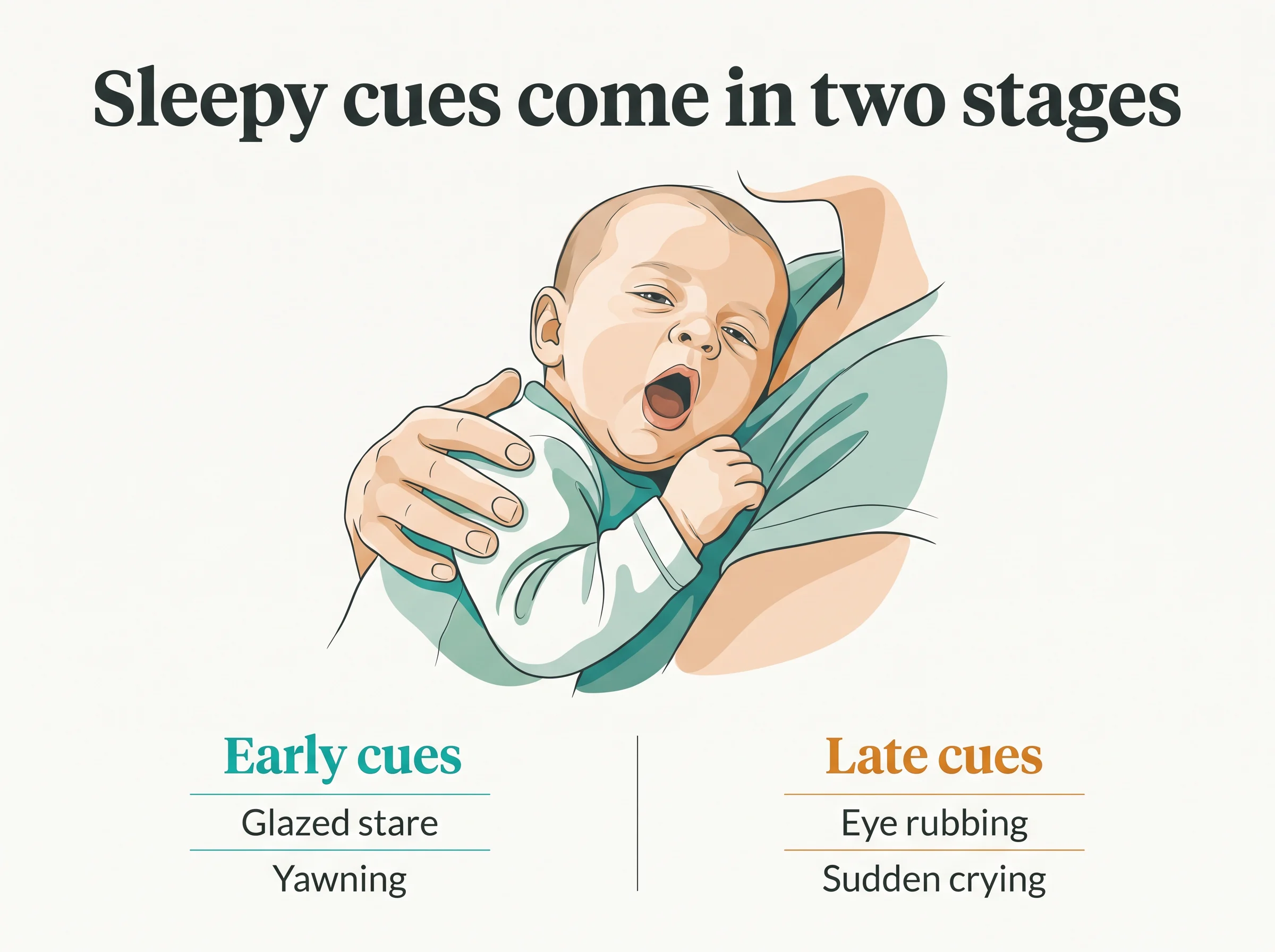
The chart helps, but your baby's sleepy cues matter even more. The numbers are an average; the real answer is written all over your little one's face. It helps to split the cues into two stages.
When you spot the early cues, start getting ready for the nap right away. These are things like a glazed, faraway stare, suddenly going quiet, blinking more, yawning, losing interest in toys, or burying their face into your chest. This is your golden window.
The late cues mean you've already missed it. Eye rubbing, ear pulling, fussing, arching the back, clenched fists, or a sudden burst of crying. Once you're here, your baby is already overtired and much harder to settle.
So How Do You Time the Naps?
The theory makes sense, but putting it into practice can feel fuzzy. It's not hard, I promise.
First, note when your baby wakes: in the morning and after every nap. Then add the wake window to figure out the next nap. A 6-month-old who wakes at 7:00 AM with a 2-hour window naps at 9:00 AM; if they wake from that nap at 10:30 AM with a 2 hour 15 minute window, the next nap lands around 12:45 PM. That's the whole math.
Of course, don't go by the clock alone. Start watching for sleepy cues about 10 to 15 minutes before the window closes. If your baby shows them early, follow the cues over the clock. Naps need the same safe sleep setup as nighttime: until the first birthday, lay your baby on their back on a firm, flat crib mattress with only a fitted sheet, and no blankets, pillows or toys.
One more thing: your wind-down routine (bath, massage, a story) should fit inside the wake window, not after it. If the window is 3 hours and your routine takes 20 minutes, start it around the 2 hour 40 minute mark.
💡 Ever heard of the 2-3-4 schedule? It's a favorite for babies on two naps: 2 hours awake before the first nap, 3 hours before the second, and 4 hours before bed: gradually stretching the awake time across the day.Mistakes Almost Every Parent Makes
Here are a few slip-ups parents commonly make. We all do them, so go easy on yourself.
The first is following the chart and nothing else. The chart is just a guide (babies the same age can differ by 30 minutes or more) so always read your baby's cues alongside it.
Another common one is brushing off the overtired signals. If you see eye rubbing, ear pulling, or intense fussiness, your baby is already too tired. Next time, try starting the routine 15 to 20 minutes earlier.
Then there's using the usual wake window after a short nap. If your baby slept less than 30 minutes, trim the next window by about 30 minutes; they didn't get enough rest, so they'll tire faster.
Sticking rigidly to the chart during a sleep regression trips people up too. At 4 months or 8 months, wake windows can temporarily shorten. Stay flexible for a week or two until it passes.
And last, forgetting that car naps count. Even a quick doze in the car seat or stroller is real sleep. Short as it is, factor it into your wake window math. If they stay asleep, though, move them to a firm, flat sleep surface on their back as soon as you can.
For more on nap transitions and schedules, have a look at our Nap Schedule by Age Guide.
Find Your Baby's Own Rhythm with BebeSnap
In the end, every baby's wake window is a little different. To find the timing that fits your baby, sleep tracking really helps: but jotting it all down on paper gets old fast. The BebeSnap app makes it much easier.
- Sleep tracking: Log sleep and wake times with one tap, and wake windows calculate automatically
- Pattern analysis: After just a few days, your baby's personal wake-window pattern becomes clear at a glance
- Nap reminders: Based on the patterns it gathers, it predicts when the next nap is coming
- AI sleep chat: Got a sleep question? Ask the AI chatbot anytime
Want to learn more about sleep tracking? Check out our Sleep Record Guide.
Frequently Asked Questions (FAQ)
Q: What exactly is a wake window?
A: A wake window is the total amount of time your baby is awake between one sleep period and the next, from the moment their eyes open until they fall asleep again. For example, if your 5-month-old wakes at 7:00 AM and their wake window is about 2 hours, they should fall asleep for their first nap around 9:00 AM.
Q: What are the recommended wake windows by age?
A: Wake windows are 40-60 minutes at 0-1 month, 1 hr 15 min to 2 hours at 3-4 months, 2 to 2.5 hours at 5-6 months, and 3 to 4 hours at 9-12 months. Within the same age, the first wake window of the day is shortest and the last before bed is longest. Babies can differ by 30 minutes or more, so use these as guidelines.
Q: What happens if my baby stays awake too long?
A: When a baby stays awake too long, their body may release the stress hormones cortisol and adrenaline, creating a state of hyperarousal instead of calm. The result is more fussiness, a longer time to fall asleep, naps shorter than 30 minutes, and increased night wakings: which is why respecting the right wake window matters.
Q: How do I adjust the wake window after a short nap?
A: After a nap shorter than 30 minutes, reduce the next wake window by about 30 minutes, since the sleep pressure wasn't fully released and your baby will tire more quickly. Also watch for sleepy cues like yawning or eye rubbing: if your baby shows them earlier than the clock suggests, trust the cues.
References
See Your Baby's Sleep Pattern Emerge
Track sleep and watch wake windows and night stretches appear as clear graphs.
See what the app does firstMedical Disclaimer: This article is for informational purposes only and does not replace professional medical advice. If you have concerns about your baby's health, please consult a pediatrician.
You Might Also Like
Wonder Weeks Calculator: Your Baby's 10 Mental Leaps From the Due Date
Baby Weight Gain Calculator: Grams Per Day From Two Weigh-Ins
Baby Impetigo: Golden Crusts, Antibiotic Treatment, and When Nursery Is Safe Again
Baby Mouth Sores (Stomatitis): Causes, How to Tell Them Apart, and Dehydration Signs
You Might Also Like
Baby Sleep While Traveling: Settling Them in a New Place and Resetting After
Worried a trip will wreck your baby's sleep? The first night is the hardest, and most babies reset within 3-7 days at home. What to pack, naps on the move, and safe sleep away.

Baby Walking Development: From First Steps to Walking Practice
Babies typically take their first steps between 9-15 months. Learn about walking development stages from pulling up to independent walking, plus safe practice tips.

Baby Sleep Behaviors: Snoring, Sleep Talking & Night Terrors - When to Worry
Is your baby snoring, sleep talking, or screaming at night? Unusual sleep behaviors are common. Learn normal vs. concerning signs, with advice from the AAP.