When Can Babies Drink Water? Safe Hydration Guide by Age
Stop Trying to Remember Feed Times
Get Started FreeWatching your baby sweat on a hot summer day, you might think, "Should I give them some water?" And when solids are on the horizon, "Is it time for water now?" crosses every parent's mind. Here's the short answer: babies are ready for water at 6 months, and the AAP suggests about 4-8 oz (120-240 ml) a day until their first birthday. Before that, water can actually be dangerous: surprising, right? Let's walk through which water is safest (boiled, bottled, or otherwise), how much to offer at each age, and how to teach cup drinking.
Why Water Before 6 Months Can Be Risky
"They must be thirsty, surely one little sip is fine?" It's a natural thought, but for a young baby, water is riskier than it seems. There are solid reasons.
The biggest is the risk of water intoxication. A baby's kidneys are still immature and can't flush out extra water the way an adult's can. Drinking too much water dilutes the sodium in their blood (a condition called hyponatremia), and in severe cases that can lead to seizures, brain swelling, coma, and even death. For a small baby, even a moderate amount in a short time can be dangerous.
The other reason is that water gets in the way of nutrition. A baby's stomach is tiny, about 5-7 mL right after birth, and still only 80-150 mL by one month. Fill that little tummy with water and there's no room left for the breast milk or formula they really need, which can lead to poor nutrition. That's why both the American Academy of Pediatrics (AAP) and the World Health Organization (WHO) say no extra water is needed before 6 months.
💡 Breast milk is about 88% water. So an exclusively breastfed baby doesn't need extra water, even in the heat of summer. Formula is mixed with water too, so it contains plenty of fluid as well.So When Does Water Start? Right Around Solids
Both the WHO and the AAP recommend starting small amounts of water at 6 months, timed with the start of solid foods.
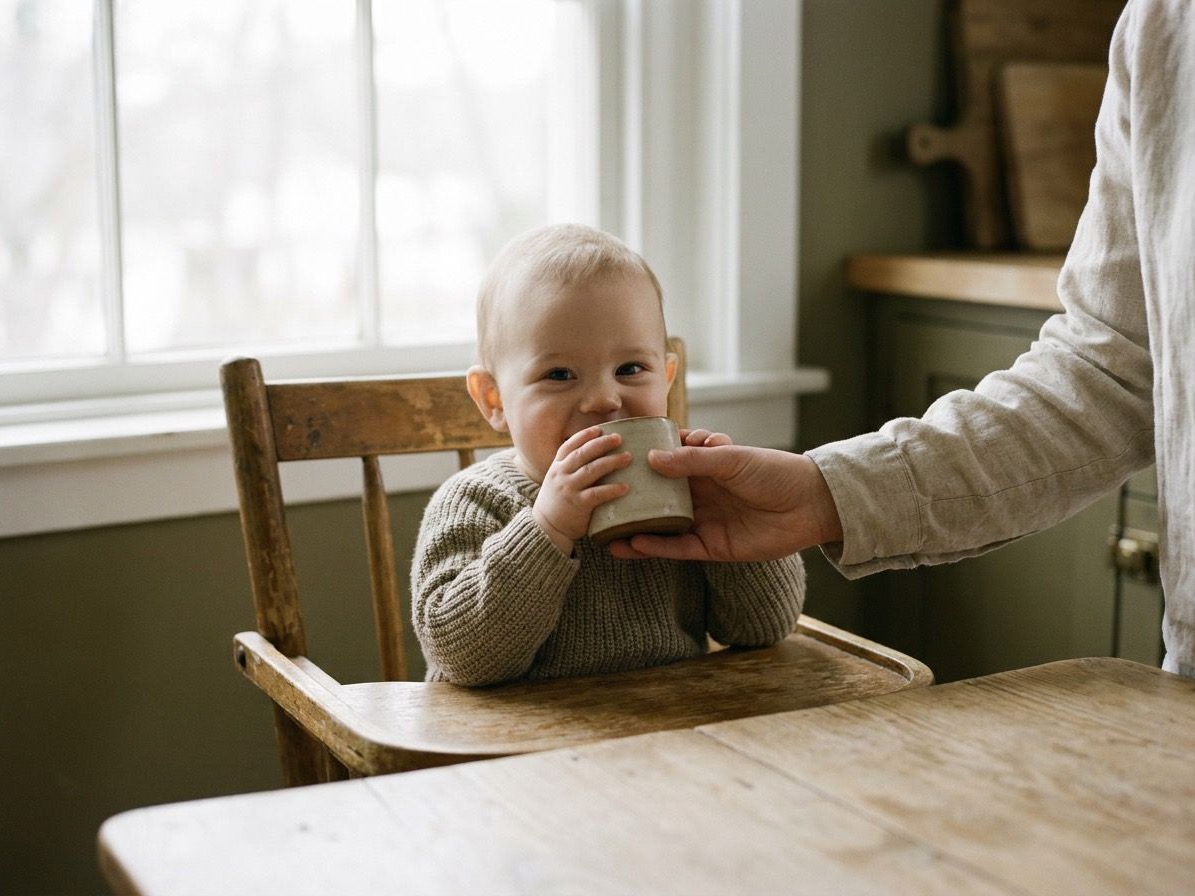
But here's the thing, at this stage, offering water isn't really about quenching thirst. The real point is getting your baby used to the taste of water and to drinking from a cup. It also helps a little with digestion, since starting solids can firm up their stools. Just remember that breast milk or formula is still their main source of fluids at this age.
Starting is simple. Offer 1-2 sips (about 10-20 ml) during or after a meal. Keep the daily total to about 4-8 oz (120-240 ml), the AAP's guide for 6-12 months, and above all, never cut back on breast milk or formula to make room for water.
How Much to Offer by Age
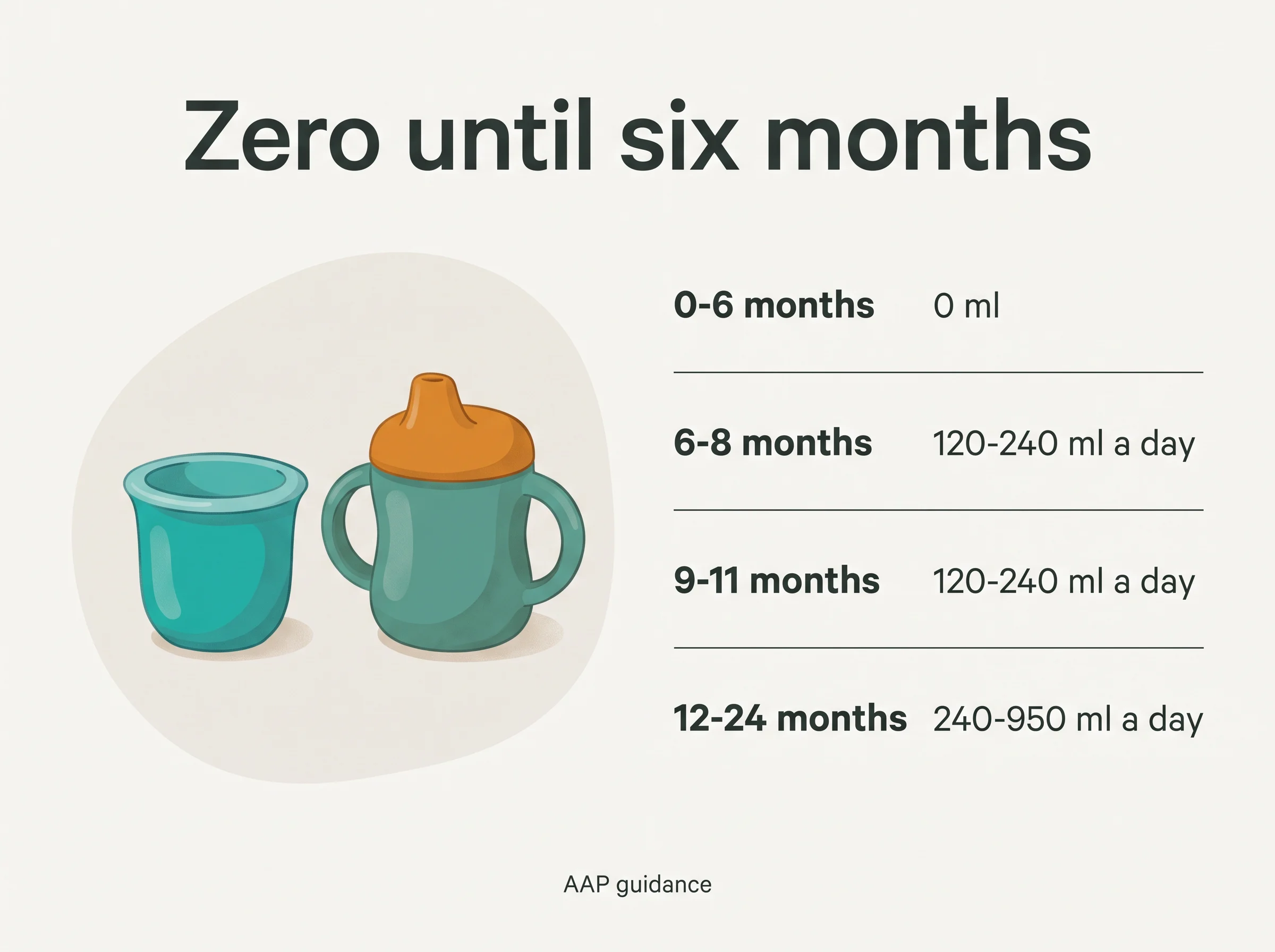
| Age | Primary Fluid Source | Water per Day (AAP) | Notes |
|---|---|---|---|
| 0-6 months | Breast milk or formula | Not needed (0 ml) | Breast milk/formula provides full hydration |
| 6-8 months | Breast milk/formula + solids | 4-8 oz (120-240 ml)/day | Small sips during and after meals |
| 9-11 months | Breast milk/formula + solids | 4-8 oz (120-240 ml)/day | Increase as meal frequency grows |
| 12-24 months | Regular meals + whole milk | 8-32 oz (240-950 ml)/day | Free access to water throughout the day |

Boiled, Bottled, Filtered… Which Water Is Safe?
"What kind of water should I even give my baby?" If you've stood in the water aisle puzzling over this, you're not alone. Here's a rundown of the common options.
The safest choice is boiled and cooled water. Bring tap or bottled water to a full rolling boil for at least a minute, then let it cool; this kills off bacteria, viruses, and other pathogens. Let it come down to body temperature (36-40°C / 97-104°F) before serving, since too hot obviously won't do. For babies under 12 months, this is the safest bet.
If you use bottled (mineral) water, pick one with low mineral content, soft water is best. Water that's too mineral-heavy (hard water) can tax a baby's still-developing kidneys. Skip anything sparkling or carbonated, use it within 24 hours of opening, and for babies under 12 months, boiling it first adds peace of mind.
Tap water is generally fine for babies over 6 months in the U.S. and many other countries. One thing to know: fluoridated tap water used to mix powdered formula may slightly raise the chance of mild dental fluorosis (faint white streaks on the teeth). If that worries you, use low-fluoride or purified water for formula. And if you're on well water, have it tested for contaminants regularly.
Filtered water from a well-maintained pitcher or faucet filter works too, just keep up with filter changes so bacteria don't build up. Under 12 months, boiling it adds an extra layer of safety.
💡 Formula is different, handle the water its own way. Boil the water and cool it only to 70°C (158°F), don't let it drop below 70°C, then dissolve the formula and cool it to body temperature before feeding. See our formula preparation guide for the full steps.Building Up Water Through the Solids Stages
As solids progress, the amount of water grows naturally right along with them. Here's how it tends to go by stage.
In early solids (6 months), a sip or two after a meal (just to rinse the mouth) is plenty. Offer it after the milk feed, not before, and start with very small amounts. By mid solids (7-8 months), meals increase to twice a day and water rises with them: small amounts during and between meals, around 120-150 ml a day.
In late solids (9-11 months), with three meals established, offer water at each meal and with snacks, totaling about 120-200 ml a day. Once you reach the complete transition (12 months and beyond), your baby can drink freely at meals, between meals, and on outings (the AAP's guide for ages 1-2 is 8-32 oz, or 240-950 ml, a day).
Which Cup Should You Use?
When you start water at 6 months, the cup you use actually matters quite a bit.
The one I'd recommend most is the open cup (a regular little cup). You can start at 6 months, pour in a tiny amount, hold it to their lips, and gently tip. Spilling everything at first is completely normal, so relax; spilling is how they learn. Pediatric dentists love it because it's best for oral-motor development.
A straw cup can come in around 6-9 months. Learning to suck through a straw helps build the mouth muscles. To teach it, dip a straw in water, cover the top with your finger to trap a little, then release it into their mouth so they get the idea. A soft silicone straw is gentlest for babies.
A sippy cup can bridge the gap from bottle to cup for a short while, but using a hard-spout one long term isn't great for oral development, so move on to an open or straw cup as soon as you can. And please don't give water in a bottle: it makes it far too easy to gulp down too much, and it skips the cup practice altogether.
💡 Practice cups in the bathtub or with a waterproof bib so spills don't stress you out. Even 1-2 minutes at each meal adds up fast.Is My Baby Getting Enough? Dehydration Signs
Too much water is a problem, but so is too little, so it's worth keeping an eye out. Watch for these signs.
Mild signs look like fewer wet diapers than usual (fewer than 6 a day), darker yellow urine, slightly dry lips, or more fussiness than normal. If you notice these, feed more often and call your pediatrician right away; the AAP says fewer than six wet diapers a day in a baby is a reason to call.
These signs, though, mean head to the doctor right away: a diaper dry for 6 or more hours, no tears when crying, a sunken fontanelle (the soft spot on top of the head), or skin that doesn't spring back when gently pinched. If your baby is limp or slow to respond, much sleepier than usual or hard to wake, has blue, gray, pale, or blotchy skin or lips, feels cold to the touch, or is breathing fast, call 911 right away.
Here's what to do. For mild dehydration, feed breast milk or formula more often, and for babies over 6 months, offer small sips of water frequently. If vomiting or diarrhea is involved, use an oral rehydration solution (ORS) as your pediatrician directs. If it looks moderate or worse, don't wait: go straight to the pediatrician or ER. For more, see our guide on baby dehydration signs and treatment.
Hydration Changes with the Seasons
In summer, babies sweat more, so nurse more often. For babies 6 months and up, you can offer water a little more frequently when needed: but too much is risky, so check amounts with your pediatrician. Always pack water for outings, and remember air-conditioned rooms can be surprisingly drying, so check diaper output often.
In winter, indoor heating makes the air really dry. Even though it's cold out, fluid quietly evaporates from the skin: so run a humidifier and keep close track of feeds and water. Diaper counts are a handy way to monitor.
During the in-between seasons, colds and stomach bugs make the rounds. Illness drains fluids faster than usual, so nurse more often when your baby is sick, and keep some oral rehydration solution on hand for any vomiting or diarrhea.
Frequently Asked Questions (FAQ)
Q: Do breastfed babies need extra water in summer?
A: If your baby is under 6 months, no. Breast milk is about 88% water and adjusts its content to keep your baby hydrated, so simply nurse more frequently in hot weather. After 6 months, offer small sips of water alongside solid foods.
Q: Can I dilute formula to give my baby extra water?
A: Never. Altering the concentration of formula can cause dangerous electrolyte imbalances such as hyponatremia, along with nutritional deficiencies, because watering it down leaves no room for the calories and nutrients your baby needs. Always follow the manufacturer's mixing instructions precisely, and if you want to add fluid in hot weather, simply nurse or feed more often instead.
Q: What if my baby refuses water?
A: Try different temperatures (some babies prefer lukewarm, others slightly cool) and switch cup types, and model the behavior by drinking water yourself. Adding a small piece of fruit for flavor is only appropriate after 12 months, and honey water is strictly prohibited before 12 months due to the risk of infant botulism. Never force water, since pressure can increase resistance.
Track Feeding and Hydration with BebeSnap
Accurately recording your baby's daily fluid intake makes it much easier to prevent dehydration. Try the BebeSnap app!
- Feeding Log: Record breastfeeding and formula sessions with time and volume to see daily fluid totals at a glance
- Diaper Tracker: Log wet and soiled diapers to catch early dehydration signals
- Solid Food Diary: Track meals and water intake together for balanced hydration management
- AI Health Chat: Get instant guidance from our AI chatbot when you have hydration concerns
References
Stop Trying to Remember Feed Times
Log time, amount, and intervals. BebeSnap turns them into your baby's daily pattern.
See what the app does firstMedical Disclaimer: This article is for informational purposes only and does not replace professional medical advice. If you have concerns about your baby's health, please consult a pediatrician.
You Might Also Like
Wonder Weeks Calculator: Your Baby's 10 Mental Leaps From the Due Date
Baby Weight Gain Calculator: Grams Per Day From Two Weigh-Ins
Baby Impetigo: Golden Crusts, Antibiotic Treatment, and When Nursery Is Safe Again
Baby Mouth Sores (Stomatitis): Causes, How to Tell Them Apart, and Dehydration Signs
You Might Also Like
Tomato for Babies: When to Start, Skin and Seeds, and Why Cherry Tomatoes Are Never Served Whole
Tomato can start at 5-6 months once the skin and seeds are removed and it is cooked. Portions run 20-30g at 7-8 months and 30-40g at 9-11 months, counted together with fruit. Cherry tomatoes are the one vegetable Japan's childcare guidance names by name as something not to serve whole.
Baby Weight Gain Calculator: Grams Per Day From Two Weigh-Ins
Enter two weigh-ins and get the gain per day. The guide is 25-30g a day at 0-3 months, 15-20g at 3-6 months, and 10-15g at 6-12 months.

Breastfeeding vs Formula Feeding: Honest Pros, Cons & How to Choose
Breast milk or formula, which is better? Compare nutrition, immunity, cost & convenience based on WHO and AAP evidence, including combination feeding options.