9 to 12 Month Baby Meal Schedule: Sample Feeding Routine for Solids, Milk, and Snacks
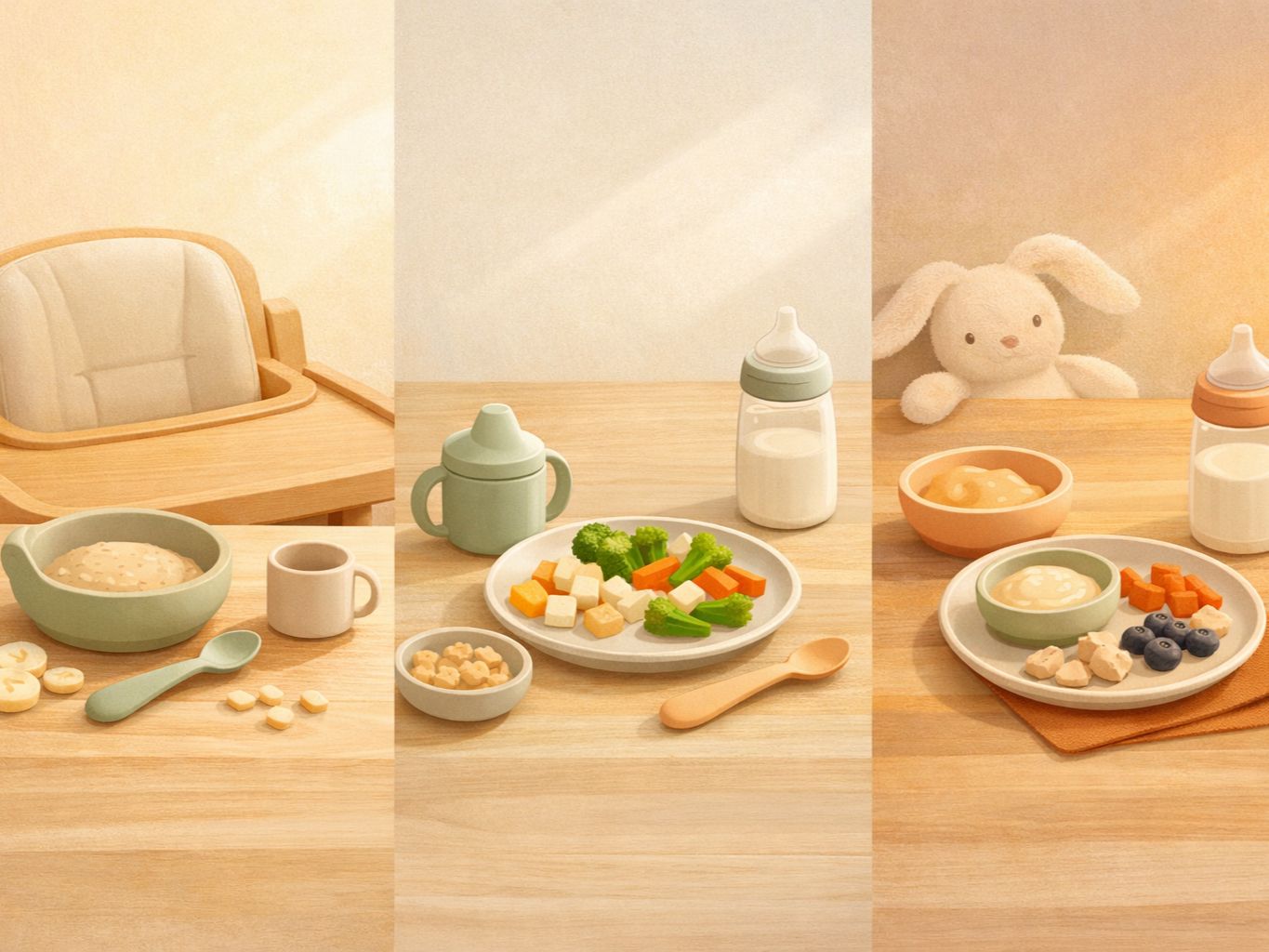
Stop Trying to Remember Feed Times
Get Started FreeIf you have been searching for the "perfect" 9 to 12 month feeding schedule and ending up more confused, you are not alone. Most sample schedules look so rigid that the moment your baby wakes up early or naps long, the whole thing feels broken. Here is the good news: you do not have to hit exact times. Watch your baby's natural hunger rhythm for a few days, and the routine that fits your house starts to show itself.
The one thing worth holding onto is this: don't drop milk feeds just because solids are picking up. Before the first birthday, breast milk or formula is still a main source of nutrition, so let it stay in the day and add solids around it. In this guide we'll walk through how to set the order of the day, how things shift month by month, snacks, and what to do on the days your baby barely eats.
Start with the order, not the clock
Sample schedules list 7:00 milk, 8:30 breakfast, and so on, which makes you anxious the second you fall off the times. But babies don't run on a clock. Wake-up time and nap length drift a little every day, so chasing exact minutes just leaves you feeling behind. Instead, memorize one simple sequence: milk on waking, breakfast a bit later, a snack in between, lunch, another snack, dinner, and a feed before bed. That order is what keeps the day steady.
The table below is a starting point, not a rulebook. If your baby wakes early, slide the whole thing earlier; if a nap runs long, slide it later. Treat the time column as a loose guide and just protect the sequence.
| Rough time | What to offer | Why it helps |
|---|---|---|
| On waking | Breast milk or formula | The tank is empty after the night, so fill it first with something familiar. |
| 1 to 2 hours later | Breakfast solids | Babies eat best before they get overly hungry or sleepy. |
| Mid-morning | A bite of snack or a short feed | Bridges the gap so lunch doesn't arrive on an empty, cranky stomach. |
| Around midday | Lunch solids | If this is a strong eating window, you can offer a bit more. |
| Afternoon | Milk, plus a light snack if needed | Covers the stretch when a long nap pushes dinner far off. |
| Early evening | Dinner solids | Comfortable as long as it isn't right before bed. |
| Before bed | Breast milk or formula | The familiar feed that closes out the day. |

On the days the order falls apart, don't try to cram the missed slot back in. If the mid-morning snack got skipped, pull lunch a little earlier. If a nap ran long, just make sure dinner and the bedtime feed don't end up stacked on top of each other. One off meal won't wreck the whole day.
It looks a little different at 9, 10 to 11, and near 12 months
At 9 months your baby is just stepping into a three-meal rhythm. It's completely normal if milk still seems bigger than solids right now, and yours isn't behind for it. If the amount bounces around day to day but your baby is playful and making the usual wet diapers, you're fine.
Around 10 and 11 months, mealtimes get clearer and snacks settle into the day. You usually don't need a big change here. Just keeping your baby from arriving at the table overtired or starving makes a noticeable difference, because nobody eats well half-asleep.
As the first birthday gets close, it gets easier to fold your baby into family meals. One caution: before 12 months, don't give whole cow's milk as a main drink, because it's still hard on a baby's system. A few sips of water with meals is fine for practice, but the main fluids and nutrition still come from breast milk or formula.
When you add new foods, go one at a time instead of piling on several at once, because that way it's easy to tell what caused a reaction. Skip choking-shaped foods like whole nuts, whole grapes, and big chunks of vegetable, and start with soft textures that squash easily between your fingers.
Think of snacks as filling the hungry gaps
"Snacks" can sound like another box to check, but really they just fill the stretch when meals are too far apart and your baby gets hungry. Twice a day is usually plenty. Reach for simple things that carry your baby to the next meal: soft fruit, plain whole-milk yogurt, soft bread, cooked vegetables.
One thing to watch: when a snack gets too big, your baby skips the next actual meal. So don't let a snack turn into a second dinner. On busy days, a few quick rules keep you steady: if breakfast goes badly, widen the gap between the first feed and breakfast; if lunch gets skipped, pull the next meal in rather than papering over it with snacks; and on out-and-about days, hold the order, not the times.
And if a particular food keeps bringing on a rash, vomiting, diarrhea, swelling, or coughing, don't re-test it on your own at home. Bring it up at the next visit so your pediatrician can sort out exactly which food it was.
How to tell it's working for your baby
Whether the rhythm fits shows up in your baby before it shows up on the clock. If your baby sits fairly calmly at meals and gets hungry around similar times each day, that's a sign it's working. If your baby melts down before every meal, the gaps may be too long; if your baby barely eats at the table, a feed or snack was probably too close beforehand.
You can keep watching at home when the signs are reassuring: breathing is easy, there's no swelling or repeated vomiting, the amount wobbles but your baby is overall lively, and wet diapers stay near normal. If things bounce back within a few days, there's nothing to worry about.
On the other hand, if your baby refuses meals for several days running, or both milk and solids drop noticeably, or vomiting and diarrhea come with fewer wet diapers, don't write it off as a schedule issue. If weight gain worries you, or your baby gags hard at every meal, or keeps struggling with certain textures, it's worth looking past the timing for another cause.
Managing the meal rhythm with BebeSnap
- Log solids, formula, and snack times together in BebeSnap and your home's real gaps show up at a glance.
- Even a few days of records make it easy to see when your baby eats best and when long gaps lead to fussing.
- When the family shares one log, one person notes the feed time while the other adds the reaction and diaper, so you can re-center the rhythm even after a day out.
Questions parents ask about a 9 to 12 month baby meal schedule
Q: How many bottles or nursing sessions should a 9 month old still have with solids?
A: There is no single perfect number, but many babies this age still have several breast milk or formula feeds each day. A practical check is whether milk is still a regular part of the schedule, wet diapers stay normal, and growth remains steady. Call your pediatrician if feeds are dropping quickly, wet diapers are fewer, or your baby seems less hydrated or less interested in eating overall.
Q: How many meals and snacks should a 10 month old eat?
A: For many babies, 3 meals and 2 snacks is a normal pattern, with breast milk or formula still offered through the day. If your baby is arriving at meals uninterested, grazing constantly, or taking much less milk, the first adjustment is usually smaller or fewer snacks rather than cutting full meals.
Q: What is a sample 9 to 12 month feeding routine?
A: A simple sample day is milk in the morning, breakfast, a midmorning milk feed or snack, lunch, afternoon milk, a small snack, dinner, and an evening milk feed. The exact clock can shift with naps, but keeping the same order usually works better than chasing exact times.
Q: How do I adjust the feeding schedule if naps or daycare change the day?
A: Keep the sequence, not the exact clock. If the day starts late or a nap runs long, skip the missed slot and move to the next planned feed, meal, or snack instead of trying to squeeze everything back in. Share your baby’s usual milk times, familiar foods, allergies, and stop-feeding rules with daycare or other caregivers so the routine stays consistent.
References
Stop Trying to Remember Feed Times
Log time, amount, and intervals. BebeSnap turns them into your baby's daily pattern.
See what the app does firstMedical Disclaimer: This article is for informational purposes only and does not replace professional medical advice. If you have concerns about your baby's health, please consult a pediatrician.
You Might Also Like
Wonder Weeks Calculator: Your Baby's 10 Mental Leaps From the Due Date
Baby Weight Gain Calculator: Grams Per Day From Two Weigh-Ins
Baby Impetigo: Golden Crusts, Antibiotic Treatment, and When Nursery Is Safe Again
Baby Mouth Sores (Stomatitis): Causes, How to Tell Them Apart, and Dehydration Signs
You Might Also Like
Apple for Babies: Stage-by-Stage Portions and When Raw Apple Is Safe
Apple can start in the first weaning stage, grated and cooked. Portions are 20-30g at 7-8 months and 30-40g at 9-11 months, counted together with vegetables. Front teeth bite, but the molars that grind only start coming in at the end of weaning.
When to Start Solids: WHO's 6-Month Guidance and 4 Readiness Signs
WHO recommends starting solids around 6 months. Here are the 4 readiness signs, when starting at 4-6 months is reasonable, stage-by-stage progression, and how to choose first foods.
8- to 12-Month-Old Feeding Schedule: What to Feed Your Baby All Day
A simple feeding schedule for an 8- to 12-month-old often looks like 3 meals, 2 to 3 snacks, and breast milk or formula still carrying much of the day.