Newborn Essentials Checklist 2026: What You Really Need vs What to Skip
All Your Baby Records in One App
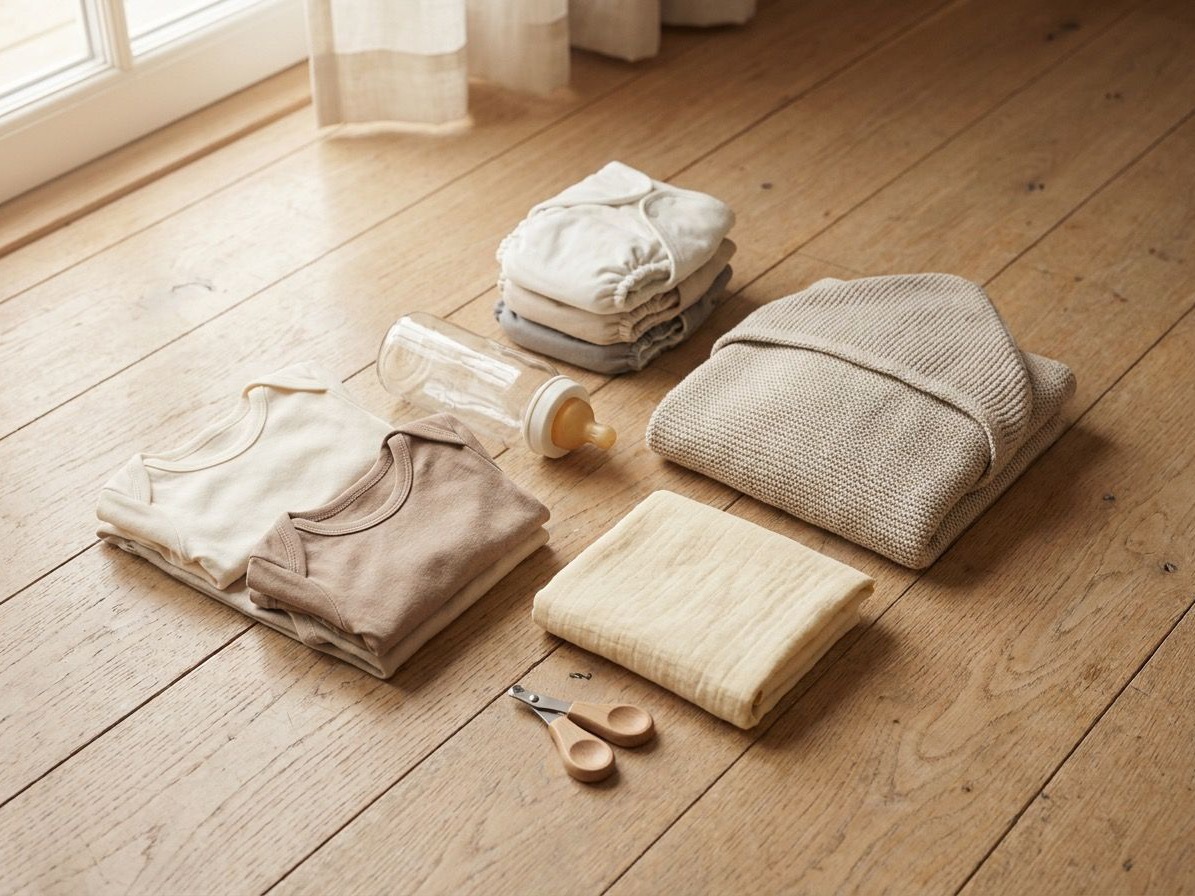
Get Started FreeYou sit down to finally tackle your baby prep, open up a registry checklist, and suddenly feel more overwhelmed than when you started. Every blog and store keeps tossing more "must-haves" into your cart, and before you know it you've spent thousands of dollars on stuff your baby will barely touch. Here's what experienced moms will tell you, though: about half of what they bought went totally unused. So let's cut through the noise together. This guide gives you the 32 things you'll actually reach for, plus 10 items you can skip with zero guilt, and shows you how to do it whether you want to keep things lean or go all in.
When Should You Start Getting Ready?
Babies don't always wait for their due date, so it helps your peace of mind to spread the prep out over time instead of cramming it all in at the end. Here's a rough timeline to follow.
| Timing | What to Do | Key Point |
|---|---|---|
| 20-28 weeks | Research and create your list | Compare products while you still have energy |
| 28-32 weeks | Purchase big-ticket items (car seat, stroller) | Allow time for shipping and setup |
| 32-36 weeks | Buy consumables, wash and organize | Pre-wash all clothing and bedding |
| 36+ weeks | Pack your hospital bag, final check | Have the car seat installed and inspected |
In the US and many Western countries, the baby registry is a huge part of getting ready. A lot of parents set one up at Babylist, Amazon, or Target so friends and family can buy items directly, and that one simple step can take a real chunk out of what comes out of your own pocket.
Feeding Supplies You'll Want on Hand
| Item | Priority | Quantity | Notes |
|---|---|---|---|
| Bottles | ★ Must-have | 2-4 | Even if breastfeeding, have at least 2 ready (4-5 oz size) |
| Formula (1 can) | ★ Must-have | 1 | Keep one on hand even if planning to breastfeed exclusively |
| Bottle sterilizer | ★ Must-have | 1 | Steam or UV sterilizer; boiling works too but less convenient |
| Bottle brush + soap | ★ Must-have | 1 set | Dedicated bottle brush and baby-safe dish soap |
| Nursing pillow | ★ Must-have | 1 | Reduces arm and back strain during feeding sessions. Never let your baby sleep on it; move them to their crib after feeding |
| Nursing bras + pads | ★ Must-have | 3-4 bras | Stock up on disposable nursing pads |
| Breast pump | △ Situational | 1 | Essential if returning to work; can wait to buy after birth otherwise |
| Bottle warmer | ✗ Skip | - | A bowl of warm water works just as well in 2-3 minutes |

Even if you're planning to breastfeed, keep a couple of bottles and a backup can of formula around. They're the items moms most often wish they'd had ready when the moment came. If bottle sterilizing feels confusing, our Baby Bottle Sterilization Guide walks you through it.
Sleep Gear, Where Safety Comes First
| Item | Priority | Quantity | Notes |
|---|---|---|---|
| Crib or bassinet | ★ Must-have | 1 | A safe sleep space is non-negotiable. Firm, flat mattress required |
| Waterproof mattress protector | ★ Must-have | 2 | For spit-ups and diaper leaks |
| Fitted crib sheets | ★ Must-have | 2-3 | 100% cotton, snug fit to the mattress |
| Swaddles | ★ Must-have | 2-3 | Reduces Moro reflex, helps newborns feel secure. Always place a swaddled baby on their back, keep it loose at the hips, and stop once your baby looks like they're trying to roll over |
| Sleep sack | △ Situational | 1-2 | Needed after swaddle transition; not needed right away |
| Baby monitor | △ Situational | 1 | Helpful if baby sleeps in a different room |
| Crib bumpers | ✗ Skip | - | The AAP warns against bumpers due to suffocation risk. Legally banned in the US since 2022 |
| Newborn pillow | ✗ Skip | - | No pillows for babies under 12 months due to suffocation and SIDS risk |
The AAP recommends sharing a room but not a bed for at least the first 6 months to lower the risk of sleep-related infant deaths. Sleeping in the same bed as your baby isn't advised.
Clothing, Here's What to Pack
| Item | Priority | Quantity | Notes |
|---|---|---|---|
| Onesies / bodysuits | ★ Must-have | 5-7 | 100% cotton, mix of newborn and 0-3 month sizes |
| Footed sleepers / zip-up pajamas | ★ Must-have | 4-5 | Zipper style is a lifesaver for nighttime diaper changes |
| Receiving blankets | ★ Must-have | 2-3 | Multi-purpose: swaddling, burping, stroller cover |
| Newborn caps | ★ Must-have | 2 | For outings in cooler weather. Once you're home from the hospital, skip hats indoors, including during sleep, to avoid overheating |
| Socks + mittens | △ Situational | 3-4 pairs | Mittens prevent face scratching; socks mainly for outings |
| Fancy outfits | ✗ Skip | - | Babies outgrow them in weeks. You will receive plenty as gifts! |
| Newborn shoes | ✗ Skip | - | Completely unnecessary until baby starts walking |
Babies outgrow clothes shockingly fast, and you'll get tons as gifts, so resist the urge to splurge on adorable outfits. Practical, easy-on-easy-off pieces are the smart buy. If you're unsure how to dress your baby by season, take a peek at our Baby Clothing Guide by Temperature.
Bath Supplies, Just the Basics
| Item | Priority | Quantity | Notes |
|---|---|---|---|
| Baby bathtub | ★ Must-have | 1 | Foldable or standard; newborns cannot use adult tubs safely |
| Hooded bath towels | ★ Must-have | 2-3 | 100% cotton, soft and absorbent |
| Baby body wash / soap | ★ Must-have | 1 | Fragrance-free, gentle formula for newborns |
| Baby moisturizer | ★ Must-have | 1 | Apply right after bath; fragrance-free, hypoallergenic |
| Water thermometer | △ Situational | 1 | Ideal bath temp is 98-100°F (37-38°C); never exceed 104°F (40°C). Elbow test works too |
| Infant tub sling | △ Situational | 1 | Helpful for solo bath time in a baby tub. Skip bath seats for the adult tub, since they can tip over and a baby can drown. Never step away, even with a support |
Your hands might shake the first time you bathe your tiny baby, and that's completely normal. After a few tries it'll feel like second nature, promise. If you want a step-by-step on the order and the little tricks, our Newborn Bath Guide has it all laid out.
Travel Gear, Don't Skip the Car Seat
| Item | Priority | Quantity | Notes |
|---|---|---|---|
| Infant car seat | ★ Must-have | 1 | Required from hospital discharge. Install and test before due date! |
| Stroller | △ Situational | 1 | Minimal outings in the first month; can buy after birth |
| Baby carrier / wrap | △ Situational | 1 | Check for newborn insert compatibility; try on after birth |
| Diaper bag | △ Situational | 1 | Any large bag with compartments works fine |
Health and Hygiene, More Than You'd Expect
| Item | Priority | Quantity | Notes |
|---|---|---|---|
| Newborn diapers | ★ Must-have | 1-2 packs | 10-12 per day. Do not stockpile -- babies outgrow sizes quickly! |
| Baby wipes | ★ Must-have | 3-5 packs | Fragrance-free, gentle formula. You will use a LOT of these |
| Diaper rash cream | ★ Must-have | 1 | Zinc oxide based cream recommended |
| Digital thermometer | ★ Must-have | 1 | A forehead (temporal artery) type, including no-touch models, works at any age. Ear thermometers are reliable only from 6 months, and a rectal reading is most accurate under 3 months |
| Baby nail clippers / scissors | ★ Must-have | 1 | Newborn-specific; needed from the first week |
| Nasal aspirator | ★ Must-have | 1 | Essential for clearing stuffy noses. Manual or electric |
| Umbilical cord care supplies | ★ Must-have | 1 set | Keep the stump clean and dry; the AAP says there is no need for alcohol (follow your hospital's instructions if they differ) |
| Diaper pail | △ Situational | 1 | Good for odor control, but a regular trash bag works too |
| Wipe warmer | ✗ Skip | - | Creates dependency at home; cold wipes will upset baby when out |
The 10 Things You Can Honestly Skip
Now for the flip side: the items seasoned moms most often call a waste of money. Babies differ, so there's some wiggle room, but at the very least you don't need to buy these before birth.
1. Crib bumpers
- They're easy to grab because they look sweet, but the AAP clearly says not to use them because of suffocation, strangulation, and entrapment risks
- In the US they've actually been banned from manufacture and sale since 2022 under the Safe Sleep for Babies Act, that's how serious it is
2. Newborn pillows
- It feels natural to want to prop up your baby's head, but for babies under 12 months a pillow raises the risk of suffocation and SIDS (Sudden Infant Death Syndrome). Keep anything soft out of the crib
3. Wipe warmer
- Get your baby hooked on warm wipes at home and you'll have a rough time when you're out and only cold ones are available
4. Bottle warmer
- A bowl of warm water heats a bottle in 2-3 minutes. No need for one more gadget taking up counter space
5. Expensive outfits and newborn shoes
- Newborns shoot up a size in a matter of weeks, and the cute stuff pours in as gifts anyway, so there's no reason to buy ahead
6. Baby walkers
- The AAP advises against them because of serious injury risks like falls down stairs and burns
- Canada has banned their sale outright since 2004
7. Baby food makers
- A regular blender or immersion blender does the exact same job, and you'll use it for a surprisingly short window
8. Baby-specific washing machine
- Tossing baby-safe detergent into your regular machine gets clothes just as clean
9. Bulk diaper pre-purchase
- Every baby fits a different brand and size. Buy a small amount first, see what works, then stock up
10. Bouncer or swing(before birth)
- Some babies adore them, others want nothing to do with them. Wait and see how your baby reacts after birth
- A bouncer or swing is not a place to sleep. If your baby falls asleep in one, move them to a firm, flat crib on their back as soon as possible
A Note on Nursery Culture in the US
In the United States, setting up the nursery is a cherished pre-birth ritual. Parents often give over a whole room to the baby, with a crib, a changing table, a rocker or glider, wall decor, and plenty of storage. So it helps to think about your prep with that in mind.
The registry culture is a big help here, because friends and family can buy items directly and offset $1,000-$3,000 of your costs. Babylist, Amazon Baby Registry, and Target are the popular spots to set one up.
Because of all this, a lot of the big-ticket items like the crib, stroller, and car seat often come as gifts, and baby showers usually land around 32-36 weeks. So it's smart to point your own spending at the consumables, the diapers, wipes, and formula that rarely show up on registries.
Pick the Plan That Fits Your Budget
Keeping It Lean (~$500-$800)
Cut the fluff and buy only what you'll truly use:
- Car seat (1)
- Bottles (2) + sterilizer (1)
- Diapers (1 pack) + wipes (3 packs)
- Onesies (5-7) + swaddles (2)
- Baby bathtub (1) + body wash (1)
- Thermometer (1) + nail clippers (1)
- Bassinet instead of a full crib
Ways to save more:
- Say yes to hand-me-downs. The one exception is car seats, which are best bought new. If you do go used, check the manufacture date, expiration (6-10 years from manufacture), accident history, and recall status
- Set up a registry so others can pitch in, and avoid double-buying things you'll likely receive as gifts
- Go with store-brand diapers and wipes, which are often just as good for a lot less
Going All In (~$1,500-$2,500)
For when you'd rather have everything ready in one go:
- All the lean-plan items included
- Full-size crib with nursery furniture
- Stroller + accessories
- Electric breast pump
- Baby monitor
- Diaper pail
- Baby carrier / hip seat
- Additional swaddles + sleep sacks
- Bouncer (after confirming baby likes it)
Once Baby Arrives, Start Tracking with BebeSnap
When your prep is done, the real adventure begins. Once your baby is here, the days blur together in a haze of feeds, diapers, and naps, and it gets hard to remember what you did and when. That's exactly where BebeSnap helps. Logging from day one takes a real load off your mind.
- Feeding log: Jot down breastfeeding, formula, and mixed-feeding times and amounts with one hand
- Diaper tracker: Note frequency and condition, and the AI even analyzes health patterns for you
- Sleep tracker: Spot your baby's sleep patterns and ease into a routine that's right for them
- Growth records: See height and weight changes at a glance on growth curve charts
- AI stool analysis: Just snap a photo and the AI reads your baby's stool color and condition
Frequently Asked Questions (FAQ)
Q: When should I start preparing newborn essentials?
A: Research and create your list at 20-28 weeks, then buy big-ticket items like the car seat and stroller at 28-32 weeks. Purchase consumables and wash everything at 32-36 weeks, and pack your hospital bag after 36 weeks. Aim to have all core essentials ready by 34 weeks in case baby arrives early.
Q: Which baby items can I safely skip buying before birth?
A: You can skip crib bumpers, newborn pillows, wipe warmers, bottle warmers, fancy outfits and newborn shoes, baby walkers, and baby food makers. Crib bumpers and newborn pillows in particular increase suffocation and SIDS risk, so they should not be used at all.
Q: Do I really need to have the car seat ready before my due date?
A: Yes. Your baby should ride rear-facing from the very first ride home from the hospital, so install the seat before your due date and have a certified car seat technician check it if you can. Buy new when possible; if used, verify the manufacture date, expiration (6-10 years from manufacture), accident history, and recall status.
Q: How can a baby registry help reduce costs?
A: In the US and many Western countries, a baby registry lets friends and family purchase items directly, which can offset $1,000-$3,000 in costs. Big-ticket items like the crib, stroller, and car seat are often gifted, so focus your own spending on consumables like diapers, wipes, and formula that rarely appear on registries.
References
- AAP HealthyChildren - Safe Sleep
- AAP HealthyChildren - Baby Products to Avoid
- AAP HealthyChildren - Bathing Your Baby
- AAP HealthyChildren - How to Take Your Child's Temperature
- Pampers - Newborn Baby Checklist
- Babylist - Baby Registry Checklist
- The Bump - Baby Essentials Checklist
- Newton Baby - Minimalist Baby Registry
All Your Baby Records in One App
Feeding, sleep, diapers, growth: every daily record in one place.
See what the app does firstYou Might Also Like
Tomato for Babies: When to Start, Skin and Seeds, and Why Cherry Tomatoes Are Never Served Whole
Apple for Babies: Stage-by-Stage Portions and When Raw Apple Is Safe
Spinach for Babies: When to Start, Why Boiling Matters, and When to Skip It
Potato for Babies: When to Start, Safe Shapes, and Why Never to Blend It
You Might Also Like
Decoding Baby Cries: Reading Hunger, Sleepy, Discomfort, and Pain by Sound and Body Cues
Baby cries can be read through sound patterns and body cues. Here's how to tell hunger, sleepy, discomfort, and pain apart, the pre-cry signals, why crying peaks around 6 weeks, and 5 soothing moves.
🎉 BebeSnap Blog Launch! 🎉
The BebeSnap blog is here! From sleep and feeding to health and development, we'll share the parenting info new parents need, clear, trustworthy, and easy to follow.
Postpartum Body Recovery Guide: Week-by-Week Timeline, Exercise, Nutrition & Pelvic Floor Healing
When will your body recover after birth? A complete 6-week postpartum recovery timeline, ACOG-recommended exercise guidelines, Kegel exercises for pelvic floor healing, lochia, perineal and C-section recovery: all in one guide.