Baby Carrier & Stroller Guide: Types, Safety Tips, and Age-by-Age Recommendations
All Your Baby Records in One App
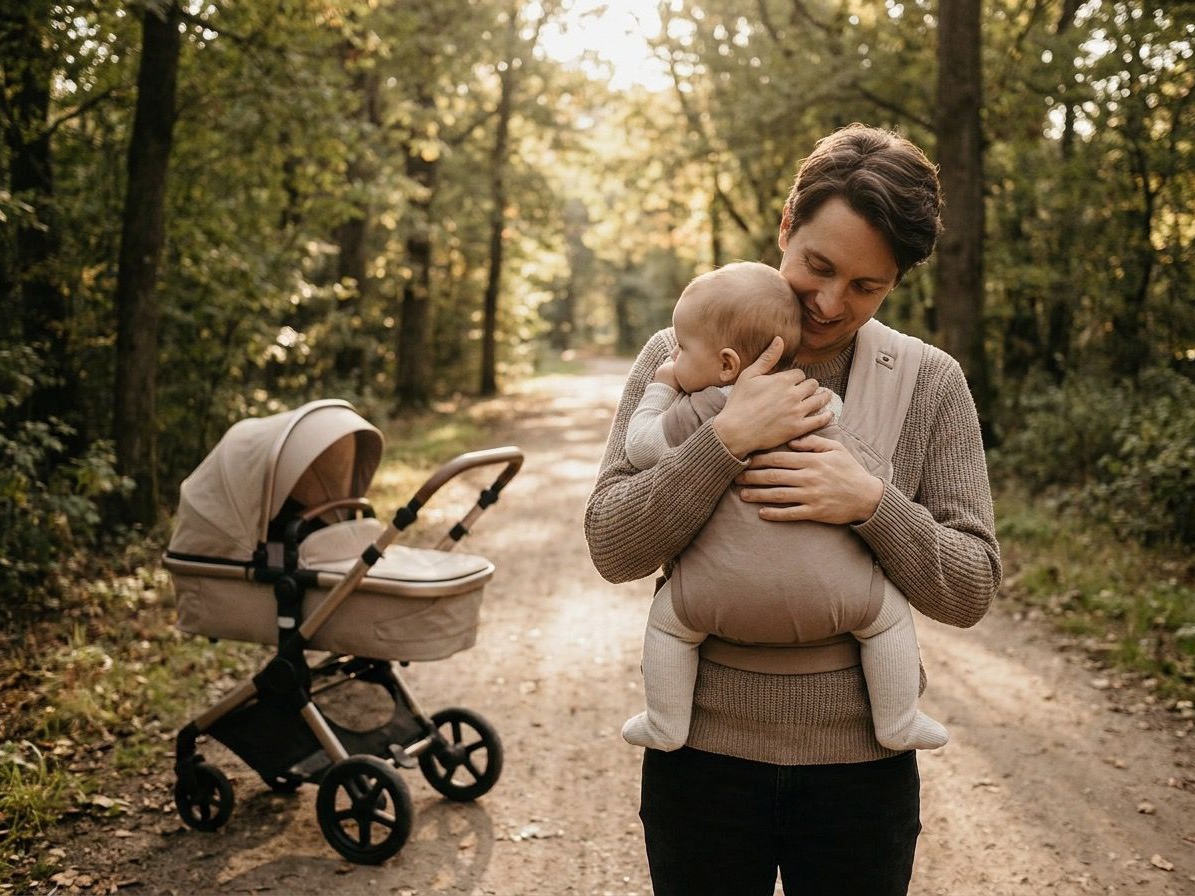
Get Started FreeBaby carriers and strollers are essential gear for new parents, but the sheer number of options can feel overwhelming. Wraps, structured carriers, ring slings, full-size strollers, lightweight models: which ones do you actually need? This guide compares four types of baby carriers and three types of strollers, covers critical safety standards, and provides age-by-age recommendations.
When Can You Start Using a Baby Carrier?
Depending on the type, baby carriers can be used from birth (approximately 7 lbs / 3.5 kg and up).
- Wraps: Suitable from birth, the stretchy fabric molds snugly around newborns
- Soft Structured Carriers (SSC): Usable from birth with a newborn insert; many newer models fit newborns without one
- Ring Slings: Safe from birth when positioned correctly
- Mei Tais: Most accommodate newborns with adjustable seat panels
Baby Carrier Types Compared
There are four main categories of baby carriers.
1. Wraps
- A long piece of fabric wrapped around the wearer's body
- Provides the closest, most womb-like hold for newborns
- Steeper learning curve, practice is needed before it feels intuitive
- Best suited for newborn to 12 months
2. Soft Structured Carriers (SSC)
- Buckles and padded straps make these the most popular everyday option
- Excellent weight distribution for longer wear
- Multiple positions: front inward, front outward, hip, back carry
- Usable from newborn to 36 months (some up to 48 months)
3. Ring Slings
- A length of fabric threaded through two rings, worn over one shoulder
- Quick to put on and take off, but feeding your baby while they are in the sling is not safe, so take them out to nurse
- Weight concentrated on one shoulder, so less ideal for long outings
- Best for newborn to 18 months
4. Mei Tais
- Inspired by traditional Asian carriers, a wide panel with long straps that tie
- Combines the snug fit of a wrap with the structure of an SSC
- Suitable from newborn to 36 months
| Type | Ease of Use | Closeness | Long-Wear Comfort | Age Range |
|---|---|---|---|---|
| Wrap | Difficult | Excellent | Moderate | 0–12 months |
| SSC | Easy | Good | Excellent | 0–36 months+ |
| Ring Sling | Moderate | Good | Moderate | 0–18 months |
| Mei Tai | Moderate | Good | Good | 0–36 months |
Carrier Safety: M-Position and T.I.C.K.S. Rules
Two safety frameworks are essential for every babywearing parent.
The M-Position (IHDI Guidelines)
The International Hip Dysplasia Institute (IHDI) recommends the M-position (also called the spread-squat or jockey position) for healthy hip development.
- Baby's knees should sit slightly higher than the buttocks
- Thighs spread at a 60- to 120-degree angle
- The carrier's seat panel should fully support each thigh
- This positioning is most critical during the first six months of life
T.I.C.K.S. Safety Checklist
Every time you put on a carrier, confirm these five points:
- T (Tight): The carrier is snug so baby does not slump
- I (In view at all times): Baby's face is visible without opening the fabric
- C (Close enough to kiss): Tilt your head forward and you can kiss baby's forehead
- K (Keep chin off chest): At least one finger's width between chin and chest
- S (Supported back): Baby's back rests in a natural C-curve against your body
Stroller Types Compared
Strollers generally fall into three categories.
1. Full-Size Strollers
- The sturdiest option with the smoothest ride
- Deep recline (up to 180 degrees), can function as a bassinet
- Superior suspension handles rough terrain
- Heavier (22–33 lbs / 10–15 kg) and bulkier when folded
2. Mid-Weight (Compact) Strollers
- A balance between full-size comfort and portability
- Recline of 170 degrees or more, weight around 13–18 lbs (6–8 kg)
- Easier to manage on public transit or solo outings
- Suitable from birth, though less shock absorption than full-size
3. Lightweight (Travel) Strollers
- The lightest (7–13 lbs / 3–6 kg) and most compact fold
- Ideal for travel, errands, and quick trips
- Most require the baby to sit upright, so only from about 6–7 months
- Limited recline and less ride stability
| Type | Weight | From Age | Recline | Ride Quality | Portability |
|---|---|---|---|---|---|
| Full-Size | 10–15 kg | 1 month | 180° | Excellent | Low |
| Mid-Weight | 6–8 kg | 1 month | 170°+ | Good | Moderate |
| Lightweight | 3–6 kg | 6–7 months | Limited | Moderate | Excellent |

Choosing by Lifestyle
Urban apartment, frequent public transit
- Carrier: SSC, quick to buckle, safe on escalators
- Stroller: Mid-weight, easy to fold for buses and elevators
Suburban home, car-based travel
- Carrier: SSC or Mei Tai
- Stroller: Full-size, trunk space is not an issue; handles sidewalks well
Frequent travelers
- Carrier: Wrap or ring sling, lightweight and packable
- Stroller: Lightweight, check airline overhead bin compatibility
Twins or children close in age
- Carrier: SSC that supports front and back carry simultaneously
- Stroller: Double stroller (tandem or side-by-side)
Age-by-Age Recommendations
Newborn to 3 months: Wrap or SSC (with insert) + Full-size stroller
- Closeness and stability matter most at this stage
4 to 6 months: SSC + Full-size or mid-weight stroller
- Once baby has head control, carrier options widen
7 to 12 months: SSC (back carry capable) + Mid-weight stroller
- Curiosity grows; some babies enjoy front-outward facing
12 months and up: SSC + Add a lightweight stroller
- Once walking begins, a compact stroller for quick in-and-out is invaluable
Seasonal Considerations
Spring / Fall
- The most comfortable seasons for both carriers and strollers
- A wind cover on the stroller helps manage temperature swings
Summer (Heat)
- Carrier: Choose a mesh-panel model; check baby's temperature every 30 minutes
- Stroller: Look for breathable fabrics and a large, extendable canopy
- Use a clip-on fan or parasol for added airflow
Winter (Cold)
- Carrier: Wear baby inside your coat using a babywearing cover or extension panel
- Stroller: Attach a footmuff; layer clothing rather than using one bulky blanket
- Never cover baby's face with fabric (suffocation risk)
Pre-Purchase Checklist
When choosing a carrier, verify:
- IHDI Hip-Healthy acknowledgment
- Weight range (minimum to maximum) and number of carry positions
- Shoulder strap padding thickness and waistband width
- Try it on in-store whenever possible
When choosing a stroller, verify:
- Recline angle (170 degrees or more for newborns)
- Folded dimensions (fits your car trunk and entryway)
- Wheel size and suspension (match your typical terrain)
- Safety certification for your region (ASTM, EN, etc.)
Track Growth and Plan Outings with BebeSnap
BebeSnap makes it easier to choose the right carrier and stroller at every stage.
- Growth Tracking: Monitor weight and height so you always know if your baby is within the carrier's weight range
- AI Health Analysis: Log how your baby feels after outings and let AI flag any patterns
- Developmental Milestones: Record head control, sitting, and walking milestones to time stroller transitions
- Outing Notes: Jot down which gear you used on each outing to discover what works best for your family
Frequently Asked Questions (FAQ)
Q: When can I start using a baby carrier?
A: Depending on the type, baby carriers can be used from birth (approximately 3.5 kg / 7 lbs and up). Wraps and ring slings are suitable from birth, and soft structured carriers (SSCs) work from birth with a newborn insert, while some models fit newborns from 3.5 kg without one. If you're new to babywearing, start with 5-10 minute sessions so both you and your baby can adjust.
Q: Why is the M-position important when babywearing?
A: The International Hip Dysplasia Institute (IHDI) recommends the M-position for healthy hip development. Baby's knees should sit slightly higher than the buttocks, the thighs spread at a 60- to 120-degree angle, and the seat panel should fully support each thigh. This is most critical during the first six months, and carriers that don't support it may contribute to hip dysplasia.
Q: What is the T.I.C.K.S. safety rule?
A: It's a five-point checklist to confirm every time you put on a carrier. Tight (snug so baby doesn't slump), In view (baby's face always visible), Close enough to kiss (you can kiss baby's forehead), Keep chin off chest (one finger's width between chin and chest), and Supported back (baby's back rests in a natural C-curve).
Q: When can I start using a lightweight stroller?
A: Lightweight (travel) strollers usually require the baby to sit upright, so they're suitable from about 6-7 months. For use from birth, choose a full-size stroller that reclines to 180 degrees or a mid-weight model that reclines 170 degrees or more. Many families add a lightweight stroller after 12 months, once walking begins, for easy in-and-out trips.
References
- International Hip Dysplasia Institute - Baby Carriers
- NHS - Baby and Toddler Safety (sling TICKS, feeding in a sling)
- AAP HealthyChildren - A Parent's Guide to Safe Sleep
- BabyGearLab - Best Baby Carriers Tested & Ranked
- BabyGearLab - Best Strollers Tested & Ranked
- Ergobaby - Choosing the Best Baby Carrier
- Lucies List - Best City Strollers 2026
All Your Baby Records in One App
Feeding, sleep, diapers, growth: every daily record in one place.
See what the app does firstYou Might Also Like
Tomato for Babies: When to Start, Skin and Seeds, and Why Cherry Tomatoes Are Never Served Whole
Apple for Babies: Stage-by-Stage Portions and When Raw Apple Is Safe
Spinach for Babies: When to Start, Why Boiling Matters, and the One Time to Skip It
Potato for Babies: When to Start, Safe Shapes, and Why Never to Blend It
You Might Also Like

Decoding Baby Cries: Reading Hunger, Sleepy, Discomfort, and Pain by Sound and Body Cues
Baby cries can be read through sound patterns and body cues. Here's how to tell hunger, sleepy, discomfort, and pain apart, the pre-cry signals, why crying peaks around 6 weeks, and 5 soothing moves.
Baby Choking First Aid: Complete Guide to Infant Back Blows, CPR & Prevention
Baby choking on food and can't breathe? For infants under 1, give 5 back blows + 5 chest thrusts. NOT the Heimlich. Step-by-step first aid guide.
Baby Car Seat Guide: How to Choose the Safest Seat by Age and Type
Car seats reduce infant crash fatality risk by 71%. Compare infant-only, convertible, all-in-one, and booster types, plus rear-facing guidelines, ISOFIX/LATCH tips, and country-specific laws.