Baby's First Flight: When Can Babies Fly & How to Handle Ear Pain
All Your Baby Records in One App
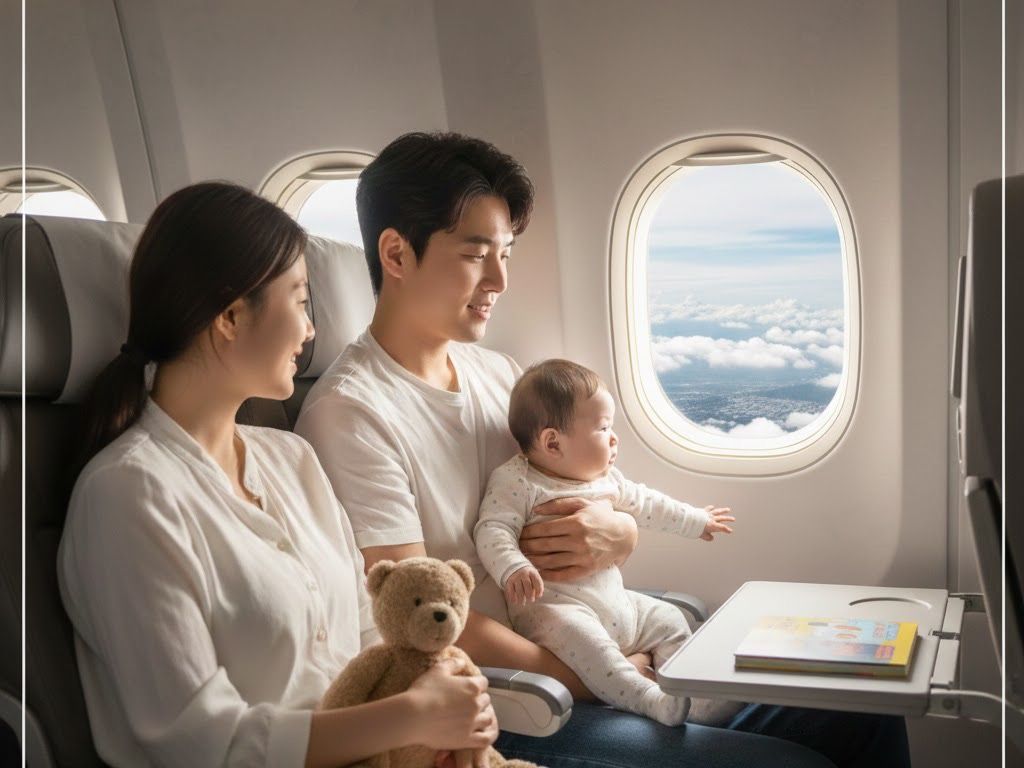
Get Started FreePlanning your baby's first flight? "When can babies fly?", "What if their ears hurt during takeoff?" We've compiled everything you need for a comfortable flight with your baby.
When Can Babies Fly?
Airline Regulations
Most airlines allow:
- Domestic flights: After 7 days old
- International flights: After 14 days old
However, just because it's allowed doesn't mean it's recommended.
Recommended Age
Pediatrician recommendations:
- 2-3 months+: Basic immunity developed
- 6 months+: Better suited for long flights
- 6-15 months: Most challenging period (can't express discomfort)
Pre-Flight Check
Visit pediatrician before departure:
- Check for recent colds or ear infections
- Verify vaccination schedule
- Get fever reducer/pain reliever prescription if needed
Why Do Babies Get Ear Pain on Planes?
The Cause
Air pressure changes rapidly during takeoff and landing. Adults adjust by swallowing or yawning, but babies:
- Have immature Eustachian tubes (connects ear to throat)
- Can't regulate pressure themselves
- Can't verbally express discomfort
Result: Ear pain → Crying → More crying cycle
The Hardest Moments
- Landing hurts more than takeoff
- Start preparing 30 minutes before landing
How to Handle Baby Ear Pain on Planes
Feeding/Bottle
Most effective method:
- Sucking motion opens the Eustachian tube
- Time feeding with takeoff/landing
- Prepare 30 minutes before landing
Breastfeeding moms:
- Bring nursing cover
- Window seat offers more privacy
Formula-feeding moms:
- Pre-mix formula in bottles
- Request warm water from cabin crew
Pacifier/Snacks
Under 6 months: Pacifier 6 months+: Puffs, crackers, chewable snacks
Chewing and swallowing helps regulate pressure
If Baby Keeps Crying?
Soothing methods:
- Hold and rock
- Play white noise app
- Let them look out the window
- Bring out a new toy
Choosing Baby-Friendly Seats
Bassinet Seats
What is a bassinet?
- Wall-mounted baby bed
- Usually at bulkhead (front row)
- Weight limit varies (typically 10-11kg)
How to reserve:
- Call airline after booking
- Popular routes fill fast → request early
- Reconfirm 72 hours before departure
Benefits:
- Baby can lie flat when sleeping
- Extra legroom
- Easier diaper changes
Seat Selection Tips
Recommended:
- Bulkhead (front row): More space, bassinet available
- Window: Nursing privacy, baby can look outside
- Aisle: Easy bathroom access, can walk to soothe baby
Avoid:
- Emergency exit rows (no infants allowed)
- Last row (seats don't recline, engine noise)
Baby Flight Packing Checklist
Carry-On Essentials
Feeding supplies:
- Bottles + formula (twice what you need)
- Thermos with warm water
- Nursing cover
- Pacifiers
Diapering:
- Diapers (2 per flight hour + extra)
- Travel wipes
- Changing pad
- Plastic bags
Clothing:
- 2+ spare outfits
- Light blanket
- Socks (cabins are cold)
Soothing items:
- 2-3 new toys (still wrapped)
- Familiar stuffed animal/blanket
- Downloaded videos on phone
Checked Baggage
- Stroller (gate check available)
- Car seat (if renting car)
- Extra pack of diapers
- Multiple spare outfits
Flight Day Tips
At the Airport
Check-in:
- Use family/infant priority counters
- Use stroller to gate, then check
- Reconfirm bassinet reservation
Security:
- Declare liquids (formula, baby food) separately
- Baby food exempt from 100ml limit
- Stroller, carrier screened separately
Boarding
Priority boarding:
- Use family priority boarding
- Note: Early boarding = longer wait on plane
- Decide based on baby's condition
Getting settled:
- Request bassinet setup
- Raise armrests for more space
- Place diaper bag at feet
During Flight
Takeoff:
- Feed or give pacifier
- Fasten seatbelt (baby on lap)
Cruising:
- Place in bassinet
- Check diapers regularly
- Keep hydrated
30 minutes before landing:
- Prepare feeding/snacks again
- Landing hurts ears more than takeoff!
FAQ
Q: How much are baby tickets?
A: Infants under 2 usually fly free on domestic flights and pay 10% of the adult fare internationally. In this case your baby sits on your lap without a separate seat. If you prefer a dedicated seat, you can often buy one and use an approved car seat, so check with your airline in advance.
Q: Can I bring a stroller?
A: Yes. You can use it all the way to the gate and gate-check it, so you can keep your baby in the stroller until just before boarding. Some compact, foldable travel strollers also fit in overhead bins. At security, the stroller and baby carrier are usually screened separately.
Q: What if baby won't stop crying?
A: Get up and walk the aisle slowly to soothe them, or offer a feed or pacifier. Crying during takeoff and landing is usually caused by ear pain from pressure changes, so timing a feed to those moments really helps. Most passengers understand, so handle it naturally rather than apologizing in advance.
Q: Is there baby food on planes?
A: Most airlines offer infant meals. You'll need to request them when booking or at least 24 hours before departure, so arrange this ahead of time. To be safe, also pack plenty of your baby's familiar snacks or formula in case the meal isn't available.
Track Records While Traveling with BebeSnap
Don't miss feeding, sleep, and diaper records while traveling.
- Jet lag tracking: Record in local time
- One-hand recording: Tap while holding baby
- Family sharing: Family at home sees real-time updates
- Download on App Store
- Download on Google Play
References
All Your Baby Records in One App
Feeding, sleep, diapers, growth: every daily record in one place.
See what the app does firstYou Might Also Like
Apple for Babies: Stage-by-Stage Portions and When Raw Apple Is Safe
Spinach for Babies: When to Start, Why Boiling Matters, and the One Time to Skip It
Potato for Babies: When to Start, Safe Shapes, and Why Never to Blend It
Introducing Fish to Your Baby: When to Start, What Order, What to Avoid
You Might Also Like
Decoding Baby Cries: Reading Hunger, Sleepy, Discomfort, and Pain by Sound and Body Cues
Baby cries can be read through sound patterns and body cues. Here's how to tell hunger, sleepy, discomfort, and pain apart, the pre-cry signals, why crying peaks around 6 weeks, and 5 soothing moves.
Introducing Fish to Your Baby: When to Start, What Order, What to Avoid
Fish does not need to be delayed. Start with white fish, a spoonful at a time, and avoid the big mercury-heavy species. Here is the order to follow, which fish to skip, and why raw shellfish is different.
Complete Newborn Bath Guide: Timing, Temperature, and Techniques
When and how to bathe a newborn? Sponge baths before cord falls off, ideal water temp 36-38°C, and 2-3 baths per week per AAP guidelines.