Baby Sleep While Traveling: Settling Them in a New Place and Resetting After
See Your Baby's Sleep Pattern Emerge
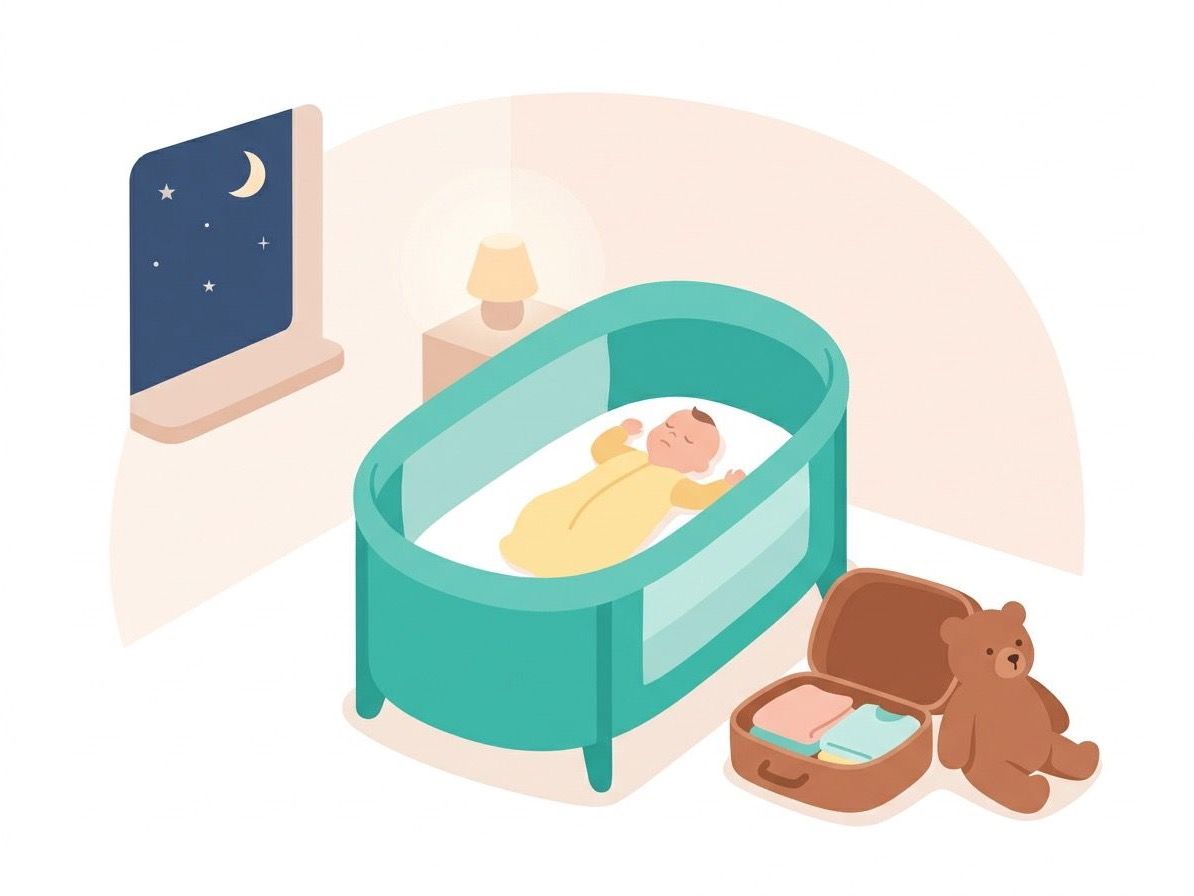
Get Started FreeYou've booked the trip, and there's still that knot in your stomach: the sleep rhythm you finally established is about to be undone by one vacation. Let's start with the reassuring part. Sleep does get messy while traveling, and that's expected; most babies find their way back within 3 to 7 days of getting home. So instead of trying to hold the usual schedule together for the whole trip, focus on just two things: bring the familiar sleep cues with you, and set up a safe sleep space wherever you land.
What Should You Pack First?
Babies don't decide it's bedtime by figuring out where they are. They decide by whether things feel the way they always do. That's why the most important items in your bag aren't clothes or toys; they're the sleep cues from home.
The sleep sack or swaddle you already use
- Same texture, same smell, strongest signal. Resist the urge to wash it fresh right before you leave; pack it as is. Stop swaddling as soon as your baby shows signs of trying to roll over (some start as early as 2 months), and switch to a sleep sack that leaves the arms free.
A white noise machine or phone app
- It covers hallway noise, the room next door, and an unfamiliar air conditioner. For volume and placement, see our white noise guide.
Portable blackout gear
- Hotel curtains almost always gape in the middle or leak light at the top. Blackout panels, a couple of clips, and painter's tape will handle most rooms.
One crib sheet from home
- Laid in a travel crib, that familiar smell settles a baby far faster than anything new. Use it only if it fits that mattress snugly; if it's loose, use the sheet made for the travel crib.
Whatever your bedtime routine runs on
- The lotion after bath, the one picture book, the song you always sing: anything that lets you replay the same sequence. We covered building that sequence in the bedtime routine guide.
If your baby has a lovey or blanket, check the age first. Under 12 months, nothing soft belongs in the sleep space, so use it during the wind-down and take it out when you lay them down.
💡 If you have to cut the packing list, prioritize in this order: sleep sack, then white noise, then blackout. Those three alone make a strange room feel surprisingly familiar.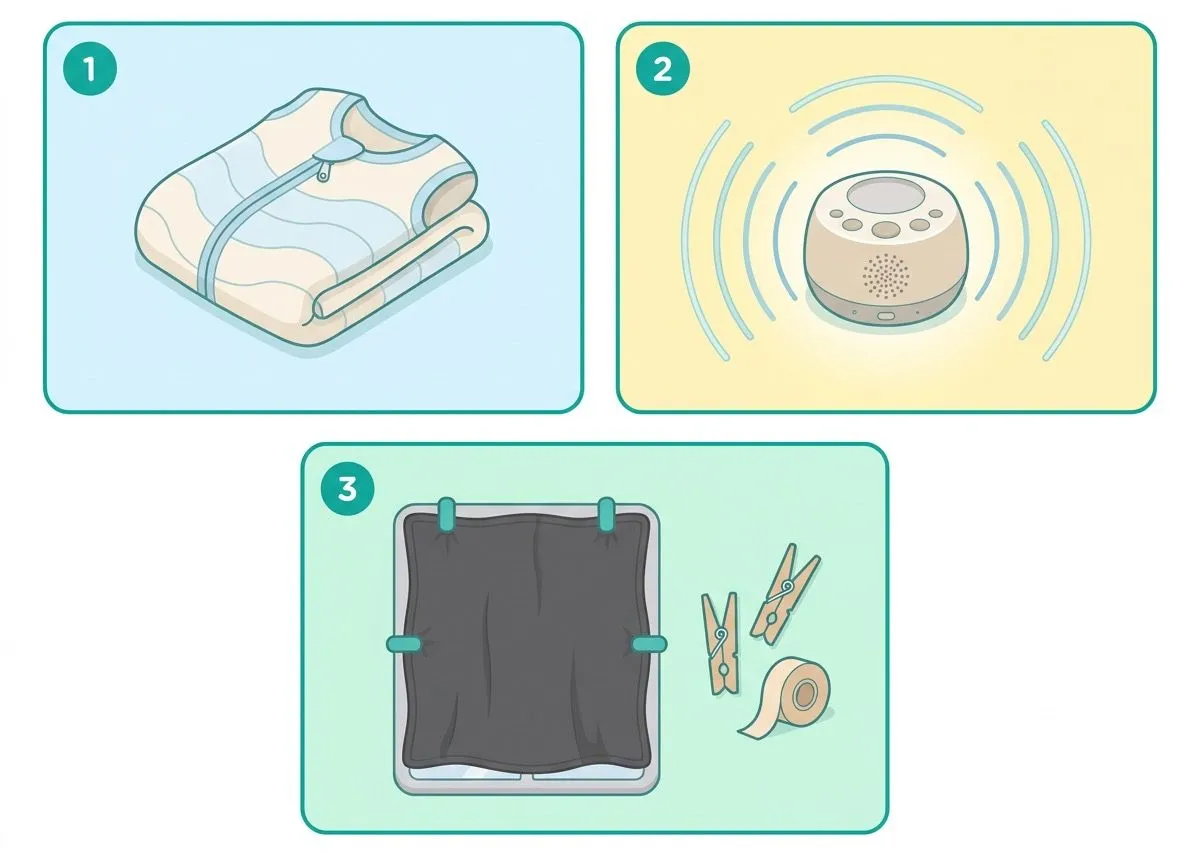
How Strictly Should You Protect Naps on the Move?
Think of sleep in the car or on a plane as a bonus nap. It's fine if it runs short, and it's fine if it runs long. Travel days are supposed to throw the schedule off.
When you can, line up departure with a usual nap window. If the car pulls out right as drowsiness sets in, your baby fusses less and you can focus on the drive. Just keep two things in mind.
If your baby falls asleep in the car seat, move them onto a firm, flat surface as soon as you arrive; if they fall asleep in a stroller, do it as soon as you can. Sleeping upright for long stretches lets the head fall forward and can compress the airway, so those devices are for travel, not for real sleep. In the car, use a rear-facing seat installed at the correct angle, and stop for a break every 2 to 3 hours on day trips (every 4 to 6 hours at night).
And keep late-afternoon naps short. A solid hour or two right before arrival will push bedtime way back that night. Rather than jolting them awake, brighten the car, start chatting, and let them surface naturally.
Why Is the First Night Always the Hardest?
The roughest night of any trip is almost always night one. In an unfamiliar space, the brain never fully stands down; it stays half on watch while you sleep. Adults feel this too on the first night away, and in babies the effect is much stronger.
So for night one, the goal isn't "sleep like at home." It's "get through it."
Set up the room before you unpack
- Decide where the sleep space goes, close the curtain gaps, and turn on white noise before you touch the suitcases.
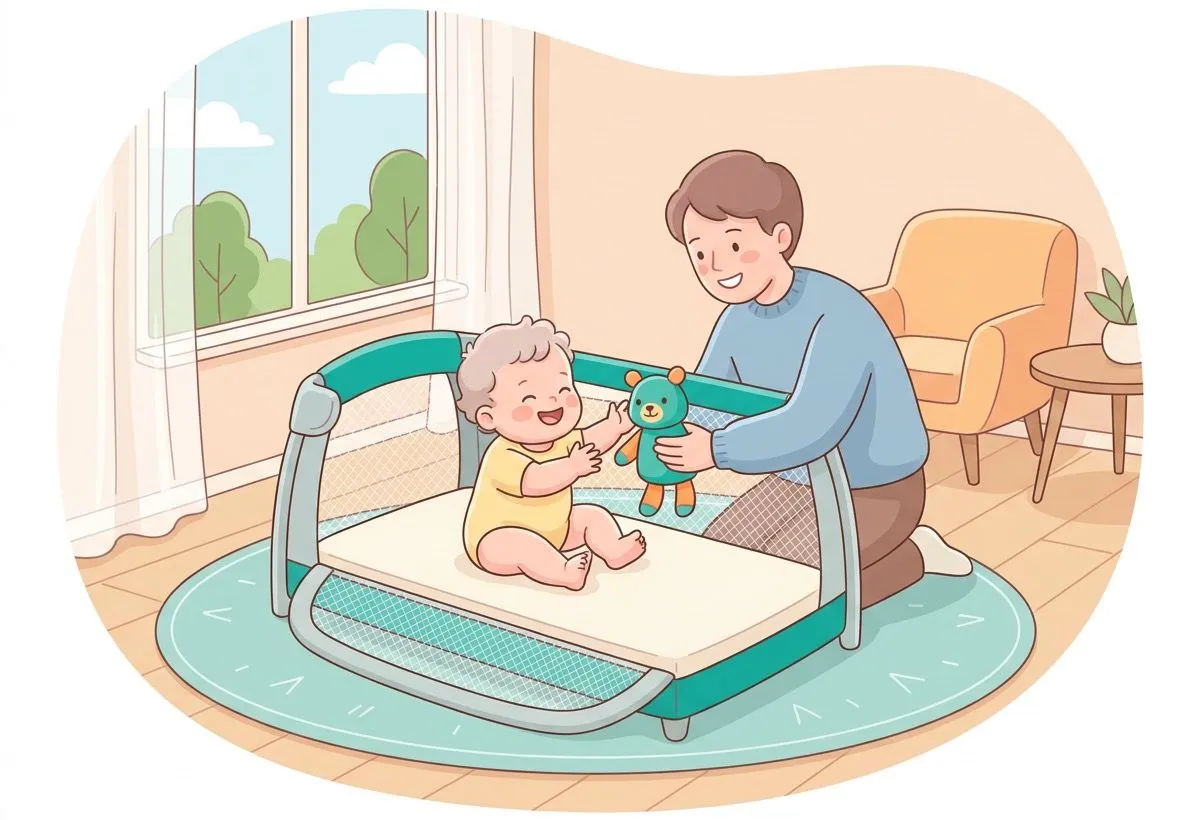
Let them play in the sleep space first
- Twenty or thirty minutes of playing in the travel crib well before bedtime turns it from "a place I've never seen" into "the place I was just playing."
It's okay to help more than usual tonight
- Rocking them down or staying beside them until they drift off won't unravel the habits you built. Once they're asleep, lay them on their back in the travel crib. One or two nights of extra help is just that.
Move bedtime 15 to 30 minutes earlier
- Travel days pile on stimulation, and overtiredness comes fast. An earlier bedtime often means an easier one.
Get outside during the day
- Daylight on arrival day helps their body clock sync to the new place faster.
How Much Does Time Zone Change Matter?
A road trip within the same time zone and a long-haul flight are two completely different problems. Sorting by distance makes it manageable.
| Type of trip | Before you go | After you arrive |
|---|---|---|
| Same time zone | Nothing to adjust | Shift bedtime 15-30 min earlier on night one |
| 1-3 hour difference | Just go; no pre-shifting needed | Switch to local time immediately, get morning light |
| 4+ hour difference | Shift 15-30 min per day for 3-4 days beforehand | Eat and wake on local time; roughly one day per hour of difference |

For a destination more than four hours off, moving bedtime and wake time 15 to 30 minutes per day toward the new zone in the days before you fly makes arrival far smoother. You don't have to close the whole gap; that's a lot to ask of a household, and getting halfway there still helps a great deal.
Once you land, light is your most powerful tool. During waking hours, get outside into bright light; during sleep hours, make the room as dark as you can. Putting meals on local time speeds things up too. For expectations, a rough guide of about one day of adjustment per hour of time difference takes the pressure off.
What If You're All Sharing One Room?
In a hotel or rental, the whole family ends up in one room, and two problems come up again and again: the baby wakes at every sound the adults make, and the adults lose their entire evening.
Break the line of sight to the sleep space
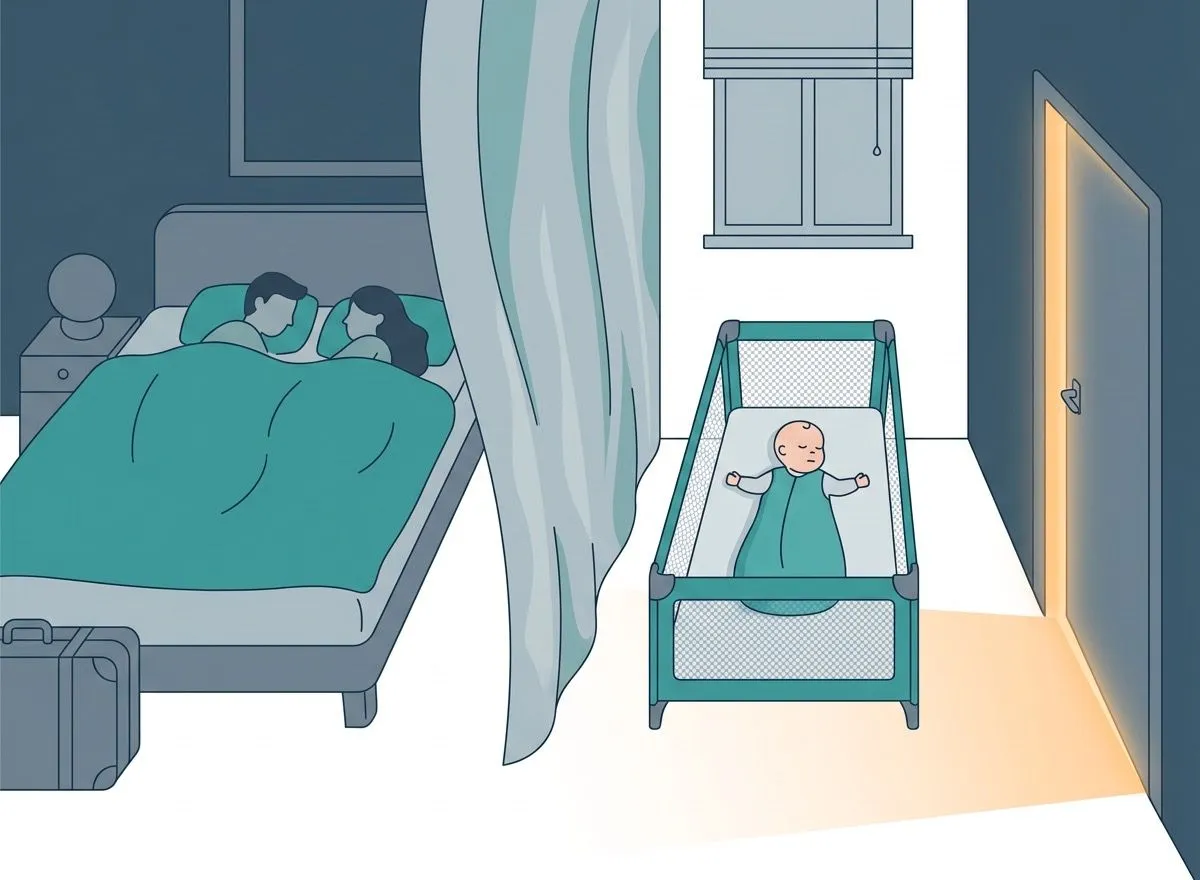
- Move the travel crib away from the adult bed and use a closet door or curtain so your baby can't see straight over to you. Less checking, less calling out. Keep the crib away from cords, lamps, and TVs, and tape up blind and window cords so none hang within your baby's reach.
Use the bathroom light as your night light
- After bedtime, skip the overhead lights entirely. A bathroom door cracked open gives you plenty to move around by.
Take your evening outside the room, one adult at a time
- Scout a balcony, the lobby, or a lounge at the end of the hall in advance. Knowing where to go makes the trip feel much less confining. Just don't leave your baby alone in the room, even with a monitor or when the room is within sight; take turns going out, or book a babysitter through the hotel, so an adult is in the room whenever your baby sleeps.
Go to bed closer to when they do
- For a few nights, an early family bedtime is a perfectly good strategy. Fewer people rustling around means fewer wakeups.
If a two-room layout or a separate living area is within reach when you book, that single choice does more for your nights than any amenity. At similar prices, choose the floor plan over the frills. Even so, the American Academy of Pediatrics (AAP) and the UK's NHS recommend sharing a room with your baby for at least the first 6 months, so keep your baby asleep in the room where a parent sleeps and don't leave your baby alone in a separate room.
Keeping Sleep Safe Away From Home
The location changes; the basics don't. A firm, flat surface, one fitted sheet, and nothing else in the space.
The American Academy of Pediatrics (AAP) recommends that while traveling, your baby sleeps in the same room as you but on a separate surface, never in the same bed. A crib, bassinet, or travel play yard that meets safety standards is all you need. Sharing an adult bed raises the risk 5 to 10 times for babies under 4 months, and falling asleep together on a sofa or armchair raises it up to 67 times. Bed-sharing isn't recommended at any point in the first year, so it's worth avoiding especially when everyone is exhausted from travel.
Here's what tends to get overlooked on the road.
Don't add a mattress to the travel crib
- Layering in a quilt or extra pad to soften it creates gaps at the edges, which is exactly the hazard you're trying to avoid. Use the surface it came with.
Inspect a borrowed hotel crib
- Take one minute to check that the rails are solid, the mattress isn't loose, and the sheet fits snugly.
Never fall asleep together on a sofa or armchair
- Dozing off on a couch during a night feed is the highest-risk scenario of all. If you think you might drift off, feed sitting on a firm chair or in bed instead. Clear pillows and blankets from the area, and if you do fall asleep, put your baby back on their back in the travel crib as soon as you wake up.
Always place them on their back
- Wherever you are, back to sleep, every sleep.
For the full set of ground rules, read our baby sleep environment guide alongside this.
Once You're Home, How Long Until Things Reset?
Waiting for the rhythm to drift back on its own takes longer than simply restarting it. Let the last night of the trip be late if it must, but from the night you walk in the door, run the normal routine exactly as before.
There's an order that works best. Reset the morning wake time before you worry about bedtime. Get them up at the usual hour and into daylight, and naps and bedtime follow on their own within days. Allow a few mornings of sleeping in, on the other hand, and the whole rhythm keeps sliding later.
Most babies are back to their old pattern in 3 to 7 days. If you crossed time zones, add roughly a day per hour of difference. Expect more night wakings for the first two or three nights, and know that this is exactly when new habits get made. Skip the trip to the living room and the bright lights, and respond the same quiet way you did before the trip.
💡 If night wakings drag past a week and your baby seems off during the day too, it may not be travel fallout. A check-in with your pediatrician is worthwhile.Managing Travel Sleep with BebeSnap
- Sleep tracking: Log naps on the move and that first bedtime away, and you'll see exactly when the rhythm starts to settle.
- Trip notes: Record the room setup and bedtime together so you know what to change next trip.
- AI chatbot: Ask about a baby who won't settle on night one, or how to handle a time zone shift, even late at night.
- Before-and-after view: Put pre-trip and post-trip sleep logs side by side to see how far back to baseline you are.
Frequently Asked Questions (FAQ)
Q: Do I need to keep my baby's usual sleep schedule while traveling?
A: No. On travel days, naps naturally run short or long, and sleep in the car or on a plane counts as a bonus nap rather than a failure. What matters far more is keeping the familiar cues consistent: the same bedtime sequence, the same sleep sack, the same white noise. Cues travel better than schedules do.
Q: My baby won't settle on the first night. Is it okay to rock them to sleep?
A: Yes. In an unfamiliar place the brain stays partly alert, which is why night one is the hardest of any trip. Rocking them down or staying beside them until they fall asleep will not undo the sleep habits you built; once they're asleep, lay them on their back in the travel crib. Return to your usual approach once you're home and things typically recover within a few days.
Q: Can my baby sleep in the hotel bed with us?
A: It isn't recommended at any point in the first year. Adult beds bring soft bedding, gaps, and entrapment risks, and bed-sharing raises the risk 5 to 10 times for babies under 4 months, while dozing off together on a sofa or armchair raises it up to 67 times. Share the room but not the bed: use a travel crib or play yard meeting safety standards, firm and flat with a fitted sheet only.
Q: How many days until sleep goes back to normal after a trip?
A: Most babies return to their previous pattern within 3 to 7 days. If you crossed time zones, allow roughly one extra day per hour of difference. Reset the morning wake time first rather than bedtime, and get your baby into daylight in the morning: naps and bedtime tend to fall back into place on their own after that.
References
- AAP HealthyChildren - A Parent's Guide to Safe Sleep
- AAP HealthyChildren - Travel Safety Tips
- Sleep Foundation - Jet Lag
- Lullaby Trust - Safer sleep advice
- CPSC - Play Yards and Cribs Safety
- AAP HealthyChildren - Hotel Dangers That Put Baby's Safety at Risk
- AAP HealthyChildren - Is It Safe for My Baby to Travel in a Car Seat a Few Hours at a Time?
See Your Baby's Sleep Pattern Emerge
Track sleep and watch wake windows and night stretches appear as clear graphs.
See what the app does firstMedical Disclaimer: This article is for informational purposes only and does not replace professional medical advice. If you have concerns about your baby's health, please consult a pediatrician.
You Might Also Like
Kaup Index (Baby BMI): How to Calculate It and What's Normal by Age
Wonder Weeks Calculator: Your Baby's 10 Mental Leaps From the Due Date
Baby Weight Gain Calculator: Grams Per Day From Two Weigh-Ins
Baby Impetigo: Golden Crusts, Antibiotic Treatment, and When Nursery Is Safe Again
You Might Also Like

Baby Waking at 5 AM: What to Do and What Not to Do
Is your baby up at 5 AM? It's usually bedtime timing, room light, or the last wake window. Waking after 6 AM is normal. Here's what to do and what to avoid.
Baby Not Gaining Weight? Normal Growth Rates by Age & When to Worry
Worried your baby isn't gaining weight? Newborns gain 25~30g a day, but this slows to 10~15g a day after 6 months. The key warning sign is a drop of 2 or more percentile bands.

Summer Room Temperature for Babies: AC Tips & Sleeping Through Hot Nights
Is your baby sweating and waking on hot nights? Learn the AAP's recommended room temperature (68-72°F / 20-22°C), humidity (40-60%), safe AC use, and hot-night sleep tips.