Baby Waking at 5 AM: What to Do and What Not to Do
See Your Baby's Sleep Pattern Emerge
Get Started FreeIs your baby up before sunrise (reliably at 5 AM) ready to start the day while you're still desperate for sleep? Here's the short answer: early waking is almost always caused by a bedtime that's too late (or too early), a room that isn't dark enough, or the last wake window being off. Nearly all of it is fixable.
But one thing first. If your baby wakes after 6 AM, that isn't "early rising"; it's just morning. Most babies naturally wake between 6 and 7 AM. True early waking means waking before 6 AM and being unable to fall back asleep. In this guide, we'll track down the cause and sort it into what you should do and what you should avoid.
Early Waking vs. Night Waking: What's the Difference?
These two have different causes and different fixes, so it helps to tell them apart first. A night waking is when your baby stirs in the middle of the night and usually resettles, on their own or with a little help. Early waking is when they wake before 6 AM, can't fall back asleep, and start the day for good. If your baby stirs at 5:30 but drifts off again within 20 to 30 minutes, that's a brief arousal, not early waking.
Setting this benchmark takes a lot of pressure off. Waking after 6 AM is developmentally normal, so there's no need to push your baby's body clock earlier than it naturally runs. The only thing worth fixing is the "wakes before 6 and can't go back" pattern.
⚠️ Waking after 6 AM is normal. If your baby stirs at 5:30 and falls back asleep, that's not early waking.Why Always So Early?
There's a real reason your baby wakes right around dawn. As morning approaches, their sleep is at its lightest, and the sleep pressure (the drive to sleep) that built up overnight is nearly used up. At the same time, melatonin (the hormone that brings on drowsiness) is fading, while cortisol, the alerting hormone, rises with the circadian rhythm.
That's why even a tiny trigger can fully wake them in the early hours. A sliver of light through a gap in the curtains, birdsong, or a garbage truck outside would be ignored in the middle of the night, but at 5 AM it becomes a wake-up switch. Summer makes this worse, because the sun rises earlier.
Which Type Is Your Baby? Read Their Mood
The biggest clue to the cause is your baby's mood when they wake. If they wake at 5 AM cheerful and ready to play, they've had enough sleep, which often means bedtime was actually too early. If instead they're cranky, rubbing their eyes, and clearly still tired, that's an overtired signal: bedtime was likely too late, or the last wake window before bed was too long.
| Baby's signal | Likely cause | What to try |
|---|---|---|
| Wakes happy and wants to play | Already well-rested (bedtime too early) | Push bedtime 15-20 min later |
| Cranky, rubbing eyes, still tired | Overtired (bedtime too late or last window too long) | Move bedtime earlier, protect naps |
| Sleeps fine in the dark, wakes when light leaks in | Dawn light | Make the room fully dark |
| Wakes hungry | Hunger | Feed well before bed, adjust if needed |

As the table shows, the same "early waking" can call for opposite moves. That's why, before reflexively shifting bedtime, it's worth watching for a few days to see what mood your baby wakes up in.
What to Do
Once you have a sense of the cause, it's time to act, one step at a time.
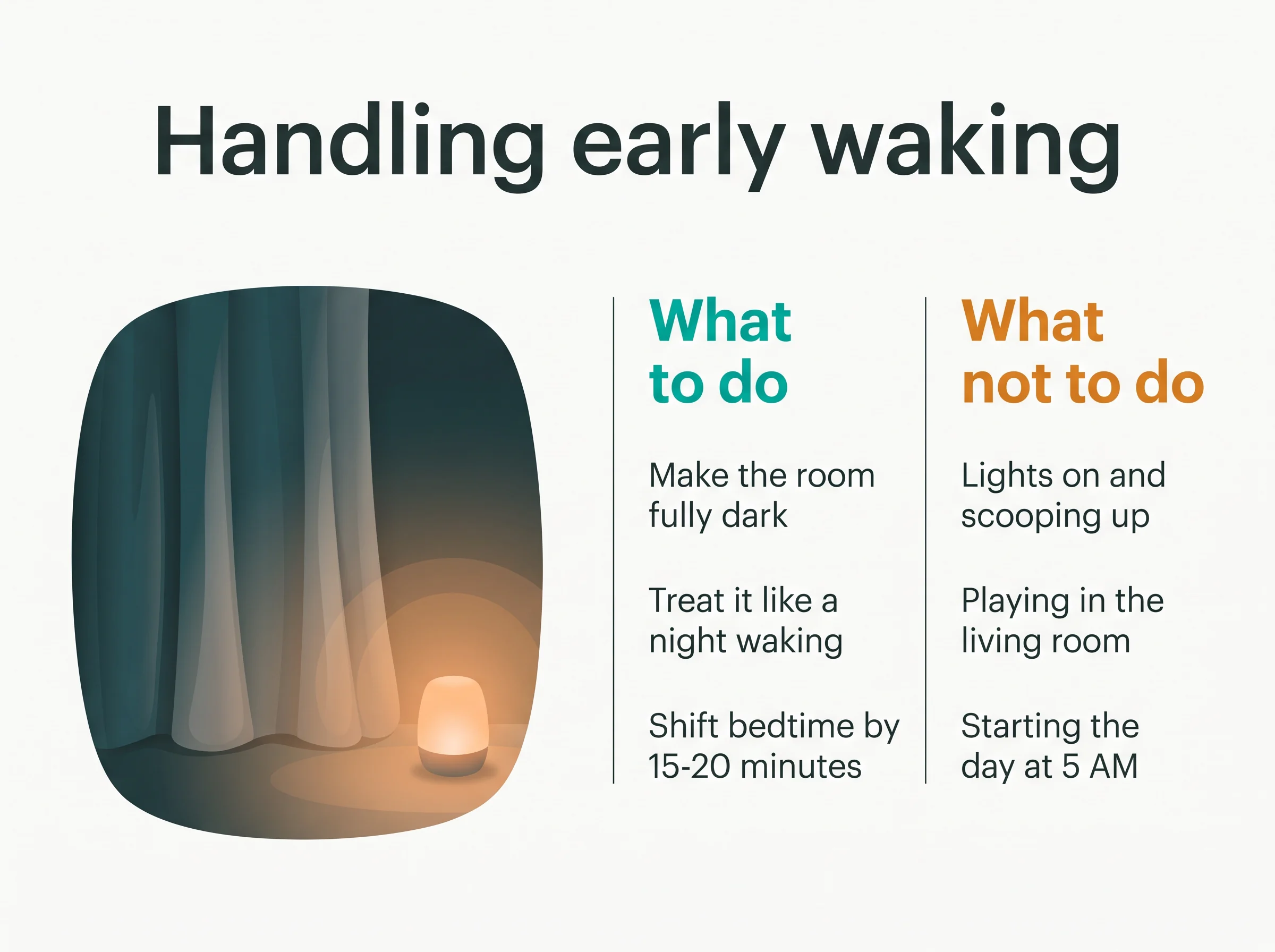
Make the room completely dark
- Block light with blackout curtains or blinds. Even a thin sliver of light through a gap becomes a trigger that wakes the body clock at dawn.
Treat the 5 AM wake like a night waking
- If they wake, keep the lights off and resettle them with a quiet, low voice. The message you're sending is that it's still sleep time.
Use white noise to mask early-morning sounds
- White noise gently covers outside noise (birds, traffic) so small triggers are less likely to wake your baby.
Adjust bedtime in 15-20 minute steps and give it at least a week
- Push bedtime later if they wake happy, earlier if they wake tired. The change won't show results the next day, so stick with it for a week or more.
Check the last wake window
- See whether the awake stretch before bed ran too long and tipped them into overtiredness. For age-appropriate timing, see our Baby Wake Windows Guide.
Set a consistent "morning start" time
- For example, keep the room dark until 6:30 AM, then turn on the lights and greet the day brightly at that hour. You're giving your baby a clear marker for when real morning begins.
What Not to Do
Well-meaning responses can actually cement early waking. Steer clear of these.
Turning on the lights and scooping them up right away
- If you brightly pick them up every time they wake at 5, your baby learns that waking early brings good things, and wakes even earlier.
Taking them to the living room to play or watch a screen
- If dawn leads to playtime, the reward can pull wake-up time earlier and earlier.
Just starting the day at 5 AM
- Once or twice is unavoidable, but if it becomes a habit, 5 AM settles in as the new wake time.
Giving up after two days and switching tactics
- Whether it's a bedtime shift or blackout, results usually take one to two weeks. Changing things every few days only confuses your baby.
Reflexively moving bedtime earlier when they wake happy
- Putting a well-rested baby to bed even earlier can fill their sleep tank sooner and make early waking worse.
How Long Until It Improves?
Most of the time, keeping the steps above consistent for one to two weeks helps it settle. Consistency is the key. That said, during sleep regressions at 4 or 8 months, or while teething, early waking can temporarily return: but it usually resolves once the phase passes.
As babies grow, wake time often settles naturally into the 6 to 7 AM range, so try not to rush it. However, if early waking starts suddenly, persists, and comes with other symptoms like pain, fever, or heavy snoring, it's worth checking with your pediatrician.
💡 Results usually appear after one to two weeks. Don't judge it after a few days, stay consistent.Finding the Cause with BebeSnap
Pinning down what's behind early waking ultimately takes a record of when your baby slept and woke. With the BebeSnap app, you can log sleep and wake times in a single tap and see at a glance whether the last wake window was appropriate. After a few days of data, deciding whether to push bedtime later or earlier gets much easier: and you can ask the AI sleep chat anything you're unsure about.
Frequently Asked Questions (FAQ)
Q: My baby wakes at 5 AM, is it okay to just start the day?
A: It's best not to. If you turn on the lights and take them to play whenever they wake at 5, your baby learns that waking early brings a reward, and wake-up time creeps earlier. Set a consistent "morning start" time, like 6:30 AM, keep the room dark until then, and respond quietly like a night waking.
Q: How do I tell early waking from a night waking?
A: A night waking is when your baby stirs in the middle of the night and usually resettles. Early waking is when they wake before 6 AM, can't fall back asleep, and start the day. If they stir at 5:30 but drift off within 20 to 30 minutes, that's a brief arousal, not early waking. Waking after 6 AM is developmentally normal.
Q: Should I make bedtime earlier or later?
A: Judge it by your baby's mood on waking. If they wake happy and ready to play, they've had enough sleep, so push bedtime 15 to 20 minutes later. If they wake cranky and still tired, that's overtiredness, so move bedtime earlier. Either way, give the change at least a week before judging whether it worked.
Q: The room is dark but my baby still wakes early. Why?
A: Light isn't the only cause. Near dawn, sleep is lightest, melatonin fades, and cortisol rises, so even small noises can wake your baby. Use white noise to mask outside sounds, and also check whether the last wake window before bed was appropriate and whether your baby was fed well enough before sleep.
References
See Your Baby's Sleep Pattern Emerge
Track sleep and watch wake windows and night stretches appear as clear graphs.
See what the app does firstMedical Disclaimer: This article is for informational purposes only and does not replace professional medical advice. If you have concerns about your baby's health, please consult a pediatrician.
You Might Also Like
Wonder Weeks Calculator: Your Baby's 10 Mental Leaps From the Due Date
Baby Weight Gain Calculator: Grams Per Day From Two Weigh-Ins
Baby Impetigo: Golden Crusts, Antibiotic Treatment, and When Nursery Is Safe Again
Baby Mouth Sores (Stomatitis): Causes, How to Tell Them Apart, and Dehydration Signs
You Might Also Like
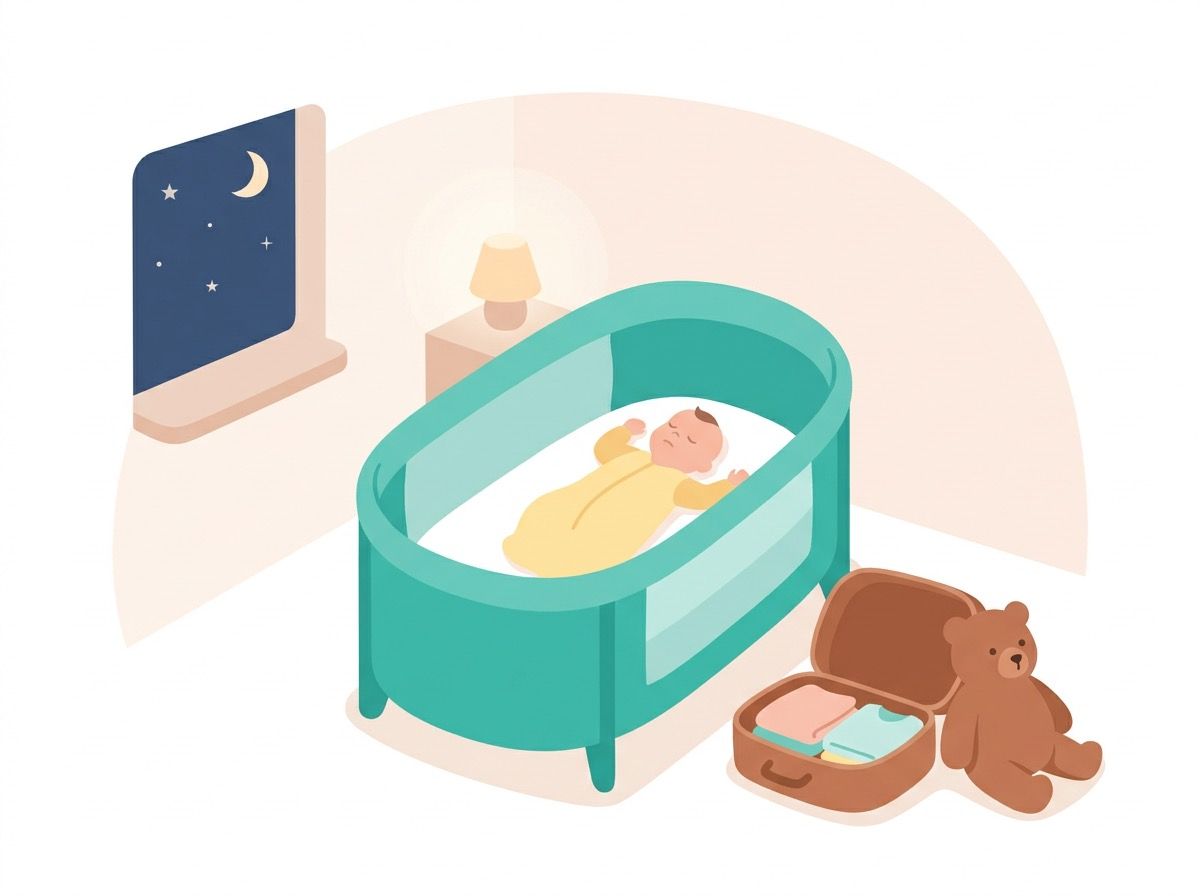
Baby Sleep While Traveling: Settling Them in a New Place and Resetting After
Worried a trip will wreck your baby's sleep? The first night is the hardest, and most babies reset within 3-7 days at home. What to pack, naps on the move, and safe sleep away.

Eat-Play-Sleep Routine: Feed on Waking, Then Play, Then Sleep
Eat-Play-Sleep means feeding right after waking, then playing, then sleeping: never feeding to sleep. It breaks the feed-sleep link for longer nights. Newborns have 30-60 min wake windows, so keep it loose; by 4-5 months a ~3-hour cycle settles in.

Summer Room Temperature for Babies: AC Tips & Sleeping Through Hot Nights
Is your baby sweating and waking on hot nights? Learn the ideal summer room temperature (24-26°C), humidity (40-60%), safe AC use, and hot-night sleep tips.