Summer Room Temperature for Babies: AC Tips & Sleeping Through Hot Nights
See Your Baby's Sleep Pattern Emerge
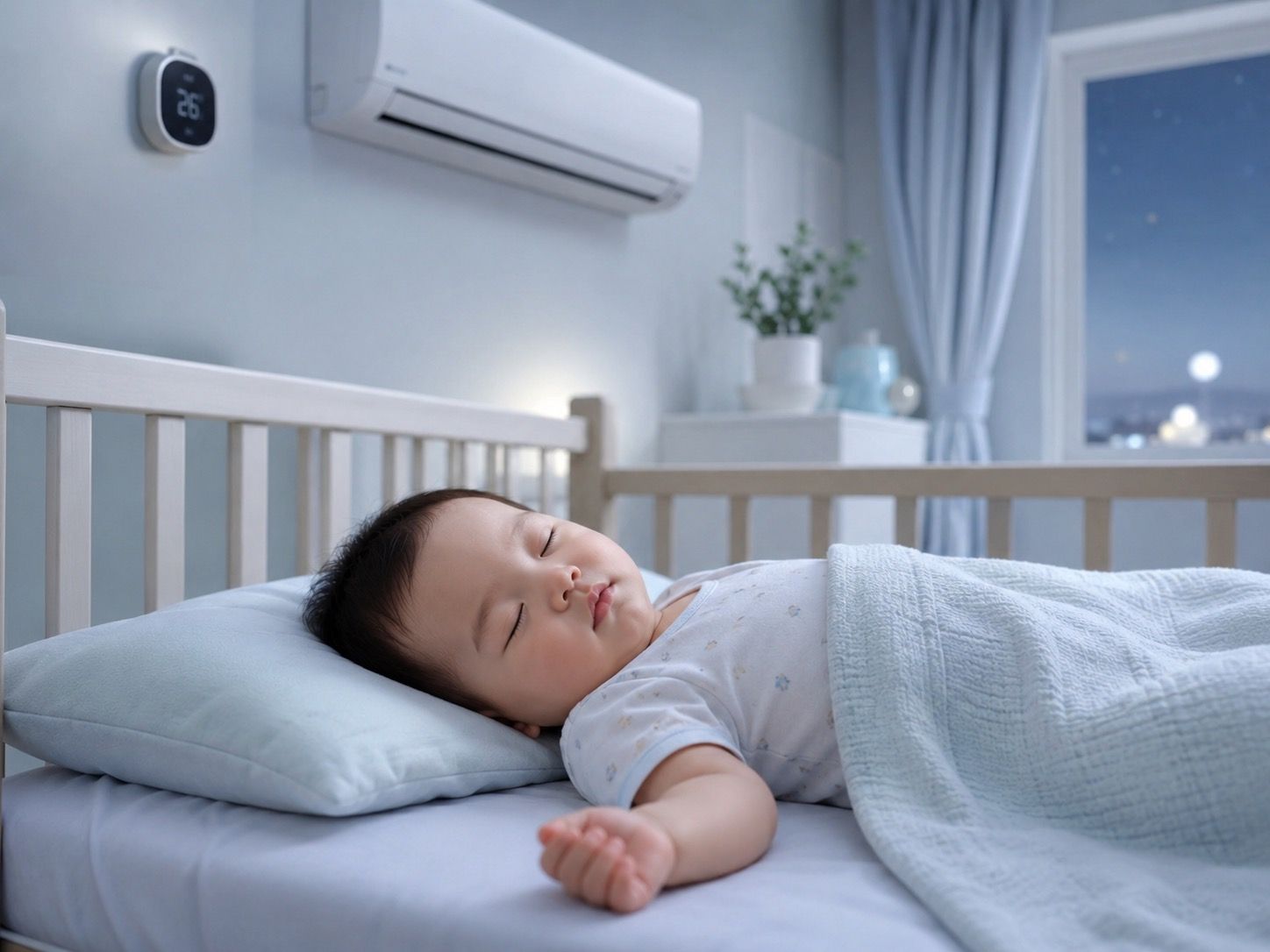
Get Started FreeYou hear the cry, stumble in, and find your little one with a sweaty back, damp hair stuck to their forehead, fussing in the dark. If you've lived this summer night, you know it well. You're torn: switch on the AC and worry they'll catch a cold, or leave it off and watch them swelter. I've been there too. The thing is, babies can't cool themselves down the way we can, so the room temperature is on us to manage. In this guide, let's talk through what to set the nursery to on a summer night (24-26°C / 75-79°F), how much humidity is comfortable (40-60%), how to use the AC and fan without worry, and why a cooler room is actually the safer choice.
Aim for 24-26°C, and Don't Stress Over Every Degree
A baby has a lot of skin for their size and isn't great at sweating it out yet, so they feel the heat far more than we do. That's why keeping the room steady makes such a difference.
| Item | A good range | Quick note |
|---|---|---|
| Room temperature | 24-26°C (75-79°F) | For the nursery, try not to go above 26°C |
| Humidity | 40-60% | Keeps mold and dust mites down |
| Indoor/outdoor gap | Within 5-6°C | Helps avoid "air-con chill" |
| Airing out | Every 2-3 hours | 5-10 minutes each time |
In summer, 24-26°C is the sweet spot for the nursery. In that range your baby isn't wilting from the heat or getting chilly. Humidity of 40-60% is comfortable too, because much higher and mold and dust mites move right in, while much lower leaves your baby's nose and throat dry and scratchy. Rather than fussing over single degrees, just aim to land somewhere in that range and let yourself relax about it.
💡 Keep a thermometer and humidity gauge near the crib. The temperature where you're lying down can be surprisingly different from the temperature at your baby's crib level.The AC Is Your Friend When Used Right
So many parents hold back because they've heard "AC gives babies colds." Honestly, used well, the AC is the very thing that protects your baby from the heat. It comes down to two things: keep the airflow off them, and set a sensible temperature.
1. Don't let the air blow straight on the baby
- Cold air hitting them directly drops their temperature fast and dries out their nose and throat.
- Point the vents toward the ceiling or a wall so the cool air drifts gently around the room.
2. Set it around 26°C
- Keep it only about 5-6°C cooler than outside; that's what helps you sidestep that run-down "air-con chill."
- If it's a blazing 33°C outside, around 27°C indoors is about right.
3. Crack a window every 2-3 hours
- Run the AC for hours and the air gets stuffy and stale.
- Just 5-10 minutes with a window open freshens things up and balances the humidity.
4. Don't forget the filter
- A dusty filter grows mold and bacteria that can irritate your baby's airways.
- Clean it once before you start using it for summer, then every couple of weeks after.
5. Keep hydration up
- An air-conditioned room gets quietly dry. For babies over 6 months, offer water; for younger ones, nurse or offer formula a bit more often.
Use the Fan to Move Air, Not to Blow on Baby
A fan is handy when you don't have AC, or alongside one. Just remember one rule: never let it blow directly on your baby. Direct airflow pulls moisture from their skin and can cool them down too much.
Instead, aim the fan at a wall or the ceiling and use it to keep the air moving. That way the warm air pooling in one corner mixes around and the whole room feels cooler. Pop it on oscillate and it's safer still, since the breeze never lingers on one spot. Run a fan gently alongside the AC and you'll feel cool without having to crank the thermostat down any further.
On Tropical Nights, Lighter Is Better: Not Heavier
When the overnight low won't drop below 25°C, babies struggle to fall asleep and to stay asleep. The mistake a lot of us make is adding a layer "just in case they get cold later." On a summer night, it's the opposite: dress them lighter.
How warm a blanket or sleepwear is gets measured in a unit called TOG. The lower the number, the cooler it is.
| Room Temperature | Recommended TOG | What to put them in |
|---|---|---|
| 24-25°C | 0.5 TOG | Short-sleeve bodysuit + thin sleep sack |
| 26-27°C | 0.2-0.5 TOG | Short-sleeve or sleeveless bodysuit |
| Above 27°C | 0-0.2 TOG | Diaper + one thin sleeveless layer |

In summer, a breathable cotton sleep sack or a single thin muslin layer is all your baby's crib needs, skip the thick blanket. And keep pillows, crib bumpers, and stuffed animals out, since they can cover the face and pose a risk.
When the Heat Keeps Waking Them, Try This
A baby who keeps waking from the heat usually has sweat pooled on their back or neck. A quick, gentle lukewarm bath before bed brings their temperature down and helps them drift off more easily. Skip cold water, though; it actually tenses the body up.
Cooling the room ahead of time helps a lot, too. Switch the AC on about 30 minutes before bedtime so the room's already comfortable when you lay them down. If they've sweated through their clothes, change them into a soft cotton set, and pick absorbent natural fabrics so a cold sweat doesn't leave their back damp. A good burp after feeding and a little top-up of fluids also help settle them for the night.
Why a Cooler Room Is the Safer One
The biggest safety issue in summer sleep is letting a baby get too warm. The American Academy of Pediatrics (AAP) clearly names overheating as one of the risk factors for Sudden Infant Death Syndrome (SIDS). When a baby is too hot, they can sink into sleep so deep that their natural "wake up" response dulls, which can affect how they regulate their breathing.
So the rule for safe summer sleep is "keep them cool," not "keep them warm." No hat, no piling on layers, and never cover their head. The AAP usually says dress a baby in one more layer than an adult would want: but on a sticky summer night, dressing them about the same as you, or even one layer lighter, is the right call.
⚠️ Signs they're too hot: sweaty hair, flushed cheeks, fast breathing, a chest that feels warm to the touch, and restlessness. If you spot these, strip off a layer right away and cool the room down.Newborns and Bigger Babies Aren't Quite the Same
Even in the same summer, a newborn and an older baby need slightly different care. Newborns are even shakier at managing their own temperature, so they're vulnerable to getting too cold as well as too hot.
| Category | Newborn (0-3 months) | Infant (4+ months) |
|---|---|---|
| Temperature sensitivity | Very high (watch both heat and cold) | Fairly steady |
| Direct AC airflow | Never | Never |
| Hydration | Breast milk/formula only (no water yet) | A little water after 6 months |
| Sleepwear | One thin layer + 0.5 TOG sleep sack | 0-0.5 TOG depending on temperature |
With newborns, cool hands and feet are often perfectly normal, so always check their temperature at the chest or the back of the neck. And for babies under 6 months, hydrate with breast milk or formula instead of water: water can throw off the delicate balance in such a small body.
Managing Summer Sleep with BebeSnap
- Sleep tracking: Log when your baby falls asleep and wakes, and see at a glance how tropical nights shift their patterns.
- Sleep environment notes: Jot down that night's room temperature and what you dressed them in to find the combo that suits your baby best.
- AI chatbot: Ask "Why does my baby keep waking in the heat?" or "What temperature is right?" late at night, whenever it's on your mind.
- Growth record sync: Look at sleep, feeding, and diaper logs side by side to see how summer is affecting your baby overall.
Frequently Asked Questions (FAQ)
Q: What AC temperature is right for a baby's room in summer?
A: Keep the room at 24 to 26°C. Even more important than the exact number is the gap between indoor and outdoor temperature, which should stay within 5 to 6°C to avoid the run-down feeling of over-cooling. So if it's 33°C outside, set the AC to around 27°C, and never let the airflow blow directly onto your baby.
Q: Is it okay to let a fan blow directly on my baby?
A: No. Direct airflow draws moisture from your baby's body and drops their temperature too far. Use the fan only to circulate air by pointing it toward a wall or ceiling.
Q: My baby keeps waking on hot nights. Should I add more clothing?
A: It's the opposite. On summer nights, dress them lighter. Feel the back of the neck, and if it's sweaty, remove a layer; a thin 0-0.5 TOG sleep sack is enough.
Q: Can I give a newborn water in summer?
A: No, you should not give water to babies under 6 months, because it can upset the delicate electrolyte balance in such a small body. Instead, keep your baby hydrated by offering breast milk or formula more frequently during hot weather. Babies over 6 months can have small sips of water in addition to their usual feeds.
References
See Your Baby's Sleep Pattern Emerge
Track sleep and watch wake windows and night stretches appear as clear graphs.
See what the app does firstMedical Disclaimer: This article is for informational purposes only and does not replace professional medical advice. If you have concerns about your baby's health, please consult a pediatrician.
You Might Also Like
Wonder Weeks Calculator: Your Baby's 10 Mental Leaps From the Due Date
Baby Weight Gain Calculator: Grams Per Day From Two Weigh-Ins
Baby Impetigo: Golden Crusts, Antibiotic Treatment, and When Nursery Is Safe Again
Baby Mouth Sores (Stomatitis): Causes, How to Tell Them Apart, and Dehydration Signs
You Might Also Like
Baby Sleep While Traveling: Settling Them in a New Place and Resetting After
Worried a trip will wreck your baby's sleep? The first night is the hardest, and most babies reset within 3-7 days at home. What to pack, naps on the move, and safe sleep away.
Baby Sunscreen & Sun Protection Guide: When to Start and How to Use SPF Safely
Babies under 6 months should avoid sunscreen, use SPF 30+ mineral formula every 90 minutes from 6 months on.

Baby Waking at 5 AM: What to Do and What Not to Do
Is your baby up at 5 AM? It's usually bedtime timing, room light, or the last wake window. Waking after 6 AM is normal. Here's what to do and what to avoid.