Breast Pump Flange Size Guide: How to Measure Your Nipple in mm and Choose the Right Fit
Stop Trying to Remember Feed Times
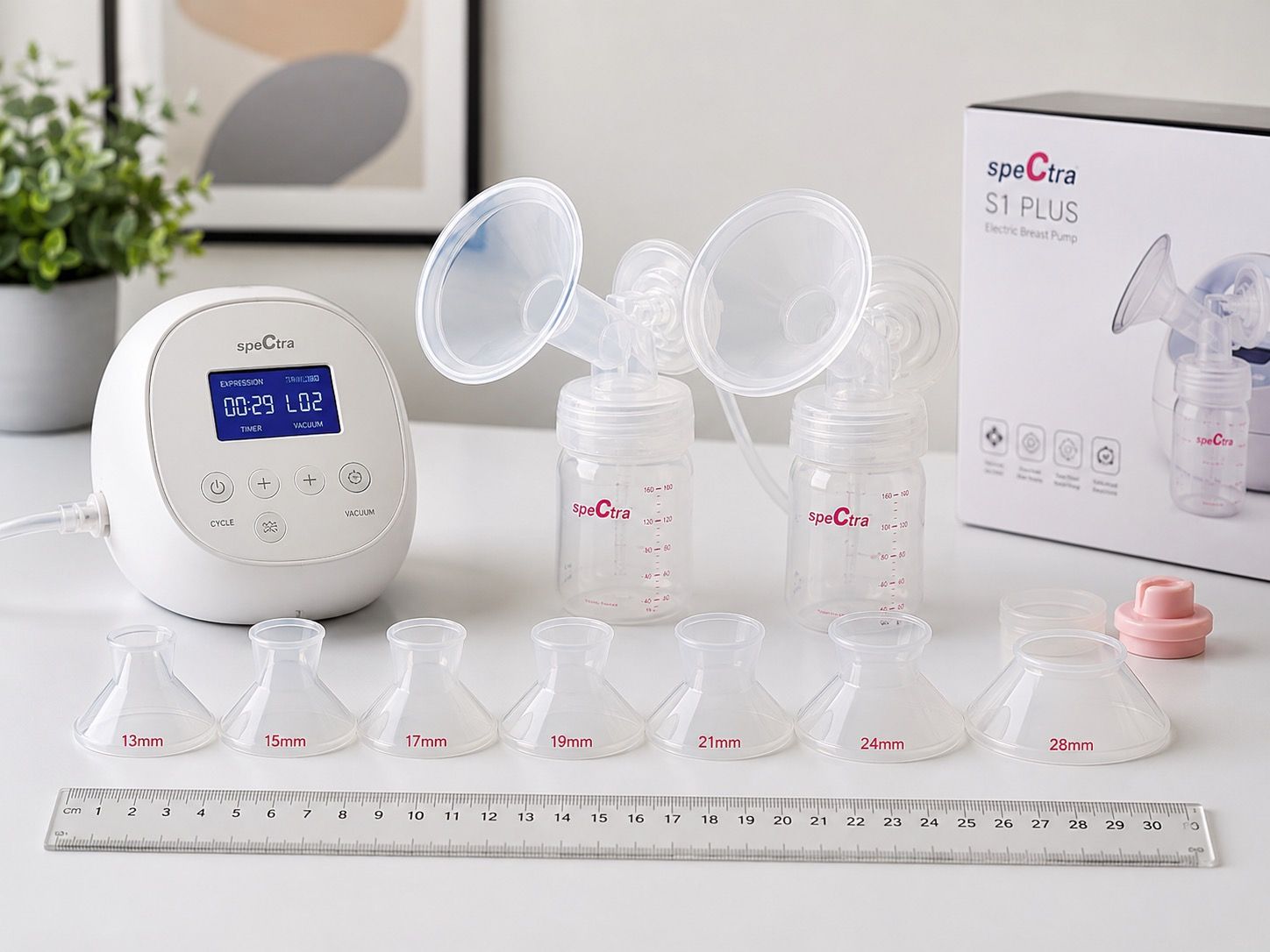
Get Started FreeIf pumping leaves you wincing every session, or you sit there forever and barely get any milk, you know how disheartening that is. So many of us blame ourselves, thinking "maybe my supply is low" or "maybe this pump is junk." But the real culprit is often something else entirely: the flange, that funnel that touches your breast, is the wrong size. Pumps usually come with big sizes like 24mm or 28mm by default, and honestly, those are way too big for a lot of us. The fix comes down to one thing: measure your own nipple, then pick a flange just 2-4mm bigger than that. Let's go through exactly how to measure, how to choose, and how to know whether it actually fits.
Why Flange Size Matters More Than You'd Think
The flange is the funnel-shaped piece that presses against your breast while you pump. When it fits your body, your nipple can move freely inside it, and milk comes out comfortably and efficiently. If it doesn't fit, even the priciest pump won't help you.
Here's what that looks like in practice. Too big, and it pulls in not just your nipple but the areola (the darker area) too. That causes rubbing and pain, and it compresses your ducts, which can actually lower your output. Too small, and your nipple tip keeps scraping the narrow tunnel wall, leaving it sore and sometimes even blocked. Just right? Your nipple glides smoothly in and out, with no pain and good output. That difference is huge.
💡 There's no guarantee the size that came with your pump (usually 24-28mm) fits you. Measuring yourself is the real answer.How to Measure Your Own Nipple
Measuring is most accurate right before or right after pumping, since that's when your nipple is closest to its working size. It's simple, so take your time and follow along.
1. Grab a measuring tool
- A millimeter ruler or a dedicated nipple ruler works great. A regular ruler from around the house is fine too
2. Measure the nipple diameter
- The key is to measure only the base of the nipple, not the areola. Measure across the widest part, from one edge to the other, in mm
3. Measure each side separately
- More women than you'd expect have different nipple sizes on each side. So measure both and use the right size for each
4. Add 2-4mm to your measurement
- Your starting size is your measured diameter plus 2-4mm. For example, a 17mm nipple means you start with a 19-21mm flange
Choosing a Size From Your Measurement
Here are general flange sizes based on your measured nipple diameter. Match the number you measured above to the table.
| Nipple Diameter (measured) | Recommended Flange Size |
|---|---|
| 11–13mm | 15mm |
| 14–15mm | 17mm |
| 16–17mm | 19mm |
| 18–19mm | 21mm |
| 20–22mm | 24mm |
| 23–25mm | 27mm |
| 26–28mm | 30mm |

Keep in mind this table is only a starting point. Fine-tuning while you actually pump is essential. How much your nipple swells during pumping varies from person to person, so a size a little smaller or larger than the table suggests might be your perfect fit.
How to Tell If the Size Fits
Once you've picked a size, it's time to check whether it truly fits. While you pump and right afterward, look for these:
- Your nipple moves freely inside the tunnel, without scraping the walls
- Little to no areola gets pulled in. Only the nipple should go in
- There's no pain or rubbing. If it hurts, the size is off
- Your nipple isn't white or red afterward. Discoloration means it's being squeezed
- Milk flows out without getting stuck
Common Situations and What to Do
A few situations come up a lot while pumping. Here's a quick rundown by symptom.
It hurts and your nipple fills the whole tunnel
- The size is too small. Try one size larger
A lot of areola gets pulled in and output is low
- The size is too large. Try one size smaller
Your two sides feel different
- Using a different size per breast is totally fine. It's very common
It fit before but doesn't now
- Nipple size can shift right after birth or during weaning. When that happens, just re-measure
If It Still Hurts Even With the Right Size
If you've done all of this and it still hurts, turn your attention to the suction strength. Cranking up the suction doesn't give you more milk. Don't set it to the maximum you can stand. Instead, set it to a level that feels comfortable and still gives good output. And if your nipple is cracked or sore, or the pain just won't quit, don't tough it out alone. Talk to a lactation consultant or your doctor. If an area of your breast turns red, hot and painful, or you have a fever of 100.4°F (38°C) or higher, call your doctor right away, since it could be mastitis.
See Your Pumping and Feeding at a Glance with BebeSnap
When you're wondering "did things actually get better after I changed the size?" having a record lets you compare objectively. Let BebeSnap help you keep an eye on both pumping and feeding.
- Pumping log: Record pump times and volume so you can compare output before and after a size change
- Feeding log: Manage milk fed directly at the breast and pumped milk all in one place
- AI chatbot: When you're curious why pumping hurts or your output dropped, just ask right away
Frequently Asked Questions (FAQ)
Q: How do I determine my breast pump flange size?
A: Measure your nipple diameter in mm and add 2-4mm to get your starting size. For example, a 17mm nipple starts with a 19-21mm flange. There's no guarantee the 24-28mm size that came with your pump fits you, so be sure to measure yourself.
Q: How do I measure my nipple diameter?
A: Use a mm ruler or nipple ruler to measure only the base of the nipple at its widest point, excluding the areola. Measuring is most accurate right before or after pumping, and since breasts can differ in size, measure each side separately and use the right size for each.
Q: How do I know if the flange size fits correctly?
A: During pumping, the nipple should move freely in the tunnel, little to no areola should be pulled in, and there should be no pain or rubbing. A white stripe or red mark on the nipple tip after pumping is a clear sign the flange doesn't fit.
Q: What if it still hurts even with the right size?
A: If you've got the flange size right but still feel pain, the suction may be too strong. Set suction to a comfortable level with good output, not the maximum you can tolerate. If your nipple is cracked or sore, or pain persists, consult a lactation consultant or doctor.
References
Stop Trying to Remember Feed Times
Log time, amount, and intervals. BebeSnap turns them into your baby's daily pattern.
See what the app does firstMedical Disclaimer: This article is for informational purposes only and does not replace professional medical advice. If you have concerns about your baby's health, please consult a pediatrician.
You Might Also Like
Wonder Weeks Calculator: Your Baby's 10 Mental Leaps From the Due Date
Baby Weight Gain Calculator: Grams Per Day From Two Weigh-Ins
Baby Impetigo: Golden Crusts, Antibiotic Treatment, and When Nursery Is Safe Again
Baby Mouth Sores (Stomatitis): Causes, How to Tell Them Apart, and Dehydration Signs
You Might Also Like

Tomato for Babies: When to Start, Skin and Seeds, and Why Cherry Tomatoes Are Never Served Whole
Tomato can start at 5-6 months once the skin and seeds are removed and it is cooked. Portions run 20-30g at 7-8 months and 30-40g at 9-11 months, counted together with fruit. Cherry tomatoes are the one vegetable Japan's childcare guidance names by name as something not to serve whole.

Complete Breast Pump Guide: Types, Flange Sizing, Pumping Schedule & CDC Cleaning Tips
Overwhelmed by breast pump options? Compare manual, electric, and wearable pumps, learn how to measure your flange size, follow a pumping schedule, and clean safely with CDC guidelines.
Bottle Nipple Size and Flow Guide: Choosing the Right Stage by Age and When to Switch
Newborns start with slow-flow stage 1. Match nipple stage and flow to your baby's age, and switch based on choking or frustration cues.