Baby Food Storage Guide: How Many Days in the Fridge, Months in the Freezer, and Safe Reheating
All Your Baby Records in One App
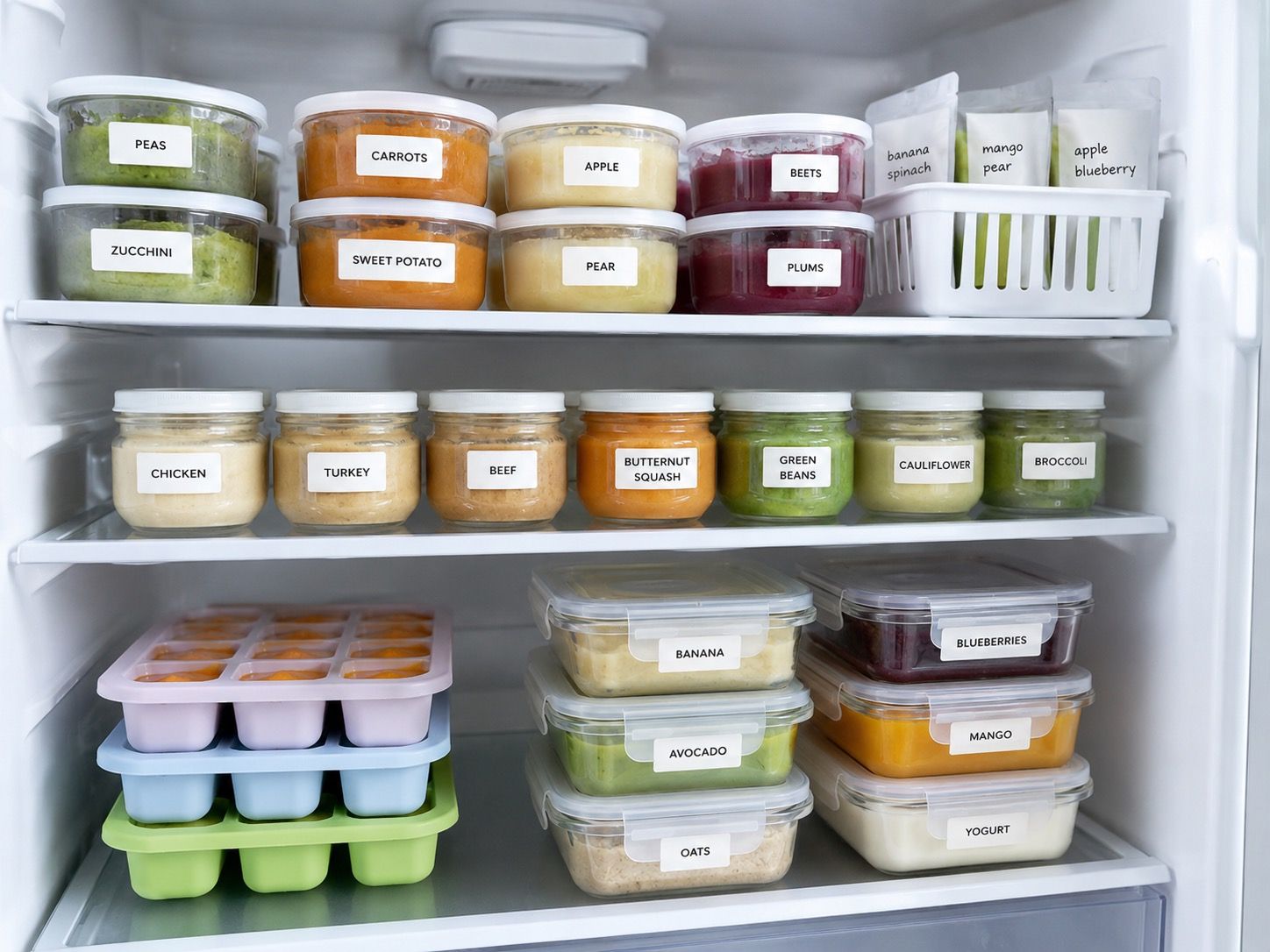
Get Started FreeThere's something deeply satisfying about spending a Sunday batch-cooking purees and lining your freezer with neat little cubes. But a few days later, you're standing at the fridge wondering, "Is this still okay to feed?" Because homemade baby food has no preservatives like the store-bought stuff does, it keeps for a shorter time than you might expect: generally 1–2 days in the fridge and 1–3 months in the freezer.
Push past those windows and, even if it looks perfectly fine, bacteria can grow and nutrients can fade, which means the food you worked hard on could end up upsetting your baby's tummy instead. So let's walk through how long each type of food is safe, how to portion freezer cubes the easy way, and the must-follow rules for thawing and reheating.
Storage Times by Ingredient: Just Remember This
How long homemade baby food keeps depends on what's in it. Stick this table on your fridge and you're set.
| Type | Fridge (32–40°F) | Freezer (0°F) |
|---|---|---|
| Fruit and vegetable purees | 1–2 days | 1–3 months |
| With meat, fish, or egg | 1–2 days | 1 month |
| Grain porridge (rice, oatmeal) | 1–2 days (rice within 24 hours) | 1–2 months |
| Mixed with breast milk | 24 hours | Not recommended |

As the table shows, anything with meat, fish, or egg gets the shortest window, because bacteria grow faster on those protein-rich foods. So even when these are frozen, aim to use them within 1 month before the nutrition and flavor start to slip.
💡 The moment a spoon that's touched your baby's mouth goes back into the dish, bacteria from saliva get mixed in and the food spoils quickly. That's why leftovers from the feeding bowl should always be tossed, even if they look fine.Portioning Freezer Cubes the Easy Way
The whole secret to freezing baby food is one thing: portion it into single servings before it goes in. That way you can pop out exactly what you need at each meal. Follow it step by step and it's genuinely simple.
First, cool the food quickly, within 1 to 2 hours, before portioning. Putting it in hot raises the freezer's internal temperature and can spoil whatever's sitting next to it. Once cooled, spoon it into a silicone cube tray or baby-food container, one slot at a time. Each slot becomes one serving, so you only take out as much as that day calls for.
After it freezes, transfer the cubes into a zip bag and write the date you made it, note the ingredient too, so you're not guessing later. And when you freeze, tuck them deep in the back of the freezer so they freeze fast: quicker freezing makes smaller ice crystals, which protects both texture and nutrients.
Thawing Is All About Not Giving Bacteria a Window
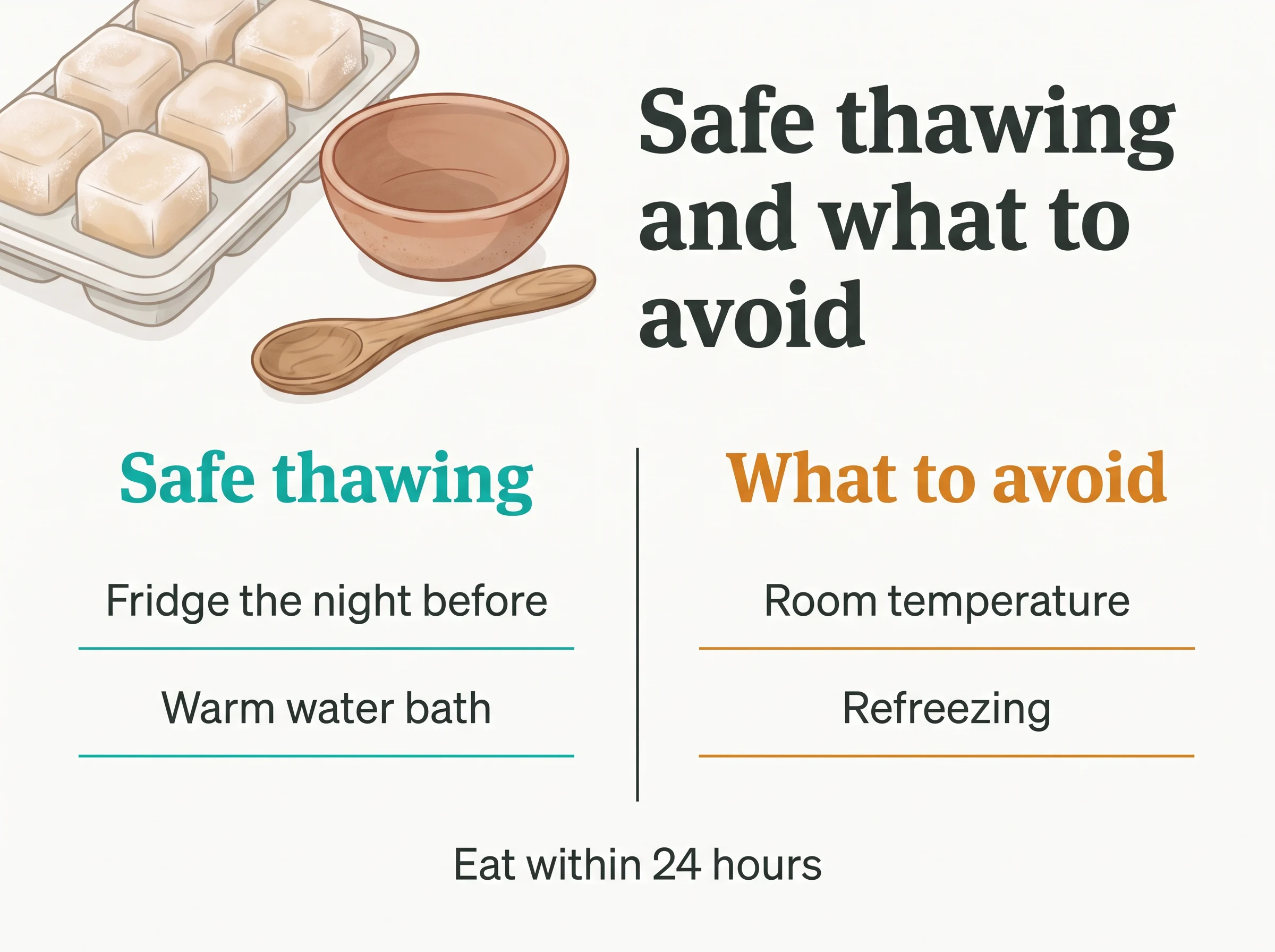
The one thing to watch when thawing is not letting food sit at lukewarm temperatures where bacteria multiply. That's why the safest method is moving it to the fridge the night before to thaw slowly. Short on time? Set the sealed container in warm water to thaw instead. The microwave is fast but heats unevenly and creates hot spots, so use caution. And never thaw on the counter at room temperature, bacteria can multiply rapidly in that time.
Eat fridge-thawed baby food within 24 hours (food thawed in a warm water bath or the microwave should be heated through and eaten right away), and never refreeze something you've already thawed, because each thaw-and-freeze cycle lets more bacteria build up.
Reheat Through to the Center, and Only Once
The thing that matters most with reheating is not serving food that's warm on the outside but cold in the middle. Heat it until it's steaming all the way to the center, then stir it evenly. Before feeding, drop a bit on your inner wrist to make sure it's just lukewarm. And skip reheating food you've already warmed and cooled once, since every reheat gives bacteria another chance to grow.
💡 In the microwave, some spots stay lukewarm while others get hot enough to burn. So after heating, always stir thoroughly to even it out, check the temperature, and then feed.Is Store-Bought Any Different?
Sealed jars or pouches of store-bought baby food can sit at room temperature until opened and have long shelf lives. But the second you open the lid, treat it exactly like homemade. Once opened, refrigerate it and use within 1–2 days (or as the label says).
And don't feed straight from the jar. Spoon a serving into a separate dish so the leftovers aren't contaminated by your baby's saliva and stay safe for next time. Even before opening, don't use anything past its expiration date.
When You're Wondering "Has This Gone Bad?"
When you're not sure, check four things. If the smell is sour or just off, toss it. If the color has changed or it's slimy or separated, toss it too. If you see even a speck of mold, throw out the whole thing, not just that spot. And finally, even if it looks perfectly fine, if it's past the storage window, let it go.
Because this is food for your baby, when in doubt, throw it out; it's always the safest choice. Remaking one meal is a far smaller hassle than a tummy ache.
Keeping Baby Food on Track with BebeSnap
Logging your baby's menu and the date you made it helps you stay on top of storage windows and feed safely.
- Solids log: Note which ingredients you fed and when, so storage times take care of themselves.
- Allergy log: Record your baby's reaction as you add new ingredients, so you can expand the menu with confidence.
- AI chatbot: When you're unsure about storing or reheating, ask anytime and get an answer right away.
Frequently Asked Questions (FAQ)
Q: How many days can I store homemade baby food in the fridge and freezer?
A: Fruit and vegetable purees keep 1-2 days in the fridge and 1-3 months frozen; foods with meat, fish, or egg keep 1-2 days in the fridge and 1 month frozen; and grain porridge keeps 1-2 days in the fridge (rice within 24 hours) and 1-2 months frozen. Baby food mixed with breast milk lasts 24 hours in the fridge and is not recommended for freezing.
Q: Can I refreeze thawed baby food?
A: No. Never refreeze baby food you have already thawed once. Eat fridge-thawed baby food within 24 hours. The safest thawing method is moving it to the fridge the night before to thaw slowly, since leaving it at room temperature lets bacteria multiply rapidly.
Q: How long does store-bought baby food keep after opening?
A: Sealed store-bought baby food can be kept at room temperature until opened, but once opened it is the same as homemade. Refrigerate it and use within 1-2 days, or as the label says. Don't feed from the jar; spoon a serving into a dish so leftovers aren't contaminated by saliva.
Q: How can I tell if baby food has spoiled?
A: Discard it if it smells sour or off, looks discolored, slimy, or separated, or shows even a tiny bit of mold. Throw it out if it is past its storage time, even if it looks fine. When in doubt, throw it out; that's always the safest choice.
References
All Your Baby Records in One App
Feeding, sleep, diapers, growth: every daily record in one place.
See what the app does firstYou Might Also Like
Tomato for Babies: When to Start, Skin and Seeds, and Why Cherry Tomatoes Are Never Served Whole
Apple for Babies: Stage-by-Stage Portions and When Raw Apple Is Safe
Spinach for Babies: When to Start, Why Boiling Matters, and When to Skip It
Potato for Babies: When to Start, Safe Shapes, and Why Never to Blend It
You Might Also Like
Decoding Baby Cries: Reading Hunger, Sleepy, Discomfort, and Pain by Sound and Body Cues
Baby cries can be read through sound patterns and body cues. Here's how to tell hunger, sleepy, discomfort, and pain apart, the pre-cry signals, why crying peaks around 6 weeks, and 5 soothing moves.
Tomato for Babies: When to Start, Skin and Seeds, and Why Cherry Tomatoes Are Never Served Whole
Tomato can start at 5-6 months once the skin and seeds are removed and it is cooked. Portions run 20-30g at 7-8 months and 30-40g at 9-11 months, counted together with fruit. Cherry tomatoes are the one vegetable Japan's childcare guidance names by name as something not to serve whole.

Sibling Jealousy & New Baby Regression | Potty Accidents, Baby Talk: What to Do
Is your older child suddenly having potty accidents and using baby talk after the new baby arrived? This regression is normal, usually settling by age 4. Just 10 minutes a day helps.