Introducing Eggs to Baby: Spit-Up vs Allergy, How to Tell

Stop Trying to Remember Feed Times
Get Started FreeThe first time you feed your baby egg and they dribble something milky down their chin, your heart skips a beat, is this an allergy? The short answer: if it's a small amount that flows out effortlessly and your baby keeps playing happily, it's almost always normal spit-up. But if repeated vomiting and hives show up within minutes to 2 hours of eating egg, it could be an allergic reaction. This guide walks you through how to introduce egg safely and how to tell normal spit-up from an allergic reaction.
When and How Should You Start Egg?
You've probably heard "wait until after age one for egg whites." Current guidance says the opposite. Delaying egg because you're worried about allergies can actually raise the risk. That's why egg should be introduced like any other food around 6 months, once solids are established.
💡 A growing body of research shows that introducing allergens early, around 4-6 months, lowers the risk of egg allergy. The old idea that "later is safer" simply isn't supported by evidence.That said, if your baby is higher-risk (with severe eczema or an already-diagnosed food allergy) it's safest to check with your pediatrician or an allergist before starting. Some families plan the first taste for the morning, during clinic office hours, so help is close if needed.
First Egg, in 3 Steps From Yolk to White
Most of the proteins that trigger egg allergy are concentrated in the white. Starting with the gentler yolk and then moving to the white makes it easier to pinpoint the cause and severity if a reaction does appear.
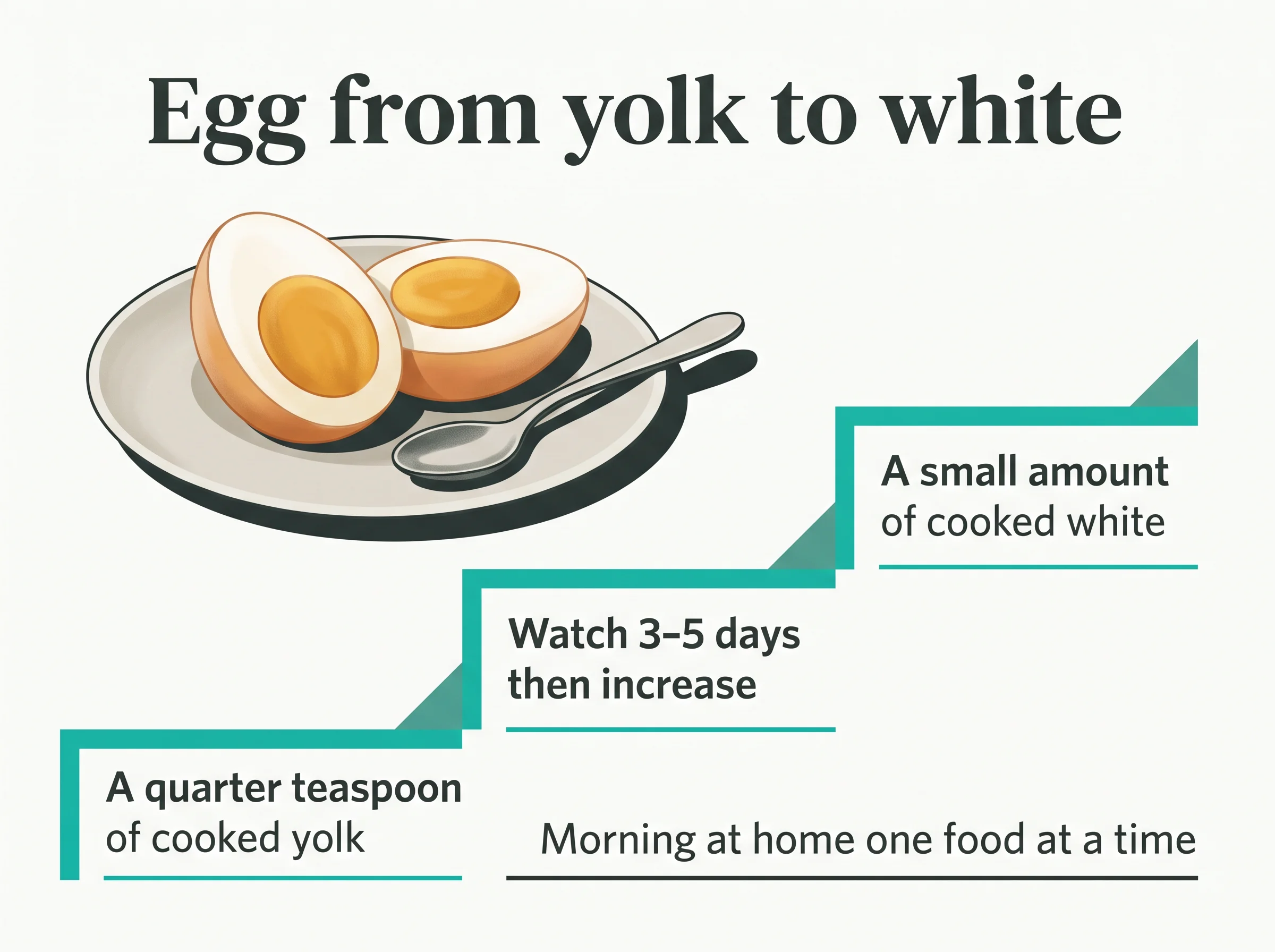
1. Start with a tiny bit of well-cooked yolk
- Mix about a quarter teaspoon of fully cooked yolk into other food, in the morning, at home
- Why fully cooked? Undercooked egg carries a salmonella risk, and thorough cooking also lowers how allergenic the egg is
2. Watch for 3-5 days, then increase
- If there's no reaction like hives or repeated vomiting, gradually raise the amount of yolk
- Don't add any other new food during this window
3. Introduce a small amount of well-cooked white
- Once yolk goes smoothly, start well-cooked white in a small amount
- Because the white is more likely to trigger a reaction, keep the same rules: small amount, morning, at home
The basic rules for any new food apply to egg too: one food at a time, 3-5 days apart, in the morning when you can respond, at home, starting small. This matters because it lets you identify exactly what caused a reaction if one occurs.
⚠️ Always serve egg with both yolk and white fully cooked. Soft-boiled or poached eggs and sauces or desserts made with raw egg still need caution even after age one.Spit-Up or Allergy? Here's How to Tell
Around 6 months, the muscle between a baby's stomach and esophagus is still immature, so spitting up a little after eating is extremely common. This normal spit-up is a small amount that flows out effortlessly, and the baby smiles, keeps playing, and gains weight well afterward. An allergic or abnormal vomit, on the other hand, comes forcefully and repeatedly soon after eating, and brings along other signs like hives or lethargy.
| Feature | Normal spit-up | Allergic / abnormal vomiting |
|---|---|---|
| Timing | During or right after feeding | Within minutes to 2 hours of egg |
| Amount / look | Small, flows out effortlessly | Repeated, forceful |
| Other symptoms | None | Hives, redness/swelling around mouth, cough, diarrhea |
| Baby's condition | Playing and feeding as usual | Floppy or very fussy, pale |
| Pattern | Several times a day is normal | Repeats every time egg is eaten |
| What to do | Fine to just keep watching | Stop egg, consult pediatrician (call 911 right away if pale or floppy, or if vomiting is severe or comes with hives) |

One more thing worth knowing: if your baby vomits repeatedly and forcefully about 1-4 hours after eating egg, turning pale and floppy, this could be food protein-induced enterocolitis syndrome(FPIES), which differs from an immediate allergy. It's marked by severe vomiting and lethargy without hives, so if you see this kind of delayed, repeated vomiting, call your pediatrician right away; if your baby is pale, floppy, or hard to wake, call 911. The vomiting and diarrhea of FPIES can lead to dehydration that needs IV fluids.
Signs That Mean Call 911 Without Hesitating
Most egg reactions are mild, like a few hives, and pass quickly. In that case, stop the egg, jot down the symptoms, and call your pediatrician; the AAP advises stopping a new food and consulting your pediatrician if a rash, vomiting, or diarrhea appears. Allergic reactions usually show up within minutes or a few hours of eating, so keep a close eye on your baby through that time. But the signs below can mean anaphylaxis and need an immediate response.
⚠️ Trouble breathing or wheezing, hives spreading over the whole body, swelling of the lips, tongue, or throat, vomiting that is severe or comes with other symptoms, going pale and floppy, or fading consciousness: if you see even one of these, call 911 right away.If you have a previously prescribed epinephrine auto-injector, inject it into the outer thigh right away, then call 911. While you wait for help, hold your baby slightly upright if breathing is hard; if they're limp and dizzy, lay them down and raise the legs a little; if they're vomiting, lay them on their side so the airway stays clear. Any egg that has caused a severe reaction should only be tried again after talking with a specialist.
Track Egg Reactions With BebeSnap
For foods with allergy potential like egg, recording "when, how much, and what reaction" matters more than anything. A record is what reveals whether it's normal spit-up or a repeating abnormal reaction, and it makes your doctor's visit far more accurate.
- Log the egg introduction date, amount, and time in one place
- Note any spit-up or rash with a photo
- Use AI analysis to spot patterns between a food and a reaction
- Share the record directly at your appointment
Frequently Asked Questions (FAQ)
Q: When is the best time to start egg?
A: Introduce egg like any other food around 6 months, once solids are established. Delaying it out of allergy fears can actually raise the risk, so early introduction around 4-6 months is protective. However, higher-risk babies with severe eczema or another diagnosed food allergy should check with a pediatrician before starting.
Q: How can I tell if spitting up after egg is an allergy?
A: If it's a small amount that flows out effortlessly and your baby keeps playing normally, it's usually normal spit-up. Forceful vomiting within minutes to 2 hours of eating egg may be an allergic reaction, so stop the egg and consult your pediatrician. If the vomiting is severe or comes with hives, redness around the mouth, cough, paleness, or lethargy, it can be anaphylaxis: call 911.
Q: Do I have to give yolk before white?
A: Because allergy proteins are more concentrated in the white, starting with a small amount of well-cooked yolk, increasing it after 3-5 uneventful days, then moving to well-cooked white makes reactions easier to track. Keep the standard rules: one new food at a time, in the morning, at home, starting small.
Q: Does egg really have to be fully cooked?
A: Yes, cook both the yolk and white thoroughly. Undercooked egg carries a salmonella risk, and thorough cooking also lowers how allergenic the egg is. Soft-boiled or poached eggs, and sauces or desserts containing raw egg, still need caution even after age one.
References
- AAP HealthyChildren - Starting Solid Foods
- AAAAI - Egg Allergy
- CDC - Infant and Toddler Nutrition
- NHS - Food allergies in babies and young children
- AAP HealthyChildren - Anaphylaxis
- AAP HealthyChildren - When to Introduce Egg, Peanut Butter and Other Common Food Allergens to a Baby
- AAP HealthyChildren - Food Allergies in Children
- AAP HealthyChildren - Causes of Vomiting in Infants & Children
- NHS - When to get urgent medical help for babies and children under 5
Stop Trying to Remember Feed Times
Log time, amount, and intervals. BebeSnap turns them into your baby's daily pattern.
See what the app does firstMedical Disclaimer: This article is for informational purposes only and does not replace professional medical advice. If you have concerns about your baby's health, please consult a pediatrician.
You Might Also Like
Wonder Weeks Calculator: Your Baby's 10 Mental Leaps From the Due Date
Baby Weight Gain Calculator: Grams Per Day From Two Weigh-Ins
Baby Impetigo: Golden Crusts, Antibiotic Treatment, and When Nursery Is Safe Again
Baby Mouth Sores (Stomatitis): Causes, How to Tell Them Apart, and Dehydration Signs
You Might Also Like

Tomato for Babies: When to Start, Skin and Seeds, and Why Cherry Tomatoes Are Never Served Whole
Tomato can start at 5-6 months once the skin and seeds are removed and it is cooked. Portions run 20-30g at 7-8 months and 30-40g at 9-11 months, counted together with fruit. Cherry tomatoes are the one vegetable Japan's childcare guidance names by name as something not to serve whole.

When to Take Baby to the ER | Infant Emergency Signs, Fever & Breathing Red Flags
ER vs doctor's office vs home care, how do you decide when your baby is sick? Babies under 3 months with a temperature of 100.4°F or higher need the ER immediately. Get age-specific and symptom-specific guidelines here.

Night Weaning Guide: When to Stop Night Feeds and How to Taper Without Failing
Between 6 months and a year, some babies no longer need night feeds nutritionally. Check the readiness signs, then drop one feed every 2-3 days or cut 20-30ml at a time to taper gently.