Summer Baby Food Safety: Bottle Sterilizing, Feeding Hygiene, and Cooler Tips to Prevent Food Poisoning
All Your Baby Records in One App
Get Started FreeHot, humid summer is the season when bacteria multiply most happily. A bottle of formula or a dish of baby food left out for a moment spoils far faster than it would in winter. On top of that, your baby's immune system isn't fully developed yet, so food an adult would handle fine can easily upset a little tummy. That's why in summer, prepared formula should sit no longer than 2 hours at room temperature, a bottle once feeding has started no longer than 1 hour, and homemade baby food no longer than 2 hours.
Today we'll walk through everything that matters more in the heat: sterilizing bottles and pump parts, storing and reheating baby food, packing a cooler for outings, and what to do (and when to head to the doctor) if food poisoning symptoms show up.
Why Things Spoil So Fast in Summer
The temperature range where bacteria grow fastest is often called the danger zone, roughly between 40°F and 140°F. A hot indoor room in midsummer sits right in the middle of it. In that range, bacteria can double every 20 minutes, so in just an hour or two they can multiply into tens of thousands you can't see.
Formula, breast milk, and baby food are especially rich in protein and nutrients, which makes them a prime feeding ground for bacteria. So in summer, stick to the times below.
| Type | Room temp (summer) | Fridge |
|---|---|---|
| Prepared formula | Within 2 hours (1 hour once feeding starts) | 24 hours |
| Expressed breast milk | 4 hours (less in heat) | 4 days |
| Homemade baby food | Within 2 hours (1 hour in heat) | 1–2 days |

Sterilizing Bottles and Pumps: One Extra Round in Summer
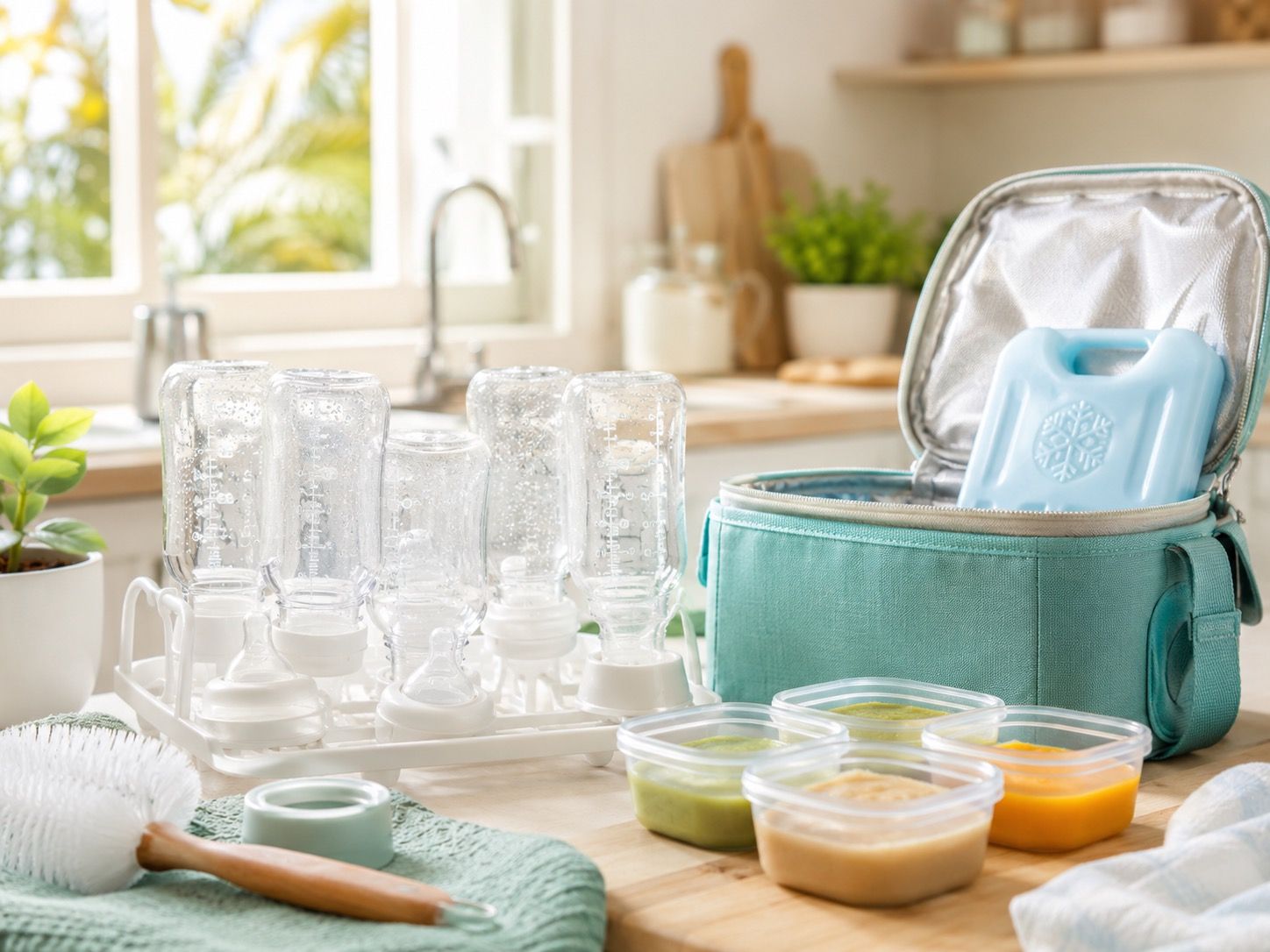
Even at an age when you'd normally cut back on sterilizing, the rainy season and midsummer let germs breed easily, so sterilizing every time buys you peace of mind. Wash bottles right after use, scrubbing every corner with a dedicated brush and rinsing well before you sterilize.
If you boil to sterilize, keep every piece under the water and boil for at least 10 minutes, as the UK's NHS advises; silicone nipples wear out faster this way, so check them often for tears or cracks. Pump parts are the same: take apart every piece that touches milk, then wash and sterilize after each use. In summer, drying everything completely matters most: any leftover moisture becomes a spot for bacteria to grow. Air-dry upside down or use your sterilizer's drying function.
Mixing Formula With 70°C Water and Reheating Safely
The water you use to mix formula deserves extra care in summer too. The World Health Organization recommends mixing powdered formula with water boiled and cooled to no lower than 70°C, which is hot enough to kill bacteria that may be in the powder. After mixing, cool the bottle under running cold water to 98–100°F before feeding.
The same goes for reheating refrigerated baby food or breast milk. Heat baby food until it's steaming to the center, then stir it evenly to be sure bacteria are gone, and drop a bit on your inner wrist to check it's just lukewarm. Avoid reheating something you've already warmed and cooled once. And never let food thaw slowly on the counter at room temperature, since bacteria multiply rapidly during that time.
For Outings, Pack a Cooler and Ice Packs
One extra item in your bag is worth it in summer: a cooler bag. Expressed breast milk packed with frozen ice packs stays safe to transport for up to 24 hours. Without ice packs at room temperature, 4 hours is the limit, and less on a hot day.
Don't carry formula pre-mixed. The safest approach is to bring boiled water in a thermos that keeps it at 70°C (158°F) or hotter and the powder measured out separately, then mix it fresh on the spot right before feeding and cool it to body temperature. If you do carry pre-mixed formula in a cooler, keep it under 2 hours.
💡 A parked car in summer heats up fast; it can climb 20°F in just 10 minutes. Never leave a bottle or baby food in the car, even for a few minutes; it hits the danger zone within minutes and bacteria explode.Food Poisoning Symptoms and Handling Dehydration
Even with all these precautions, if your baby eats spoiled food, vomiting, diarrhea, and fever usually show up within a few hours to a day. The scariest part isn't the food poisoning itself but the dehydration: babies are so small that losing even a little fluid can quickly become dangerous.
With vomiting or diarrhea, the key is giving an oral rehydration solution (an infant electrolyte drink from the pharmacy) in small amounts, often. A big volume at once tends to trigger more vomiting, so start with a teaspoon every 5–10 minutes and build up slowly. Keep breastfeeding, or keep giving formula mixed at its usual strength (never watered down). Skip sports drinks and juice, since their high sugar can actually make diarrhea worse.
When to Head Straight to the Doctor
Mild cases can be watched at home while you replace fluids, but if you see any of these signs, get medical care without delay.
- Signs of dehydration: fewer than six wet diapers a day, fewer tears when crying, a very dry mouth, or a sunken soft spot on the head (call 911 if there are no tears or wet diapers at all, or the eyes look sunken)
- Lethargy: floppy, unusually sluggish, or hard to wake (call 911 right away)
- Bloody stool or severe pain: blood or mucus in the stool, or intense tummy pain (call 911 for a lot of blood or severe pain)
- High fever or nonstop vomiting: a fever that won't come down, or vomiting for more than half a day
In particular, if a baby under 3 months old has a fever, or can't keep down even water and keeps vomiting, go to the doctor right away. When you're not sure, getting seen before it's too late is always the safest choice.
Preventing Summer Food Poisoning with BebeSnap
In summer, logging feeding and mealtimes lets you see at a glance how long something has been out, so you slip up less often.
- Feeding and solids log: Note the time you fed and you'll never lose track of how long food has sat at room temperature.
- Diaper log: Recording the frequency and look of diarrhea helps you explain things accurately at the clinic.
- AI chatbot: When vomiting or diarrhea worries you, ask right away whether it's a situation that calls for a doctor.
Frequently Asked Questions (FAQ)
Q: How long can prepared formula sit out in summer?
A: In summer, keep prepared formula at room temperature for no more than 2 hours, and a bottle your baby has started feeding from for no more than 1 hour. It keeps up to 24 hours refrigerated, but any leftover formula should be thrown out regardless of time, because bacteria from saliva get in once your baby has fed from it.
Q: How many minutes should I boil bottles to sterilize in summer?
A: Boil everything for at least 10 minutes with every piece under the water, as the UK's NHS advises; silicone nipples wear out faster this way. Since germs breed easily in the rainy season and midsummer, sterilize every time regardless of your baby's age, and dry everything completely afterward so leftover moisture doesn't let bacteria grow back.
Q: How should I pack breast milk and formula for outings?
A: Expressed breast milk packed with frozen ice packs in a cooler bag stays safe for up to 24 hours. Don't pre-mix formula; carry boiled water in a thermos that keeps it at 70°C (158°F) or hotter and the powder separately, then mix it fresh right before feeding and cool it to body temperature. Never leave a bottle in a parked car, which heats up fast in summer.
Q: When should I take my baby to the doctor for vomiting and diarrhea?
A: Call your pediatrician right away if your baby has fewer than six wet diapers a day, fewer tears, a very dry mouth, or a sunken soft spot, if a baby under 3 months has a fever, or if even water comes back up. Call 911 if your baby is lethargic or hard to wake, has no tears or wet diapers at all, or has a lot of blood in the stool or severe tummy pain.
References
All Your Baby Records in One App
Feeding, sleep, diapers, growth: every daily record in one place.
See what the app does firstYou Might Also Like
Tomato for Babies: When to Start, Skin and Seeds, and Why Cherry Tomatoes Are Never Served Whole
Apple for Babies: Stage-by-Stage Portions and When Raw Apple Is Safe
Spinach for Babies: When to Start, Why Boiling Matters, and the One Time to Skip It
Potato for Babies: When to Start, Safe Shapes, and Why Never to Blend It
You Might Also Like
Decoding Baby Cries: Reading Hunger, Sleepy, Discomfort, and Pain by Sound and Body Cues
Baby cries can be read through sound patterns and body cues. Here's how to tell hunger, sleepy, discomfort, and pain apart, the pre-cry signals, why crying peaks around 6 weeks, and 5 soothing moves.

Transitioning Out of Swaddling and the Moro Reflex: Timing and How-To
Stop swaddling the moment your baby starts rolling, usually 2-4 months. Learn step-by-step weaning for babies who wake from the Moro reflex.

Toddler Tantrums: Why They Happen and How to Respond in the Moment
Tantrums aren't bad behavior; they're a normal part of brain development from ages 1–3. Common myths, a 4-step response, prevention, and red flags.