Baby Food Freezer Cube Method: Batch Cooking, Portioning, and Mix-and-Match
Stop Trying to Remember Feed Times
Get Started FreeYou simmer one big pot of porridge, feed the same flavor for three days, and then one morning your baby clamps their mouth shut. Worse, if a rash shows up, there is no way to tell which of the six ingredients in that pot caused it. The freezer cube method solves both problems at once: cook a plain base, cook each ingredient separately, freeze them as single-ingredient cubes, and spoon them onto the base at mealtime. This guide walks through texture by stage, how to prep and portion cubes ingredient by ingredient, and how to space new foods 3-5 days apart.
What Is the Freezer Cube Method?
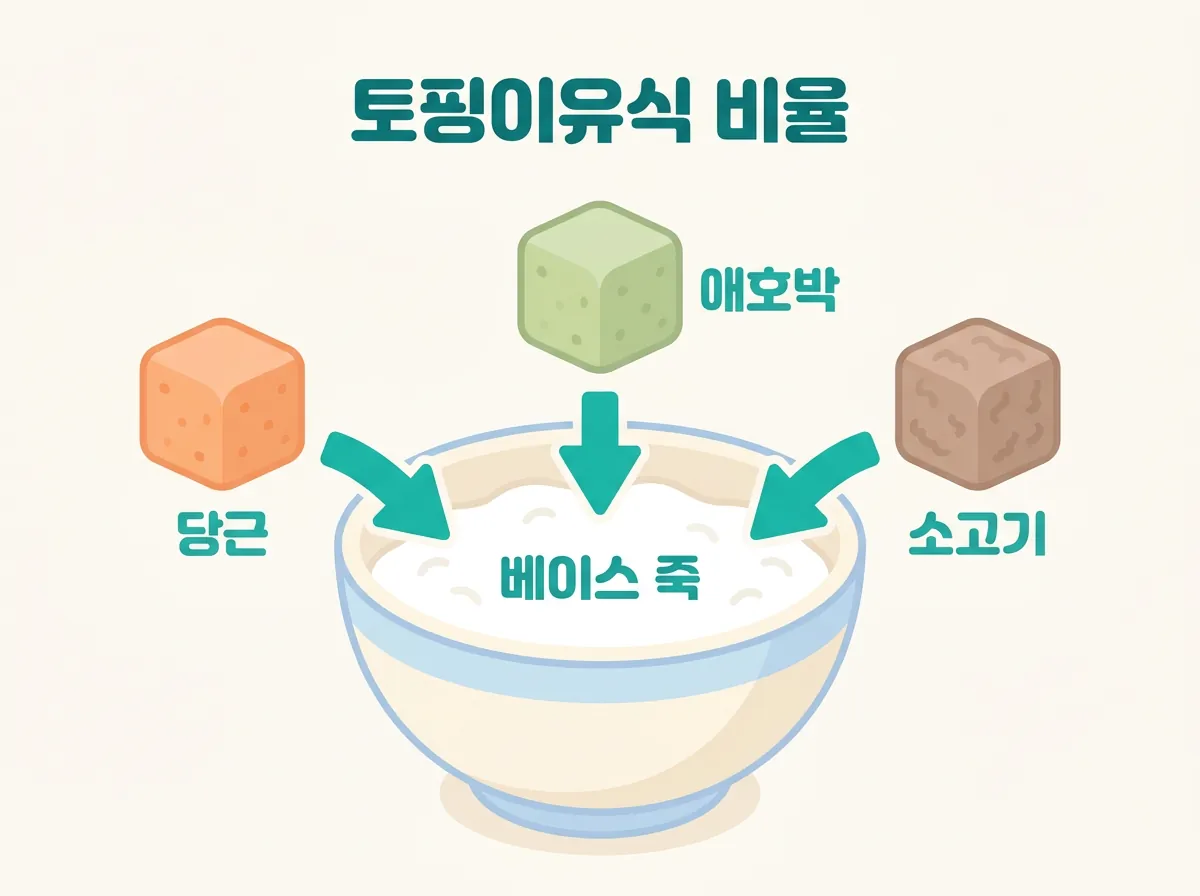
Instead of blending everything into one uniform puree, you keep a base (usually a grain porridge or cereal) and a set of toppings (vegetables, protein, fruit) separate until the moment you serve. Think of a rice bowl with toppings arranged on top rather than stirred in.
The traditional approach is the combined puree: rice, beef, carrot, and zucchini all cooked in one pot and blended into a single dish. It is simpler to make, but once it is blended there is no going back.
| Aspect | Combined puree | Freezer cube method |
|---|---|---|
| Cooking | All ingredients simmered together | Each ingredient cooked and frozen on its own |
| Combinations | Fixed once blended | Rebuilt fresh at every meal |
| Allergy tracing | Hard to tell which food triggered a reaction | One cube equals one food, so the source is clear |
| Texture | Everything ends up the same consistency | Each food chopped to its own coarseness |
| Prep time | One session, very simple | Slower to set up, far faster afterward |
Why Cook Everything Separately?
The extra prep buys you three real advantages.
1. You can pinpoint an allergen When exactly one new cube goes on the plate, a reaction points to exactly one food. With a combined puree you would have to remove six ingredients one at a time to find the culprit.
2. You can tune texture per food At the same age, potato mashes smoothly while beef stays fibrous. Cooking separately lets you blend the meat finer and leave the vegetables slightly coarser, which makes the move toward chewing much gentler.
3. Your baby learns individual flavors In a blended porridge everything tastes like one thing. Served on top, carrot tastes like carrot and beef tastes like beef, and you quickly see which foods get accepted and which get pushed back out.
There is a practical bonus too: if your baby refuses one ingredient, you remove that cube instead of throwing away the whole meal.
Base Consistency and Number of Toppings by Stage
The base is usually a rice or oat porridge. As solids progress, you use less water so the base gets thicker, and the toppings get coarser alongside it.
| Stage | Base consistency | Toppings per meal | Texture target |
|---|---|---|---|
| Starting out (around 6 months) | Thin, pourable porridge (1 part grain to 10 parts water) | 1-2 foods, one at a time | Smooth puree, sieved |
| 7-8 months | Thicker porridge (1 part grain to 7 parts water) | 2-3 foods | Mashable with the tongue, finely minced |
| 9-11 months | Soft porridge (1 part grain to 5 parts water) | 3 or more foods | Mashable with the gums, coarsely chopped |
| 12 months and up | Soft cooked rice or grains | Close to family food | Chewable with the gums |

The balance shifts over time. Early on the bowl is mostly base with a spoonful of topping on it. By 7-8 months the toppings take up noticeably more room, and from 9 months the toppings often match or exceed the base. From that point, aim for a carbohydrate, a protein, and a vegetable in every bowl.
Exact gram amounts vary a lot from baby to baby, so there is no number worth memorizing. For age-by-age reference amounts, see the baby food portion size guide.
Making the Cubes: Prep, Cook, Chop, Portion
Batching three or four ingredients in one session covers most of a week. Work in this order.
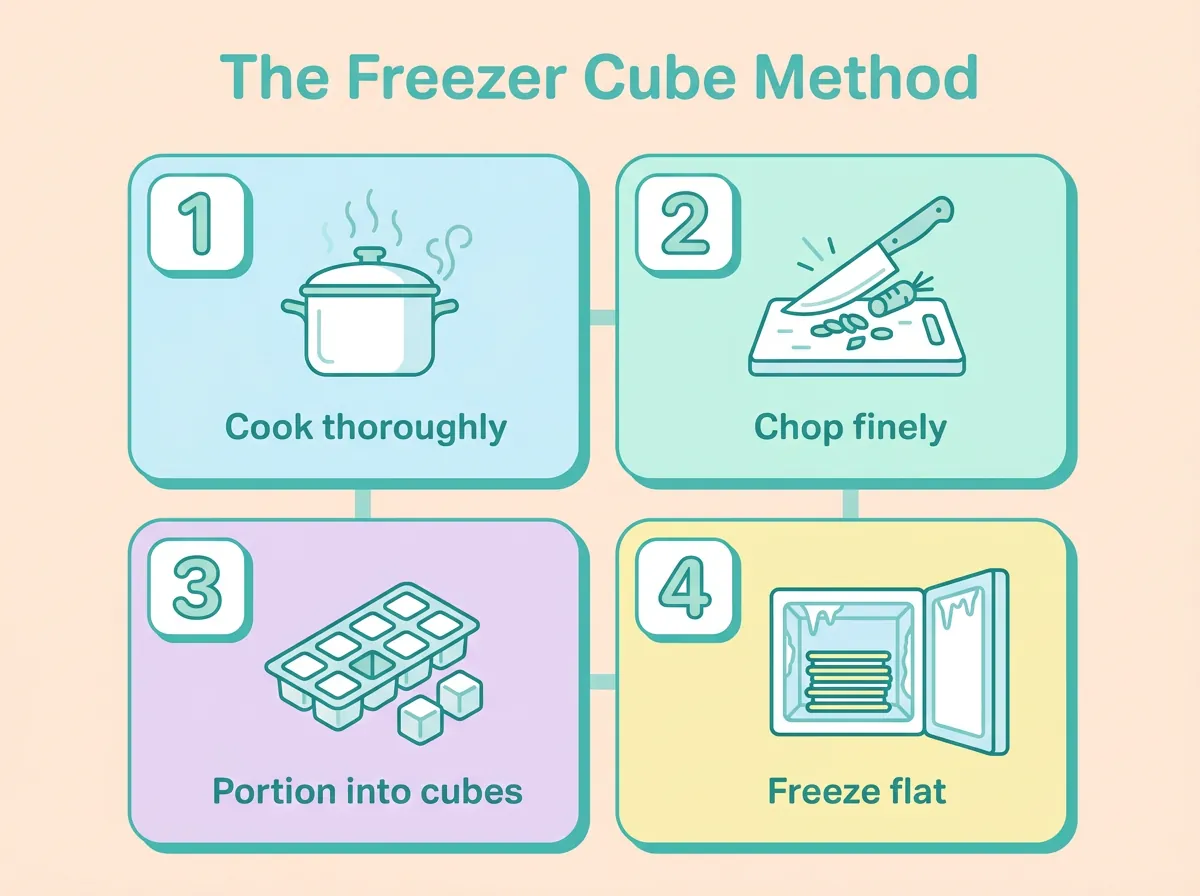
1. Prep and cook
- Peel, deseed, and cut vegetables into even pieces
- Steam by default. Boiling leaches water-soluble nutrients into the water
- For beef, soak in cold water for 20-30 minutes to draw out blood, then simmer and save the broth for the base
- Add no salt, sugar, or soy sauce at this age
2. Chop to the right texture
- Starting out: blend the cooked food and push it through a fine sieve
- 7-8 months: mince finely, just soft enough to squash against the roof of the mouth
- 9-11 months: chop to roughly 0.5 cm. Leaving small lumps on purpose is the chewing practice
3. Portion into a cube tray
- Use a silicone cube tray or ice cube tray with one food per well
- Start with small wells and move to larger ones as portions grow
- Let food cool slightly, fill the tray, cover, and freeze
4. Label and transfer to bags
- Once fully frozen, pop the cubes out and move them to freezer bags so the tray is free again
- Write the food name and the date made on every bag
- Frozen cubes look far more alike than you expect. Without labels, two weeks later you genuinely will not know
The Toppings That Matter Most: Start With Iron
Colorful vegetables are the tempting place to start, but the priority is iron. The iron stores a baby is born with run low around 6 months, which is why guidance is to bring iron-rich foods in early rather than saving them for later.
Iron-rich toppings
- Beef: lean cuts such as round or eye of round, simmered and finely minced
- Chicken: start with mild cuts like breast or tenderloin
- Egg yolk: fully cooked, offered in small amounts
- Iron-fortified infant cereal also works as a supporting source
Build vegetable cubes by color
- Yellow and orange: carrot, kabocha squash, sweet potato
- Green: zucchini, broccoli, spinach
- White: potato, daikon radish, cabbage
Two rules for the early months
- No seasoning. Salt, sugar, and soy sauce are all unnecessary at this stage
- No honey before 12 months, because of the risk of infant botulism
Allergy Testing, One Cube at a Time
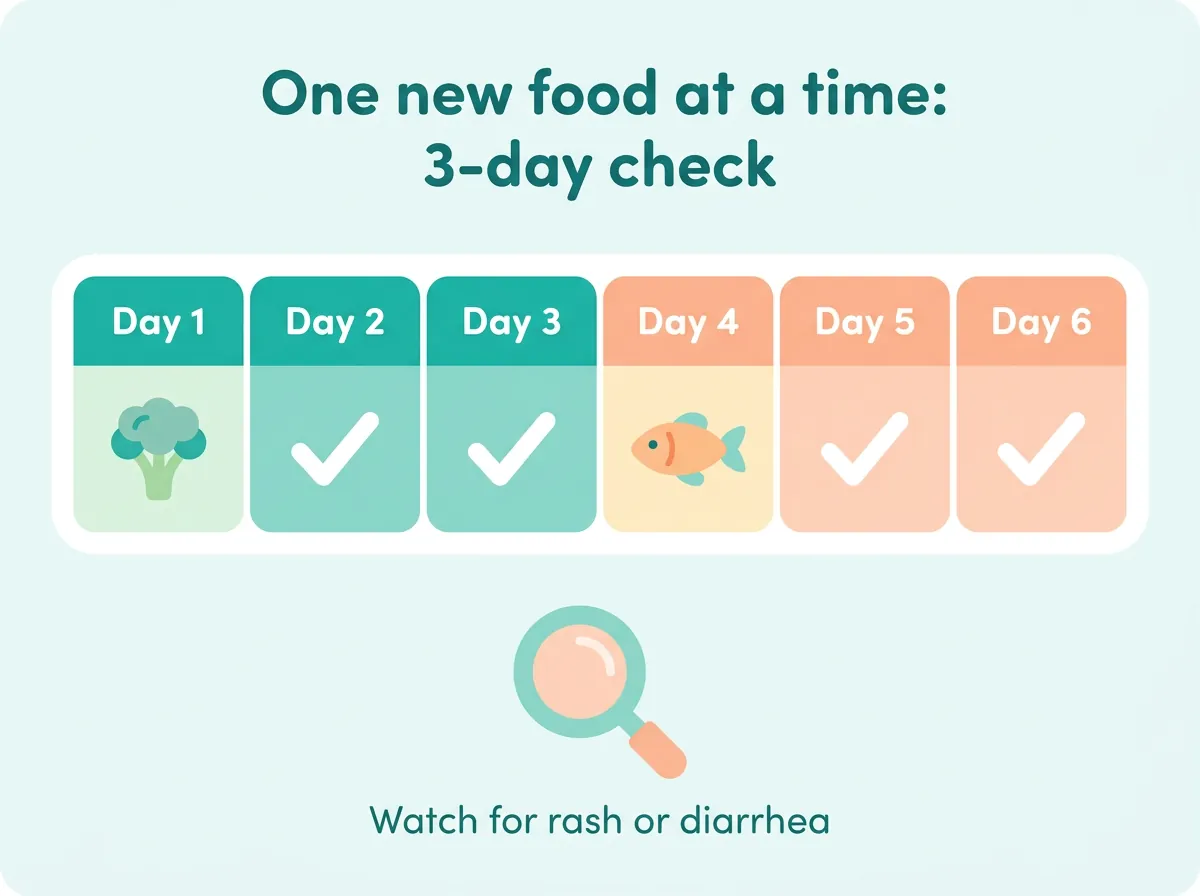
This is where the method really earns its keep. Introduce new foods one at a time, spaced 3-5 days apart. Because the cubes are already separated by ingredient, "the one new thing today" is unambiguous.
How to run it
- Offer new foods in the morning so you have daylight hours to watch, and your clinic is open
- Start with about a spoonful and build up over several days
- Foods your baby has already cleared can keep appearing. Only the new one needs to stand alone
- Over those 3-5 days, watch for hives, vomiting, diarrhea, puffiness around the eyes, or coughing
There is no reason to deliberately delay common allergens such as peanut, egg, milk, or wheat. Current guidance favors introducing them in small amounts at the appropriate age. For symptom-by-symptom detail and what to do, see the baby food allergy guide.
Freezing, Thawing, and Storage in Brief
Once the cubes exist, only a few rules matter.
- Freeze for up to 1 month, though within 2 weeks is better for flavor and nutrients
- The safest thaw is moving cubes to the refrigerator the night before for 8-12 hours
- Serve thawed food within 24 hours
- Throw away leftovers. Anything a spoon has been in and out of does not go back into storage
- Never refreeze food that has already been thawed
For storage times by food type, the trade-offs between thawing methods, and reheating temperatures, see the baby food freezing guide.
Mistakes Almost Everyone Makes Once
Honestly, most parents run into a few of these before the system settles.
1. Pre-mixing ingredients into one cube A beef-and-carrot cube feels efficient, but it blocks allergy tracing and locks the combination. Just go back to one food per well on the next batch.
2. Skipping labels Two weeks later, that frozen orange cube could be carrot, squash, or sweet potato. A name and a date solve it entirely.
3. Refreezing thawed leftovers Wasting food stings, but this one is a safety rule with no exceptions. Portioning smaller from the start is the real fix.
4. Starting two new foods in one day It feels like faster progress, until a reaction appears and both foods become suspects, and you have to start the sequence over.
5. Making the cubes too big Oversized wells mean leftovers, and leftovers get discarded. Small cubes you can serve two of are far more flexible.
6. Letting cubes sit past a month "There is still some left" quietly turns into six weeks. That is exactly what the date label is for.
7. Filling the freezer with vegetables and forgetting iron It is surprisingly common to have every color of vegetable cube and no meat. Make it a habit that at least one iron-rich food is always stocked.
Managing Solids With BebeSnap
- Food-by-food logging: recording which cube was served and when makes the 3-5 day observation window far more reliable
- AI stool analysis: one photo helps you check how digestion went after introducing a new food
- Growth tracking: seeing solids progress alongside weight and height makes portion decisions easier
- AI chatbot: ask about introduction order whenever the sequence gets confusing
Frequently Asked Questions (FAQ)
Q: What age can you start the freezer cube method?
A: The same age you would start solids, generally around 6 months, once your baby holds their head steady, can sit with support, and has lost the reflex that pushes food back out. Begin with a few days of plain thin porridge alone, then add one topping cube at a time.
Q: How is this different from a combined puree?
A: A combined puree simmers grain and every other ingredient in one pot and blends it into a single dish. With the cube method, each food is cooked and frozen separately and spooned onto the base at mealtime. Keeping them apart makes an allergen easy to identify and lets you chop each food to its own texture.
Q: How soon should frozen cubes be used?
A: Frozen baby food keeps for up to 1 month, but using it within 2 weeks preserves flavor and nutrients better. Thawed food should be served within 24 hours and any leftovers discarded. Refreezing food that has already been thawed is not safe and should never be done.
Q: How many days should you wait between new foods?
A: The standard rule is one new food every 3-5 days. Offer it in the morning starting with about a spoonful, and during that window serve only foods your baby has already tolerated. If hives, vomiting, diarrhea, or puffiness around the eyes appear, stop that food and contact your pediatrician.
References
Stop Trying to Remember Feed Times
Log time, amount, and intervals. BebeSnap turns them into your baby's daily pattern.
See what the app does firstMedical Disclaimer: This article is for informational purposes only and does not replace professional medical advice. If you have concerns about your baby's health, please consult a pediatrician.
You Might Also Like
Wonder Weeks Calculator: Your Baby's 10 Mental Leaps From the Due Date
Baby Weight Gain Calculator: Grams Per Day From Two Weigh-Ins
Baby Impetigo: Golden Crusts, Antibiotic Treatment, and When Nursery Is Safe Again
Baby Mouth Sores (Stomatitis): Causes, How to Tell Them Apart, and Dehydration Signs
You Might Also Like
Tomato for Babies: When to Start, Skin and Seeds, and Why Cherry Tomatoes Are Never Served Whole
Tomato can start at 5-6 months once the skin and seeds are removed and it is cooked. Portions run 20-30g at 7-8 months and 30-40g at 9-11 months, counted together with fruit. Cherry tomatoes are the one vegetable Japan's childcare guidance names by name as something not to serve whole.
Complete Tummy Time Guide | Baby's Essential Exercise From Day One
Start tummy time from day one! Build neck strength for rolling and gross motor development. Age-appropriate duration and tips for tummy time haters.

Nipple Bleb (Milk Blister): Why You Shouldn't Pop It and What to Do Instead
A nipple bleb signals inflammation inside the milk duct, not a surface problem. Popping it makes things worse. Here's why 2022 guidance switched from heat to ice, and why it takes 2 weeks to 2 months to clear.