Tomato for Babies: When to Start, Skin and Seeds, and Why Cherry Tomatoes Are Never Served Whole
Stop Trying to Remember Feed Times
Get Started FreeTomato is an ingredient you can use from the very first weaning stage, once you remove the skin and seeds and cook it. Cherry tomatoes are a different story. They are close to the diameter of a small airway, the surface is smooth, and the springy skin resists being bitten through, so a whole one can slide straight down.
Cutting up round, firm foods is advice you will find in any country. This article leans on Japanese sources for one reason: that is where cherry tomatoes are named explicitly in official guidance and where choking deaths are broken down by age. Concrete numbers make the call easier for a parent, so they are quoted here with the source shown.
When Can a Baby Start Tomato?
Cooked, with skin and seeds removed, tomato can start in the first stage at 5 to 6 months. Tomato is not one of the 29 items on Japan's allergen labelling list, and cooked until the sharpness softens it is usually well accepted.
Delaying it does not prevent allergy. Japan's Breastfeeding and Weaning Support Guide states plainly that "there is no scientific evidence that delaying the start of weaning or the introduction of particular foods, out of concern about developing a food allergy, has any preventive effect".
Texture and Portion by Stage
| Stage | Texture standard | How to prepare tomato | Vegetables and fruit combined |
|---|---|---|---|
| 5-6 months | Smoothly mashed | Skin and seeds out, cooked and mashed | No stated amount |
| 7-8 months | Crushable with the tongue | Skin and seeds out, cooked and finely chopped | 20-30g |
| 9-11 months | Crushable with the gums | Skin and seeds out, cooked and small | 30-40g |
| 12-18 months | Chewable with the gums | Cooked; try leaving skin as they manage | 40-50g |

The texture column is taken straight from the weaning progression table in the Support Guide. There is no rule stating a size in millimetres. The standard is whether it flattens under gum pressure.
Vegetables and Fruit Share One Slot, Not Two
In the table above, the 20-30g and 30-40g figures cover vegetables and fruit together. Fruit does not get its own separate allowance. Counting tomato as a fruit and tallying it apart from vegetables quietly removes the vegetable from that meal.
💡 Tomato is classified as a vegetable. Its sweetness makes it easy to treat like fruit, but think of it as sharing the same slot.Never Serve Cherry Tomatoes Whole
This is the part that matters most.
What makes a cherry tomato dangerous has nothing to do with which country you are in. It is close to the diameter of a small airway, the surface is smooth, and the springy skin resists being bitten through, so the whole thing can slide down. Cutting one merely in half leaves a piece that still seals the airway.
That is why Japan's childcare centre catering guidance carries this line. Among "foods that have previously caused aspiration or choking incidents" it names rice-flour dumplings and "cherry tomatoes served whole", and says they are best not used. The same document adds that "regardless of the child's age in years or months, a food they eat routinely can still lead to choking". It is the only vegetable named that way.
Japan's Consumer Affairs Agency figures show where the warning came from. Between 2010 and 2014, of 623 choking deaths among children aged 14 and under, food accounted for about 17%, or 103 deaths, and 87 of those were children aged 6 and under. By age, infants under one accounted for 49, or 47%. The listed foods include 11 from confectionery and 5 from fruit such as apple and grape.
⚠️ Cut cherry tomatoes into quarters lengthways. Halving is not enough. Cut larger tomatoes small in the same way.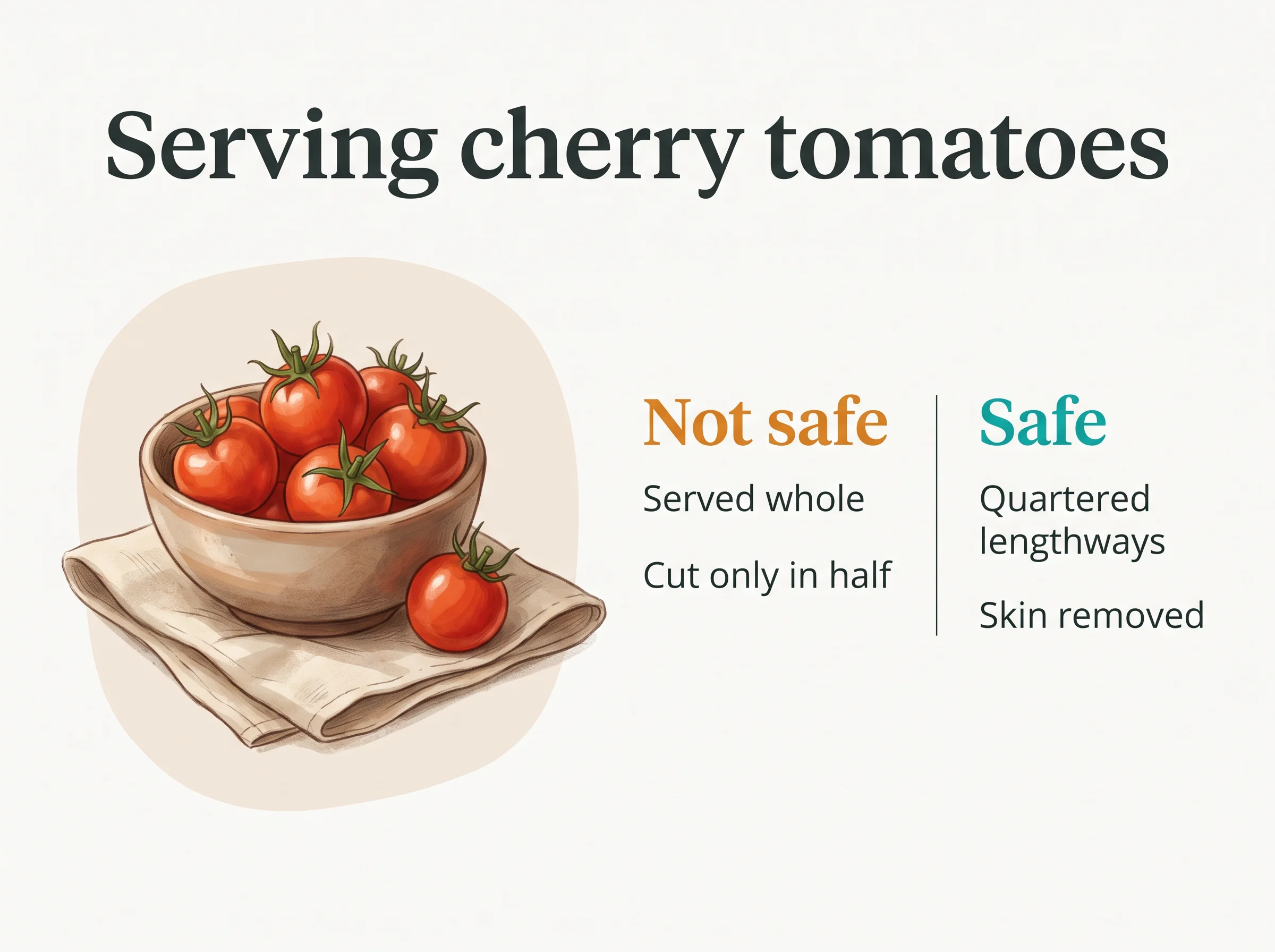
How Long to Remove Skin and Seeds
Skin does not flatten easily under gum pressure, so removing it through the 9 to 11 month stage is the safer choice. Once your baby is chewing well in the 12 to 18 month stage, you can start leaving a little on and see how they manage.
Peeling is simple. Score a shallow cross on the base, dip in boiling water for about 10 seconds, then move to cold water and the skin slips off. Scrape out the jelly around the seeds with a spoon.
The Finger-Food Window Is the Riskiest
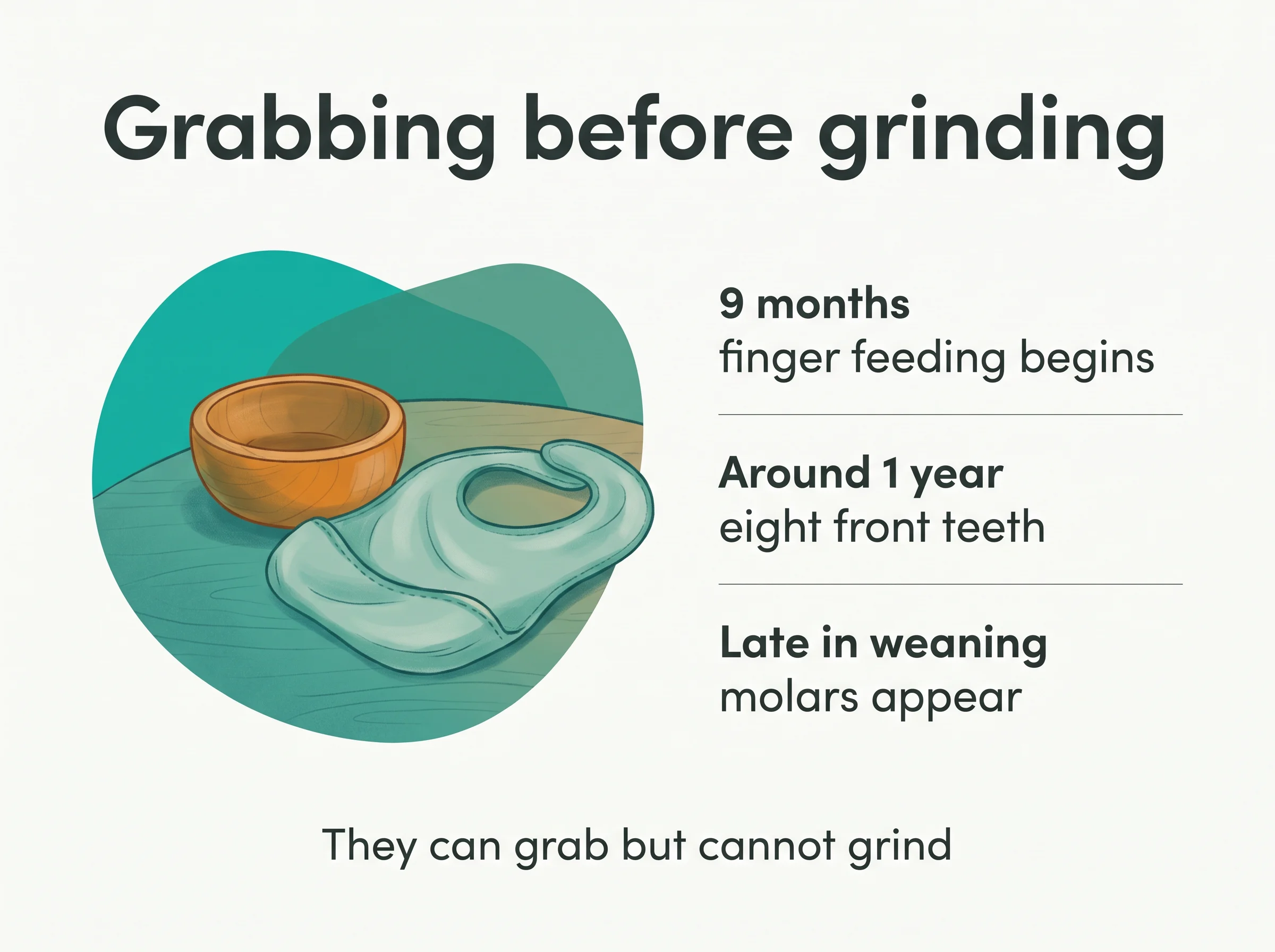
Finger feeding usually starts in the 9 to 11 month stage. Look at the order teeth arrive, though: the eight front teeth are in place around the first birthday, while the molars that grind only begin to appear late in the 12 to 18 month stage.
So from nine months until well past the first birthday, a baby can grab and bite but cannot grind. Hand them something round and springy like a cherry tomato in that window and it can go down whole, unbitten.
The agency also sets out rules for the meal itself: no eating while playing, walking, or lying down; chew slowly; keep water or tea on hand to wet the throat; check that the child is not sleepy and is sitting properly; and do not startle them while they eat.
Tomato Is Not on the 29-Item Allergen List
Japan's allergen labelling system covers 9 mandatory items and 20 recommended items, 29 in total. Tomato is not among them. Apple, kiwi, and peach are on the recommended list of 20; tomato is not.
Not being listed does not mean a reaction is impossible. Apply the same rules you use for any new food: in the morning, at home, one new food at a time, starting small. If something concerning appears, such as hives or repeated vomiting, contact your paediatrician.
Preparation and Storage
- Cooked, mashed tomato freezes well portioned in an ice cube tray
- Use frozen portions within a month, and never refreeze something already thawed
- Thaw in the fridge overnight or in a warm water bath, never on the counter
- Shop-bought tomato products often contain salt or sugar, so check the label
Tracking Tomato With BebeSnap
- Log the time and amount of each new food so you can narrow down the cause if a reaction appears
- AI analysis of stool photos helps you see colour and consistency changes alongside it
- See at a glance whether the combined vegetable and fruit total sits in the recommended range
Frequently Asked Questions (FAQ)
Q: At what age can a baby start tomato?
A: Cooked, with the skin and seeds removed, tomato can start in the first weaning stage at 5 to 6 months. Tomato is not among the 29 items on Japan's allergen labelling list. There is no scientific evidence that delaying it prevents allergy, so treat it like any new food: in the morning, at home, starting with a small amount.
Q: Is halving a cherry tomato safe enough?
A: No. A halved piece still has a shape that can seal the airway, so quarter it lengthways instead. Japan's childcare centre catering guidance names cherry tomatoes served whole as a food that has caused choking incidents and recommends they are best not used at all.
Q: How long should I peel tomatoes?
A: Skin does not flatten easily under gum pressure, so removing it through the 9 to 11 month stage is safer. Once your baby chews well in the 12 to 18 month stage, leave a little on and watch how they cope. Score a cross on the base, dip in boiling water for 10 seconds, then cold water, and the skin slips off.
Q: How much tomato should I give?
A: The guide gives 20-30g at 7 to 8 months, 30-40g at 9 to 11 months, and 40-50g at 12 to 18 months. The important point is that these cover vegetables and fruit combined. Counting tomato separately as a fruit removes the vegetable share from that meal, so treat it as sharing one slot.
References
Stop Trying to Remember Feed Times
Log time, amount, and intervals. BebeSnap turns them into your baby's daily pattern.
See what the app does firstMedical Disclaimer: This article is for informational purposes only and does not replace professional medical advice. If you have concerns about your baby's health, please consult a pediatrician.
You Might Also Like
Wonder Weeks Calculator: Your Baby's 10 Mental Leaps From the Due Date
Baby Weight Gain Calculator: Grams Per Day From Two Weigh-Ins
Baby Impetigo: Golden Crusts, Antibiotic Treatment, and When Nursery Is Safe Again
Baby Mouth Sores (Stomatitis): Causes, How to Tell Them Apart, and Dehydration Signs
You Might Also Like
Apple for Babies: Stage-by-Stage Portions and When Raw Apple Is Safe
Apple can start in the first weaning stage, grated and cooked. Portions are 20-30g at 7-8 months and 30-40g at 9-11 months, counted together with vegetables. Front teeth bite, but the molars that grind only start coming in at the end of weaning.
Baby Gagging on Solids: Is It Normal? How to Tell Gagging vs Choking
Baby gagging on solids is often normal when starting solids, but choking is an emergency. Learn how to tell gagging vs choking, what to do right away, and how to move past purees more safely.
Spinach for Babies: When to Start, Why Boiling Matters, and the One Time to Skip It
Spinach can start with first purees. Everyone says to boil it, but nobody says why: oxalic acid for the taste, and nitrate, which leafy greens carry a lot of. Boiling cuts nitrate by 30 to 40 percent, and there is one situation where you should skip spinach entirely.