Spinach for Babies: When to Start, Why Boiling Matters, and When to Skip It

Stop Trying to Remember Feed Times
Get Started FreeEvery spinach recipe for babies tells you to boil it and rinse it. Almost none of them say why. There are two reasons: oxalic acid, which makes it taste sharp, and nitrate, which leafy greens carry more of than most vegetables. Boiling handles both, cutting nitrate by 30 to 40 percent. This guide covers both reasons, and the situations where you should leave spinach off the plate.
When spinach can start
Spinach is not a food to delay. In UK guidance solid foods start at around 6 months, and spinach belongs in the first round of vegetables. There is no evidence that postponing a particular food prevents allergy.
Offer a new food as one small spoonful, then build up.
Shape and how much
| Age | Texture | Which part | How soft |
|---|---|---|---|
| Around 6 months | Boiled, chopped and pushed through a sieve | Leaf tips only | Pourable, loosened with unsalted stock |
| 7 to 8 months | Finely chopped | Whole leaf | About the firmness of tofu |
| 9 to 11 months | Chopped, folded into other food | Leaf and tender stem | Like a ripe banana |
| 12 months and older | Cut small, served as part of a dish | All of it | Firm enough to chew on gums |


The two reasons to boil it
The first is taste. Spinach tastes sharp because of oxalic acid, and boiling then rinsing in cold water takes that edge off. A baby who tasted raw sharpness once will often refuse it again.
The second is the one nobody writes down. Leafy vegetables carry comparatively high nitrate. Japan's Food Safety Commission states plainly that among Japanese vegetables, nitrate is concentrated in leafy types such as spinach, garland chrysanthemum and lettuce. Nitrate itself is not especially toxic, but it can be reduced to nitrite in the body, which has been linked to methaemoglobinaemia.
🔑 The remedy turns out to be the thing you were already doing. The same document states that nitrate in vegetables can be expected to fall by around 30 to 40 percent through cooking such as boiling. Rinsing away the sharp taste was cutting the nitrate too.
Keep it in proportion
If that made you want to drop spinach, hold on. Three things point the other way.
1. The vulnerable window is under 3 months. Babies that young produce almost no stomach acid, so bacteria in the stomach convert nitrate readily. Weaning starts well after that.
2. Japan's assessment lists no reports of harm from nitrate in vegetables within Japan. The fact sheet says so after a 2005 literature survey on fertilizer safety. The cases that made nitrate famous were reported long ago: well water in the United States in 1945 (2 cases), and spinach in West Germany in 1978 (16 cases, including 2 deaths).
3. The European assessment favours eating vegetables. EFSA compared risk against benefit across estimated nitrate exposure from vegetables and concluded that the beneficial effects of eating vegetables outweigh it.
When to skip it
There are conditional recommendations worth knowing. Spain advises against giving spinach to infants who have infectious gastroenteritis, because they are more sensitive to nitrate in that state.
For reference, the same Japanese fact sheet also lists a stricter Spanish recommendation: no spinach or chard in purees before 12 months, and no more than 20 percent of a puree if you do include it. Japan's Ministry of Agriculture, Forestry and Fisheries considers infant methemoglobinemia from nitrate extremely unlikely when weaning starts at 5 to 6 months, and the NHS lists spinach among first vegetables. Rules differ by country, so ask your pediatrician if you are unsure.
In practice: on a day with diarrhea or vomiting, skip spinach and come back to it after recovery. Other leafy greens share the property, so it is better to pause the whole group rather than swap one for another. Diarrhea or vomiting in a baby under 12 months is not something to handle by skipping spinach alone. Call your pediatrician right away if your baby has fewer than six wet diapers a day or fewer tears, and call 911 (or your local emergency number) if your baby has sunken eyes, makes no tears when crying, passes almost no urine, or is limp or hard to wake.
Preparing and swallowing
Pick the leaf tips, boil, rinse in cold water, squeeze out the moisture, chop finely or sieve, then loosen with unsalted stock or the baby's usual porridge. Never use stock cubes, which are high in salt.
Leafy greens scatter in the mouth and leave fibre behind, which makes them hard to swallow. The Japanese national list of properties that make food hard to swallow includes "breaks apart in the mouth", with broccoli as the example. Spinach leaves behave the same way. That connection is our reading of the property rather than a line naming spinach.
Two fixes: sieve it at the start so the fibre is cut, and loosen or thicken it later so it does not clump. A baby's airway is under 1cm across, so whole leaf pieces do not go on the tray.
Gagging and choking are different events. Gagging on solids walks through telling them apart.

Freezing
Cook it the day you buy it, cool it fully before freezing, reheat thoroughly before serving, never refreeze something thawed, and use it within a week.
Boil, squeeze, chop, then freeze in tablespoon portions. If it comes back dry, loosen it with hot water or stock.
What about allergy
Spinach is not among the foods that commonly trigger reactions in babies and does not appear on standard allergen labeling lists. How you introduce it matters more than the odds: one spoonful, then watch. If you see a reaction, stop and have a doctor assess it. If your baby has trouble breathing, swelling of the lips, tongue or face, vomiting that is severe or comes with other symptoms, or turns pale, blue or limp, call 911 (or your local emergency number) right away.
Track how your baby takes spinach with BebeSnap
- Log the date and amount of each new food so you can narrow the cause if a reaction appears
- Note days with diarrhoea or vomiting so you can see when you paused leafy greens
- Record when you moved up a texture so the next step does not slip
Frequently Asked Questions (FAQ)
Q: When can my baby eat spinach?
A: Spinach can start with the first vegetables, at around six months in UK guidance, once your baby is taking purees. It is not a food to delay, because there is no evidence that postponing a particular food prevents allergy. Begin with boiled leaf tips pushed through a sieve and loosened with unsalted stock, one small spoonful at a time, then build up as your baby takes it.
Q: Why does spinach have to be boiled and rinsed?
A: Two reasons. Oxalic acid gives spinach its sharp taste, and rinsing after boiling takes that edge off so babies are less likely to refuse it. Leafy greens also carry comparatively high nitrate, and Japan's Food Safety Commission states that nitrate in vegetables can be expected to fall by around 30 to 40 percent through cooking such as boiling. One step handles both.
Q: Should I avoid spinach because of nitrate?
A: No. The most sensitive window is under three months of age, when babies produce almost no stomach acid, and weaning begins after that. Japan's assessment records no domestic reports of harm from nitrate in vegetables, and EFSA concluded that the benefits of eating vegetables outweigh the estimated nitrate exposure. Boil it, rinse it, and serve it.
Q: Is there ever a time to skip spinach?
A: Yes. Spain advises against giving spinach to infants with infectious gastroenteritis, because sensitivity to nitrate is higher in that state. On a day with diarrhoea or vomiting, leave spinach out and return to it once your baby has recovered. Pause other leafy greens too. For a baby under 12 months, call your pediatrician about fewer wet diapers or tears, and call 911 (or your local emergency number) for sunken eyes, no tears, limpness or almost no urine.
References
- NHS Start for Life - Weaning
- Food Safety Commission of Japan - Fact sheet on nitrate naturally present in food
- EFSA - Nitrate in vegetables
- Children and Families Agency - Breastfeeding and Weaning Support Guide
- NHS - Your baby's first solid foods
- Ministry of Agriculture, Forestry and Fisheries of Japan - Basic information on nitrate in food
- Children and Families Agency of Japan - Guidelines on accident prevention in education and childcare facilities
Stop Trying to Remember Feed Times
Log time, amount, and intervals. BebeSnap turns them into your baby's daily pattern.
See what the app does firstMedical Disclaimer: This article is for informational purposes only and does not replace professional medical advice. If you have concerns about your baby's health, please consult a pediatrician.
You Might Also Like
Kaup Index (Baby BMI): How to Calculate It and What's Normal by Age
Wonder Weeks Calculator: Your Baby's 10 Mental Leaps From the Due Date
Baby Weight Gain Calculator: Grams Per Day From Two Weigh-Ins
Baby Impetigo: Golden Crusts, Antibiotic Treatment, and When Nursery Is Safe Again
You Might Also Like
Tomato for Babies: When to Start, Skin and Seeds, and Why Cherry Tomatoes Are Never Served Whole
Tomato can start at 5-6 months once the skin and seeds are removed and it is cooked. Portions run 20-30g at 7-8 months and 30-40g at 9-11 months, counted together with fruit. Cherry tomatoes are the one vegetable Japan's childcare guidance names by name as something not to serve whole.
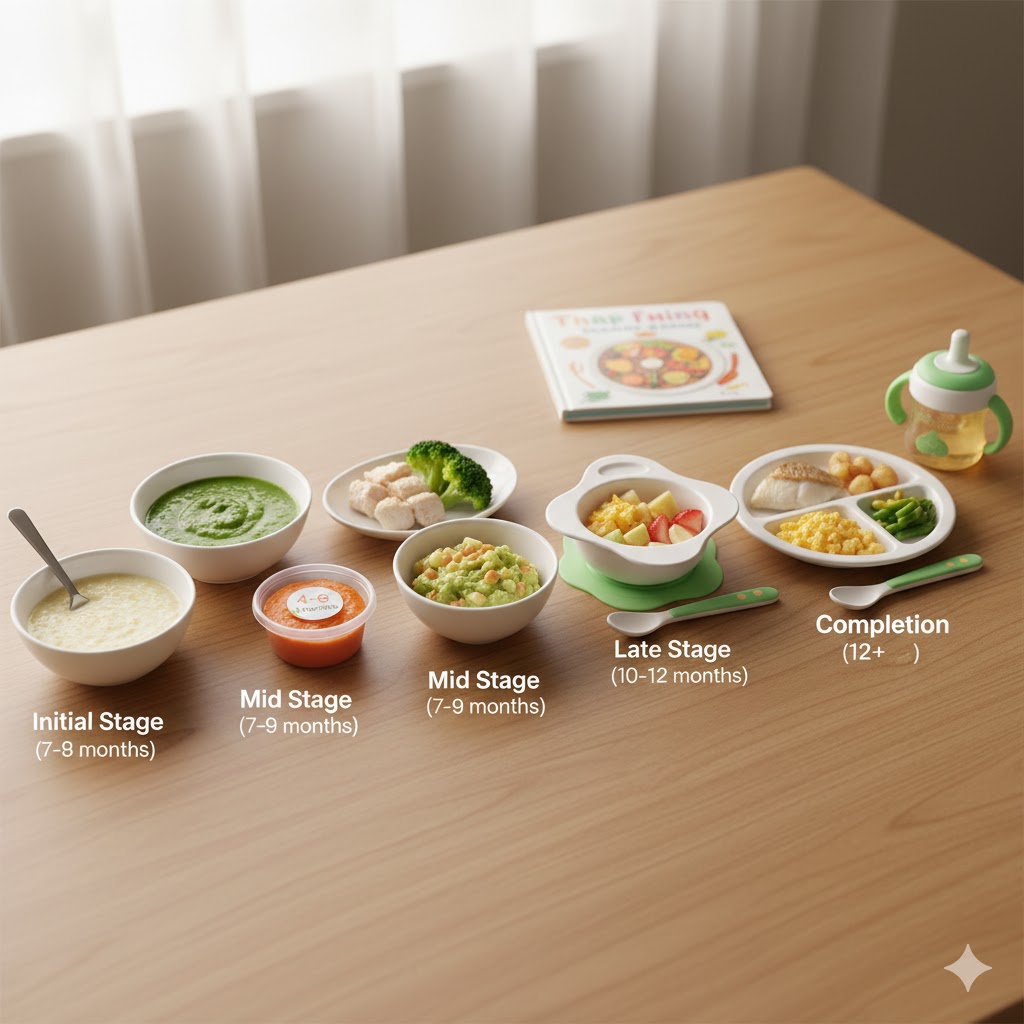
Baby Food Stages Guide: From First Bites to Toddler Meals
Solids progress through 4 stages: early, middle, late, and completion. Learn each stage's characteristics, appropriate foods, textures, and precautions for the right timing.

Potato for Babies: When to Start, Safe Shapes, and Why Never to Blend It
Potato can start once your baby is used to first purees. But green patches carry over 13 times the glycoalkaloid of normal flesh, the skin layer around 96 times the centre, and cooking does not destroy it. Potato is also the one baby food you should never blend.