Baby Gagging on Solids: Is It Normal? How to Tell Gagging vs Choking
Stop Trying to Remember Feed Times
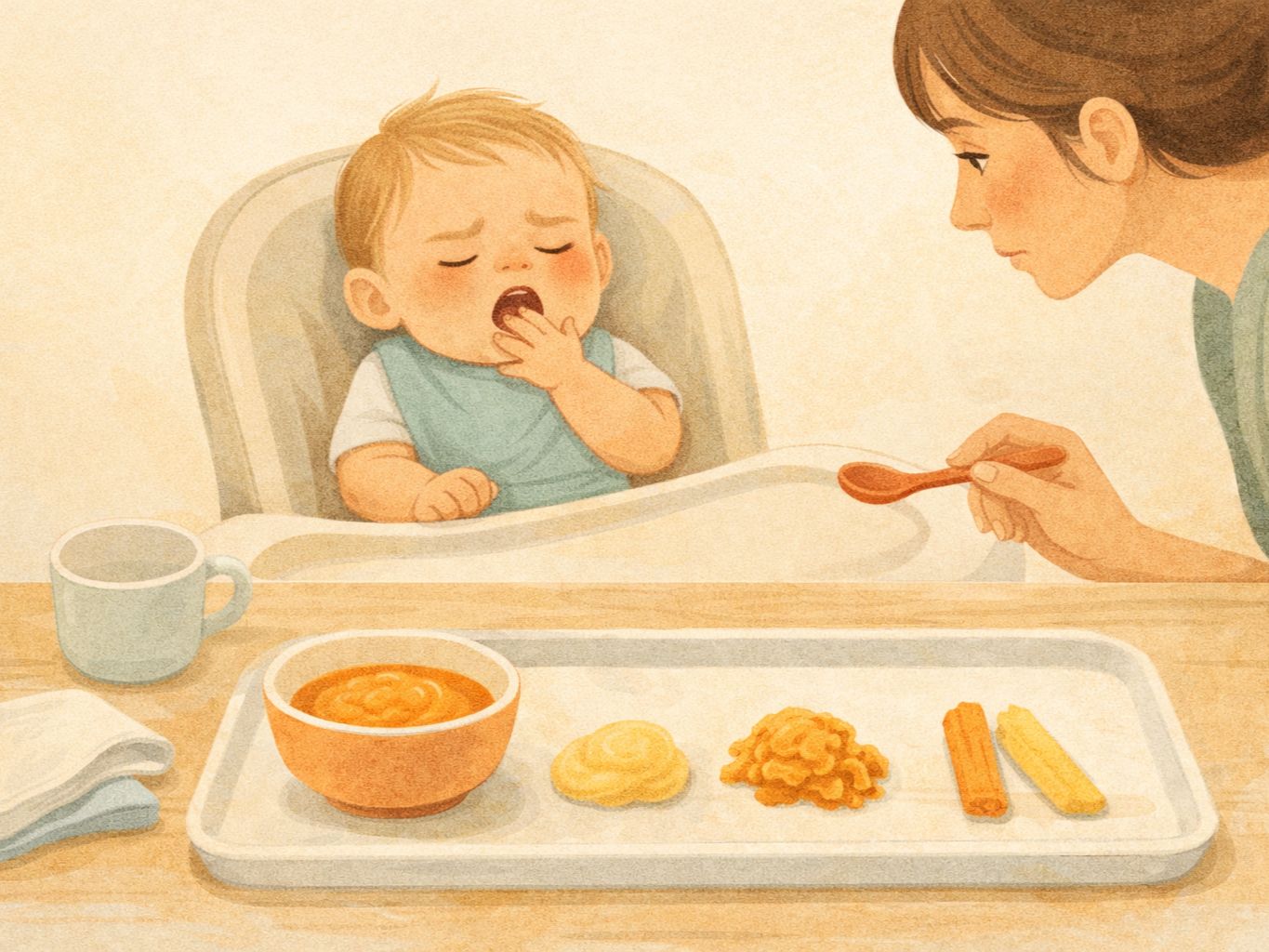
Get Started FreeThat moment when your baby suddenly goes "gak-gak," turns red, and looks like they're choking on dinner? Your hand freezes mid-spoonful and your stomach drops. Take a breath; this is one of the most common things new eaters do, and chances are your baby is just fine. Gagging while learning to eat is a normal part of the journey, not a sign you did something wrong.
There's really only one thing you need to be able to tell apart: ordinary gagging versus true choking. And the test is simpler than you'd think: is your baby making noise and moving air? If your baby is coughing, sputtering, and pushing food back out, that's almost always gagging. If your baby goes silent and pale or blue, that's a different story. Below, we'll walk through how to tell the two apart in the moment, exactly what to do, and how to move past smooth purees without the fear.
Gagging Is Usually Your Baby's Body Doing Its Job
Gagging looks dramatic, but it's actually a protective reflex; your baby's body pushing food forward before it can go too far back. Here's why it happens so much at this age: in young babies, the gag reflex sits much farther forward on the tongue than it does in adults. So while you'd only gag if food hit the back of your throat, your baby gags way out front. That "uh-oh, choking!" moment you're seeing is really their built-in safety system catching something that's too big or too new.
This is exactly why the safest move is usually to wait and watch rather than reach into the mouth. When your baby coughs, turns red, pushes the food forward, and then settles back into normal breathing, the gag has simply run its course. Sometimes it even ends with a little spit-up or a small vomit: and that's still gagging, not an emergency.
That said, not every gag should be brushed off. If it never seems to improve over time, if your baby vomits hard at most meals, or if they strongly refuse to eat at all, that's worth a closer look. We'll cover exactly where that line is further down.
Gagging or Choking? Reading It In the First 1–2 Seconds
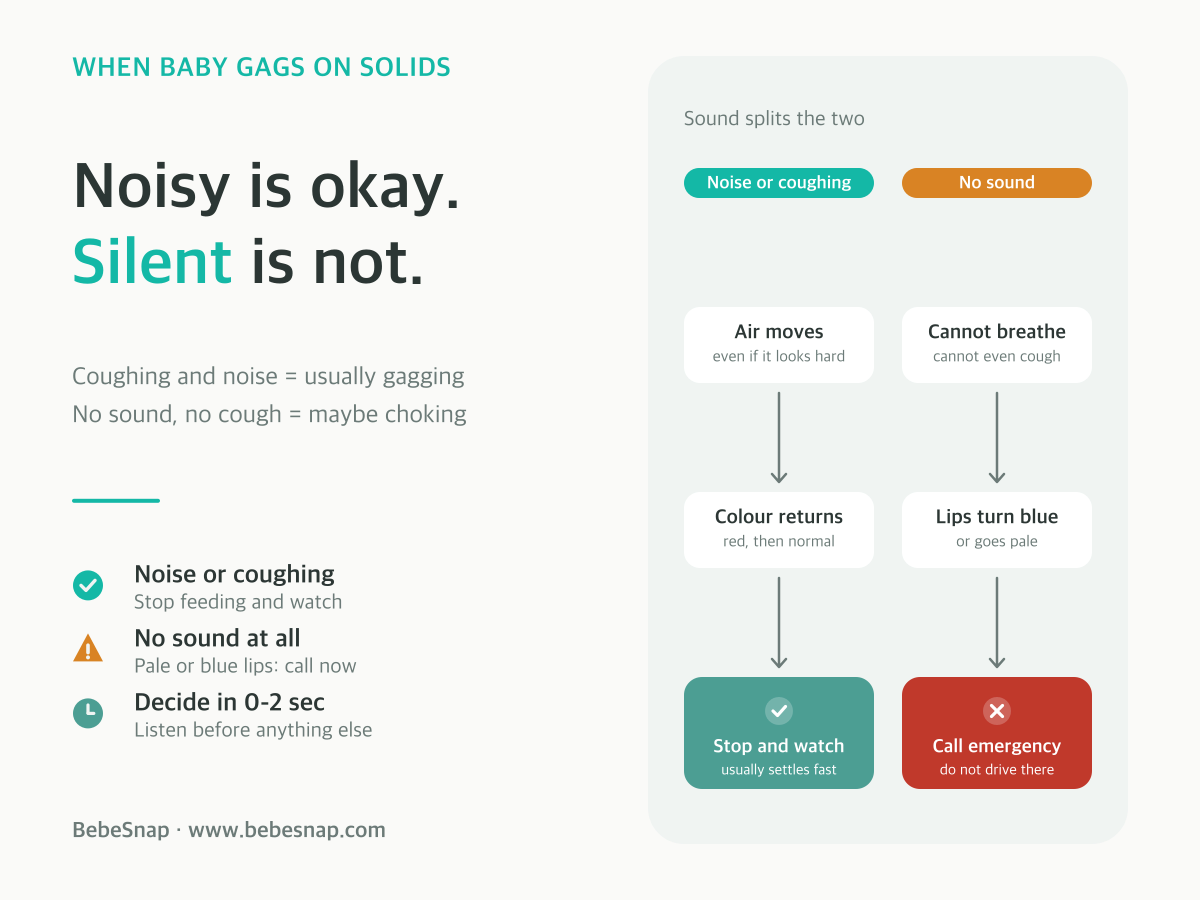
In a panic, trying to name what's happening only slows you down. Instead, just watch the first second or two: is there sound, and is air moving? Gagging is loud and active. True choking is quiet and dangerous. Remembering that one contrast makes the call much faster.
| What you see | Usually gagging | Could be true choking |
|---|---|---|
| Sound | Coughing, retching, or crying | Little sound, or completely silent |
| Breathing | Air is still moving, even if it looks hard | Can't seem to breathe, or breathing has stopped |
| Color | Turns red, then bounces back | Goes pale, or lips turn blue |
| Your baby's response | Tongue thrust, spitting, trying to cough | Can't even cough, growing limp |
| What to do | Pause the meal and watch a moment | Call 911 now and follow their guidance |

The thing to hold onto: gagging may be noisy, but it settles quickly. So if your baby suddenly goes too quiet mid-meal, that silence can be the real warning sign. No sound, no cough, and a color change means don't wait: call 911. Don't burn time deciding whether to drive yourself.
In That Moment, Here's Exactly What To Do
Let's keep the steps simple for when your mind goes blank. First, stop the spoon. Keep your baby sitting upright right where they are, and wait a moment while you watch for sound, coughing, and food coming forward. You're giving your baby the chance to clear it themselves. Once they settle, don't rush the next bite: wait until they're fully comfortable before starting again.
If another adult is nearby, split the job. One person keeps their eyes locked on your baby's face and breathing; the other clears away the leftover food and tray and makes a mental note of which food or texture caused it. If your baby does go quiet and looks like they can't breathe, that's when you stop watching and act: one person calls 911 while the other stays right beside the baby.
And a few clear don'ts: never jab your finger deep into the mouth chasing food you can't see, because you can push it farther in. Don't lay your baby down or pour water in their mouth. And don't keep feeding on the move or with your baby slumped sideways in the seat.
Moving Past Purees, One Small Step At a Time
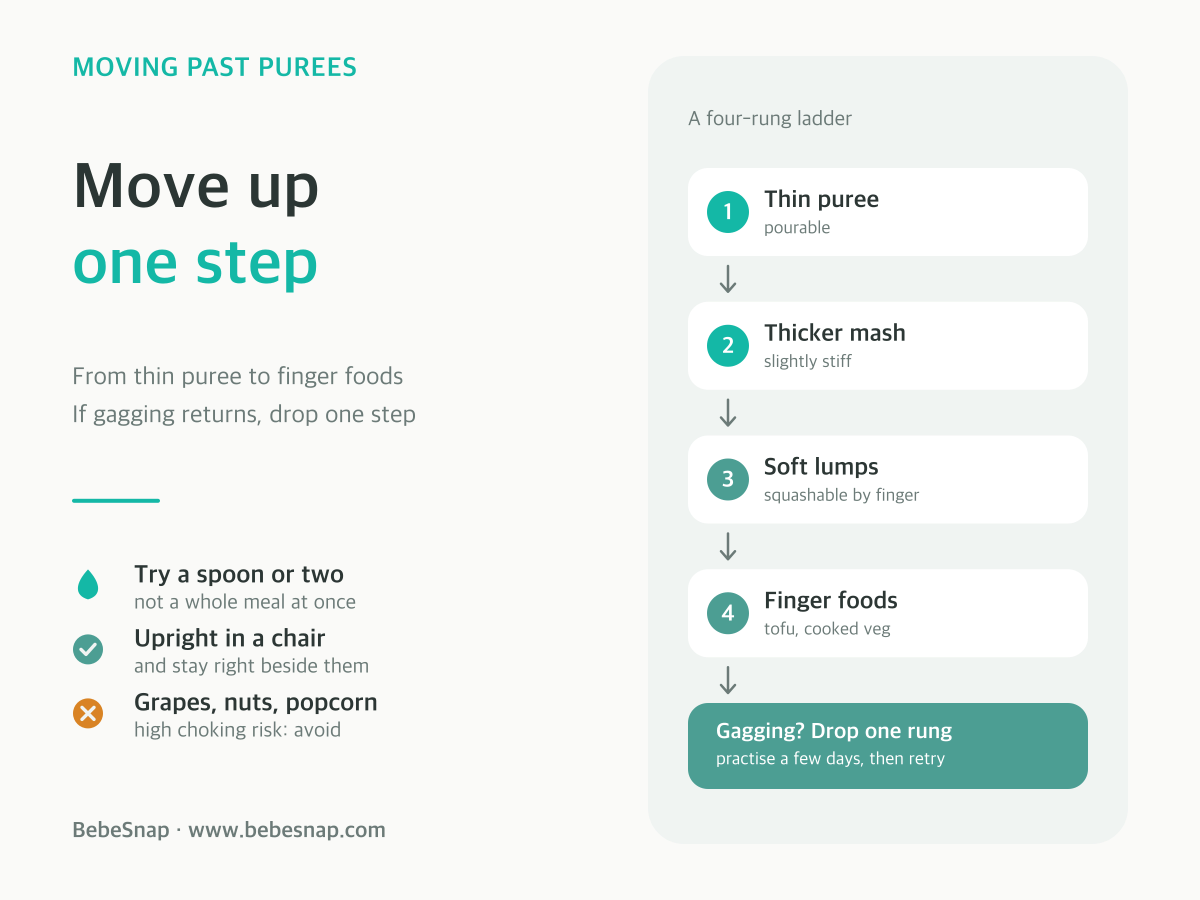
Frequent gagging doesn't mean your baby is stuck on thin purees forever. The real key is going smaller, softer, and slower. Step up one level at a time: smooth puree, then thicker mash, then soft lumps, then soft finger foods. Rather than swapping a whole meal at once, stir just a spoonful or two of the new texture into the familiar one; it's far less overwhelming for both of you.
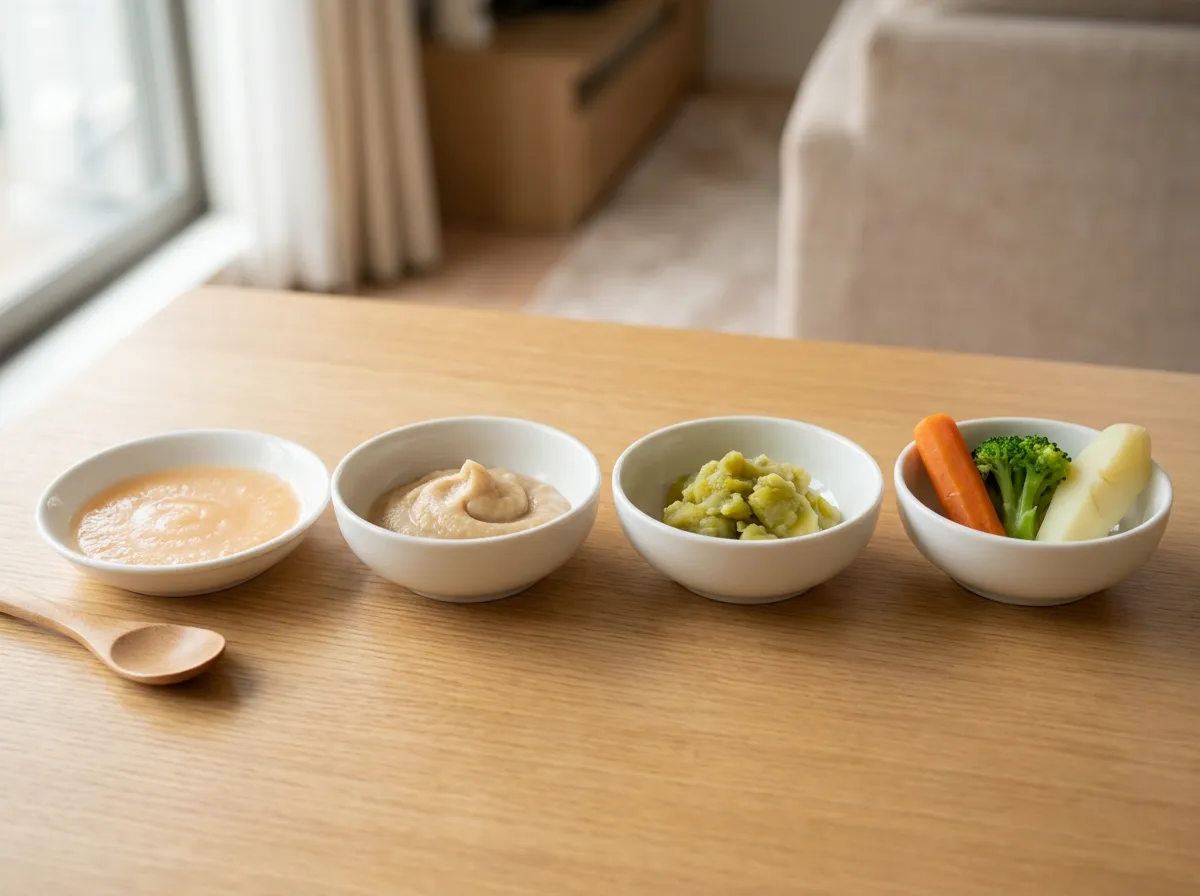
Timing helps too. Skip the moments when your baby is starving or sleepy, and try a new texture when they're in a good mood, seated upright with you right beside them. Start with foods soft enough to squish between your fingers: think tofu, well-cooked vegetables, or ripe banana.
On the flip side, whole grapes, nuts, popcorn, hard chunks of raw vegetables, firm pieces of fruit, and sticky foods that clump together are high choking risks and should wait. Hot dog and sausage rounds are risky shapes too, unless cut up small. And if a new texture keeps triggering gags, don't power through: step back one level, practice a few more days, then try again. There's no need to stop solids altogether.
When To Stop Watching at Home and Call the Doctor
Gagging itself is common, but some patterns shouldn't be chalked up to "just learning." Call your pediatrician the same day if you notice any of these:
- Hard gagging at nearly every meal, and barely eating once you step the texture up even a little
- Coughing that drags on during or right after eating, or breathing and voice sounding wet or different
- Repeated vomiting, poor weight gain, eating less, or refusing feeds
- Trouble swallowing, lots of extra drooling, or meals that take far too long
When this happens, have one person jot down which food and position caused it and how often, and have the other take a short video; it makes explaining it at the visit so much faster. And please hear this: it is not your fault. For most babies this is just one bump in the learning curve, but a few need a closer look, which is exactly why you let a professional weigh in.
How BebeSnap Can Help
- Log the food, texture, piece size, and your baby's position so you can see at a glance what to keep and what to dial back next time.
- Keep one shared feeding record so both parents land on the same safer next step at the next meal.
- Bring the log and a short video to your pediatrician when gagging is frequent, worsening, or texture progress stalls.
Frequently Asked Questions (FAQ)
Q: Is it normal for my baby to gag when starting solids?
A: Often, yes. Gagging is a protective reflex and can happen while babies learn new textures. It should not look like silent breathing trouble, color change, limpness, or a baby who cannot cry or cough.
Q: How do I tell baby gagging from choking during a meal?
A: Gagging is usually noisy, with coughing or retching, and your baby is still moving air. Choking is more likely to be quiet, with little or no sound, poor air movement, color change, or worsening distress. If your baby cannot breathe, cry, or make sound, call 911 now.
Q: Should I stop solids if my baby gags a lot on purees or finger foods?
A: Not always. Many babies need smaller texture steps, softer foods, or slower pacing rather than a full stop. Call your pediatrician if gagging happens at most meals, gets worse, or your baby struggles even with easier textures.
Q: When should I get medical help after my baby gags on food?
A: Call 911 first for severe choking signs, trouble breathing, color change, limpness, or if your baby cannot cry, cough, or make sound. Get urgent medical care right away if breathing, wheezing, coughing, vomiting, or alertness still seems off after the episode. Call your pediatrician the same day for frequent gagging, repeated coughing between bites, painful swallowing, poor weight gain, or stalled texture progress.
References
Stop Trying to Remember Feed Times
Log time, amount, and intervals. BebeSnap turns them into your baby's daily pattern.
See what the app does firstMedical Disclaimer: This article is for informational purposes only and does not replace professional medical advice. If you have concerns about your baby's health, please consult a pediatrician.
You Might Also Like
Wonder Weeks Calculator: Your Baby's 10 Mental Leaps From the Due Date
Baby Weight Gain Calculator: Grams Per Day From Two Weigh-Ins
Baby Impetigo: Golden Crusts, Antibiotic Treatment, and When Nursery Is Safe Again
Baby Mouth Sores (Stomatitis): Causes, How to Tell Them Apart, and Dehydration Signs
You Might Also Like

Apple for Babies: Stage-by-Stage Portions and When Raw Apple Is Safe
Apple can start in the first weaning stage, grated and cooked. Portions are 20-30g at 7-8 months and 30-40g at 9-11 months, counted together with vegetables. Front teeth bite, but the molars that grind only start coming in at the end of weaning.

Gassy Baby Relief: Causes, Massage Techniques & Home Remedies Guide
Is your baby fussy with a bloated tummy? Most newborns experience gas issues. Learn the I Love U massage, bicycle legs exercise, and proper burping techniques that can often provide quick relief.

8- to 12-Month-Old Feeding Schedule: What to Feed Your Baby All Day
A simple feeding schedule for an 8- to 12-month-old often looks like 3 meals, 2 to 3 snacks, and breast milk or formula still carrying much of the day.