Baby Dehydration Signs After Vomiting or Diarrhea: Wet Diapers, Fluids, and When to Call
Check Your Baby's Health from One Photo
Get Started FreeThere's nothing quite like the helpless feeling of watching your baby throw up and have diarrhea, especially when it keeps coming and you can't help wondering, "is she getting dehydrated?" When that worry hits, try not to focus on naming the illness. Focus on the dehydration signs and on whether it's time to move now.
Before you think about food, start with the simple stuff: fluids in, fluids out, wet diapers, and how your baby looks right this minute.
If your baby can't keep fluids down, has had no wet diaper for 6 hours, has blood in the vomit or stool, dark green vomit, a swollen or very painful belly, or is getting noticeably weaker or less responsive, get urgent care right away. And if your baby is struggling to breathe, has blue or gray lips, has a seizure, is limp, or is hard to wake, get emergency help first and worry about the log later.
Is it still okay to handle this at home?
Before anything else, decide whether home care is still the right path tonight. It only makes sense while your baby looks fairly well between episodes: awake enough to notice you, breathing normally, taking at least a little breast milk, formula, or oral rehydration solution, and still making wet diapers. Here's a simple way to sort it out.
- Stay home and watch for now if your baby is alert between episodes and still getting some fluids in and some urine out.
- Call today if wet diapers are dropping off, the mouth looks dry, there are no tears when crying, or your baby is drinking less than usual.
- Get urgent care now if your baby keeps vomiting and can't keep fluids down, is too weak to drink, or is getting worse over a few hours instead of settling.
- Call 911 now if your baby goes floppy, is hard to wake, has a seizure, has blue or gray lips, or is struggling to breathe.
If you're hesitating just because your baby looks "not quite right," that's usually a reason to call sooner, not later. Babies can dry out faster than older kids, so trust that instinct.
Keep a simple log over the next 4 hours
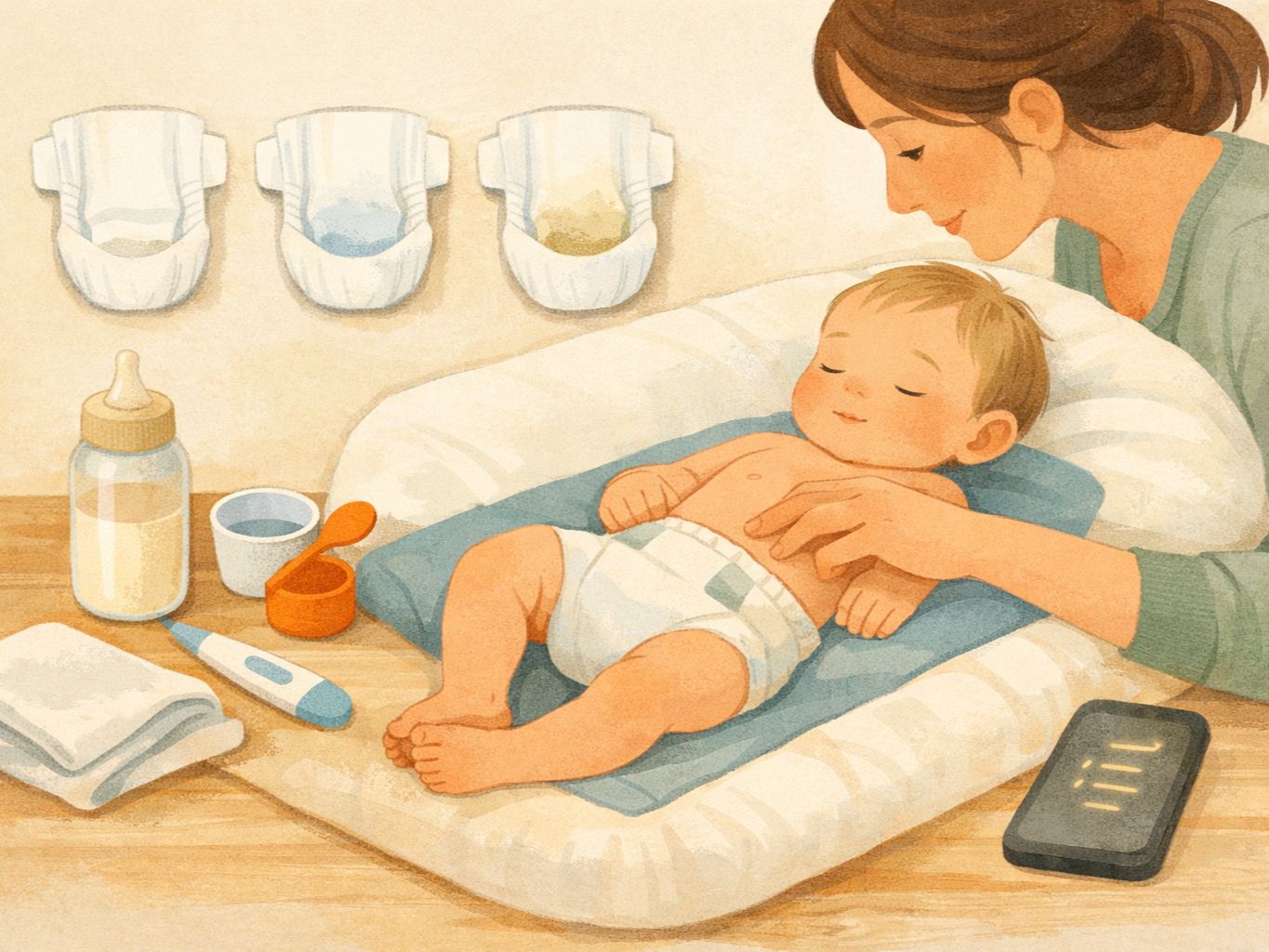
One diaper or one bout of vomiting rarely tells the whole story; the pattern over the next few hours does. Jot the time in your phone notes or a simple log every time something changes.
| Track | Write this down | Why it helps |
|---|---|---|
| Fluids in | Breastfeeds, formula, oral rehydration solution, and whether your baby kept it down | Shows whether hydration is actually replacing losses |
| Fluids out | Each vomiting episode and each diarrhea diaper | Shows whether losses are spreading out or speeding up |
| Urine | Time of each wet diaper and whether it seems lighter than usual | A drop in urine is one of the clearest home signs of dehydration |
| How your baby looks | Alert, fussy, sleepy, hard to wake, dry mouth, no tears, sunken eyes, sunken soft spot | Behavior and appearance changes often matter as much as the stomach symptoms |

If there are two of you, make it easy: one person comforts and offers fluids while the other keeps the log and watches the clock. It saves you from guessing later when you call.
What to give your baby to drink
After vomiting, the quickest way to lose ground is offering too much at once and setting off another round. Think small and often.
- Breastfed babies can usually keep nursing, often in shorter, more frequent feeds.
- Formula-fed babies usually still need formula, but smaller, more frequent feeds tend to go down better than a full one.
- Oral rehydration solution replaces both water and salts, so it's usually a better choice than plain water alone during vomiting or diarrhea.
Offer a small amount, wait, see if it stays down, and log it. If your baby vomits every single time you offer fluids, call a clinician right away. And if your baby is under 6 months, has repeated vomiting, or you're just not sure what to offer, call your pediatrician or nurse line early rather than experimenting on your own.
Don't give anti-vomiting or anti-diarrhea medicine unless your own clinician has told you exactly what to use for your child.
Dehydration signs that mean call now or go now
Use your log to tell when the path changes. You're no longer just watching for more diarrhea; you're watching for dehydration and for a baby who's losing the ability to bounce back between episodes.
- Call the same day for fewer wet diapers than usual, a very dry mouth, no tears when crying, sunken eyes, a sunken soft spot, unusual sleepiness, or poor drinking.
- Get urgent care now if there's been no wet diaper for 6 hours.
- Call 911 now if your baby is hard to wake, limp, has blue or gray lips, has a seizure, or is struggling to breathe.
- Head to urgent care or the ER now if your baby is too weak to drink, keeps vomiting and can't keep fluids down, or is getting worse fast.
- Go now for blood in the stool or vomit, dark green vomit, a swollen belly, severe pain, or a baby younger than 3 months who looks ill or has a rectal temperature of 100.4°F (38°C) or higher.
If you're debating whether your baby is sick enough to go in, look at the trend: less urine, less drinking, less energy, and a worse overall look should tip you toward calling or going.
What to tell the doctor or ER
When you call, pull up your log first. A clinician will usually ask when it started, how many times your baby vomited and had diarrhea, what fluids stayed down, when the last wet diaper was, whether there's a fever, and how your baby is acting right now.
- If one adult can stay with the baby, that person keeps offering small fluids and watching breathing, alertness, and urine.
- If there's a second adult, they make the call, pack the bag, look after siblings, and get ready to drive or meet emergency help.
- If you're heading in, grab feeding supplies, extra diapers, a change of clothes, and a list of any medicines your baby already takes.
You don't need a flawless record. Just the last wet diaper time, what your baby has kept down, and whether they look better, the same, or worse than a few hours ago. Those few details help the team decide faster.
Use the app as your dehydration log
Caring for a sick baby and remembering it all is so much to juggle. A few quick entries make the doctor visit much easier.
- Record every breastfeed, bottle, vomit, diarrhea diaper, and wet diaper in one timeline.
- Use notes to flag a dry mouth, no tears, fever, unusual sleepiness, or the last time your baby kept a feed down.
- Show the log during a nurse call or clinic visit so you can give exact times instead of rough guesses.
Parent FAQs About Wet Diapers and Dehydration
Q: How many wet diapers should a sick baby have?
A: There is no single number that fits every baby, so compare with your baby's usual pattern. What matters most is a clear drop in urine output. If diapers are getting much less wet than usual, or there has been no wet diaper for 6 hours, call a clinician promptly and seek urgent medical care if your baby also looks weak, sleepy, or is drinking poorly.
Q: What can I give my baby after vomiting or diarrhea?
A: Offer small, frequent fluids instead of a full feeding all at once. Breast milk, formula, and oral rehydration solution are the usual options, depending on your baby's age and what your clinician has already told you. Plain water alone is usually not the best rehydration plan for a young baby with vomiting or diarrhea.
Q: When should I take my baby to the ER for dehydration?
A: Get urgent medical care now if your baby cannot keep fluids down, has no wet diaper for 6 hours, is too weak to drink, or is getting worse quickly. Go now for blood in vomit or stool, dark green vomit, a swollen belly, severe pain, or an ill baby under 3 months with a rectal temperature of 100.4°F (38°C) or higher. If your baby has trouble breathing, blue or gray lips, a seizure, or is limp or hard to wake, call 911 now.
Q: Should I stop breast milk or formula if my baby has diarrhea?
A: Usually no. Continued breastfeeding or formula in smaller, more frequent amounts often helps protect hydration and energy. The goal is to keep fluids going in a way your baby can tolerate. If feeds seem to trigger more vomiting or your baby refuses to drink, call your clinician.
References
Check Your Baby's Health from One Photo
AI stool analysis reads color and texture, and keeps every health record in one place.
See what the app does firstMedical Disclaimer: This article is for informational purposes only and does not replace professional medical advice. If you have concerns about your baby's health, please consult a pediatrician.
You Might Also Like
Apple for Babies: Stage-by-Stage Portions and When Raw Apple Is Safe
Spinach for Babies: When to Start, Why Boiling Matters, and the One Time to Skip It
Potato for Babies: When to Start, Safe Shapes, and Why Never to Blend It
Wonder Weeks Calculator: Your Baby's 10 Mental Leaps From the Due Date
You Might Also Like
Baby Impetigo: Golden Crusts, Antibiotic Treatment, and When Nursery Is Safe Again
Golden-brown crusts spreading across your baby's skin? Impetigo is a common, highly contagious bacterial skin infection in young children. It stops being contagious 48 hours after treatment starts. Here is how to recognise it and when nursery is safe again.

Summer Baby Food Safety: Bottle Sterilizing, Feeding Hygiene, and Cooler Tips to Prevent Food Poisoning
In summer, prepared formula lasts just 2 hours at room temperature (1 hour once feeding starts) and baby food only 2 hours. Here's how to sterilize bottles, reheat at 70°C, pack a cooler, and spot dehydration.
Baby Breathing Red Flags at Night: When Cough or Congestion Needs Urgent Help
A baby coughing or sounding congested at night needs urgent help if breathing looks hard, lips or face change color, feeding drops sharply, the baby is hard to wake, or a baby under 12 weeks has a fever.