Baby Eczema vs Infant Heat Rash | Symptoms, Skincare & When to See a Doctor
Check Your Baby's Health from One Photo
Get Started FreeAround 2-3 months of age, many babies develop red, bumpy patches on their cheeks. "Is this just baby heat rash or could it be eczema?" is one of the most common questions new parents ask. While infantile seborrheic dermatitis (cradle cap) usually resolves on its own, atopic dermatitis (eczema) requires ongoing care. This guide covers how to tell the difference, proper moisturizing techniques, environmental management, and when to see a doctor.
Cradle Cap (Seborrheic Dermatitis) vs Atopic Dermatitis: What's the Difference?
These conditions may look similar, but they have different causes and outcomes.
| Feature | Infantile Seborrheic Dermatitis (Cradle Cap) | Atopic Dermatitis (Eczema) |
|---|---|---|
| Onset | 2-8 weeks old | 2-6 months old |
| Common Areas | Face, scalp, forehead | Cheeks, skin folds (elbows, knees), neck |
| Duration | Weeks to months (resolves by age 1) | Persists 2+ months, recurrent |
| Itching | Minimal or none | Intense itching (baby tries to scratch) |
| Skin Appearance | Yellowish, greasy, flaky scales | Dry, rough, red patches |
| Family History | Not strongly linked | Higher risk with parental allergies |
| Outlook | Resolves spontaneously | Chronic, may relapse |
Early Signs of Atopic Dermatitis
Eczema affects different body areas depending on the child's age.
Infants (2 months - 2 years)
- Red, rough patches on both cheeks
- Dry rash on forehead and chin
- Bumpy rash on outer arms and legs
- Oozing or crusting in severe cases
- Baby rubs face against pillow or scratches with hands due to itching
Toddlers and Older Children (2-12 years)
- Concentrated in elbow creases and behind knees
- Neck, wrists, and ankle folds
- Skin thickening with deepened lines (lichenification)
How Atopic Dermatitis Is Diagnosed
Diagnostic criteria vary between countries. The UK NICE guideline, for example, uses these:
Required:
- An itchy skin condition
Plus 3 or more of the following 4 (from age 4, onset before age 2 is added as a fifth):
- Visible dermatitis in skin creases such as the elbows or behind the knees (or on the cheeks or outer arms and legs at 18 months or younger)
- Previous dermatitis in those areas
- Dry skin in the last 12 months
- Asthma or allergic rhinitis (or, under age 4, an atopic condition in a parent or sibling)
Moisturizing: The Cornerstone of Eczema Management
The single most important step in managing eczema is moisturizing. Babies with eczema have a weakened skin barrier that loses moisture rapidly, so frequent application is essential.
Choosing the Right Moisturizer
- Ointments: Highest moisture retention, best for severely dry skin
- Creams: Good all-around choice, most commonly used
- Lotions: Lightweight for summer, but less effective for eczema
- Choose fragrance-free, dye-free, hypoallergenic products
- Look for ceramide-containing formulas to help repair the skin barrier
How to Moisturize Properly
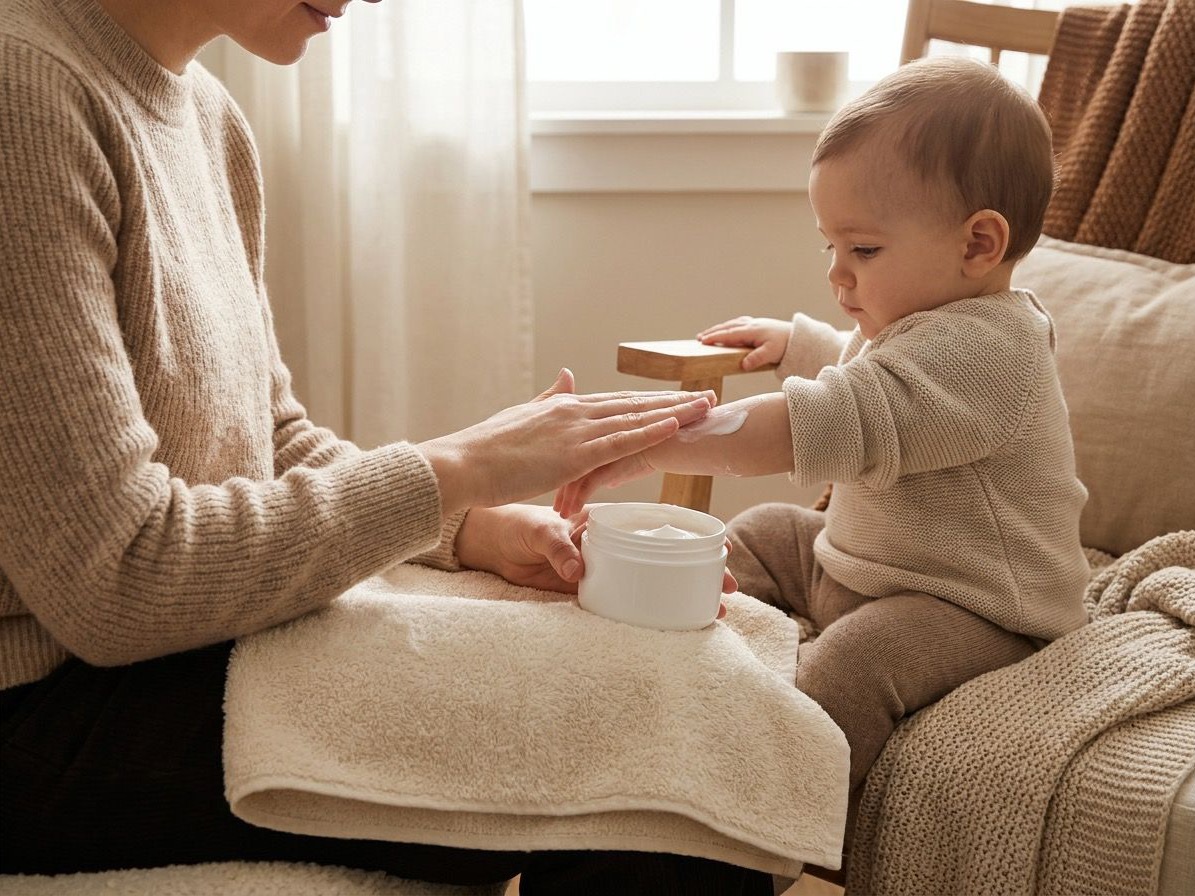
- Apply at least 2-3 times daily (always after bathing)
- Apply within 3 minutes of bathing while skin is still damp
- Use a generous amount, smoothing in the direction of hair growth
- Don't skip the face, neck, and skin folds
- During flare-ups, increase frequency to 5-6 times daily
Proper Bathing for Eczema-Prone Skin
Bathing helps keep skin clean while maintaining hydration when done correctly.
Bathing Guidelines:
- Water temperature: 96-100°F(36-38°C), lukewarm, not hot
- Duration: 5-10 minutes maximum
- Cleanser: Mild, fragrance-free, pH-balanced (pH 5-5.5)
- Lather gently with hands, never use washcloths or scrub brushes
- No harsh soaps, exfoliants, or bubble baths
- Pat dry gently with a soft towel, never rub
- Apply moisturizer within 3 minutes of getting out
| Factor | Recommended | Caution |
|---|---|---|
| Water Temperature | 96-100°F (36-38°C) | Above 104°F (40°C) irritates skin |
| Duration | 5-10 minutes | Over 20 minutes causes moisture loss |
| Frequency | Once daily | Avoid more than twice daily |
| Cleanser | Mild, fragrance-free | Regular soap is too harsh |

Environmental Management
Eczema-prone skin reacts strongly to environmental factors. Maintaining optimal indoor conditions can significantly reduce flare-ups.
Indoor Environment Guidelines:
- Humidity: 50-60% (use a humidifier in dry weather)
- Temperature: 68-72°F (20-22°C), avoid overheating
- Use 100% cotton for clothing and bedding (avoid wool and synthetics)
- Minimize dust mite habitats: remove carpets and stuffed animals from the nursery
- Ventilate regularly, but avoid opening windows on high-pollution days
Common Triggers to Avoid:
- Sweat: Overheating from excessive bundling or hot environments
- Dry air: Winter heating systems that lower humidity
- Harsh detergents: Skip fabric softener; use fragrance-free laundry detergent
- Food restrictions: Do not eliminate foods without medical guidance, unnecessary dietary restrictions can harm nutrition
Understanding Topical Steroids
Many parents worry about steroid creams, but when used correctly, they are safe and highly effective for eczema management.
How to Use Topical Steroids Safely:
- Follow your doctor's instructions on strength and duration
- Face and neck: low-potency; body and limbs: a potency matched to how severe the eczema is (no potent steroids under 12 months without a dermatologist's guidance)
- Apply thinly to affected areas only
- If you use a moisturizer and a steroid at the same time of day, apply one at a time and wait a few minutes before the next (follow your doctor's advice on which goes first)
- Don't stop abruptly, taper gradually as directed by your doctor
Common Myths Debunked:
- "Steroids are always dangerous" → Appropriate use is safe and well-studied
- "Once you start, you can never stop" → Doses can be reduced once symptoms are controlled
- "Steroids darken the skin" → Inflammation itself causes discoloration, not the treatment
When to See a Doctor
Consult your pediatrician or dermatologist in these situations.
Seek Prompt Medical Care If:
- Clusters of small blisters appear, the eczema suddenly gets worse and painful, or your baby has a fever or seems unwell (get care the same day; this can be a herpes infection called eczema herpeticum)
- Skin is oozing, crusting, or has yellow discharge (possible secondary infection)
- Affected area is swollen, warm, or painful
- Itching is so severe the baby can't sleep
- Moisturizing alone isn't improving symptoms
- The rash is spreading to new areas
Ongoing Medical Management Recommended If:
- Symptoms recur for 2 or more months
- Family history of eczema, asthma, or hay fever
- Widespread dry, rough skin over the body
Track Your Baby's Skin with BebeSnap
Concerned about your baby's skin? BebeSnap's AI skin analysis can help you manage eczema more effectively.
- AI Skin Photo Analysis: Take a photo of your baby's skin and get an AI-powered assessment
- Track Changes Over Time: Regular photos help you see improvement or detect flare-ups early
- AI Consultation: Ask our AI chatbot any questions about your baby's skin health
👉 Learn more about BebeSnap AI Skin Analysis
Frequently Asked Questions (FAQ)
Q: How can I tell cradle cap from eczema?
A: Cradle cap (seborrheic dermatitis) appears at 2-8 weeks and is marked by greasy, yellowish scales with little to no itching. Eczema, on the other hand, appears at 2-6 months and is dry, rough, and intensely itchy. Cradle cap usually resolves on its own before age 1, but if symptoms recur for 2 or more months, suspect atopic dermatitis.
Q: How often should I moisturize a baby with eczema?
A: Apply moisturizer at least 2-3 times daily, and always after bathing. It's especially effective to apply within 3 minutes of bathing while the skin is still damp. During flare-ups, increase to 5-6 times a day, and choose fragrance-free, dye-free products that contain ceramides to help repair the skin barrier.
Q: How should I bathe a baby with eczema?
A: Use lukewarm water at 96-100°F (36-38°C) for no more than 5-10 minutes. Lather a mild, pH-balanced (pH 5-5.5) cleanser with your hands and wash gently, never use washcloths or scrubs. Afterward, pat the skin dry with a soft towel and apply moisturizer within 3 minutes.
Q: Is it safe to use steroid creams?
A: When used correctly per your doctor's instructions, topical steroids are safe and effective. Use low-potency on the face and a strength matched to the eczema's severity on the body and limbs, applying thinly to affected areas only. Avoiding steroids out of fear can actually allow eczema to worsen and require stronger treatment, so following your pediatrician's guidance is safest.
References
Check Your Baby's Health from One Photo
AI stool analysis reads color and texture, and keeps every health record in one place.
See what the app does firstMedical Disclaimer: This article is for informational purposes only and does not replace professional medical advice. If you have concerns about your baby's health, please consult a pediatrician.
You Might Also Like
Tomato for Babies: When to Start, Skin and Seeds, and Why Cherry Tomatoes Are Never Served Whole
Apple for Babies: Stage-by-Stage Portions and When Raw Apple Is Safe
Spinach for Babies: When to Start, Why Boiling Matters, and the One Time to Skip It
Potato for Babies: When to Start, Safe Shapes, and Why Never to Blend It
You Might Also Like
Baby Impetigo: Golden Crusts, Antibiotic Treatment, and When Nursery Is Safe Again
Golden-brown crusts spreading across your baby's skin? Impetigo is a common, highly contagious bacterial skin infection in young children. It stops being contagious 48 hours after treatment starts. Here is how to recognise it and when nursery is safe again.

Creating a Baby Bedtime Routine: Help Baby Fall Asleep Independently
Bedtime battles every night? Try the AAP-recommended 'Brush, Book, Bed' routine to help your baby fall asleep independently.

Febrile Seizure First Aid | Symptoms, What to Do & When to Call 911
Febrile seizures are common between 6 months and 5 years and most children recover with no lasting effects. Learn first aid during a seizure, when to seek care, and prevention.