Baby Hives: Causes, Home Care, and When to Worry
Check Your Baby's Health from One Photo
Get Started FreeA red, raised rash pops up on your baby's forearm in the morning, vanishes without a trace by evening, then reappears on the thigh. Press it, and the center turns white. When a rash moves around and comes and goes within hours like this, and it's itchy, it's very likely hives. The reassuring news is that most baby hives are not a scary illness; they usually settle on their own within a few days to a few weeks without special treatment.
There is one exception you can't miss. If the hives come with swelling of the lips, eyes, or face, or your baby struggles to breathe, everything changes. Those are signs of anaphylaxis, and you need to get to the ER without delay. Once you can spot that one thing, most bouts of hives turn out to be far less alarming than they first look.
⚠️ If the hives come with swelling of the lips, tongue, or eyelids, wheezing, coughing, or trouble breathing, or repeated vomiting and limpness, it may be anaphylaxis. Don't wait for medicine: call 911 and get to the ER immediately.Is This Rash Actually Hives?
Hives are wheals: raised welts that form when fluid briefly leaks into the upper layers of the skin. They puff up like mosquito bites, with a red or pinkish rim and a paler center, and they range from tiny spots to palm-sized patches that can merge together. Above all, they itch.
Two features set hives apart from other rashes. The first is movement. A single hive usually fades within 24 hours (often within just a few hours) leaving clear skin behind, while new ones pop up somewhere else entirely. If the rash is in a completely different place by evening than it was in the morning, it's almost certainly hives. The second is that they blanch. Press a welt gently with your fingertip and it turns white, then flushes red again when you let go. This matters because it reflects the leaky blood vessels underneath.
💡 The single most reliable sign of hives is that they blanch when pressed and migrate; each welt clears within 24 hours and new ones appear elsewhere, with normal-looking skin in between.Why Did the Hives Appear So Suddenly?
Parents often ask, "What did I do wrong?", but the most common trigger for hives in children is surprisingly a viral infection. Hives frequently flare up during or just after a cold or a stomach bug. This matters because it means that no matter how hard you retrace the day, you often won't find a specific food or product to blame.
Allergic triggers do exist too. Foods (eggs, milk, nuts, fish, shellfish, and more) can bring on hives within minutes to two hours of eating, and so can medications like antibiotics or fever reducers, and insect bites and stings. On top of that, physical pressure on the skin (heat, sweat, friction) can raise hives all on its own. That's exactly why hives are so common in summer: babies sweat more, get more insect bites, and rub against thin clothing, and those factors stack up. Often several triggers overlap rather than one clean cause.
How Do I Tell It From Heat Rash, Eczema, or Roseola?
In summer, a baby's skin can show heat rash, eczema, or a roseola rash alongside hives, and they're easy to confuse. Lining up their appearance, location, itch, and duration side by side makes the difference much clearer.
| Feature | Hives | Heat rash | Eczema | Roseola |
|---|---|---|---|---|
| Look | Raised wheals, blanch when pressed | Tiny bumps or red dots | Dry, rough, scaly, may ooze | Flat pink spots after fever |
| Location and movement | Migrates within hours | Fixed to sweaty areas | Recurs on cheeks and creases | On the trunk, doesn't move |
| Itch | Intense | Mild sting or itch | Very itchy | Rarely itchy |
| Duration | Each spot under 24 hours | Days once cooled | Long-lasting, relapsing | 1–3 days after fever |

To boil it down: hives are raised welts that migrate and blanch under pressure. Heat rash stays put as tiny bumps in sweaty spots, and eczema lingers in the same places, dry and rough. Roseola shows up as pink spots only after several days of high fever have broken, and it barely itches. Holding onto this pattern will help you panic a little less in the middle of the night.
How Do I Calm Hives at Home?
Most hives quiet down with a few days of home care. The goal is simple: ease the itch and avoid irritating the skin.
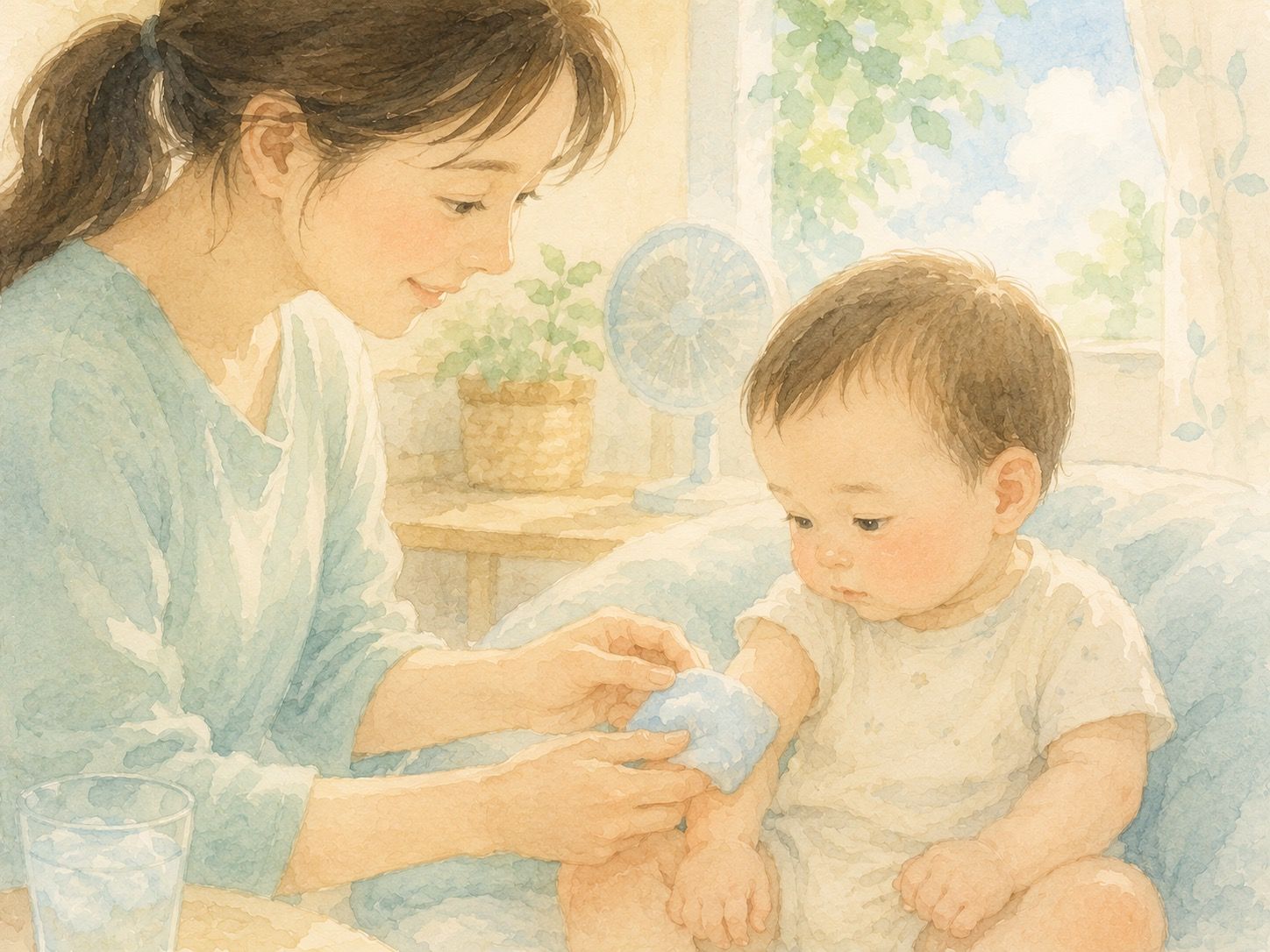
Start by cooling the skin. Apply a cool, damp cloth as a compress, give a lukewarm rinse, and keep the room comfortable. Do the opposite of a hot bath or heavy layers, because warming the skin widens blood vessels and can spread the hives further. Next, help your baby not scratch. Trim their nails short and dress them in soft cotton to cut down friction, because scratching can break the skin and invite infection. If the itch is severe, an antihistamine may help: but always check with your pediatrician for the right medicine and dose for your baby's age and weight, and never split an adult product on your own. Finally, keep a record: photograph the rash and jot down any new food, lotion, or detergent from that day, because it makes narrowing down the trigger far easier later.
💡 A hot bath or warming your baby up actually makes hives worse. Cooling the skin down (lukewarm or cool) calms the itch far more quickly.When Should I Head Straight to the ER?
Hives on their own are usually harmless, but if any of the following appear alongside them, it may be anaphylaxis: a whole-body allergic reaction. In that case every second counts, so call 911 and get to the ER right away.
- Angioedema, swelling of the face, lips, tongue, or eyelids: swelling in the mouth and throat can block the airway.
- Breathing trouble: wheezing, coughing, breathlessness, or a hoarse, changed voice.
- Gut symptoms: repeated vomiting, severe belly pain, diarrhea.
- Whole-body changes: limpness, pallor, dizziness, or being hard to wake.
When these join the hives, it's no longer just a skin reaction. For exactly what to do in an emergency, read our Baby Anaphylaxis & Allergy Emergency Guide. Even without these red flags, it's wise to see a pediatrician during the day if the hives come with a high fever, painful swollen joints, or simply won't improve after several days.
What If They Last More Than 6 Weeks? Chronic Hives
Most hives are acute and fade on their own within a few days to a few weeks. But when hives recur almost daily for more than 6 weeks, they're considered chronic. That word sounds alarming, yet a large share of chronic cases are "spontaneous," appearing without any clear trigger. It isn't a life-threatening condition, but the constant itch can disrupt sleep and mood, so it's worth seeing a pediatrician or pediatric allergist for steady management. Rather than cutting out foods one by one on a hunch, working with a specialist to find the cause and adjust medication is far gentler on your baby.
Finding the Trigger with BebeSnap
Hives that migrate and come and go often vanish by the time you reach the clinic, which makes them hard to describe. That's where a running record pays off.
- AI skin analysis: Photograph the rash and BebeSnap analyzes and logs it, so you can show it directly to the doctor.
- Feeding logs: Line up what your baby ate against when the hives appeared to narrow down likely triggers.
- Symptom timeline: Capture when and where the rash appeared and faded, so its telltale migrating pattern comes through at the visit.
Frequently Asked Questions (FAQ)
Q: How many days do baby hives last?
A: A single welt usually fades within 24 hours (often within just a few hours) while new ones appear elsewhere. Looking at an acute episode as a whole, most clear on their own within a few days to a few weeks. If hives recur almost daily for more than 6 weeks, though, that's chronic urticaria and you should see a pediatrician.
Q: How do I tell hives apart from heat rash?
A: Hives are raised wheals that migrate to new spots within hours and blanch white when you press them. Heat rash, by contrast, stays fixed as tiny bumps in sweaty areas like the neck, back, and diaper line, and doesn't move around. That migration and the blanching when pressed are the most reliable ways to tell them apart.
Q: Cool or warm, what's better for hives?
A: Cooling is better. Use a cool, damp cloth as a compress, give a lukewarm rinse, and keep the room comfortable. Avoid hot baths or warming your baby up, because heat widens the skin's blood vessels and can make the hives spread further and itch more.
Q: With hives, when should I go to the ER?
A: If swelling of the lips, tongue, or face, wheezing, coughing, trouble breathing, repeated vomiting, or limpness and pallor appear along with the hives, it may be anaphylaxis. In that case, don't wait for medicine to work: call 911 and get to the ER immediately, as it can become life-threatening quickly.
References
Check Your Baby's Health from One Photo
AI stool analysis reads color and texture, and keeps every health record in one place.
See what the app does firstMedical Disclaimer: This article is for informational purposes only and does not replace professional medical advice. If you have concerns about your baby's health, please consult a pediatrician.
You Might Also Like
Tomato for Babies: When to Start, Skin and Seeds, and Why Cherry Tomatoes Are Never Served Whole
Apple for Babies: Stage-by-Stage Portions and When Raw Apple Is Safe
Spinach for Babies: When to Start, Why Boiling Matters, and When to Skip It
Potato for Babies: When to Start, Safe Shapes, and Why Never to Blend It
You Might Also Like

Baby Impetigo: Golden Crusts, Antibiotic Treatment, and When Nursery Is Safe Again
Golden-brown crusts spreading across your baby's skin? Impetigo is a common, highly contagious bacterial skin infection in young children. It stops being contagious 48 hours after treatment starts. Here is how to recognise it and when nursery is safe again.

How to Boost Baby Immunity: Breastfeeding, Vitamin D, and Vaccines, Complete Guide
Baby immunity hits its lowest point at 6 months, breastfeeding, 400 IU vitamin D daily, and on-time vaccines are the top 3 evidence-based ways to protect your newborn.
Baby Drooling & Drool Rash: How to Treat It and Tell It From Hand-Foot-Mouth
Heavy drooling between 3 and 18 months (peaking around 5 to 7 months) is normal. Drool rash on the mouth, chin, and neck usually clears in 5 to 7 days with gentle patting and a barrier cream. Here's how to tell it apart from hand-foot-mouth disease.