Baby Anaphylaxis: Allergy Emergency Response Guide
Check Your Baby's Health from One Photo
Get Started FreeThat moment right after a new food, when hives start spreading across your baby's body and their breathing sounds off, your stomach drops. This could be anaphylaxis: an allergic reaction that spreads fast, within minutes, and can be life-threatening. It's a scary thing to read about, but the real danger is freezing up and losing precious time when it actually happens. So if you run through the signs and the steps just once now, your hands will shake a lot less in the moment.
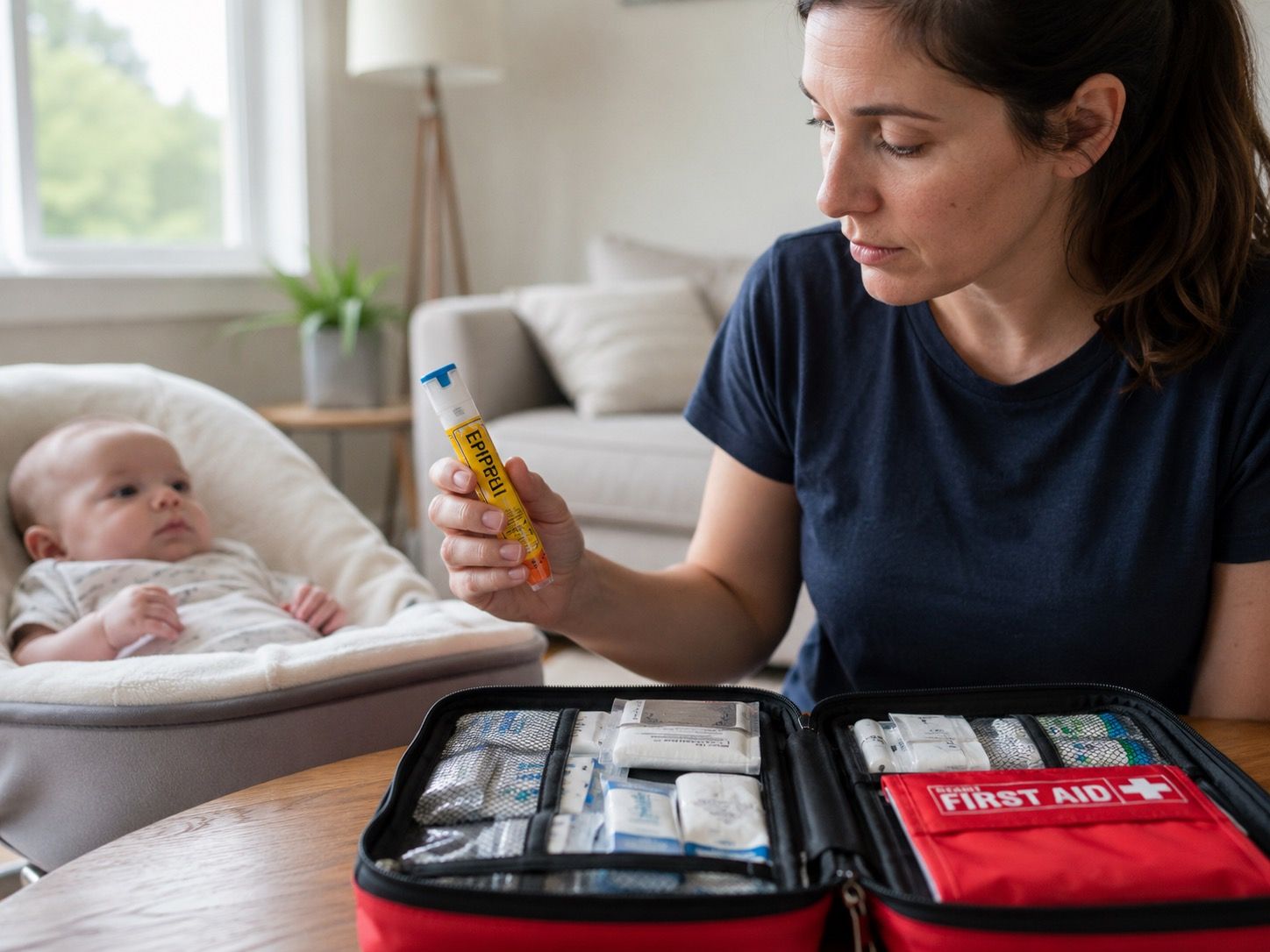
This is information to prepare with ahead of time. If it actually happens, don't strain to remember an article. Act without hesitating: if your baby has a prescribed epinephrine auto-injector, use it first and call 911 right away; if not, call 911 first.
How is this different from a regular allergy?
A mild allergy usually shows up in just one spot, maybe a little redness around the mouth or a few patches of rash. Anaphylaxis is different: it hits the whole body at once. When symptoms show up in two or more areas at the same time, skin, breathing, gut, or overall condition, that's your cue to treat it as anaphylaxis. But some signs mean calling 911 on their own: trouble breathing, sudden swelling of the lips or tongue, lips or face turning blue, or going limp or unresponsive.
What makes it frightening is the speed. It usually starts within minutes of eating the food, though it can show up a few hours later, and once it starts it can ramp up fast. That's exactly why "let's wait and see if it settles" is the most dangerous move. One more thing: a food that gave a mild reaction the first time can hit harder the second time. That's why a calm first encounter doesn't mean you can relax your guard.
Watch for these signs appearing together
The first and most dangerous thing to watch is breathing. If your baby is wheezing, coughing, or working hard to breathe even after they've stopped crying, don't wait. Lips or face turning blue (cyanosis) is an even more urgent sign.
On the skin, you might see hives spreading quickly over the body, or swelling of the face, lips, eyelids, or tongue. In the gut, there can be sudden vomiting, hard crying from belly pain, or diarrhea. And throughout the body, your baby may suddenly go limp and unresponsive, or turn pale and dazed. Going from fussy to suddenly lethargic is another change you don't want to miss.
💡 A baby can't tell you "I can't breathe." So it's up to you to catch the sudden limpness, the color change, and the crying or wheezing that isn't like usual.In the moment, move in this order
If your baby has a prescribed epinephrine auto-injector, inject it first (see below), then call 911 right away. If not, call 911 first. Don't hesitate, and say it plainly: "My baby is having an allergic reaction and is struggling to breathe." If you suspect anaphylaxis, it's right to call even if the symptoms look a little mild. Don't worry about whether you're overreacting.
If you have a prescribed epinephrine auto-injector (EpiPen Jr, etc.), inject it into the outer thigh right away. Here's the part to really hold onto: epinephrine is the only treatment that actually stops anaphylaxis. Antihistamines are just a backup, so don't rely on them and wait. That's why it helps to learn how to use the injector ahead of time and check the expiration date.
Positioning matters too. If breathing is hard, hold your baby slightly upright; if they're limp and dizzy, lay them down and raise the legs a little. If they're vomiting, lay them on their side so the airway stays clear. While you wait for 911, keep watching breathing and alertness, and if symptoms get worse or don't improve within 5 minutes, give a second dose of epinephrine (one reason to always carry two). And even if things seem to improve, you still need to be observed at a hospital, because symptoms can settle and then return in what's called a biphasic reaction.
Foods to watch closely the first time
When you introduce the foods below during solids, give them an extra-careful look the first time. The common triggers are milk and eggs, peanuts and tree nuts, wheat and soy, fish and shellfish, and sesame.
The list looks scary, but holding these foods off forever isn't the answer. In fact, introducing them at the right time, rather than delaying too long, actually helps prevent allergies.
💡 Current guidelines favor introducing allergenic foods appropriately from 4 to 6 months rather than delaying too long, which helps with prevention. But if your baby is high-risk, such as with a family history, talk with your doctor before you start.A few things that bring peace of mind
Instead of just worrying, a little preparation goes a long way. Introduce new foods one at a time, 3 to 5 days apart, so if a reaction does come, you'll know exactly which food caused it. And try to offer first-time foods during daytime hours when you could reach a hospital, at home.
If your baby already has a diagnosed allergy, strictly avoid the trigger food and carry the prescribed epinephrine everywhere. And here's one that really matters: make sure the other people who care for your baby, daycare teachers, grandparents, know which foods to avoid and what to do in an emergency. When you're not in the room, that information is what protects your baby.
Everyday allergy vs emergency, at a glance
| Category | Mild Allergy | Anaphylaxis (Emergency) |
|---|---|---|
| Skin | Local rash/itching | Full-body hives, facial swelling |
| Breathing | Normal | Wheezing, trouble breathing |
| Whole body | Good condition | Lethargy, low alertness, pale |
| Response | Observe, antihistamine if your doctor prescribed one | Epinephrine now (if prescribed) + call 911 |

Managing Allergies with BebeSnap
When it comes to watching for solid-food allergies, nothing beats a food log. Let BebeSnap help.
- Record when you introduced each new food and any reaction, to track down the trigger
- Use AI skin analysis to check rashes and hives from a photo
- Ask the AI chatbot about allergy symptoms and responses, any time of day
Frequently Asked Questions (FAQ)
Q: How can I recognize anaphylaxis in my baby?
A: Suspect anaphylaxis when symptoms appear in two or more body systems at once. Trouble breathing or going limp calls for 911 on its own. Watch for respiratory signs like wheezing and trouble breathing, hives spreading over the body with facial swelling, sudden vomiting, and going limp or pale. A baby can't say "I can't breathe," so parents must notice color changes and unusual crying.
Q: What should I do first if I suspect anaphylaxis?
A: If you have a prescribed epinephrine auto-injector, inject it into the outer thigh right away, then call 911 and state clearly, "baby allergic reaction, trouble breathing." If you don't have one, call 911 immediately. Epinephrine is the only first-line treatment for anaphylaxis; antihistamines are only secondary.
Q: If symptoms improve after epinephrine, do I still need to go to the hospital?
A: Yes. Even if symptoms improve, you must always get observed at a hospital because of the risk of a biphasic reaction, where symptoms return. Also, if symptoms get worse or don't improve within 5 minutes, give a second epinephrine dose if you have one.
Q: How should I introduce solids to help prevent allergies?
A: Introduce new foods one at a time, 3-5 days apart, and give first-time foods at home during the day when you can reach a hospital. Current guidelines suggest introducing allergenic foods appropriately from 4-6 months, rather than delaying too long, helps prevent allergies. For high-risk infants, proceed after consulting your doctor.
References
Check Your Baby's Health from One Photo
AI stool analysis reads color and texture, and keeps every health record in one place.
See what the app does firstMedical Disclaimer: This article is for informational purposes only and does not replace professional medical advice. If you have concerns about your baby's health, please consult a pediatrician.
You Might Also Like
Tomato for Babies: When to Start, Skin and Seeds, and Why Cherry Tomatoes Are Never Served Whole
Apple for Babies: Stage-by-Stage Portions and When Raw Apple Is Safe
Spinach for Babies: When to Start, Why Boiling Matters, and When to Skip It
Potato for Babies: When to Start, Safe Shapes, and Why Never to Blend It
You Might Also Like

Baby Impetigo: Golden Crusts, Antibiotic Treatment, and When Nursery Is Safe Again
Golden-brown crusts spreading across your baby's skin? Impetigo is a common, highly contagious bacterial skin infection in young children. It stops being contagious 48 hours after treatment starts. Here is how to recognise it and when nursery is safe again.
Baby Eczema vs Infant Heat Rash | Symptoms, Skincare & When to See a Doctor
Is your 2-3 month old's face turning red? Cradle cap (seborrheic dermatitis) usually clears by age 1, but atopic dermatitis persists 2+ months. Maintain 50-60% humidity and moisturize 2-3 times daily.

Newborn Gas Relief: Symptoms, Bicycle Legs, Burping, and When to Worry
Is your newborn pulling up legs, turning red, and grunting? Bicycle legs, burping, and tummy massage often help ease the gas.