Baby Vitamin D Supplements: Timing, Dosage, and How to Give
Stop Trying to Remember Feed Times
Get Started FreeAt your baby's first checkup, your pediatrician probably said something like, "If you're breastfeeding, give vitamin D separately." And you may have thought, "Wait, isn't breast milk supposed to be perfect?" It almost is, but it's low in vitamin D. Breast milk just doesn't carry much vitamin D. It's not anything you're doing wrong; that's simply how breast milk works.
That's why the American Academy of Pediatrics (AAP) recommends starting vitamin D within the first few days for breastfed babies. Vitamin D builds strong bones and teeth and supports the immune system, so it really matters. Don't let it overwhelm you, though: let's walk through when to start, how much, and the easy way to actually get it into your little one.
Why Bother Giving It Separately?
Vitamin D helps your baby's body absorb calcium, which is what makes bones strong. Without enough of it, bones can grow weak and bowed (a condition called rickets) so it's not a nutrient to shrug off.
The reason is simple. Breast milk contains very little vitamin D, and you can't exactly send a newborn out to sunbathe. Babies under 6 months need to stay out of direct sun and wear sun protection. So rather than trying to make up the gap with food or sunshine, one little drop of a supplement is the safest, most reliable way to cover it.
Does Your Baby Need It? When and How Much?
| Category | Vitamin D Recommendation |
|---|---|
| Exclusively breastfed | From the first few days, 400 IU daily |
| Mixed feeding | 400 IU daily if formula is under 1L |
| Exclusively formula-fed | No extra needed if drinking 1L+ of formula |
| After starting solids | Continue if food/fortified foods don't reach 400 IU |

The table can be a lot to take in, so here's the short version. A breastfed baby needs 400 IU a day starting within the first few days. A formula-fed baby does get vitamin D from the formula itself, but a young baby who isn't drinking much yet (under about 1L, or 1000ml, a day) may not get enough from formula alone. So don't just assume "it's formula, we're fine"; the most accurate move is to check with your pediatrician. After the first birthday, the recommendation rises to about 600 IU a day, and by then food and milk can cover some of it too.
💡 Formula feeding doesn't automatically mean you can skip it. Even with vitamin D in the formula, a baby drinking small amounts may come up short. Whether breastfed or formula-fed, a quick check with your pediatrician is the most reassuring route.So How Do You Actually Give It?
Baby vitamin D almost always comes as liquid drops: the kind that look like medicine. At first you might wonder, "How am I supposed to get this into them?" but it's genuinely easy once you try.
First, double-check the dose. The amount in a single drop varies from product to product, so read the label and always measure with the included dropper. Eyeballing it with a kitchen spoon leads to wildly inconsistent amounts, so skip that.
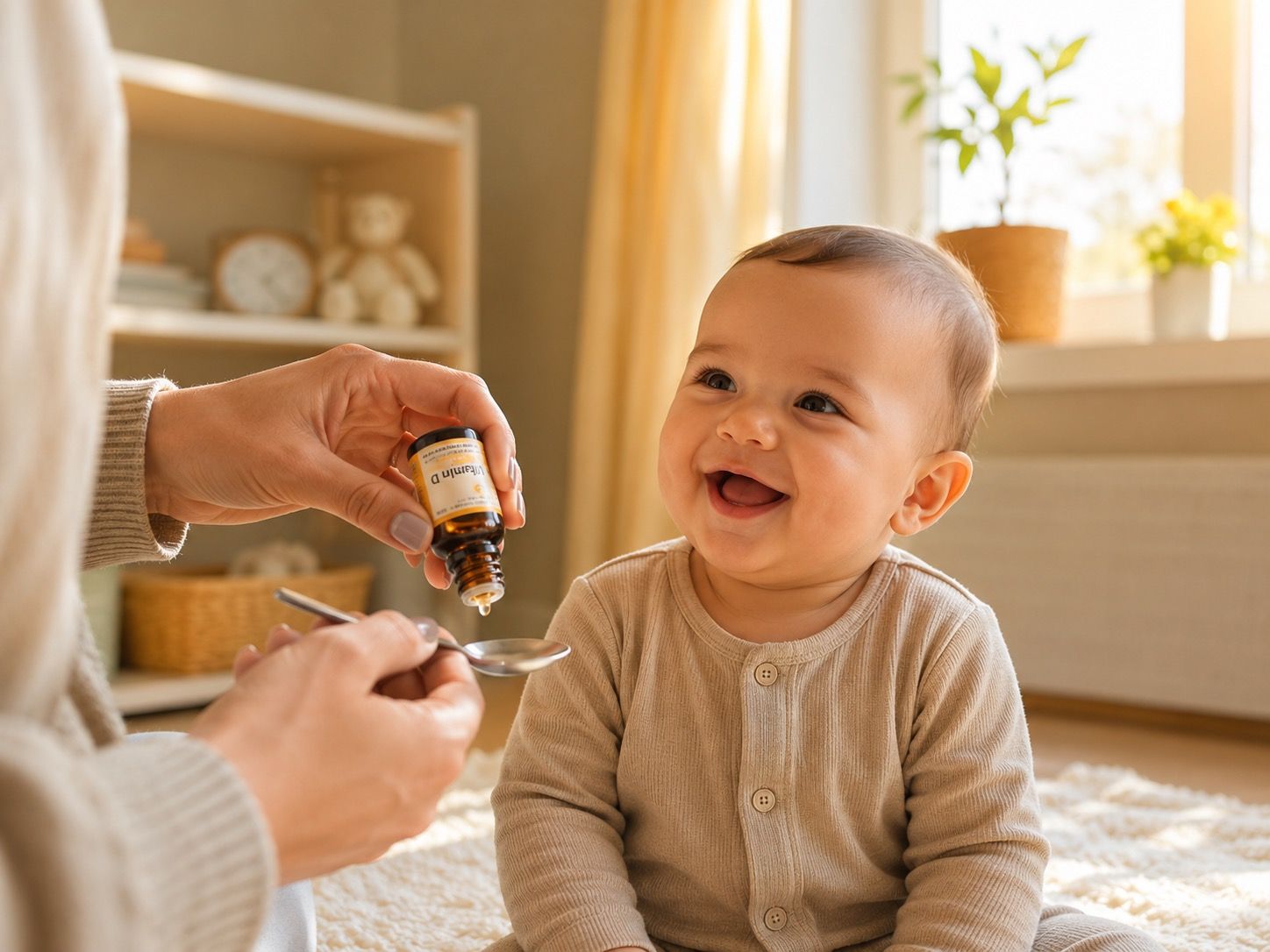
Giving it is simpler than you'd think. Just place the dose shown on the label on the nipple or inside the lower lip. Some products put 400 IU in a single drop, and others in ½ to 1 mL. Doing it right before or after a feed means you won't forget. You can mix it into expressed milk or formula, but keep in mind that if your baby doesn't finish the bottle, they only get part of the dose.
The single most helpful thing is giving it at the same time every day. Tie it to something fixed, like the first morning feed, and you'll rarely miss it.
Don't Overdo It, Either
Vitamin D is fat-soluble, which means extra doesn't just flush out; it builds up in the body. That's why sticking to the recommended amount matters. Don't give more than 400 IU a day in supplements unless your doctor specifically tells you to. If you're also giving a multivitamin alongside vitamin D drops, double-check that the two aren't doubling up.
Signs of too much include poor appetite, vomiting, frequent urination, and constipation. And of course, keep the supplement well out of your baby's reach.
Can't a Little Sunshine Do the Job?
Lots of parents wonder this. It's true that sunlight lets the skin make vitamin D. But with babies, you can't really lean on the sun. Babies under 6 months should avoid direct sun (per the AAP). On top of that, sunscreen, the season, where you live, and skin tone all change how much gets made. So relying on the sun is unpredictable, while one daily drop is safe and steady.
What About After Solids and Age 1?
Once solids start, you might think, "Food can handle it now": but hitting 400 IU from food alone is actually quite hard. Some vitamin-D-fortified formula and cereals can chip in, and after the first birthday, fortified cow's milk covers a bit too. If it still falls short, keep going with the supplement.
When to Ask Your Pediatrician
Reach out if you're unsure about the dose or when to start, or if your baby was premature or has trouble absorbing nutrients; those may need a dose adjustment. If the legs look bowed or growth seems unusually slow, mention it, since those can be signs of rickets. And if you think your baby may have gotten too much vitamin D, ask right away.
Never Forget a Dose with BebeSnap
The whole point of vitamin D is giving it every single day, but in the blur of new-baby life, it's so easy to forget. Managing it with BebeSnap makes it much easier.
- Log each dose so you never have to wonder, "Did I give it today?"
- Track feeding amounts to confirm your baby is getting enough formula
- Ask the AI chatbot about dosage or timing anytime, 24/7
Frequently Asked Questions (FAQ)
Q: When and how much vitamin D should a breastfed baby get?
A: The American Academy of Pediatrics (AAP) recommends 400 IU of vitamin D daily for exclusively breastfed babies, starting within the first few days. Breast milk is nearly perfect nutrition but contains very little vitamin D, and a deficiency can cause rickets, which weakens the bones.
Q: Does a formula-fed baby still need vitamin D?
A: Formula contains vitamin D, so no extra is needed once your baby drinks about 1L (1000ml) or more per day. However, newborns often can't drink that much, so supplementation of 400 IU daily may be needed until they do. Consult your pediatrician to be sure.
Q: What's the best way to give vitamin D?
A: Baby vitamin D usually comes as liquid drops. Measure the labeled dose (one drop for some products, ½ to 1 mL for others) with the included dropper and place it on the nipple or inside the lower lip. Don't use a kitchen spoon. Giving it at the same time each day, such as the first morning feed, helps you remember.
Q: Isn't sunlight enough to provide vitamin D?
A: Sun exposure lets the skin make vitamin D, but babies should avoid direct sun under 6 months. The amount produced varies with sunscreen, season, latitude, and skin tone, so a daily 400 IU supplement is safer and more consistent than relying on the sun.
References
Stop Trying to Remember Feed Times
Log time, amount, and intervals. BebeSnap turns them into your baby's daily pattern.
See what the app does firstMedical Disclaimer: This article is for informational purposes only and does not replace professional medical advice. If you have concerns about your baby's health, please consult a pediatrician.
You Might Also Like
Wonder Weeks Calculator: Your Baby's 10 Mental Leaps From the Due Date
Baby Weight Gain Calculator: Grams Per Day From Two Weigh-Ins
Baby Impetigo: Golden Crusts, Antibiotic Treatment, and When Nursery Is Safe Again
Baby Mouth Sores (Stomatitis): Causes, How to Tell Them Apart, and Dehydration Signs
You Might Also Like
Tomato for Babies: When to Start, Skin and Seeds, and Why Cherry Tomatoes Are Never Served Whole
Tomato can start at 5-6 months once the skin and seeds are removed and it is cooked. Portions run 20-30g at 7-8 months and 30-40g at 9-11 months, counted together with fruit. Cherry tomatoes are the one vegetable Japan's childcare guidance names by name as something not to serve whole.

Baby Vitamins & Supplements Guide | Vitamin D, Iron, Probiotics & DHA by Age
When should you start baby vitamins? Vitamin D 400IU from birth, iron by about 6 months for exclusively breastfed babies, probiotics & DHA: complete age-by-age dosing guide for breastfed and formula-fed babies.

When Can Babies Have Yogurt & Cheese? | Starting Dairy Foods Safely
Plain yogurt and low-salt cheese can start around 7-8 months: 50-70g at 7-8 months, 80g at 9-11 months. But cow's milk as a drink waits until 12 months.