Baby Drooling & Drool Rash: How to Treat It and Tell It From Hand-Foot-Mouth
Check Your Baby's Health from One Photo
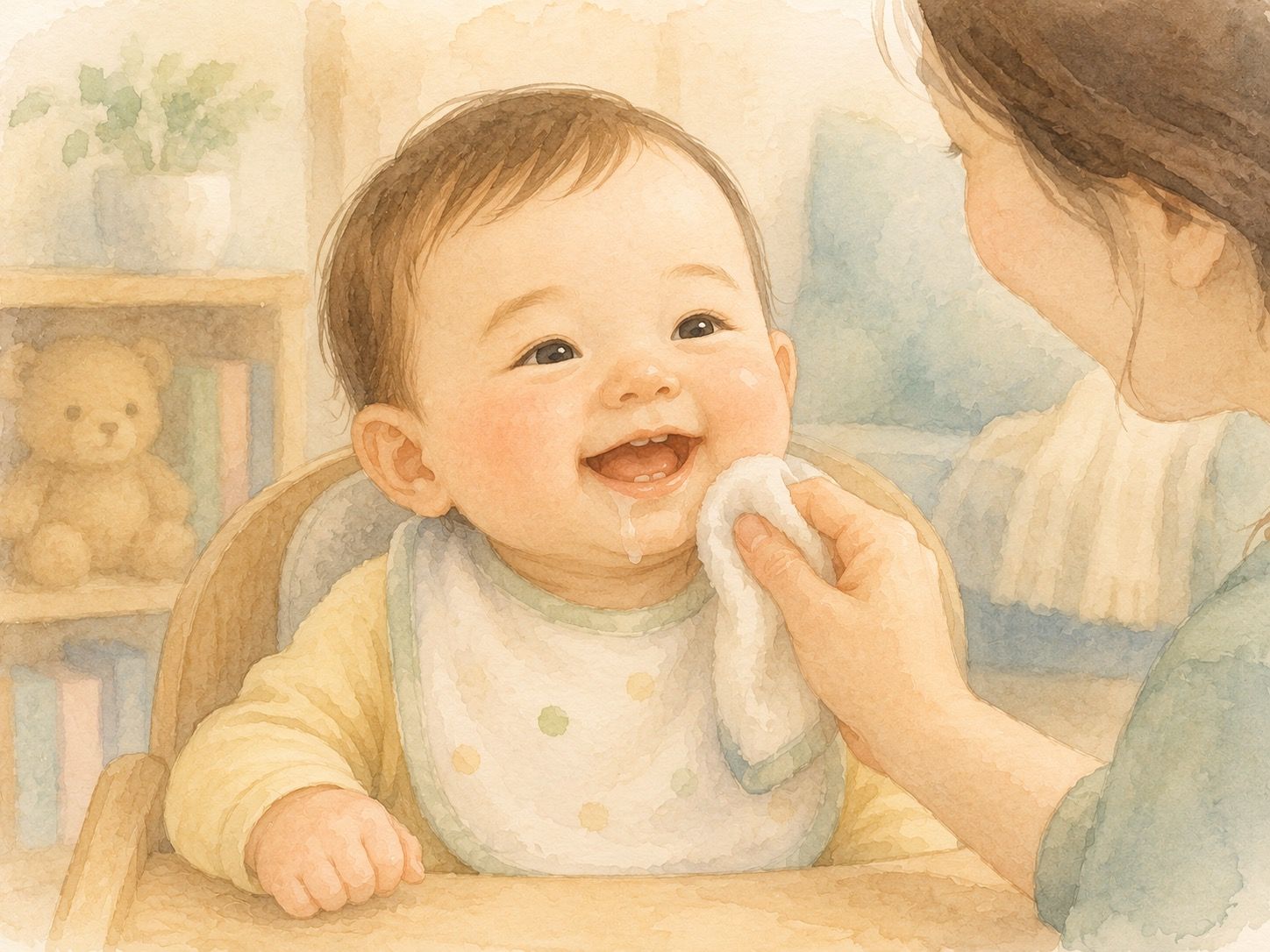
Get Started FreeYour baby's collar and bib are soaked through by mid-morning and the chin is turning red and chapped, so is this much drooling actually okay? For most babies between 3 and 18 months it is: heavy drooling is completely normal, and drooling itself is not an illness. The part that actually needs your attention isn't the drool but the skin. When saliva sits on delicate skin for hours, it can leave a red, irritated drool rash on the mouth, chin, and neck: which, happily, usually clears within 5 to 7 days with gentle care and a barrier cream at home.
Why Is My Baby Drooling So Much?
Drooling usually picks up noticeably between 3 and 18 months, peaking around 5 to 7 months. It's not one single cause but several overlapping at once.
Around this age the salivary glands become much more active and produce a lot more saliva. The catch is that your baby's mouth and throat muscles are still learning to swallow, so that extra saliva simply spills out instead of going down. On top of that, this is the oral stage, when babies explore everything by putting hands and toys in their mouths: which stimulates even more drool. Teething, as the teeth push through the gums, is another common trigger.
One myth worth clearing up: heavy drooling doesn't always mean a tooth is about to appear. Teething is just one of several causes. Until swallowing matures around 18 to 24 months, drooling is a normal part of development, not a warning sign.
💡 The drooling itself is nothing to worry about, saliva actually helps keep the mouth moist and protects the gums. The thing to watch isn't "how much your baby drools" but "the skin that stays wet with drool."Why Does Drool Rash Form, and Where?
Saliva contains digestive enzymes that break down food. When enzyme-rich saliva sits on delicate baby skin for a long time, it irritates it. And when drool wets the skin, dries, and re-wets it all day long, the skin's protective barrier weakens, leaving those red, bumpy, chapped patches. That's drool rash.
The most common spots are wherever saliva pools. The area around the mouth and the chin are classic, but it can spread to the cheeks where drool runs down, the neck folds, and even the upper chest where a bib presses. The inside of the neck folds is especially prone to breaking down because saliva collects there and doesn't dry easily.
💡 Drool rash is not contagious and not a sign of anything serious. It's simply skin that's been irritated by staying wet, so cutting down the wet time and adding a protective barrier clears up most cases.How to Treat It at Home
Drool rash care really comes down to two things: keep the skin dry, and put a protective barrier over it. Follow these steps and most cases settle on their own.
1. Wipe often and gently
- Blot the drool away at the moments it builds up most, such as after feeds and naps.
- Rubbing damages already-sensitive skin, so use a soft cotton cloth and pat gently, as if absorbing the moisture rather than scrubbing it.
- If needed, rinse the area with warm water about twice a day, then pat it dry.
2. Moisturize and seal once it's dry
- After the skin is fully dry, apply a thin layer of petroleum jelly or a gentle healing ointment to create a barrier so saliva can't touch the skin directly.
- At bedtime especially, a slightly thicker layer protects the skin from drool through the night.
3. Change bibs and clothes frequently
- Use an absorbent cotton bib and swap it out the moment it's wet, because a soaked bib just keeps the skin damp.
- Check the skin under the bib now and then, too.
4. Mind the indoor environment
- Very dry air makes the skin barrier break down more easily, so keep humidity comfortable, especially in winter with a humidifier.
- Wipe drool-covered hands and toys often to reduce irritation.
It Might Not Be Drool Rash: Telling It From Hand-Foot-Mouth and Eczema
Not every rash around the mouth is drool rash. It's especially easy to confuse with hand-foot-mouth disease, which spreads in summer, or with eczema. Looking at where the rash is (together with any other symptoms) helps you tell them apart.
| Condition | Location & Appearance | Accompanying Signs |
|---|---|---|
| Drool rash | Only where saliva touches: mouth, chin, neck; red, bumpy, or chapped | No fever; improves with drool care |
| Hand-foot-mouth disease | 2-5 mm blisters in the mouth, palms, and soles, 3-6 days after infection | Fever, fussiness, refusing to eat from pain |
| Eczema (atopic dermatitis) | Cheeks and the creases of the arms and legs; itchy, oozing, chronic | Itching, dryness, family history |

The key question is whether the rash is only where saliva lands. Drool rash shows up just on the mouth, chin, and other drool-exposed spots, with no fever. By contrast, if you see blisters on the palms, soles, or inside the mouth along with a fever and poor feeding, hand-foot-mouth disease is more likely. If it's itchy and keeps returning on the cheeks and the creases of the limbs, suspect eczema and get it checked.
When Should You See a Doctor?
Most drool rash improves with home care, but see a pediatrician or dermatologist if you notice any of these signs.
- No improvement after 5 to 7 days of home care, or it's getting worse
- Oozing, yellow crusting, or pus (a sign of a secondary bacterial infection)
- Blisters on the palms, soles, or inside the mouth (suggesting hand-foot-mouth disease)
- A fever over 38°C (100.4°F), or your baby feeds poorly and seems listless from pain
- The rash spreading beyond the mouth area to the torso or limbs
Keeping an Eye on the Rash with BebeSnap
It's hard to judge day to day whether a rash is healing or turning into something else. Logging it in BebeSnap helps you catch the change.
- AI skin analysis: Snap the chin, cheeks, and neck folds where drool rash tends to settle, and AI reviews the patch to help you judge whether it's fine to keep watching at home.
- Side-by-side progress: Line up photos by date to see whether the redness is fading, so you'll know right away if it hasn't budged after 5 to 7 days.
- AI chatbot support: When you're unsure whether the rash is drool rash or hand-foot-mouth, ask your questions any time, day or night.
If your baby is drooling and fussing more from teething, see our Complete Baby Teething Guide too.
Frequently Asked Questions (FAQ)
Q: My baby drools a lot, is that okay, and does it mean a tooth is coming?
A: It's usually completely normal. Between 3 and 18 months, and especially at 5 to 7 months, the salivary glands are active and your baby hasn't mastered swallowing, so saliva spills out. Teething is one cause, but heavy drooling doesn't always mean a tooth is on the way. Until swallowing matures around 18 to 24 months, drooling is a normal part of development.
Q: How do I treat drool rash at home?
A: The key is keeping the skin dry and sealing it with a barrier. After feeds and naps, pat the drool away with a soft cotton cloth rather than rubbing. Once the skin is fully dry, apply a thin layer of petroleum jelly or a gentle ointment (slightly thicker at bedtime) so saliva can't touch the skin directly. It usually clears within 5 to 7 days.
Q: How can I tell drool rash from hand-foot-mouth disease?
A: Look at the location and whether there's a fever. Drool rash appears only where saliva touches (the mouth, chin, and neck) with no fever. Hand-foot-mouth disease brings 2-5 mm blisters in the mouth, palms, and soles about 3-6 days after infection, usually with a fever and poor feeding from pain. Blisters plus fever point to hand-foot-mouth, so get it checked.
Q: When should I take my baby to the doctor for drool rash?
A: See a doctor if it doesn't improve or worsens after 5 to 7 days of home care, if there's oozing, yellow crusting, or pus suggesting a secondary infection, if blisters appear on the palms, soles, or inside the mouth, if a fever tops 38°C, or if the rash spreads to the torso or limbs. Blisters together with a fever especially warrant a prompt visit.
References
Check Your Baby's Health from One Photo
AI stool analysis reads color and texture, and keeps every health record in one place.
See what the app does firstMedical Disclaimer: This article is for informational purposes only and does not replace professional medical advice. If you have concerns about your baby's health, please consult a pediatrician.
You Might Also Like
Tomato for Babies: When to Start, Skin and Seeds, and Why Cherry Tomatoes Are Never Served Whole
Apple for Babies: Stage-by-Stage Portions and When Raw Apple Is Safe
Spinach for Babies: When to Start, Why Boiling Matters, and When to Skip It
Potato for Babies: When to Start, Safe Shapes, and Why Never to Blend It
You Might Also Like

Baby Impetigo: Golden Crusts, Antibiotic Treatment, and When Nursery Is Safe Again
Golden-brown crusts spreading across your baby's skin? Impetigo is a common, highly contagious bacterial skin infection in young children. It stops being contagious 48 hours after treatment starts. Here is how to recognise it and when nursery is safe again.

Baby Ear Cleaning Guide | Safe Ear Wax Care & Cotton Swab Warnings
A baby's ear canal is delicate; deep cotton-swab cleaning can injure it. Earwax clears on its own; wipe only what's visible. Safe ear-cleaning tips and swab cautions inside.

Baby Hives: Causes, Home Care, and When to Worry
A raised, itchy rash that shows up on the arm by morning and the leg by evening, and blanches when pressed, is likely hives. Each welt fades within 24 hours and most cases clear in weeks: but facial swelling or trouble breathing means the ER now.