Bottle Nipple Size and Flow Guide: Choosing the Right Stage by Age and When to Switch
Stop Trying to Remember Feed Times
Get Started FreeThat heart-stopping moment when your baby suddenly chokes and sputters mid-feed? Or when they suck happily for a while and then start fussing and getting mad at the bottle? Here's the thing, mama: it's usually not you, and it's not your baby either. More often than not, it's the bottle nipple that doesn't match your little one right now. Nipples don't come in just one type. They're sorted into stages based on flow rate, which is just how fast the milk comes out. Newborns start with a slow flow, and as your baby grows, you move up to faster ones. Let's walk through which stage fits your baby right now, and how to spot the little cues that say, "Okay, time to size up."
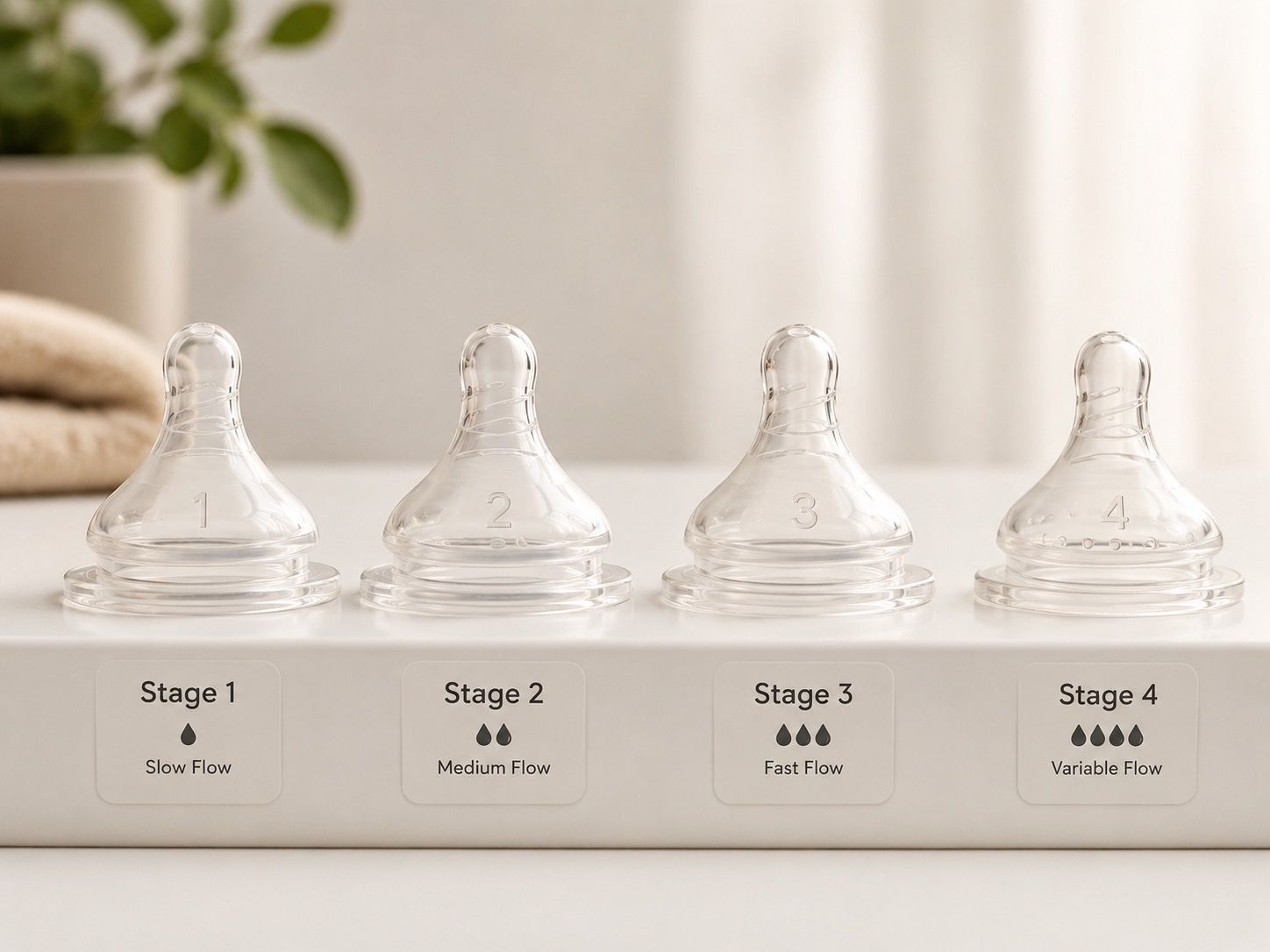
So What Exactly Is a Nipple "Stage"?
A nipple stage really just comes down to the size of the hole. A smaller hole means milk trickles out slowly, and a bigger hole means it flows faster. So the higher the stage number, the bigger the hole and the quicker the milk comes.
A slow flow that releases one drop at a time is perfect for newborns who don't have much sucking power yet. As your baby's suck gets stronger, you move up to a medium flow, and once they're a pro who drinks a lot, you go to a fast flow.
One heads-up, though: brands number their stages differently and suggest different ages, so the number on the box isn't gospel. Watching how your own baby actually feeds tells you far more than any label.
💡 You move up a stage based on your baby's sucking strength, not just their age. A 6-month-old doesn't automatically need stage 3.A Rough Guide by Age
The table below shows the general recommendations most brands follow. Think of it as a starting point, then adjust based on what you see with your baby.
| Stage | Recommended Age | Flow |
|---|---|---|
| Stage 0 (preemie) | Premature, low birth weight | Slowest |
| Stage 1 | 0–3 months | Slow flow |
| Stage 2 | 3–6 months | Medium flow |
| Stage 3 | 6+ months | Fast flow |
| Stage 4+ | 9+ months | Fastest (thickened feeds only if your pediatrician advises) |

Newborns, and especially babies who go back and forth between breast and bottle, do best starting with the slowest flow. Since a bottle gives milk easily while the breast takes real work, a flow that's too fast can lead your baby to prefer the easy bottle and start refusing the breast.
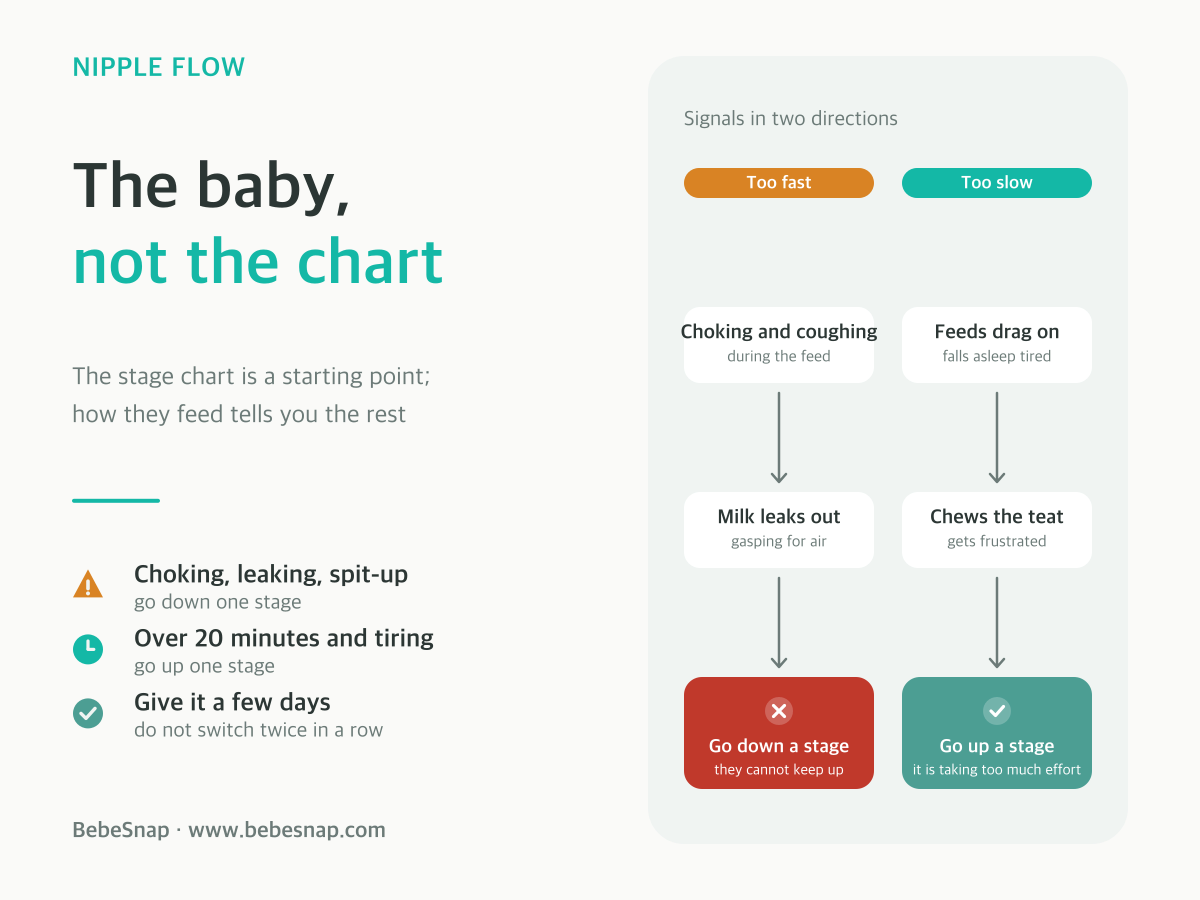
Signs the Flow Might Be Too Fast
Wondering if the nipple you're using is coming out too fast for your baby? Look for these:
- Frequently choking, coughing, or sputtering during feeds
- Milk dribbling out of the corners of the mouth
- Gulping and gasping for air while drinking
- Stopping mid-feed to turn the head away or push the bottle off
- Spitting up often after feeding
If this sounds familiar, your baby can't keep up with how fast the milk is filling their mouth. Drop down one flow level. But if your baby still spits up or vomits often after you slow the flow, or vomits forcefully after feeds, it may not be the nipple, so call your pediatrician right away. Green (bile) or bloody vomit is an emergency: go to the ER right away.
Signs the Flow Might Be Too Slow
The opposite can happen too, where the flow is so slow your baby gets frustrated.
- Feeds dragging on past 30 minutes
- Sucking hard, then getting mad and fussy when nothing comes
- Pushing the bottle away, or wearing out and falling asleep mid-feed (turning away or dozing off after a good feed usually just means your baby is full)
- The nipple collapsing flat from such strong sucking (first, gently pull at the corner of your baby's mouth to release the suction)
- Still seeming unsatisfied even after finishing
If your baby is struggling like this, try moving up one flow level. Feeding should feel a lot easier afterward. If feeds are still a struggle after that, or your baby seems hungry again soon after feeding, has fewer wet diapers, or isn't gaining weight well, talk to your pediatrician.
A Simple Way to Check the Fit
Fill the bottle, turn it upside down, and watch. If milk drips a few drops and then stops, or comes out very slowly, you're in good shape. If it pours out in a steady stream, the flow is too fast. Easy, right? And when you feed, hold your baby slightly upright rather than lying flat. That one small change cuts down on choking quite a bit. Never prop the bottle and leave your baby to feed alone, and never leave them alone in bed with a bottle; they can choke on the milk. If your baby can't breathe properly or their lips or face turn blue, call 911 (or your local emergency number) right away, whether or not they're still coughing.

Swap in a Fresh Nipple When It's Time
Separate from sizing up or down, the nipple itself wears out with use. Replacing it on a regular basis keeps things hygienic.
For hygiene, it's a good idea to switch to a new one every 2-3 months. But regardless of that schedule, if you notice discoloration, stickiness, swelling, tears, or a hole that's gotten loose, toss it and grab a fresh one right away. Also, sterilize in boiling water before each use and wash thoroughly after feeds. Keep an eye out for warped or cracked silicone too, since that can suddenly speed up the flow.
💡 Give the nipple a gentle tug. If it stretches way out or tears easily, it's already worn out, so let it go without a second thought.Shape Matters More Than You'd Think
It's easy to focus only on flow, but the nipple's shape also has a real effect on how well your baby latches and drinks. There are rounded dome shapes, wide-base shapes that mimic the breast, and orthodontic shapes designed with dental development in mind. If your baby splits time between breast and bottle, start with a slow-flow nipple. Many brands say a wide, breast-like base reduces nipple confusion, but there's no evidence yet that any one shape works better. So if your baby keeps refusing the bottle, don't just look at flow, try switching the shape. Surprisingly often, that's the real answer.
See Your Feeding Rhythm at a Glance with BebeSnap
When you're torn over whether a stage fits, having a record to look back on makes the call so much easier. Let BebeSnap help you keep track of your baby's feeding rhythm.
- Feeding log: Record feed times and amounts, and the pattern of a too-slow or too-fast flow starts to show
- Growth tracking: Steady weight gain helps confirm your baby is getting enough
- AI chatbot: When choking or fussing keeps happening, just ask, "Should I change the stage?" and get an answer right away
Frequently Asked Questions (FAQ)
Q: Which nipple stage should a newborn use?
A: Newborns should start with a stage 1 slow-flow nipple, recommended for 0-3 months. Babies who also breastfeed in particular should begin with the slowest flow, because a flow that's too fast can lead to breast refusal.
Q: How do I know if the nipple flow is too fast?
A: If your baby frequently chokes or gags during feeds and milk dribbles out of the corners of the mouth, the flow is too fast. Gasping for breath, turning away and pushing the bottle off, or frequent spit-up after feeding are also signs: drop down one flow level. If spit-up stays frequent after that or turns forceful, call your pediatrician; green or bloody vomit means going to the ER right away.
Q: How often should I replace bottle nipples?
A: Replace nipples with a new one every 2-3 months for hygiene. However, if you see discoloration, stickiness, swelling, tears, or an enlarged hole, replace it immediately regardless of the schedule. A nipple that stretches easily or tears when pulled is worn out.
Q: How can I check whether the flow is right?
A: When you turn the bottle upside down, milk should drip a few drops and then stop or slowly drip. A steady stream means the flow is too fast. Hold your baby semi-upright rather than flat during feeding to prevent choking.
References
Stop Trying to Remember Feed Times
Log time, amount, and intervals. BebeSnap turns them into your baby's daily pattern.
See what the app does firstMedical Disclaimer: This article is for informational purposes only and does not replace professional medical advice. If you have concerns about your baby's health, please consult a pediatrician.
You Might Also Like
Wonder Weeks Calculator: Your Baby's 10 Mental Leaps From the Due Date
Baby Weight Gain Calculator: Grams Per Day From Two Weigh-Ins
Baby Impetigo: Golden Crusts, Antibiotic Treatment, and When Nursery Is Safe Again
Baby Mouth Sores (Stomatitis): Causes, How to Tell Them Apart, and Dehydration Signs
You Might Also Like

Tomato for Babies: When to Start, Skin and Seeds, and Why Cherry Tomatoes Are Never Served Whole
Tomato can start at 5-6 months once the skin and seeds are removed and it is cooked. Portions run 20-30g at 7-8 months and 30-40g at 9-11 months, counted together with fruit. Cherry tomatoes are the one vegetable Japan's childcare guidance names by name as something not to serve whole.

Baby Bottle Refusal: Solutions for Working Moms Returning to Work
Baby refusing the bottle before your return to work? Learn tips on nipple types, feeding positions, and timing to help.

Baby Zinc Supplement Guide: When It's Needed, Daily Dosage, and Zinc-Rich Foods
After 6 months, breast milk alone may not supply enough zinc. Meet the 3mg daily need with beef, eggs, and other zinc-rich foods.