Baby Zinc Supplement Guide: When It's Needed, Daily Dosage, and Zinc-Rich Foods
Stop Trying to Remember Feed Times
Get Started FreeYou've probably heard plenty about iron, but "zinc" feels a little unfamiliar, right? Yet zinc is a mineral your baby genuinely needs for growth, immunity, and brain development. The good news is you don't have to worry about it in the newborn days: the stores your baby built up in the womb, plus breast milk, cover them just fine. The turning point comes around 6 months, when those stores start running low and the zinc in breast milk tapers off, making it easy to fall short.
That's exactly why it matters to bring in zinc-rich foods like beef and eggs as solids begin. Don't let it feel complicated, though. Let's walk through when your baby needs zinc, how much they need each day, and the cases where a supplement actually makes sense.
Why Does Zinc Matter for Babies?
Zinc helps the body make new cells and enzymes and process the protein, fat, and carbohydrate in food; it's a real workhorse of a mineral. For babies in particular, it does a few key jobs.
It's essential for cell division and protein synthesis, so it plays a big part in healthy growth and weight gain. It also supports immunity, helping fight off infections and heal wounds. On top of that, it's involved in cognition and learning, which makes it important for brain and nerve development, and it even supports taste development: which is why a shortage can dampen your baby's appetite.
💡 A zinc shortage can show up as slow growth, frequent illness, a poor appetite, and frequent diarrhea.How Much Does Your Baby Need Each Day?
Here are the recommended daily zinc amounts by age, according to the U.S. National Institutes of Health.
| Age | Daily Amount | Main Sources |
|---|---|---|
| 0–6 months | 2mg | Breast milk or formula is enough |
| 7–12 months | 3mg | Solids (beef, eggs) + breast milk/formula |
| 1–3 years | 3mg | A balanced diet |

As the table shows, breast milk or formula supplies plenty of zinc through 6 months. But from 7 months, the amount your baby needs goes up: just as the zinc in breast milk naturally declines. That's why filling the gap through solids becomes so important.
Why Is 6 Months the Tricky Point?
Here's a fascinating bit. While your baby was still in the womb, around late pregnancy, they took zinc from you and tucked it away in the liver. Those stores keep your baby well supplied until about 6 months. After that, though, the stores run nearly dry, and the zinc in breast milk has dropped well below newborn levels. Two things lining up at once. That's why the World Health Organization recommends starting solid foods at 6 months, and the American Academy of Pediatrics advises including foods that provide iron and zinc, such as meat.
Great First Foods for Zinc
One thing worth knowing: not all zinc is absorbed equally. The zinc in animal foods like meat is absorbed far better than the zinc in vegetables or beans. So if you're prioritizing, here's how it shakes out.
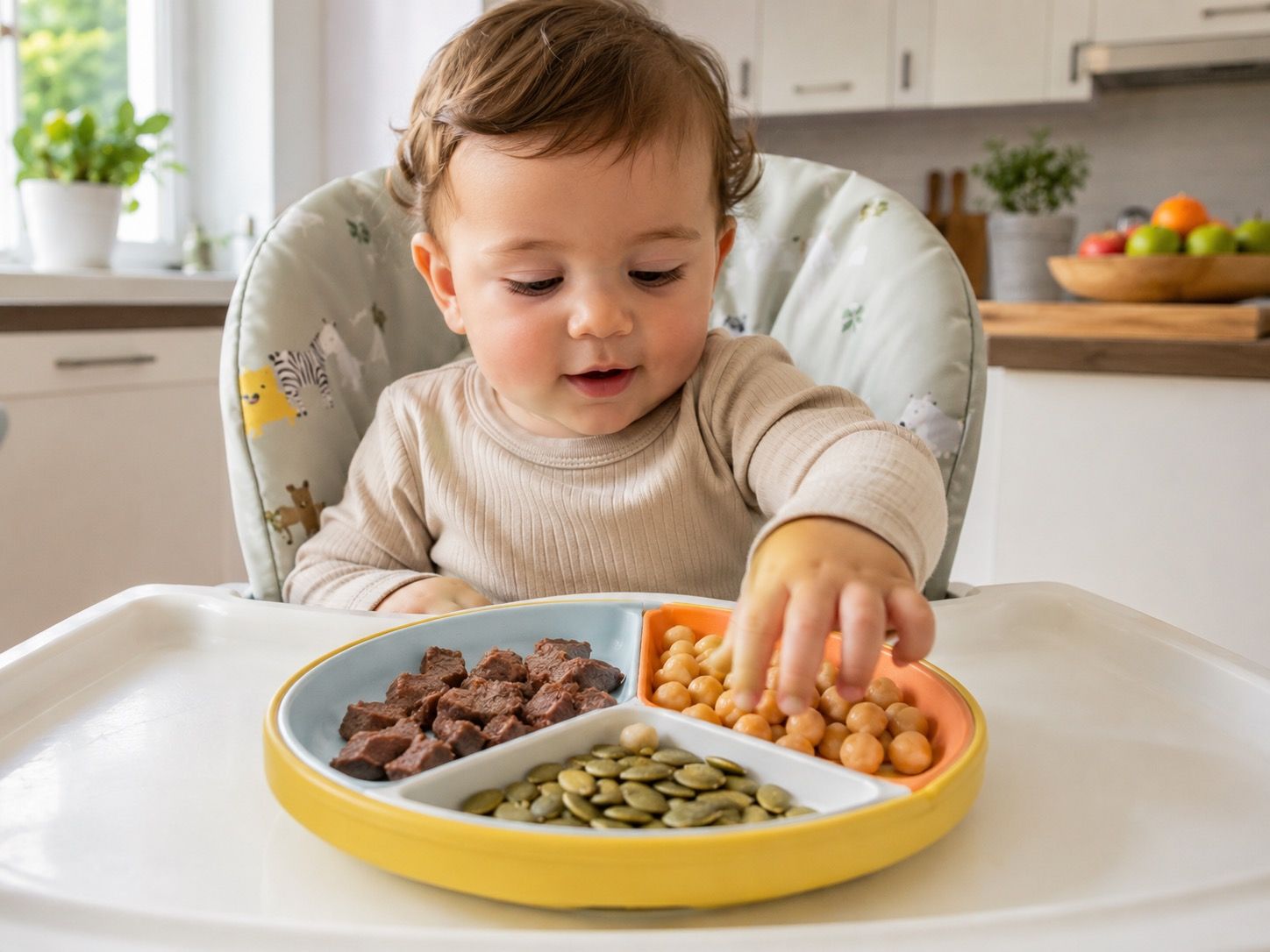
The best sources are beef and pork: highly absorbable and fine from early solids. Egg yolk, cooked gently and mashed, is great too, and chicken and liver let you cover zinc and iron together. Tofu and legumes work as plant-based sources, mashed soft, while whole grains and oatmeal make nice additions but are absorbed less well.
💡 Finely blending beef into porridge from early on knocks out two birds at once; both iron and zinc, the very nutrients babies tend to run short on.Does Your Baby Actually Need a Supplement?
Short answer: most healthy babies who eat a balanced range of solids get enough zinc and don't need a supplement at all. That said, a few situations may call for one after a chat with your pediatrician, premature babies, who are born with smaller zinc stores; babies who refuse solids or are very picky eaters; those with chronic diarrhea, since diarrhea flushes zinc out; and babies whose growth seems to be lagging.
For context, the WHO does recommend zinc supplements (10–20mg daily for 10–14 days) to treat acute diarrhea in developing countries, but that's strictly therapeutic. For everyday, just-in-case supplementing, always talk to a doctor first.
Don't Overdo It, Either
Too little zinc is a problem, but too much is harmful too. Overdoing it can cause vomiting, diarrhea, and headaches, and over the long run it actually blocks copper and iron absorption, which can lead to anemia. The daily upper limit of 7mg applies to ages 1–3, not to babies. So don't give a baby under 1 a zinc supplement unless your pediatrician prescribes one, and be careful not to hand out high-dose supplements to toddlers without a doctor's go-ahead.
Frequently Asked Questions (FAQ)
Q: Can formula-fed babies be zinc deficient?
A: Formula is fortified with zinc, so formula-fed babies generally meet the recommended daily amount, which is 2mg up to 6 months and 3mg from 7 to 12 months. However, as your baby transitions to solids and drinks less formula, food needs to make up the difference, so include zinc-rich foods like beef and eggs.
Q: How can I tell if my baby is zinc deficient?
A: Signs of zinc deficiency include slowed growth, frequent infections, a poor appetite, skin inflammation (dermatitis), wounds that are slow to heal, and frequent or chronic diarrhea. These signs overlap with other conditions, and no single blood test reliably shows how much zinc the body has, so check with your pediatrician if you notice any of them.
Q: Which foods are highest in zinc for babies?
A: Beef and pork are best because their zinc absorbs well, and you can offer them from early weaning. Egg yolk, chicken, and liver are also good sources. Tofu, beans, and whole grains contain zinc too, but it absorbs less readily than from animal foods, so pair them with meat.
Q: Can a baby get too much zinc?
A: Yes. Too much at once can cause vomiting, diarrhea, and headaches, and chronic excess interferes with copper and iron absorption, which can lead to anemia. The 7 mg upper limit is for ages 1 to 3, not babies. Never give a baby under 1 zinc supplements without a prescription, and ask a doctor before giving toddlers high-dose zinc.
Manage Your Baby's Nutrition with BebeSnap
Logging your baby's solids and growth makes it easier to balance micronutrients like zinc.
- Solids log: Record which foods you offered to see nutritional balance at a glance
- Growth tracking: Follow weight and height curves to catch growth-delay signs early
- AI chatbot: Instantly ask for zinc-rich recipes or whether a supplement is needed
References
Stop Trying to Remember Feed Times
Log time, amount, and intervals. BebeSnap turns them into your baby's daily pattern.
See what the app does firstMedical Disclaimer: This article is for informational purposes only and does not replace professional medical advice. If you have concerns about your baby's health, please consult a pediatrician.
You Might Also Like
Wonder Weeks Calculator: Your Baby's 10 Mental Leaps From the Due Date
Baby Weight Gain Calculator: Grams Per Day From Two Weigh-Ins
Baby Impetigo: Golden Crusts, Antibiotic Treatment, and When Nursery Is Safe Again
Baby Mouth Sores (Stomatitis): Causes, How to Tell Them Apart, and Dehydration Signs
You Might Also Like
Tomato for Babies: When to Start, Skin and Seeds, and Why Cherry Tomatoes Are Never Served Whole
Tomato can start at 5-6 months once the skin and seeds are removed and it is cooked. Portions run 20-30g at 7-8 months and 30-40g at 9-11 months, counted together with fruit. Cherry tomatoes are the one vegetable Japan's childcare guidance names by name as something not to serve whole.

BebeSnap AI Chatbot Tori Guide | Parenting Consultation
BebeSnap AI chatbot Tori is a smart parenting partner available 24/7. It analyzes your baby's care records to provide personalized advice and helps you find the latest parenting information.
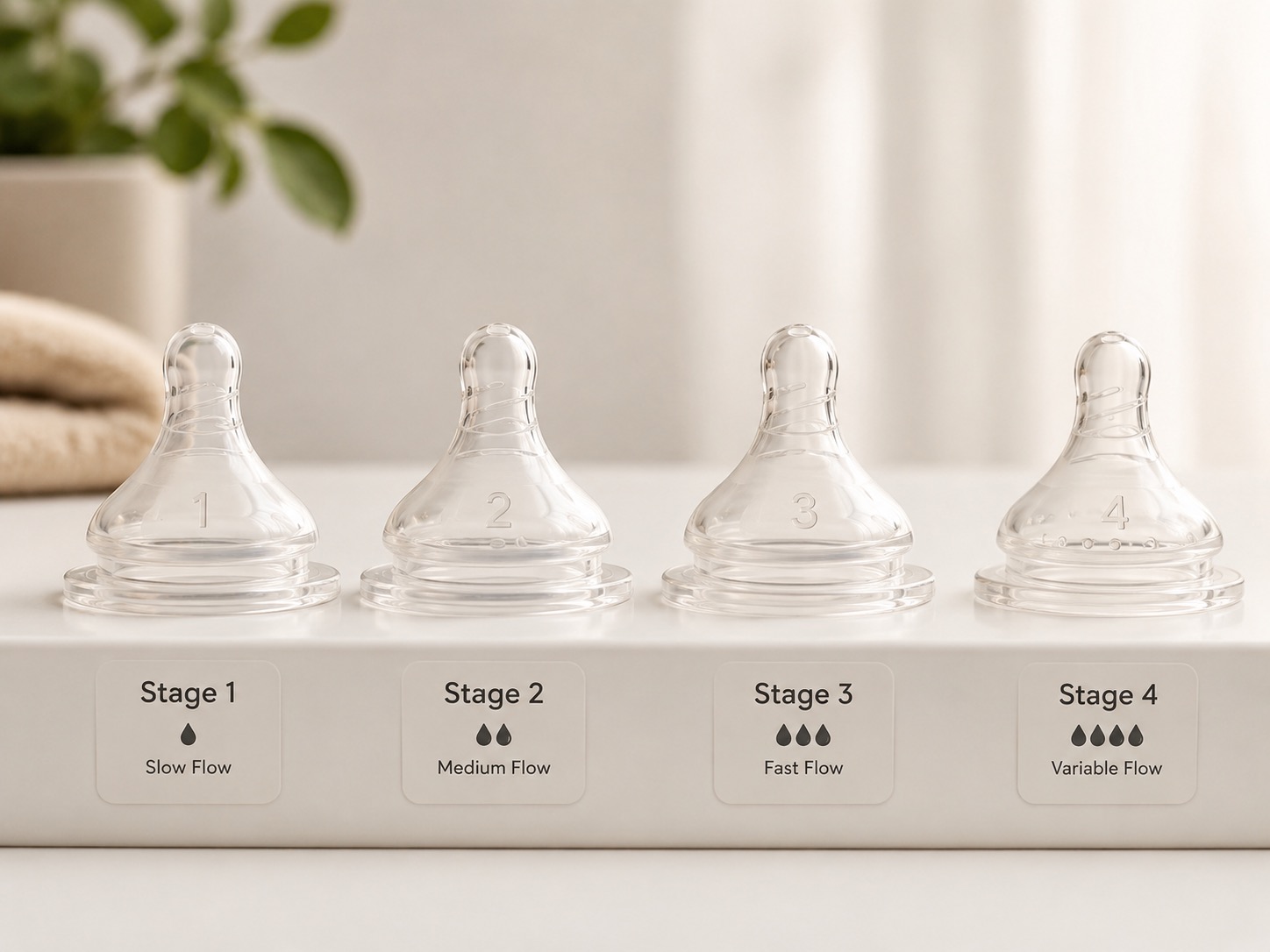
Bottle Nipple Size and Flow Guide: Choosing the Right Stage by Age and When to Switch
Newborns start with slow-flow stage 1. Match nipple stage and flow to your baby's age, and switch based on choking or frustration cues.