Switching to Cow's Milk: When to Start, How Much, and How to Transition

Stop Trying to Remember Feed Times
Get Started FreeAs the first birthday nears, most parents wonder whether it's time to drop formula and move to cow's milk. The bottom line is above, now let's walk through why, and exactly how to make the switch.
Why Not Before 12 Months?
Giving cow's milk as a main drink before 12 months is hard on your baby's body, for three main reasons.
- Too little iron: Cow's milk is low in iron and actually interferes with iron absorption in the gut, raising the risk of anemia.
- Strain on the kidneys: Its high protein and mineral load is tough on immature kidneys.
- Risk of gut bleeding: In young infants it can trigger small amounts of intestinal bleeding.
So until 12 months, breast milk or formula is the foundation, and cow's milk is only okay in small amounts mixed into food.
Whole Milk or Low-Fat?
From 12 months to age 2, whole milk is the default. At this stage babies need the calories from fat and the fatty acids that support brain development. Low-fat and skim milk have too little fat and aren't recommended for this age.
After age 2 you can consider switching to low-fat based on growth and eating habits. If a change is needed because of weight concerns or family history, talk to your pediatrician first.
How Much Per Day?
Milk is a good food, but too much actually does harm. When milk fills your child up, they eat less solid food, and milk also blocks iron absorption, which can lead to anemia.
| Age | Recommended milk per day | Notes |
|---|---|---|
| 12–24 months | 480–720ml (about 2–3 cups) | Whole milk, split between meals |
| 24 months+ | Around 480ml | Low-fat switch possible after a chat with the doctor |

How to Switch From Formula
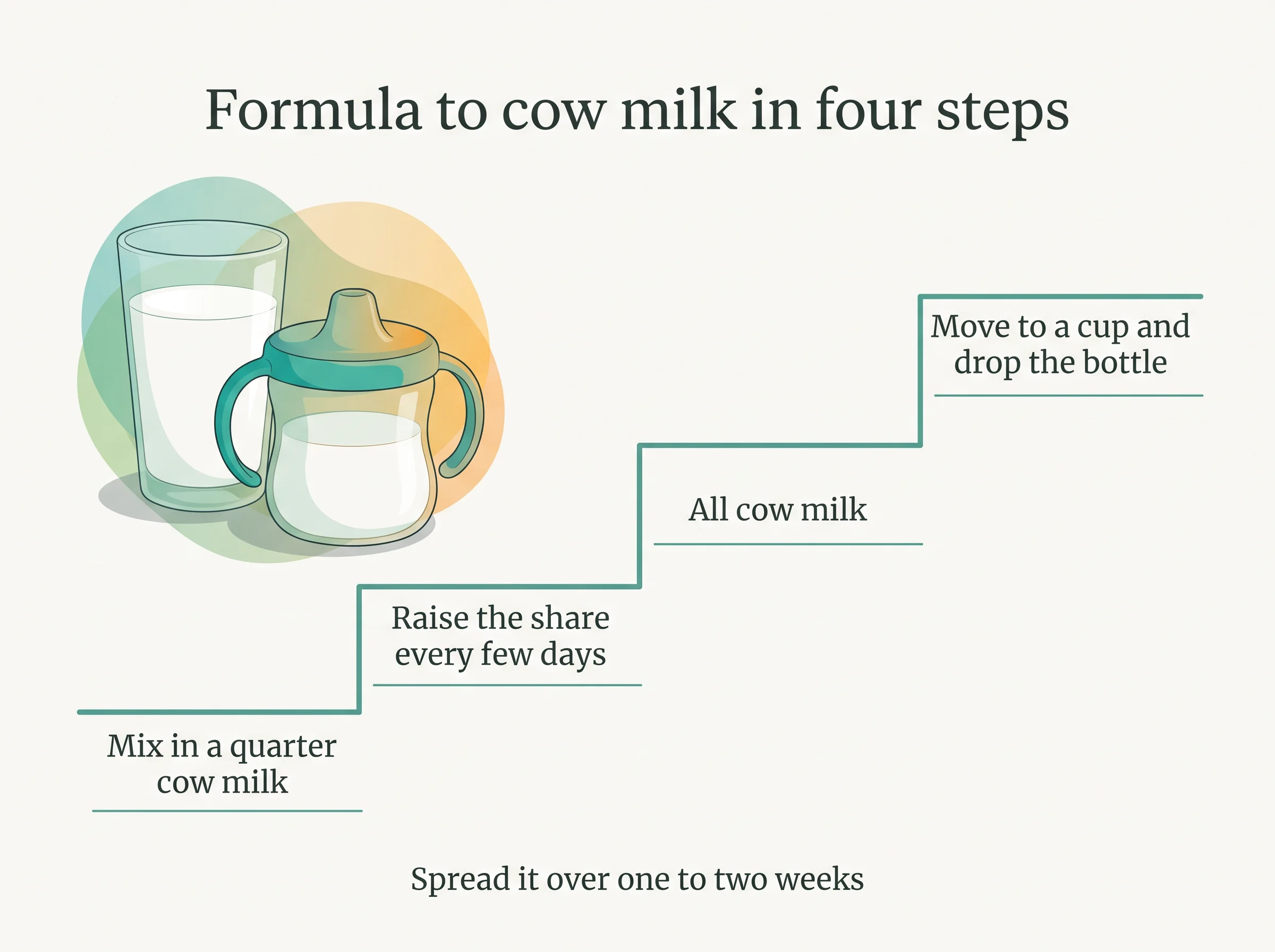
Switching all at once can backfire, since the taste and texture are different. It's easier to blend gradually over 1–2 weeks.
1. Start by mixing
- Mix about a quarter cow's milk into the formula for a few days.
2. Increase the ratio
- Every few days, raise the cow's milk to half, then three-quarters.
3. Full switch
- If there's no refusal, move to 100% cow's milk.
4. Drop the bottle at the same time
- The first birthday is also a great time to wean off the bottle. Serving milk in a straw or handled cup lets you wean the bottle and switch to milk in one go.
There's no need to warm it. Cold milk straight from the fridge is fine, though slightly lukewarm milk at first can ease the transition.
Can I Use Soy or Oat Milk Instead?
Unless your child has a milk allergy or lactose issue, plant-based drinks aren't a suitable replacement for cow's milk as a main drink around the first birthday. Apart from fortified soy milk, most plant drinks don't match cow's milk for protein, fat, calcium, and vitamin D.
If your child can't have cow's milk because of an allergy, don't pick a plant drink on your own, talk with your pediatrician or a dietitian about a proper alternative.
When to Call the Pediatrician
After the switch, the following signs may point to a milk protein allergy or intolerance.
- Hives, a rash around the mouth, or facial swelling
- Repeated vomiting or diarrhea, or blood in the stool
- Fussiness and tummy pain only after milk
- Fast breathing or unusual lethargy → seek care immediately
Track the Switch With BebeSnap
Logging how much milk and how your baby reacts during the transition helps you catch overfeeding or refusal early.
- Record milk, formula, and meals on one screen
- See whether the daily milk total goes over the recommended range
- Note rashes or stool changes to track allergy signs
Frequently Asked Questions (FAQ)
Q: At what age can I give cow's milk?
A: As a main drink, start at 12 months. Before that, cow's milk is low in iron, strains the kidneys, and can cause small intestinal bleeding in young infants, so breast milk or formula is the right choice. Before the first birthday, only small amounts mixed into food are okay.
Q: How do I switch from formula to cow's milk?
A: Make the change gradually over 1–2 weeks. Start by mixing about a quarter cow's milk into the formula, raise the ratio to half then three-quarters every few days, and move to 100% once there's no refusal. The first birthday is also a good time to wean the bottle, so serve milk in a straw cup.
Q: How much milk per day is appropriate?
A: From 12–24 months, about 480–720ml (16–24oz) of whole milk a day is right. Going over 720ml fills your child up so they eat less solid food, and it blocks iron absorption, raising the anemia risk. Split the milk between meals rather than serving it all at once.
Q: Can I give low-fat or skim milk?
A: From 12 months to age 2, give whole milk. At this stage babies need the calories from fat and the fatty acids that support brain development. A low-fat switch usually comes after age 2, and if there's obesity or family history, check with your pediatrician first.
References
Stop Trying to Remember Feed Times
Log time, amount, and intervals. BebeSnap turns them into your baby's daily pattern.
See what the app does firstMedical Disclaimer: This article is for informational purposes only and does not replace professional medical advice. If you have concerns about your baby's health, please consult a pediatrician.
You Might Also Like
Wonder Weeks Calculator: Your Baby's 10 Mental Leaps From the Due Date
Baby Weight Gain Calculator: Grams Per Day From Two Weigh-Ins
Baby Impetigo: Golden Crusts, Antibiotic Treatment, and When Nursery Is Safe Again
Baby Mouth Sores (Stomatitis): Causes, How to Tell Them Apart, and Dehydration Signs
You Might Also Like

Tomato for Babies: When to Start, Skin and Seeds, and Why Cherry Tomatoes Are Never Served Whole
Tomato can start at 5-6 months once the skin and seeds are removed and it is cooked. Portions run 20-30g at 7-8 months and 30-40g at 9-11 months, counted together with fruit. Cherry tomatoes are the one vegetable Japan's childcare guidance names by name as something not to serve whole.

New Dad Parenting Guide: Practical Baby Care Tips and Bonding Strategies for Fathers
Research shows involved fathers raise children with higher IQs and stronger social skills. A complete guide to newborn care, night feeding rotations, and age-specific bonding activities for new dads.

Summer Hydration & Feeding for Babies: Do They Need Extra Water?
For summer hydration, babies under 6 months get all their fluids from breast milk or formula, no water needed. Feed shorter and more often in heat, and watch for 6+ wet diapers a day plus dehydration warning signs.