Summer Hydration & Feeding for Babies: Do They Need Extra Water?
Stop Trying to Remember Feed Times
Get Started FreeYou just finished a feed, but the baby's still smacking their lips and fussing, sweat beading on their forehead: and that little voice in your head says, "It's so hot, surely one sip of water won't hurt?" I hesitated over that exact thing with my first. Here's the reassuring part: for a baby who isn't a year old yet, and especially under 6 months, summer hydration comes from breast milk or formula, not water. Nearly 90% of breast milk is water, so your little one isn't going thirsty just because you're holding off on the cup. Below, let's walk through how to tweak feeds in the heat, how to spot dehydration, and how to keep milk safe when you're out: mom to mom.
Before 6 Months, Milk Is Their Water
I get the urge to offer water on a scorching day. But for such a tiny tummy, water is a heavier drink than it looks.
A baby's kidneys aren't fully grown yet, so they can't flush out extra water the way ours do. Drink too much and the salts in their blood get diluted, which, in the worst case, can leave a baby limp, drop their body temperature, or even trigger seizures. It's rare, but there's simply no reason to risk it over water they don't need.
There's a second catch, too. A baby's stomach is genuinely tiny. Fill it with water and there's less room for the nutrient-packed milk they actually need to grow. That's exactly why, in the heat, every sip of milk (which carries calories and fluid together) matters more, not less. Water just takes up the space without giving anything back.
💡 About 88% of breast milk is water. Formula is mixed with water too, so there's plenty of fluid in every bottle. If your baby is feeding well, you don't need to offer extra water: even in the thick of summer."Little and Often" Is Totally Normal in the Heat
On hot days, babies lose a fair bit of fluid through sweat and breathing, so they'll often want to nurse more frequently. That's not a problem; it's your baby cleverly topping themselves up. No need to panic.
The easiest approach is to feed when they ask rather than by the clock, because babies are surprisingly good at taking exactly what they need. In the heat, you'll often see shorter, more frequent feeds instead of long ones. That's just their natural way of replacing the fluid they sweated out, so try not to read "snacky" feeding as a problem.
One thing to hold firm on: never stretch a feed by adding extra water or watering down formula. Diluting it shortchanges the nutrition and brings back that too-much-water risk we just talked about. If you're worried about fluids, keep the formula at full strength and simply add a feed.
⚠️ Always mix formula at the exact ratio on the tin. Watering it down on a hot day raises the risk of both undernutrition and water overload at once.Past 6 Months? A Sip or Two From a Cup
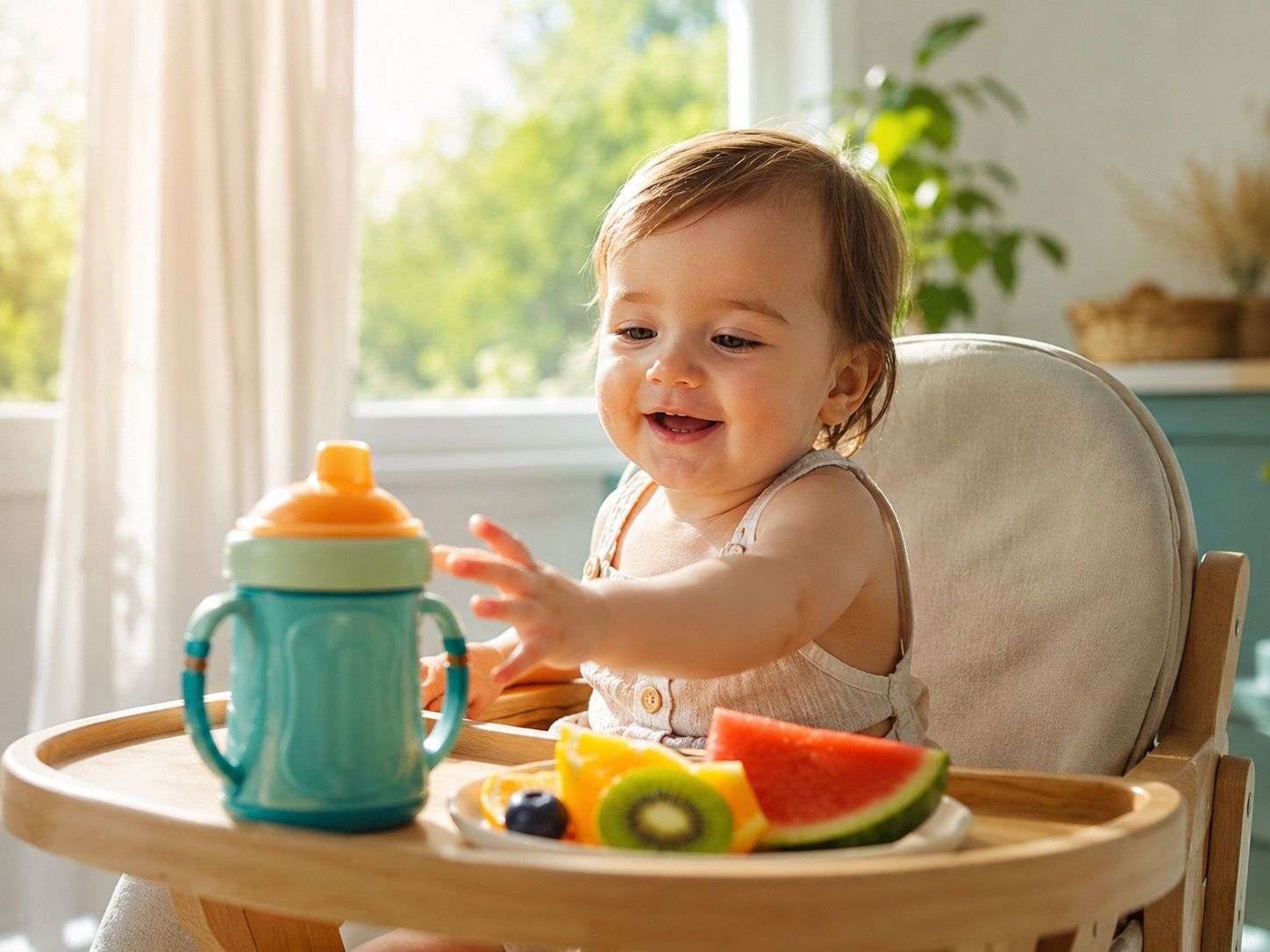
Around 6 months, when solids start, you can begin offering tiny amounts of water. At this stage water is less about quenching thirst and more about learning to drink from a cup and getting used to the taste.
Don't feel you need to push it. A daily total of 60-120 ml (about half a small cup) is plenty, and only so long as it isn't replacing milk feeds. Offer it in a straw cup or small open cup rather than a bottle, since sipping from a cup helps their mouth develop. Just give a sip or two slowly during or after a meal.
| Age | Main Fluid Source | Water Intake |
|---|---|---|
| 0-6 months | Breast milk or formula | None needed (0 ml) |
| 6-12 months | Milk + solids | 60-120 ml/day, by cup |
| 12+ months | Meals + milk | Freely, when thirsty |
When to Take a Closer Look for Dehydration
Dehydration is the thing that worries us most in summer. The good news is you can check for it at home with your own eyes, no fancy tools. The most reliable clue is wonderfully simple: how many wet diapers your baby makes in a day. Six or more good, heavy ones, and you can relax.
| Sign | All good | Take a closer look |
|---|---|---|
| Wet diapers | 6+ per day | Fewer than 6, or none for 6+ hours |
| Mouth/tongue | Moist | Dry mouth, little saliva |
| Tears/soft spot | Tears when crying, flat soft spot | No tears, sunken soft spot |
| Mood/activity | Playing as usual | Limp, very fussy, or sleepy |

If You're Nursing, Drink Up Yourself First
If you're breastfeeding, your own hydration honestly comes before the baby's, when you drink enough, your supply flows better. Since breast milk is mostly water, being thirsty yourself can dent how much you make. And in summer you're sweating it out too, so it's worth an extra glass or two over your usual.
It's an easy habit to build: park a glass of water next to you and sip while your baby feeds. The trick is to drink before you actually feel thirsty. Not sure how much is enough? Aim to keep your urine a pale yellow rather than dark. Water or unsweetened drinks beat coffee and sugary ones, which won't do you any favors.
A Smaller Appetite in Summer Is Okay
Adults lose their appetite in the heat, right? Babies are no different. In high summer they may eat or feed a little less for a while, and most of the time that's completely natural: no need to fret.
If they're taking a bit less per feed but asking more often, that's just their body adjusting to the temperature. As long as wet diapers stay at six or more a day, weight keeps climbing, and they're happy and playing, you can simply keep an eye on it.
That said, here's when to check in with the doctor: if your baby refuses almost all feeds for a full day, wet diapers suddenly drop below six, or they turn unusually floppy and fussy. If vomiting or diarrhea joins in, dehydration comes on faster, so go sooner to be safe.
Keeping Milk Safe on Outings
Summer days out mean the milk you packed can spoil quickly, so storage deserves an extra moment of care. The hotter it is, the faster bacteria grow.
Expressed milk lasts up to 4 hours in a cool room (under about 25°C / 77°F), but in midday heat, don't count on the full time. Pack an insulated bag with ice packs, where it'll keep for about a day. Pre-mixed formula shouldn't sit out longer than two hours, and on a hot outing it's safest used within one hour.
The cleanest trick is to carry cooled boiled water in a thermos and pre-measured formula separately, then mix it right before feeding. And anything your baby has already drunk from? Toss it within the hour, no guilt: bacteria grow fast in a bottle that's touched their mouth.
💡 A hot car or a patch of direct sun can spoil milk or formula in minutes. Keep that cooler bag and ice packs with you, and if you find yourself thinking "is this still okay?", just pour it out.Managing Summer Feeding with BebeSnap
- Feeding log: Tap to record feed times and amounts, and see at a glance whether you fed often enough on a hot day
- Diaper log: Keep a running count of daily wet diapers so you never miss an early dehydration sign
- AI poop analysis: Snap a photo of the diaper and AI reads the stool, helping you catch summer dehydration or digestive changes early
- AI chatbot: Ask "Can I give water in summer?" or anything else, day or night, whenever it pops into your head
Frequently Asked Questions (FAQ)
Q: On a hot day, can I give a little water to a baby under 6 months?
A: No. Babies under 6 months get everything they need from breast milk or formula, even in summer. Water carries a risk of water intoxication and undernutrition. If it's hot, simply feed more often.
Q: My baby wants to feed more often in summer. Is that normal?
A: Yes, it's normal. In heat, babies lose more fluid through sweat, so shorter, more frequent feeds are common. If wet diapers stay at 6 or more a day and mood is good, there's no need to worry.
Q: Can I dilute formula to add more fluid?
A: Absolutely not. Follow the exact ratio on the package. Diluting reduces nutrition and raises the risk of hyponatremia. Add fluid by increasing the number of feeds instead.
Q: What should I do if I suspect dehydration?
A: If wet diapers fall below 6 a day or the mouth is dry, feed more often first. If there's no urine for 12+ hours, a sunken soft spot, or limpness, go to the hospital immediately. In an emergency, call 911.
References
Stop Trying to Remember Feed Times
Log time, amount, and intervals. BebeSnap turns them into your baby's daily pattern.
See what the app does firstMedical Disclaimer: This article is for informational purposes only and does not replace professional medical advice. If you have concerns about your baby's health, please consult a pediatrician.
You Might Also Like
Wonder Weeks Calculator: Your Baby's 10 Mental Leaps From the Due Date
Baby Weight Gain Calculator: Grams Per Day From Two Weigh-Ins
Baby Impetigo: Golden Crusts, Antibiotic Treatment, and When Nursery Is Safe Again
Baby Mouth Sores (Stomatitis): Causes, How to Tell Them Apart, and Dehydration Signs
You Might Also Like
Apple for Babies: Stage-by-Stage Portions and When Raw Apple Is Safe
Apple can start in the first weaning stage, grated and cooked. Portions are 20-30g at 7-8 months and 30-40g at 9-11 months, counted together with vegetables. Front teeth bite, but the molars that grind only start coming in at the end of weaning.

Summer Room Temperature for Babies: AC Tips & Sleeping Through Hot Nights
Is your baby sweating and waking on hot nights? Learn the ideal summer room temperature (24-26°C), humidity (40-60%), safe AC use, and hot-night sleep tips.
Switching to Cow's Milk: When to Start, How Much, and How to Transition
Whole cow's milk starts at 12 months, 480–720ml (16–24oz) a day for the first 2 years. Here's why not sooner, and how to switch from formula step by step.