Formula Feeding Intervals: How Many Hours Apart and How Many Feeds a Day

Stop Trying to Remember Feed Times
Get Started FreeOnce a formula calculator gives you a daily total, the very next question shows up fast: how many bottles should that total be split into, and how far apart? The same 25 ounces a day feels completely different when it lands in six bottles versus eight. Work out the daily total first with our formula amount calculator guide, then use this article to spread that total across 24 hours: and to understand why the newborn weeks are the one stretch where you really do watch the clock.
Feeding Intervals and Daily Feeds by Age
Start with the big picture. These are averages for formula-fed babies, and landing slightly outside the range is fine as long as weight gain and diaper counts look good.
| Age | Interval | Feeds per day | What matters at this stage |
|---|---|---|---|
| 0-2 weeks | 2-3 hours | 8-12 | Wake to feed past 3-4 hours by day, 4-5 hours at night |
| 2 weeks-1 month | 2-3 hours | 8-10 | Once birth weight is regained, night waking is optional |
| 1-2 months | 3-4 hours | 6-8 | One night stretch starts to lengthen |
| 2-4 months | 3-4 hours | 5-7 | Some babies sleep 5-6 hours at night |
| 4-6 months | 4-5 hours | 4-6 | Daytime feed times become fairly predictable |
| 6-12 months | 4-5 hours | 3-4 plus solids | Feeds drop as solids expand |

Why Newborns Shouldn't Go Past 3-4 Hours
In the newborn weeks, feeding on demand alone is not quite enough. The baseline interval is 2-3 hours, and 3-4 hours is an upper limit rather than a target. Three reasons make that limit worth watching.
- Tiny stomach capacity: A newborn can hold very little at once, so frequent feeds are the only way the daily requirement adds up.
- Blood sugar drops quickly: Newborns store energy poorly, so long gaps raise the risk of low blood sugar and dehydration.
- Hunger cues can go missing: Babies with jaundice, low birth weight, or an unusually sleepy temperament may simply keep sleeping through hunger. Waiting for cues alone can quietly cut the daily feed count.
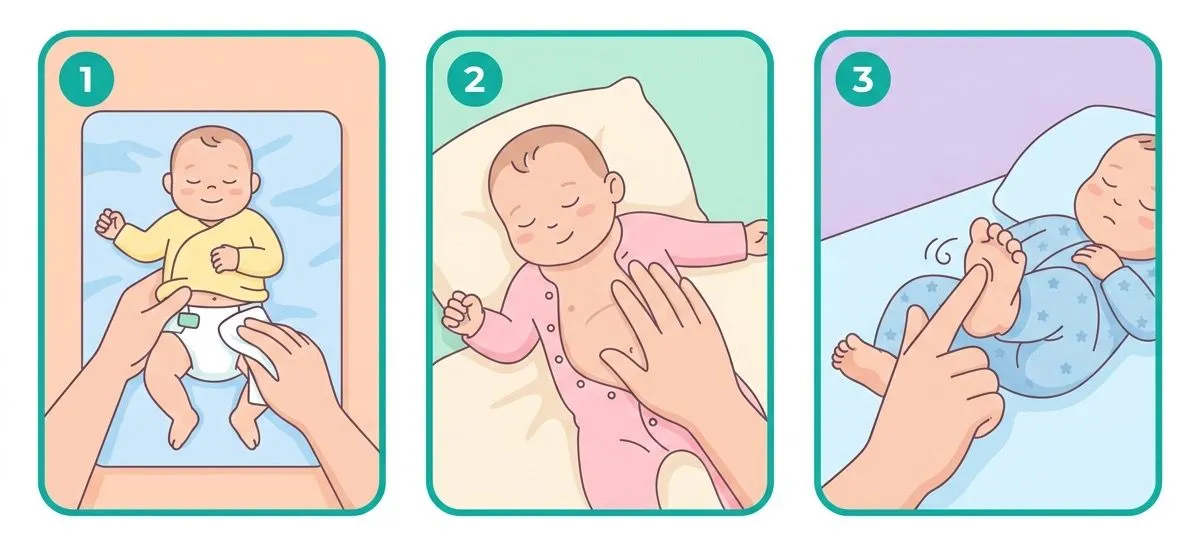
That is why the first few weeks call for waking a baby who goes past 3-4 hours in the day or 4-5 hours at night. To wake gently, change the diaper, unwrap down to a light layer for skin contact, and stroke the soles of the feet, building the stimulation up gradually. Never shake your baby to wake them.
When Can You Stop Waking Your Baby?
Three conditions together mean you can let the night stretch happen on its own.
- Birth weight has been regained, usually somewhere between day 10 and day 14.
- Weight is climbing steadily along the growth curve since then.
- There are at least six wet diapers a day, with regular stools.
Most babies reach that point between 2 and 4 weeks. Preterm babies, low-birth-weight babies, infants under treatment for jaundice, and any baby with slow weight gain are exceptions: keep the interval your pediatrician set, and ask directly at the next visit whether it is time to stop waking.
How Long Can Night Intervals Get?
Around six weeks, day-night rhythms start to settle in, and one night stretch naturally lengthens. By 2-4 months many babies sleep 5-6 hours at a time, and between 4 and 6 months that stretch can reach 6-8 hours.

Here is the part that trips people up. A longer night means fewer feeds in the day, but that doesn't mean you have to force a daily target. Offer more when your baby shows hunger cues during the day, and stop when they signal they've had enough. If the day's total falls a little short but your baby is lively and gaining weight well, that's fine.
What If the Interval Keeps Getting Shorter?
When a baby who was going three hours suddenly wants a bottle every 90 minutes, a growth spurt is usually behind it. Spurts commonly land around 7-14 days, 3-6 weeks, 4 months, and 6 months, and typically pass in 2-3 days, occasionally a week. Set the clock aside, feed to demand, and the old rhythm generally returns.
Plenty of short intervals have nothing to do with hunger, though.
- A trapped burp ended the feed early: The baby stopped because of discomfort, not fullness, and is genuinely hungry again 30 minutes later.
- The nipple flow does not match: Too fast means gulping and swallowing air; too slow means tiring out and falling asleep mid-feed. If feeds run under 10 minutes or past 30, check the bottle nipple size.
- It was not a hunger cue: Tiredness and wanting to be held can look a lot like hunger. On a hot day, a baby under 6 months who seems thirsty still needs formula, not water.
The deciding evidence is weight and diapers. Short intervals with good weight gain and plenty of wet diapers can simply be watched; frequent feeds with leftovers in every bottle, or flat weight, deserve a call to the pediatrician.
Clock-Led or Cue-Led Feeding?
This is less a choice between two camps than a division of labor.
- Let cues set the floor: When hunger cues appear (mouthing, sucking on hands, turning the head to root) feed, even if the clock has not reached three hours. Crying is a late cue, so catching the earlier ones helps.
- Let the clock set the ceiling: In the newborn weeks, hold to the 3-4 hour daytime and 4-5 hour nighttime limits above. That ceiling exists for the times a baby fails to signal hunger at all.
- Judge the total by the day: One light feed is not a problem. Babies, like adults, have a bigger appetite at some meals than others.

One thing to avoid outright: stretching intervals on purpose during the newborn stage. Making a hungry baby wait to "hit three hours" cuts the daily feed count and can slow weight gain. Intervals are less something you extend than something that lengthens on its own as your baby grows.
Do Intervals Change With Combination Feeding?
Yes, feed by feed. Breast milk digests faster, so hunger tends to return in 2-3 hours, while formula sits a bit longer and can carry a baby 3-4 hours. In combination feeding, the gap after a breastfeed is naturally shorter and the gap after a bottle is longer. That is exactly why a single fixed timetable always feels slightly off.
Two things are worth remembering. If you want a longer stretch at night, filling that particular feed with formula is a common approach. And watch your own supply and comfort: if you are maintaining milk production, a long gap raises the risk of engorgement and mastitis, so pump during that window.
When to Call Your Pediatrician
- Your newborn's daily feeds have dropped below eight
- Birth weight has not been regained by two weeks
- Fewer than six wet diapers a day, or dark concentrated urine
- Weight has stalled or dropped
- Forceful vomiting after every feed
- Falling asleep repeatedly during feeds and taking less
If your baby is hard to wake, limp, or not responding the way they usually do, don't wait to call the pediatrician; call 911 right away.
Track Feeding Intervals With BebeSnap
- Log each feed and BebeSnap shows the time elapsed since the last one along with the daily feed count
- Day and night patterns appear as a graph, so you can see exactly when the night stretch starts lengthening
- Diaper counts and growth records sit alongside feeds, so you can judge whether the current interval suits your baby
Frequently Asked Questions (FAQ)
Q: How many hours apart should a newborn be formula fed?
A: From birth to two weeks, aim for feeds every 2-3 hours, totaling 8-12 feeds a day. Newborns have tiny stomachs and drop blood sugar quickly, so frequent feeds matter. Wake a sleeping baby who passes 3-4 hours during the day or 4-5 hours overnight.
Q: Do I have to wake my sleeping baby for a bottle?
A: Yes, until birth weight is regained, usually between day 10 and day 14. After that, if weight is tracking the growth curve and there are at least six wet diapers daily, you can let your baby wake on their own overnight. Preterm or slow-gaining babies should follow their pediatrician's schedule.
Q: Is it okay if my baby feeds more often than every three hours?
A: Shorter intervals are normal during growth spurts around 7-14 days, 3-6 weeks, 4 months, and 6 months, and usually settle within 2-3 days to a week. A trapped burp or a mismatched nipple flow also ends feeds early, sending a baby back sooner. If weight gain is steady, watching is fine.
Q: How do intervals work when combining breast milk and formula?
A: They vary by feed. Breast milk digests in about 2-3 hours while formula lasts 3-4, so gaps run shorter after nursing and longer after a bottle. If you want a longer night stretch, many parents give formula for that feed; if you are maintaining supply, pump during that window.
References
Stop Trying to Remember Feed Times
Log time, amount, and intervals. BebeSnap turns them into your baby's daily pattern.
See what the app does firstMedical Disclaimer: This article is for informational purposes only and does not replace professional medical advice. If you have concerns about your baby's health, please consult a pediatrician.
You Might Also Like
Wonder Weeks Calculator: Your Baby's 10 Mental Leaps From the Due Date
Baby Weight Gain Calculator: Grams Per Day From Two Weigh-Ins
Baby Impetigo: Golden Crusts, Antibiotic Treatment, and When Nursery Is Safe Again
Baby Mouth Sores (Stomatitis): Causes, How to Tell Them Apart, and Dehydration Signs
You Might Also Like

Tomato for Babies: When to Start, Skin and Seeds, and Why Cherry Tomatoes Are Never Served Whole
Tomato can start at 5-6 months once the skin and seeds are removed and it is cooked. Portions run 20-30g at 7-8 months and 30-40g at 9-11 months, counted together with fruit. Cherry tomatoes are the one vegetable Japan's childcare guidance names by name as something not to serve whole.

How to Prepare Baby Formula | Water Temperature, Ratio & Storage Guide
Preparing formula comes down to water temperature, ratio, and hygiene. Doing it wrong affects nutrient absorption and can upset the tummy. Here's how to prepare formula correctly.

Night Weaning Guide: When to Stop Night Feeds and How to Taper Without Failing
Between 6 months and a year, some babies no longer need night feeds nutritionally. Check the readiness signs, then drop one feed every 2-3 days or cut 20-30ml at a time to taper gently.