Baby Mouth Sores (Stomatitis): Causes, How to Tell Them Apart, and Dehydration Signs
Check Your Baby's Health from One Photo
Get Started FreeYour baby is suddenly drooling, pushing away the bottle, and crying when anything touches their mouth. You look inside and see raw, whitish or red patches. That is stomatitis, and most cases clear up on their own. The thing that actually needs watching is not the ulcers themselves but whether the pain is stopping your child from drinking. Here is how to tell the common causes apart, what helps at home, and the exact signs that mean you should call a doctor.
What stomatitis actually means
Stomatitis is an umbrella term for inflammation of the lining of the mouth: the gums, the inside of the cheeks and lips, the roof of the mouth, and the tongue. It is not one disease but a group of them.
The causes split into two broad groups.
Infectious: caused by a virus or bacteria. Most cases in babies fall here.
Non-infectious: such as recurrent aphthous ulcers, the small round sores that come back in the same spots without any infection.
Telling the three common causes apart
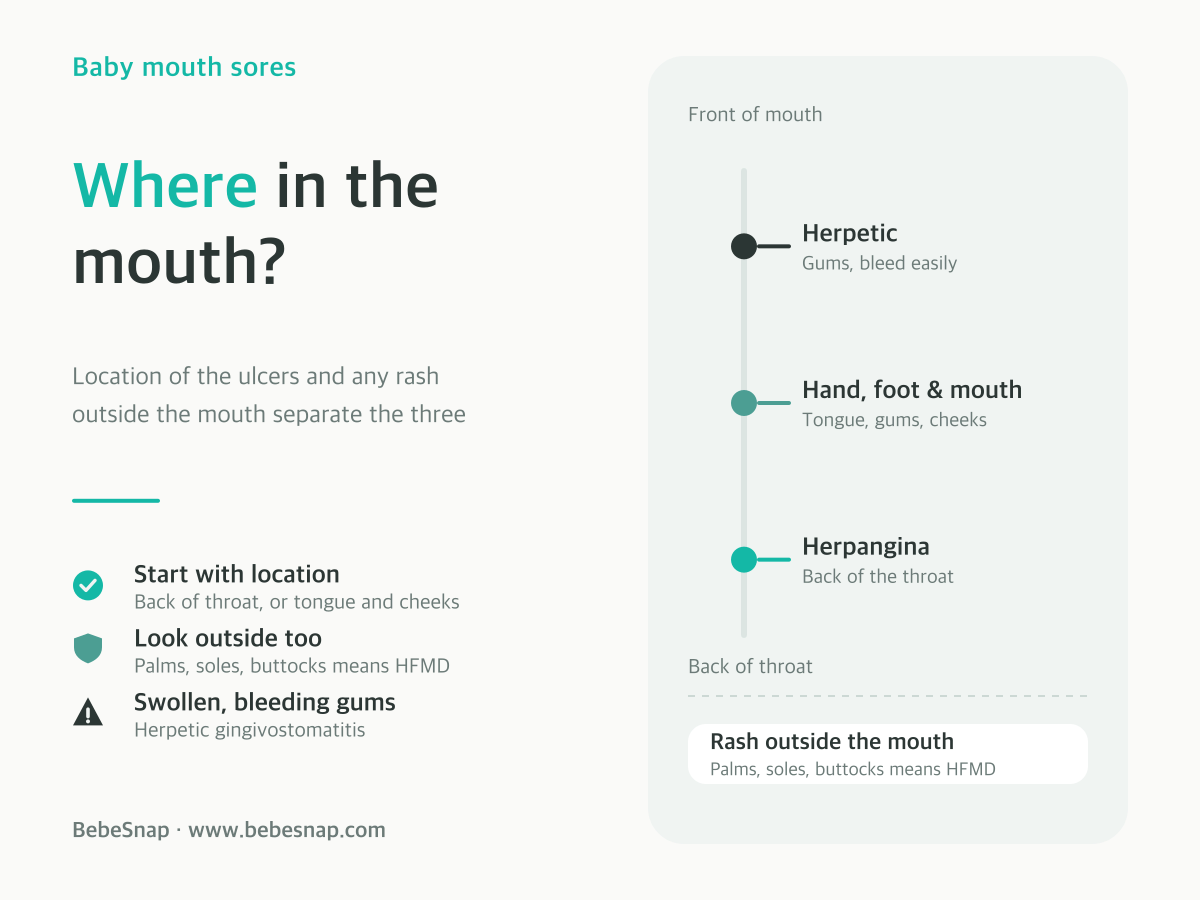
Parents mostly want to know which one this is. In summer, three causes dominate, and they separate fairly well by where the ulcers sit and whether there is a rash outside the mouth.
| Herpangina | Hand, foot and mouth | Herpetic gingivostomatitis | |
|---|---|---|---|
| Ulcer location | Mostly back of the throat | Tongue, gums, inner cheeks | Gums and throughout the mouth |
| Rash outside mouth | None | Palms, soles, buttocks | None (may appear around lips) |
| Fever | Sudden, over 39 degrees | Ulcers follow fever by 1 to 2 days | High fever before blisters |
| Gums | Usually normal | Usually normal | Swollen, bleed easily |
| Typical age | Under 4 years | Mostly under 5 | First infection, infants and toddlers |

Herpangina starts with a sudden fever over 39 degrees and a sore throat. Red spots appear at the back of the throat, turn into blisters, and then become ulcers. It is most common under 4 years and peaks in summer.
Hand, foot and mouth disease begins with fever and sore throat, and 1 to 2 days later blister-like ulcers appear on the tongue, gums, and inner cheeks. A rash follows on the palms, soles, and buttocks, and it is usually not itchy. The NHS notes that it usually gets better on its own in 7 to 10 days.
Herpetic gingivostomatitis is what happens when a child meets the herpes simplex virus for the first time. According to The Royal Children's Hospital Melbourne, about one in four children develop mouth ulcers after that first infection. Swollen, easily bleeding gums are the giveaway.
The real risk is dehydration, not the ulcers
When the mouth hurts, a child refuses not just food but fluids. That is the usual reason an otherwise self-limiting illness ends up needing medical care. Where oral intake becomes difficult and dehydration is a concern, supportive treatment including intravenous fluids may be needed.
The Royal Children's Hospital lists these signs.
Mild dehydration: passing urine less often, dark yellow or brown urine, dry lips, tongue, mouth or throat, dizziness or light-headedness
Severe dehydration: not passing urine at all, sunken eyes, no tears when crying
The American Academy of Pediatrics also counts fewer than six wet diapers a day in an infant as a warning sign, and urinating only once or twice a day as severe dehydration. If you see mild signs, push fluids actively and call your pediatrician right away. If you see any severe sign, go to the emergency room or call 911 (or your local emergency number).
What helps at home
Fluids first, food later: The Royal Children's Hospital puts it plainly: there is no need to worry about a child not eating, but it is important that they get enough fluids. A few days of eating less is fine. Not drinking is not.
Cold and bland: Cold drinks and icy poles help (under 6 months, breast milk or formula only and no water; no juice for any baby under 1 year). Acidic drinks such as orange juice, salty food, and hot food all sting the ulcers and make refusal worse.
Pain control: Acetaminophen (paracetamol) or ibuprofen can be used, but check with your doctor first before giving acetaminophen to a child under 2, give ibuprofen to a baby under 6 months only if your doctor says so, and never give aspirin. A child who is not in pain will drink. Numbing gels are a decision for your doctor, not something to use on your own.
Little and often: Offering a lot at once invites refusal. Small amounts given frequently, by spoon or syringe, add up to more.
When to see a doctor
Seek medical care if any of the following apply.
- Your baby is under 3 months old and has a temperature of 38°C (100.4°F) or higher: call your pediatrician right away, whatever the mouth looks like
- Your child keeps refusing fluids or shows any of the dehydration signs above
- Fever lasts more than 3 days, or comes with headache, vomiting, neck pain, or unusual limpness or sleepiness
- Swollen, painful gums with mouth sores (possible herpetic gingivostomatitis): the NHS advises seeing a doctor
- An ulcer has not healed after 3 weeks: this is the NHS threshold
- An ulcer bleeds or becomes more painful and red, which can signal infection
Enterovirus mouth infections can rarely be complicated by meningitis or myocarditis. This is uncommon, but if a fever lasts more than 3 days, or comes with headache, vomiting, neck pain, or unusual limpness, do not wait. Note also that clinical guidance routinely lists dehydration itself among the complications of this illness.
Call 911 (or your local emergency number) if your child is struggling to breathe, has blue, purple, or gray lips, has a seizure, is difficult to wake, is unusually confused, or is extremely drowsy, or if you see severe dehydration signs such as no urine, sunken eyes, or no tears.
How long it lasts
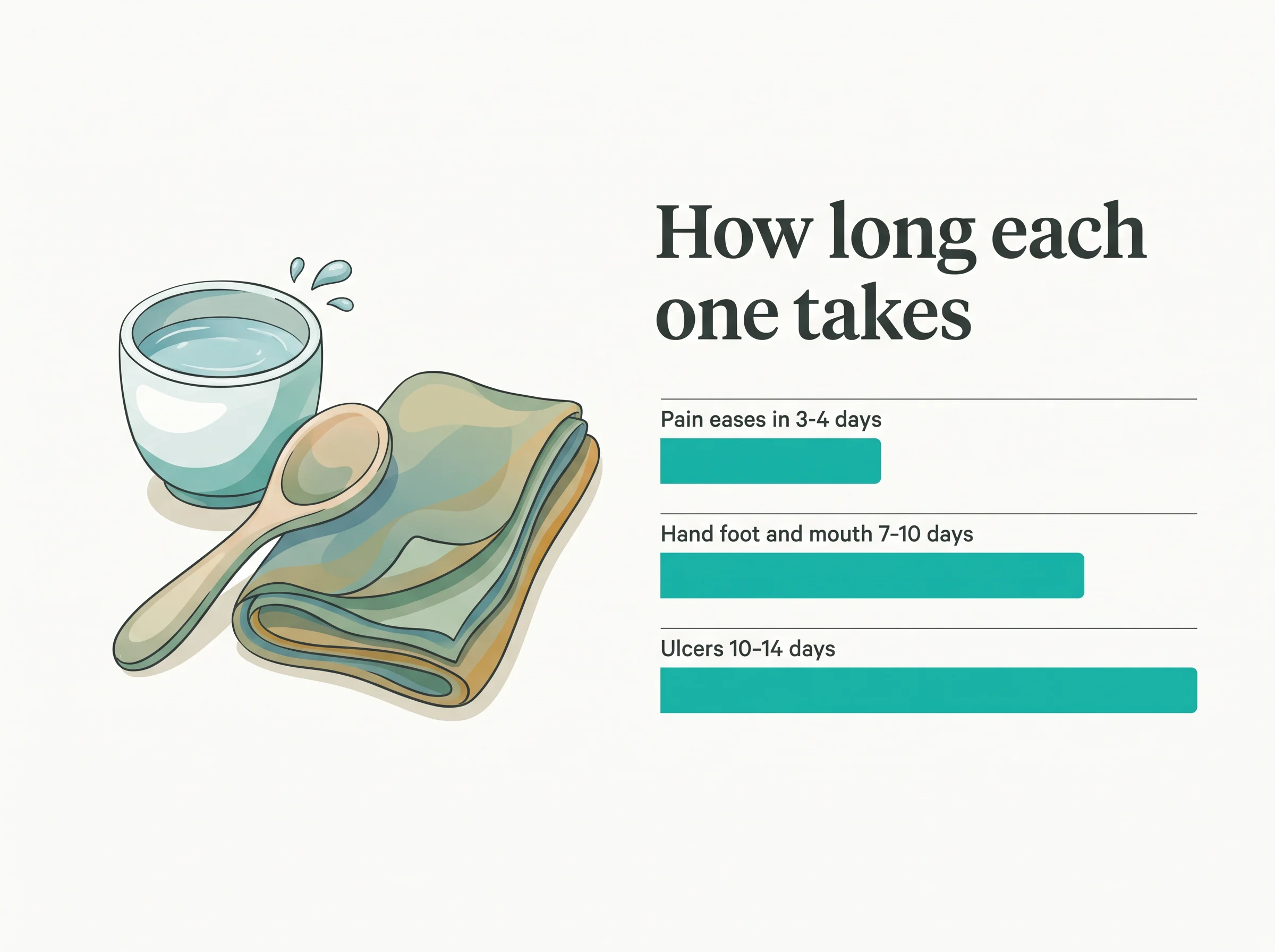
The NHS notes that ordinary mouth ulcers clear up on their own within 1 to 2 weeks. Ulcers from herpetic gingivostomatitis can take 10 to 14 days, but the pain eases within 3 to 4 days. Hand, foot and mouth disease usually gets better on its own in 7 to 10 days.
In other words, the hard part is the first few days. Protect fluid intake through that window and time handles the rest.
Managing a mouth-sore week with BebeSnap
- Log feeds and fluid intake so you can see exactly how much went in today
- Track wet nappies so dehydration signs do not slip past you
- Record temperature and show the doctor the actual curve, not a guess
- Use AI stool analysis to follow bowel changes during a week of poor intake
Frequently Asked Questions (FAQ)
Q: How can I tell stomatitis from hand, foot and mouth disease?
A: The fastest check is to look outside the mouth. A rash on the palms, soles, or buttocks alongside mouth ulcers points to hand, foot and mouth disease. Ulcers concentrated at the back of the throat after a sudden fever above 39 degrees suggest herpangina, while swollen, easily bleeding gums suggest herpetic gingivostomatitis. Home care is the same for all three.
Q: My child will not drink because of the pain. When should I see a doctor?
A: Fewer wet diapers than usual (under six a day for infants), dark urine, and dry lips and tongue are mild dehydration signs, so call your pediatrician right away. Urinating only once or twice a day or not at all, sunken eyes, or no tears when crying mean you should go to the ER or call 911 (or your local emergency number). Treat pain first with an age-appropriate pain reliever, then try fluids again.
Q: How long do mouth sores take to heal?
A: Ordinary mouth ulcers heal on their own within 1 to 2 weeks. Herpetic gingivostomatitis ulcers can last 10 to 14 days, although the pain itself eases substantially within 3 to 4 days. Hand, foot and mouth disease usually gets better on its own in 7 to 10 days. An ulcer that has not healed after 3 weeks should be checked by a doctor.
Q: What should I feed a child with a sore mouth?
A: Cold and non-irritating options work best. Cold drinks, icy poles, and oral rehydration solutions all help (under 6 months: breast milk or formula only, no water). Avoid acidic drinks such as orange juice, salty foods, and hot foods, which sting the ulcers. Eating less for a few days is acceptable, but fluids are not optional, and small amounts offered frequently add up to more than large amounts offered at once.
References
Check Your Baby's Health from One Photo
AI stool analysis reads color and texture, and keeps every health record in one place.
See what the app does firstMedical Disclaimer: This article is for informational purposes only and does not replace professional medical advice. If you have concerns about your baby's health, please consult a pediatrician.
You Might Also Like
Tomato for Babies: When to Start, Skin and Seeds, and Why Cherry Tomatoes Are Never Served Whole
Apple for Babies: Stage-by-Stage Portions and When Raw Apple Is Safe
Spinach for Babies: When to Start, Why Boiling Matters, and When to Skip It
Potato for Babies: When to Start, Safe Shapes, and Why Never to Blend It
You Might Also Like
Baby Impetigo: Golden Crusts, Antibiotic Treatment, and When Nursery Is Safe Again
Golden-brown crusts spreading across your baby's skin? Impetigo is a common, highly contagious bacterial skin infection in young children. It stops being contagious 48 hours after treatment starts. Here is how to recognise it and when nursery is safe again.
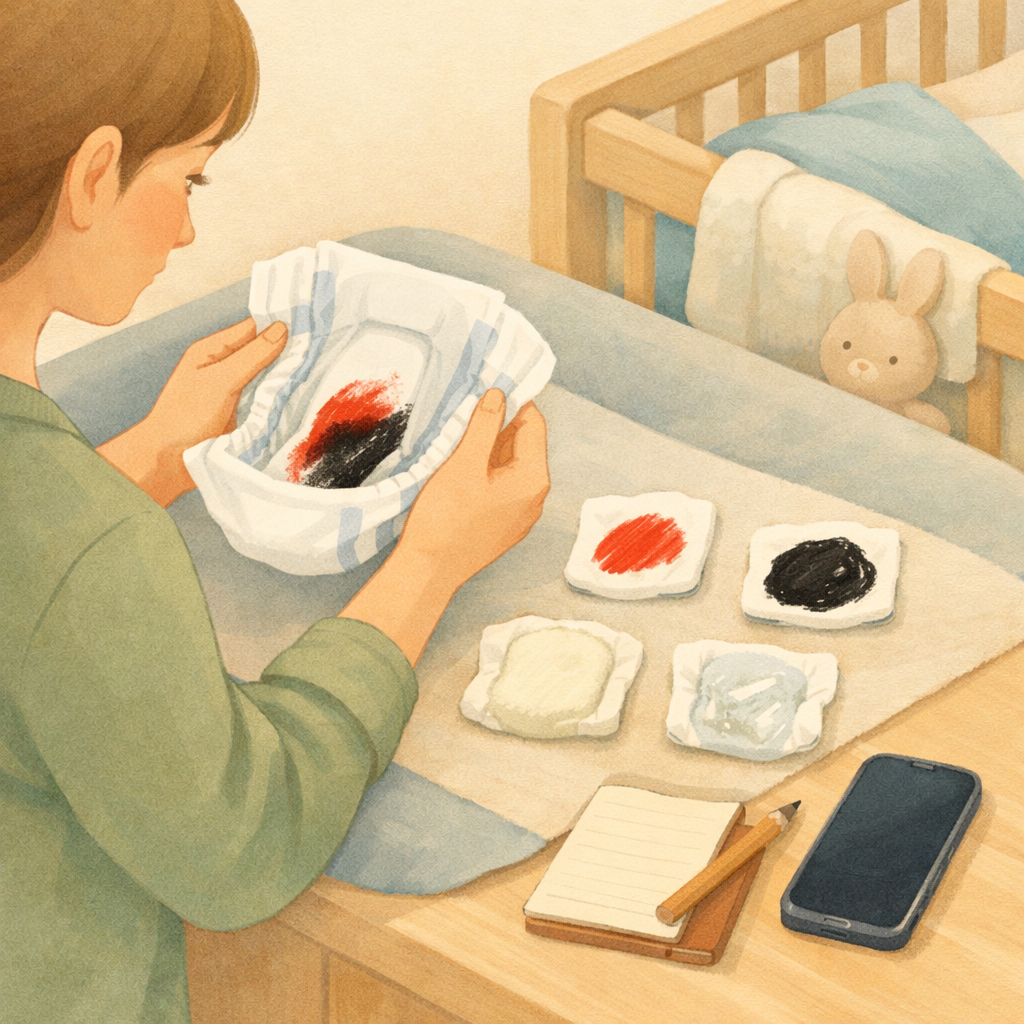
Baby Stool Red Flags: Blood, Black, White, or Mucus and When to Call the Doctor
White, pale gray, or pale cream baby poop, black tar-like stool after the meconium stage, and heavy or repeated blood in stool need prompt medical attention. Mucus matters more when it comes with diarrhea, vomiting, fever, poor feeding, or dehydration signs.
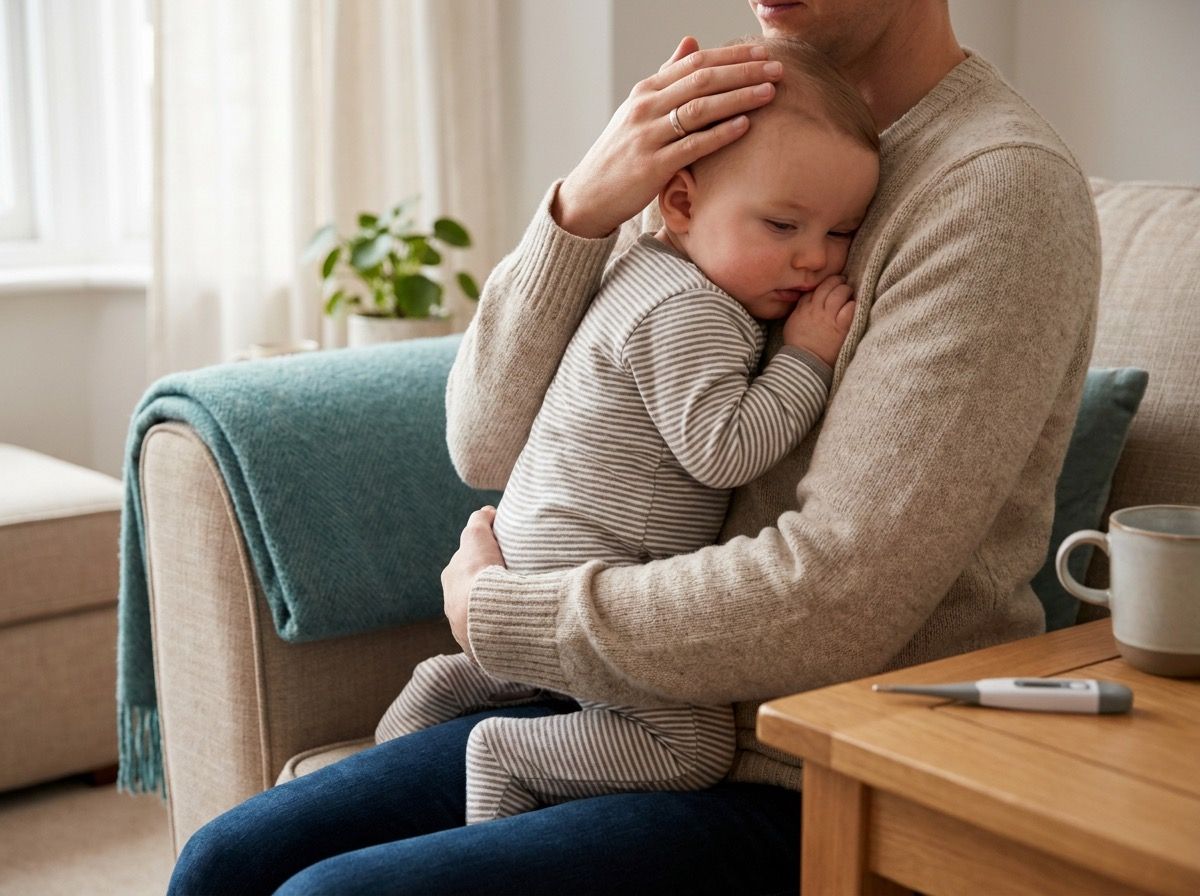
Baby UTI Symptoms: When Fever Is the Only Sign, and Why the Urine Test Comes First
Fever with no cough, no runny nose, nothing else? In children under 2, fever is often the only sign of a urinary tract infection. Here is why an unexplained fever deserves a urine test, how the sample is collected, and what treatment looks like.