Baby Stool Red Flags: Blood, Black, White, or Mucus and When to Call the Doctor
Check Your Baby's Health from One Photo
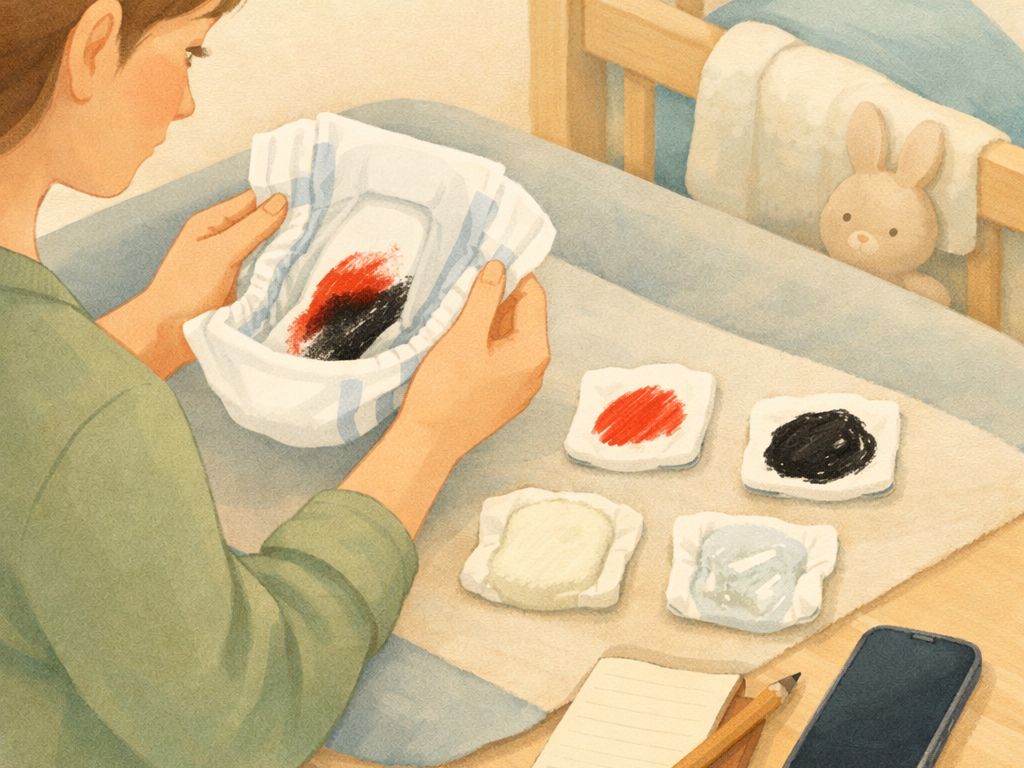
Get Started FreeYou open the diaper and there it is, red blood, jet-black poop, or a strangely pale, chalky stool, and your stomach drops. "What is this? Is my baby okay?" I've been there, and that panic is completely normal. But here's the thing: instead of trying to play detective and guess the cause at home, it's far safer to first sort out one question, is this the kind of stool that needs a same-day call to the doctor? If your baby has white or pale gray stool, black tar-like stool after the meconium stage, repeated blood, or just looks unwell, get medical help the same day. You can usually watch at home only when your baby seems totally fine and there was just a tiny one-time bit of mucus or a small red streak with nothing else going on, and even then, call sooner if your baby is under 3 months or it happens again. Before you call, snap a clear photo, save the diaper if the clinic wants it, and jot down when it started, how many diapers were involved, and whether there's fever, vomiting, diarrhea, pain, poor feeding, or fewer wet diapers. Let's walk through it together.
When to watch, call today, or go now
| What you see | What to do now |
|---|---|
| Heavy bleeding, trouble breathing, blue or gray color, very hard to wake, repeated vomiting with a swollen or hard belly | Call 911 now |
| Black tar-like stool after the meconium stage | Call for urgent same-day medical care |
| White, chalky, or pale gray stool | Call your pediatrician the same day; do not wait for another diaper |
| Blood mixed through the stool, blood that keeps happening, or blood with fever, diarrhea, vomiting, pain, poor feeding, or a sick-looking baby | Get same-day medical advice |
| One small bright red streak and your baby otherwise seems well | Take a photo and call your pediatrician soon; call the same day if your baby is younger than 3 months or it happens again |
| Mucus only, and your baby is feeding well, acting normally, and making normal wet diapers | Watch closely, document it, and call if it repeats or new symptoms start |

The Next 5 Minutes, Before You Call
When you're exhausted and rattled, it helps to move in a set order so you don't have to think twice. First, look at your baby, not just the diaper, their breathing, color, how alert they are, whether the belly looks swollen, how they're feeding, and their wet diapers. Next, take a clear photo in good light and hang onto the diaper in case the clinic wants to see it. Then write down the time, the stool color, whether the blood was only on the outside or mixed all the way through, and how many diapers were involved. If there are two of you, one can comfort and watch the baby while the other handles the photo, the notes, and the phone call.
When Mucus Can Probably Wait, and When It Can't
A little bit of mucus can come from swallowed drool or a brief bit of irritation, no big deal. It matters more when it keeps showing up, is streaked with blood, or comes alongside watery poop, fever, vomiting, a swollen belly, poor feeding, fewer wet diapers, or a baby who seems uncomfortable or less alert. If your baby is under 3 months, call sooner, because little ones can go downhill fast. But if mucus is the only thing that's different and your baby seems perfectly happy, it's usually reasonable to keep a close eye on the next few diapers. Call the same day if the mucus keeps coming back or anything new pops up.
What to Say When You Call the Pediatrician
Keep it short and specific, you don't need a speech. Lead with your baby's age and the main thing you saw: red blood, black tar-like stool, white or pale gray stool, or mucus. Then say when it started, how many diapers it affected, and whether there's fever, vomiting, diarrhea, a swollen belly, pain, poor feeding, weight worries, or fewer wet diapers. Mention any new formula, new foods, iron, or other medicines, but don't talk yourself into "it's just the iron" when the stool is dark. A clear diaper photo usually says more than a long description ever could.
What Not to Do While You Wait
Please don't brush off white or pale gray stool. Don't assume black stool after the newborn meconium days is normal. And don't fall down the rabbit hole of comparing your baby's diaper to internet photos and convincing yourself not to call, lighting and diaper material can throw the color way off. Don't give extra water unless your doctor tells you to. Keep feeding as normally as your baby can handle, unless they're vomiting over and over or your doctor said otherwise. If your baby gets sleepier, feeds less, has fewer wet diapers, spikes a fever, starts vomiting, or the stool change happens again, get same-day medical advice.
What to Track in BebeSnap Before You Call
- Log the stool color and texture right away: red streaks, black tar-like stool, white or pale gray stool, mucus, watery stool, or a mix.
- Upload a clear diaper photo and note the time, how many diapers were involved, and whether blood was only on the surface or mixed all the way through.
- Track the symptoms that raise the urgency: fever, vomiting, poor feeding, fewer wet diapers, a swollen belly, unusual sleepiness, or pain.
Questions parents ask about baby poop red flags
Q: What does white or pale gray poop mean in a baby?
A: White, chalky, or pale gray stool can mean bile is not reaching the intestine normally. This is not a wait-and-see finding in a baby. Call your pediatrician the same day, especially for a young infant.
Q: Is black poop normal after the newborn meconium stage?
A: Usually no. Black stool is expected during the first newborn meconium stools. After that, tarry black stool can mean digested blood and needs urgent same-day medical advice. If your baby takes iron, tell the clinician, but do not assume iron is the reason without medical guidance.
Q: When is blood or mucus in baby stool an emergency?
A: Call 911 now for heavy bleeding, trouble breathing, blue or gray color, a baby who is very hard to wake, or repeated vomiting with a swollen belly. Get same-day medical care if blood or mucus comes with fever, vomiting, diarrhea, belly pain, poor feeding, dehydration signs, or a baby who looks sick.
Q: Should I take a photo of my baby's poop before calling the doctor?
A: Yes. A clear photo can help because stool color is hard to describe accurately. Also note when it started, how many diapers were involved, and whether your baby had fever, vomiting, pain, new foods, formula changes, medicines, or fewer wet diapers.
References
Check Your Baby's Health from One Photo
AI stool analysis reads color and texture, and keeps every health record in one place.
See what the app does firstMedical Disclaimer: This article is for informational purposes only and does not replace professional medical advice. If you have concerns about your baby's health, please consult a pediatrician.
You Might Also Like
Apple for Babies: Stage-by-Stage Portions and When Raw Apple Is Safe
Spinach for Babies: When to Start, Why Boiling Matters, and the One Time to Skip It
Potato for Babies: When to Start, Safe Shapes, and Why Never to Blend It
Wonder Weeks Calculator: Your Baby's 10 Mental Leaps From the Due Date
You Might Also Like
Baby Impetigo: Golden Crusts, Antibiotic Treatment, and When Nursery Is Safe Again
Golden-brown crusts spreading across your baby's skin? Impetigo is a common, highly contagious bacterial skin infection in young children. It stops being contagious 48 hours after treatment starts. Here is how to recognise it and when nursery is safe again.

Baby Stuffy Nose Guide: Causes, Solutions, and Prevention
Is your baby struggling with a stuffy nose? Learn the causes of newborn nasal congestion, safe solutions, and how to use nasal aspirators based on pediatric guidelines.
Newborn Grunting at Night: What’s Normal, What to Watch, and When to Call
Newborn grunting at night can be normal during sleep, gas, or stooling, but grunting with each breath, color change, chest pulling, fever of 100.4°F (38°C) or higher in a baby under 3 months, poor feeding, or hard waking needs prompt care.