Baby UTI Symptoms: When Fever Is the Only Sign, and Why the Urine Test Comes First
Check Your Baby's Health from One Photo
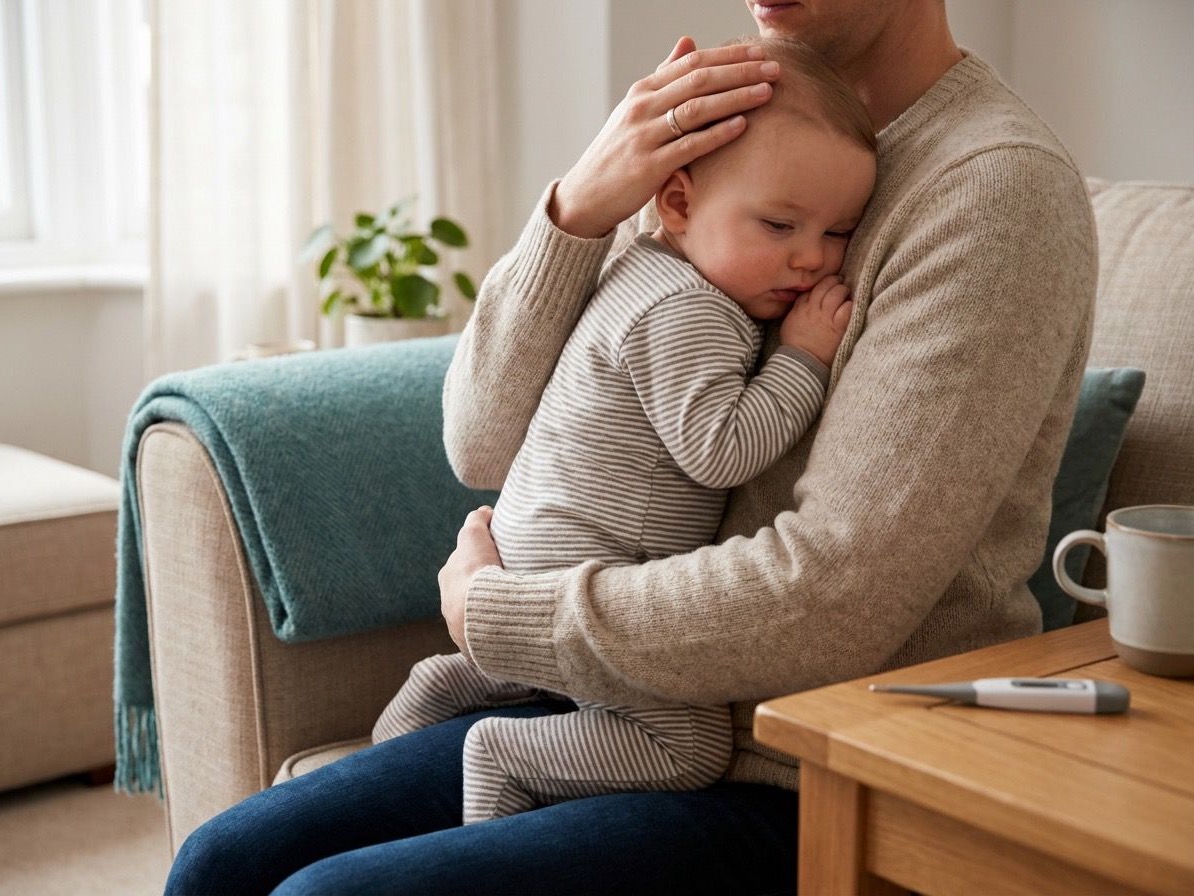
Get Started FreeYour baby has a fever. No cough, no runny nose, no diarrhoea, nothing you can point at. This kind of unexplained fever is exactly when a urinary tract infection deserves a thought. It is common, it is easy to miss, and missing it lets the infection reach the kidneys. If you take one thing from this article, make it this: the urine test comes before the antibiotic.
Why it gets missed
The American Academy of Pediatrics puts it plainly: UTIs in infants and young children up to 2 years of age may have few recognizable signs or symptoms other than a fever.
An adult can say it burns, or that they need the toilet constantly. A baby cannot. So from the outside this is simply a child with a temperature, and it gets filed as a cold.
The AAP adds the key qualifier: an unexplained high fever, meaning one not explained by a respiratory infection or diarrhoea, may be the only sign of a urinary tract infection.
Signs to look for
| Babies who cannot tell you | Children who can |
|---|---|
| Fever with nothing else to explain it | Pain or burning when weeing |
| Unusually irritable | Needing the toilet far more often |
| Not feeding, eating or drinking properly | Not feeling emptied afterwards |
| Being sick, or unusually floppy | Discomfort low in the tummy |
| Urine smells or looks different | Wetting themselves again after being dry |

The urine test comes before the antibiotic
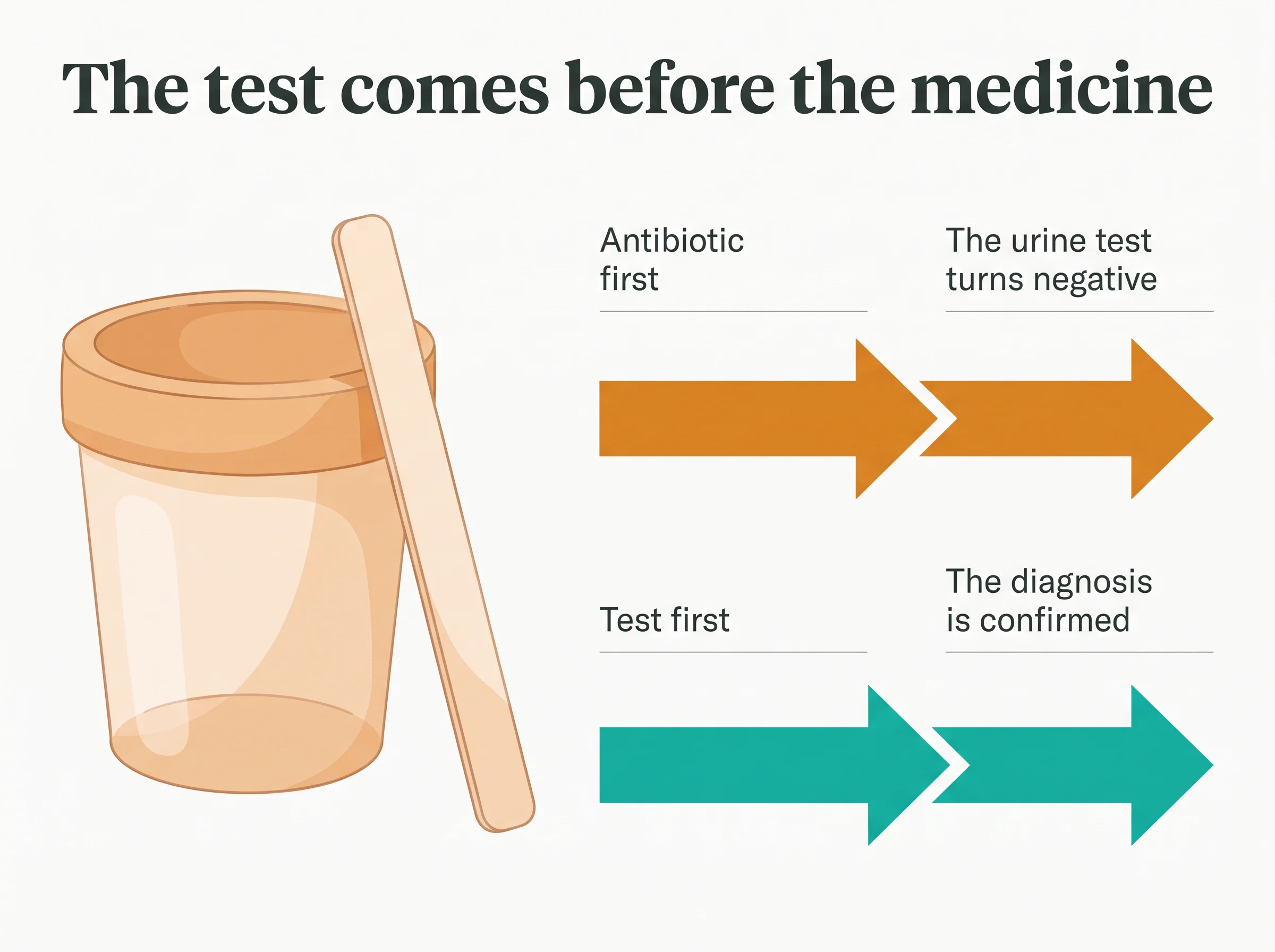
This is the part worth remembering. Starting an antibiotic before the sample is taken can turn a real infection into a negative test, because the bacteria are suppressed enough to escape detection without being cleared.
The practical consequence: if the fever has no obvious source, ask for a urine test before any antibiotic is started, and tell the clinician plainly whether your child has already had one. That single answer changes how the result should be read.
How the sample is collected
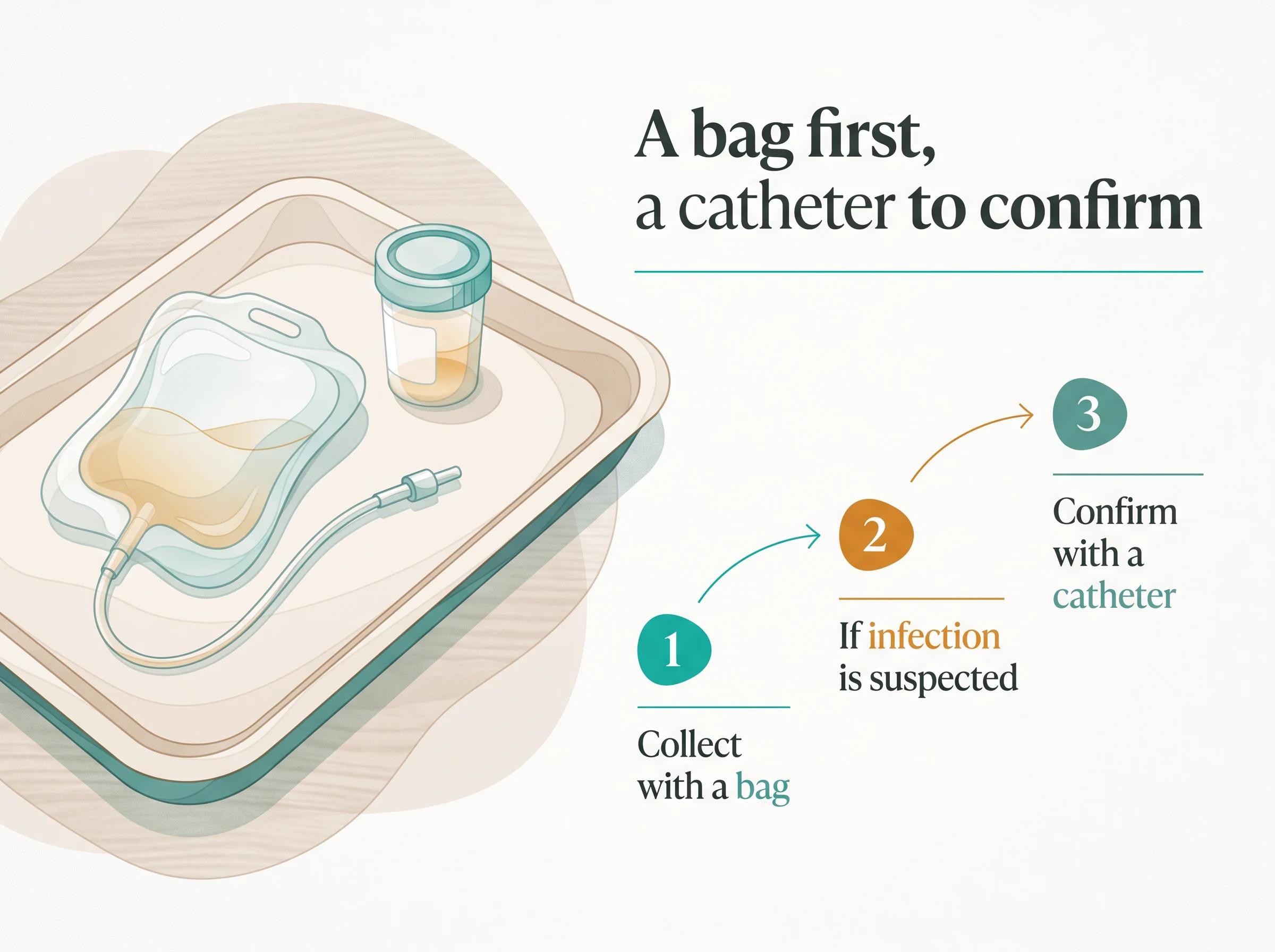
A baby still in nappies cannot wee into a pot. The AAP describes the usual first step as a special bag placed over the genitals to catch urine. If that urine looks possibly infected, the AAP is explicit that urine must then be collected using a catheter to confirm the diagnosis, because bag samples pick up skin bacteria and produce false positives easily.
Putting a child through a second collection feels hard. But without confirmation you either commit to a long antibiotic course that was never needed, or you dismiss a real infection.
Treatment
Most UTIs clear with antibiotics. Both the NHS and the AAP stress the same point about finishing them: take the full course as prescribed, even if symptoms go away after a few days. Stopping early invites recurrence, and repeated infection is what damages kidneys.
Lower infections settle quickly once treatment starts. Infection that has reached the kidney needs a substantially longer course, which is why the diagnosis matters rather than simply treating the fever.
If it keeps coming back
Recurrence is a reason to look for a structural cause rather than to simply re-treat. Imaging may be recommended, and the AAP notes the decision depends on your child's age and how many UTIs they have had. Keeping an accurate record of each episode makes that judgement faster and better.
When to see a doctor
- A fever that is not explained by respiratory symptoms or diarrhoea, especially past three days
- Fever alongside marked irritability, refusing feeds, vomiting, or floppiness
- Urine that smells or looks clearly different
- A previously dry child wetting themselves again
- Repeated urinary tract infections
The NHS advises seeking an urgent appointment for any child aged 15 or younger with suspected UTI symptoms. Younger babies warrant the least delay of all.
Tracking fever and nappies with BebeSnap
- Log temperature by time so you can show the doctor the actual curve, not a recollection
- Log wet nappies to catch changes in urine output
- Log medication so you know exactly when antibiotics started: it changes how a test result should be read
- Keep a history of recurrences to speed up the decision about imaging
Frequently Asked Questions (FAQ)
Q: Can a fever with no other symptoms really be a UTI?
A: Yes, and that is the typical presentation. The American Academy of Pediatrics states that UTIs in children up to 2 years of age may have few recognisable signs other than fever, because a baby cannot tell you it hurts to wee. An unexplained high fever, one not accounted for by a respiratory infection or diarrhoea, may be the only sign. If it persists three or more days without a clear cause, ask about a urine test.
Q: Can I start an antibiotic we already have at home?
A: No. Starting an antibiotic before the urine sample is taken can suppress the bacteria enough to make both the urine analysis and the culture come back negative while the infection is still there. That erases the diagnosis and delays proper treatment. Ask for the urine test first, and always tell the clinician if your child has already had any antibiotic.
Q: How is urine collected from a baby in nappies?
A: With a special bag placed over the genitals to catch urine. The AAP notes that if that sample looks possibly infected, urine must then be collected using a catheter to confirm the diagnosis, because bag samples easily pick up skin bacteria and give false positives. The second collection is worth it: without confirmation you risk either an unnecessary long antibiotic course or a missed infection.
Q: Why does my child keep getting UTIs?
A: Recurrence is a signal to look for an underlying structural cause rather than simply treating each episode. Imaging studies may be recommended, and the AAP notes the decision depends on your child's age and how many infections they have had. A specialist may be involved if a structural abnormality is found. Keeping a dated record of every episode makes that assessment quicker.
References
Check Your Baby's Health from One Photo
AI stool analysis reads color and texture, and keeps every health record in one place.
See what the app does firstMedical Disclaimer: This article is for informational purposes only and does not replace professional medical advice. If you have concerns about your baby's health, please consult a pediatrician.
You Might Also Like
Tomato for Babies: When to Start, Skin and Seeds, and Why Cherry Tomatoes Are Never Served Whole
Apple for Babies: Stage-by-Stage Portions and When Raw Apple Is Safe
Spinach for Babies: When to Start, Why Boiling Matters, and When to Skip It
Potato for Babies: When to Start, Safe Shapes, and Why Never to Blend It
You Might Also Like
Baby Impetigo: Golden Crusts, Antibiotic Treatment, and When Nursery Is Safe Again
Golden-brown crusts spreading across your baby's skin? Impetigo is a common, highly contagious bacterial skin infection in young children. It stops being contagious 48 hours after treatment starts. Here is how to recognise it and when nursery is safe again.
Complete 2026 Baby Vaccination Schedule Guide
Check the complete vaccination schedule from newborn to age 6, including free national immunization programs.
Baby Mouth Sores (Stomatitis): Causes, How to Tell Them Apart, and Dehydration Signs
Is your baby drooling and refusing to eat? Mouth ulcers usually heal in 10 to 14 days and the pain eases within 3 to 4 days. Here is how to tell the common causes apart and the dehydration signs that mean you should call a doctor.