Baby Eye Discharge & Conjunctivitis Guide: Causes, Home Care & When to See a Doctor
Check Your Baby's Health from One Photo
Get Started FreeYou wake up to find your baby's eyelids crusted shut with yellow gunk. Alarming? Absolutely. But baby eye discharge is one of the most common concerns parents face in the first year. The causes range from a simple blocked tear duct to bacterial, viral, or allergic conjunctivitis. In this guide, we will explain the five main causes, how to tell them apart, safe home care techniques including tear duct massage, and the clear signs that mean it is time to see a doctor.
5 Common Causes of Baby Eye Discharge
Baby eye discharge can stem from five main causes. Since each requires a different approach, knowing which one you are dealing with is the essential first step.
1. Blocked tear duct(congenital nasolacrimal duct obstruction)
- The most common cause, affecting about 6 to 20% of newborns
- A thin membrane remains at the end of the nasolacrimal duct (the channel that drains tears into the nose), preventing tears from draining properly
- Tears pool in one or both eyes, and white to light yellow sticky discharge accumulates
- Notably, there is little to no redness or swelling of the eye itself
- Approximately 90% resolve on their own by 12 months of age
2. Bacterial conjunctivitis
- An eye infection caused by bacteria
- Produces thick yellow to green pus-like discharge
- The eyelids may be swollen, and the whites of the eyes appear red
- Often starts in one eye and spreads to the other
- Often treated with antibiotic eye drops or ointment if the doctor thinks bacteria are the cause
3. Viral conjunctivitis
- An eye infection caused by a virus, often the same viruses that cause the common cold
- Produces clear, watery discharge
- Frequently accompanied by cold symptoms such as a runny nose and cough
- Usually affects both eyes
- Antibiotics are not effective; it resolves on its own within 1 to 2 weeks
4. Allergic conjunctivitis
- A reaction to allergens such as pollen, dust mites, or pet dander
- Eyes are itchy, with excessive clear, watery tearing
- Both eyes are affected simultaneously
- The baby may try to rub their eyes, and sneezing or a runny nose may also be present
- Removing the allergen source is the most important step
5. Chemical irritation(at birth)
- A temporary reaction to antibiotic eye drops given at birth to prevent infection
- Appears within 24 to 48 hours of birth and resolves within 2 to 4 days
- No treatment is needed
How to Tell the Difference
| Cause | Discharge color/type | Redness | Swelling | Other symptoms | Timing |
|---|---|---|---|---|---|
| Blocked tear duct | White to light yellow, sticky | None or minimal | None | Watery/pooling tears | From ~2 weeks old |
| Bacterial conjunctivitis | Thick yellow to green, pus-like | Significant | Eyelid swelling | Lids stuck shut | Any time |
| Viral conjunctivitis | Clear, watery | Present | Mild | Cold, runny nose, cough | With a cold |
| Allergic conjunctivitis | Clear, watery tears | Present | Mild | Itchiness, sneezing | Allergy season |
| Chemical irritation | Clear discharge | Mild | Mild | None | 24-48 hrs after birth |

Home Care for Baby Eye Discharge
Regardless of the cause, keeping your baby's eyes clean is the foundation of care. Here is how to do it safely.
Cleaning the eyes (basic care)
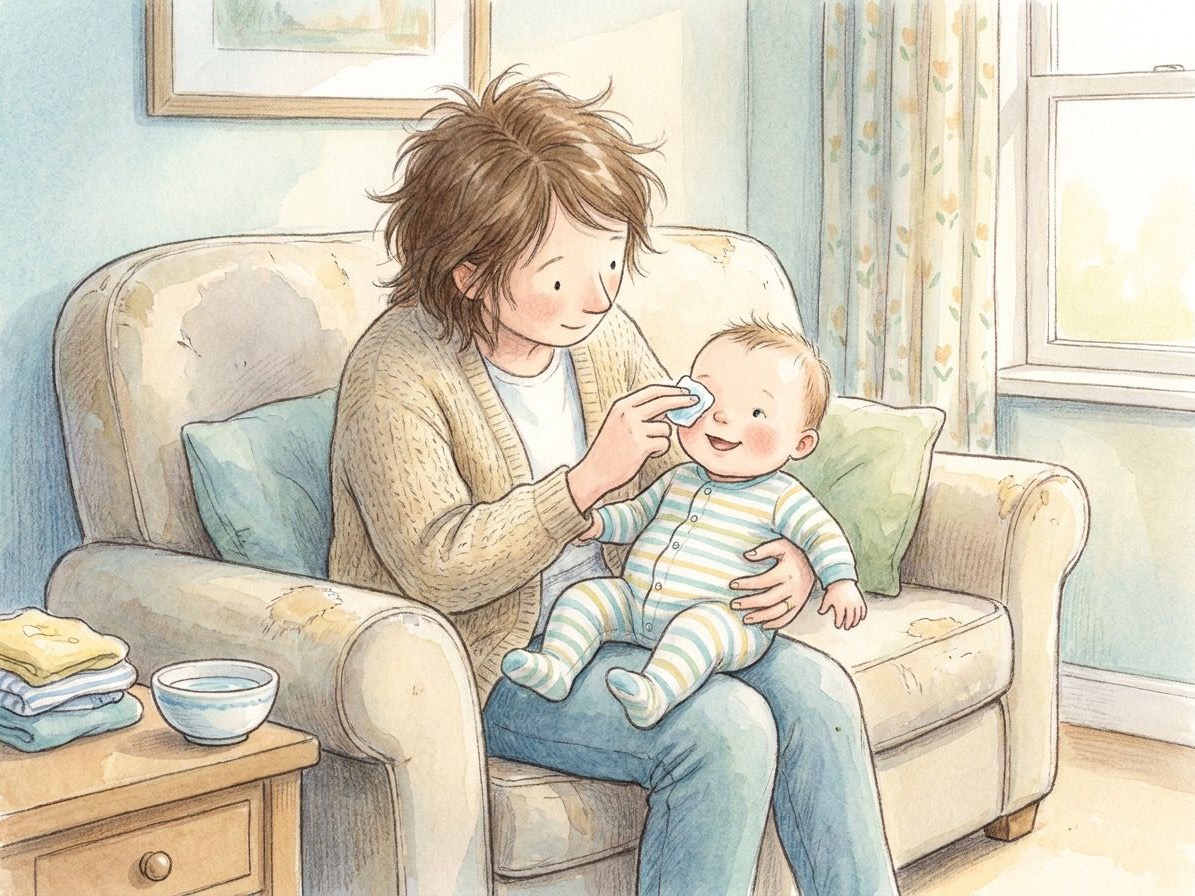
- Soak a clean gauze pad or cotton ball in warm water (boiled and cooled)
- Gently wipe from the inside corner (near the nose) toward the outside corner (toward the ear)
- Use each gauze pad or cotton ball only once, then discard it
- Use a fresh one for each eye to prevent cross-contamination
- Clean 2 to 4 times daily, or whenever discharge is visible
Warm compress
- Soak a clean cloth in warm water and place it gently over the affected eye for 1 to 2 minutes
- This softens crusted discharge, making it easier to remove
- Apply 2 to 3 times per day
Tear duct massage (Crigler massage)
If a blocked tear duct is the cause, massage done the right way may help it open naturally.
How to perform the massage
- Wash your hands thoroughly and ensure your fingernails are short
- Place your index finger at the inner corner of your baby's eye, where the nose meets the eye
- Apply gentle but firm downward pressure, stroking toward the nose
- Repeat about 10 times per session
- Perform 2 to 3 times daily (before feedings is ideal, as baby is calm)
- The aim is to push the fluid in the tear sac down toward the nose. If discharge squeezes back out toward the eye as you press, the pressure is probably going the wrong way
When to See a Doctor
Most baby eye discharge can be managed at home, but the following situations require prompt medical attention.
See a doctor immediately if:
- The eyelid is significantly swollen and red
- Thick green or yellow pus is continuously draining
- Your baby has a fever of 38 degrees C (100.4 degrees F) or higher
- The skin around the eye is red and swollen (possible periorbital cellulitis)
- Your baby cannot open their eye
- Any eye discharge in a newborn under 4 weeks old
- Your baby seems very bothered by light or has eye pain (lots of tearing with light sensitivity, such as burying their face in the bedding, or an eye that looks cloudy or unusually large, can signal glaucoma)
Schedule a pediatrician or ophthalmologist visit if:
- Home care does not improve symptoms within 2 to 3 days
- Eye discharge keeps recurring
- A blocked tear duct has not resolved by 12 months of age
- Tearing is excessive in only one eye
Treatment by Cause
Blocked tear duct
- First line: Tear duct massage + eye hygiene (most resolve naturally by 12 months)
- Second line: If still blocked after 12 months, nasolacrimal duct probing may be performed. A thin probe is inserted through the tear duct to break through the membrane. Success rate is approximately 90%
- Third line: If probing fails, silicone tube insertion or surgical intervention
Bacterial conjunctivitis
- Antibiotic eye drops or ointment prescribed by a doctor (typically used for 5 to 7 days)
- Never use eye drops without a doctor's prescription
- Improvement usually begins 24 to 48 hours after starting treatment
Viral conjunctivitis
- No specific medication; resolves on its own within 1 to 2 weeks
- Manage with eye hygiene and warm compresses for comfort
- Treat accompanying cold symptoms as needed
- Highly contagious, avoid sharing towels and washcloths within the family
Allergic conjunctivitis
- Removing the allergen is the top priority
- Cool compresses can relieve itchiness
- Antihistamine eye drops may be prescribed in severe cases
Prevention Tips
Daily hygiene
- Change your baby's face cloth daily
- Always wash your hands before touching your baby's eyes
- Teach older siblings to wash their hands regularly
- Do not share towels or pillowcases with a child who has conjunctivitis
Environmental care
- Ventilate your home regularly
- Reduce dust and allergen exposure
- Keep the area around your baby's sleeping space clean if you have pets
- Maintain indoor humidity between 40 and 60% when using air conditioning or heaters
Track Eye Health with BebeSnap
Record changes in your baby's eye condition and provide your doctor with accurate information at visits.
- Health Log: Track the color, amount, and frequency of eye discharge by date so you can give your doctor a clear timeline at appointments
- AI Parenting Chatbot: Worried about your baby's eye discharge? Ask the AI chatbot for a quick check on whether a doctor visit is needed
- Feeding & Sleep Records: Keep a comprehensive picture of your baby's overall health
FAQ
Q: My baby has yellow eye discharge. Do I need to see a doctor?
A: If the discharge is light yellow and there is no redness or swelling, it is likely a blocked tear duct. Once your pediatrician confirms it, try tear duct massage and gentle cleaning. However, if the discharge is thick yellow-green and pus-like, this suggests bacterial conjunctivitis and warrants a visit to the pediatrician. In a newborn under 4 weeks old, any eye discharge needs a doctor's check right away.
Q: When should I start tear duct massage, and how long should I do it?
A: Start after your pediatrician confirms a blocked tear duct diagnosis. Perform the massage 2 to 3 times daily, ideally before feedings when your baby is calm. Most blocked ducts open on their own within 6 to 12 months with consistent massage. Ask your pediatrician or ophthalmologist to demonstrate the technique first.
Q: Is conjunctivitis contagious to other children?
A: Bacterial and viral conjunctivitis are both highly contagious. Viral conjunctivitis can be spread for up to 2 weeks. Avoid sharing towels and pillows, and wash hands thoroughly after touching the eyes. Allergic conjunctivitis and blocked tear ducts are not contagious.
Q: Can I put breast milk in my baby's eye to treat discharge?
A: While breast milk contains antibodies and is a popular home remedy in some cultures, it is not a medically proven treatment. There is a risk of introducing secondary infection. The safest approach is cleaning with warm water and following your doctor's prescribed treatment.
Q: What happens if a blocked tear duct does not open by 12 months?
A: Your pediatric ophthalmologist can perform nasolacrimal duct probing. A thin probe is passed through the tear duct to puncture the membrane blocking it. The success rate is about 90%. The procedure is usually done under general anesthesia and takes only 5 to 10 minutes.
References
Check Your Baby's Health from One Photo
AI stool analysis reads color and texture, and keeps every health record in one place.
See what the app does firstMedical Disclaimer: This article is for informational purposes only and does not replace professional medical advice. If you have concerns about your baby's health, please consult a pediatrician.
You Might Also Like
Tomato for Babies: When to Start, Skin and Seeds, and Why Cherry Tomatoes Are Never Served Whole
Apple for Babies: Stage-by-Stage Portions and When Raw Apple Is Safe
Spinach for Babies: When to Start, Why Boiling Matters, and the One Time to Skip It
Potato for Babies: When to Start, Safe Shapes, and Why Never to Blend It
You Might Also Like
Baby Impetigo: Golden Crusts, Antibiotic Treatment, and When Nursery Is Safe Again
Golden-brown crusts spreading across your baby's skin? Impetigo is a common, highly contagious bacterial skin infection in young children. It stops being contagious 48 hours after treatment starts. Here is how to recognise it and when nursery is safe again.
Baby Fever Guide: What to Do at Every Temperature
Baby has a fever! Learn what to do at each temperature level, how to use fever reducers, and when to go to the ER.
Newborn Jaundice: Affects 60% of Babies - Symptoms & Treatment
Baby's skin turning yellow? Newborn jaundice affects 60%+ of babies. Learn the difference between normal and concerning jaundice.