Baby Cough Types Guide: Dry, Wet & Barking Cough - When to Worry & Home Care

Check Your Baby's Health from One Photo
Get Started FreeWhen your baby starts coughing, it is natural to feel concerned. But listening carefully to the sound of the cough can tell you a lot about what is going on. Dry cough, wet cough, barking cough, and whooping cough: being able to distinguish these four types helps you determine what care your baby needs and when to seek medical attention. This guide covers cough types, home remedies, phlegm removal techniques, nighttime cough relief, cough medicine safety, and emergency warning signs.
Why Do Babies Cough?
Coughing is a protective reflex that clears the airways of mucus, irritants, and pathogens. Common causes of coughing in babies include:
- Viral infections: colds, RSV, influenza, croup
- Bacterial infections: whooping cough, pneumonia, sinusitis
- Allergies: dust mites, pet dander, pollen
- Irritants: cigarette smoke, air pollution, dry air
- Gastroesophageal reflux: stomach acid irritating the airway
- Asthma: airway hypersensitivity causing recurrent cough
How to Tell the 4 Cough Types Apart
| Type | Sound | Common Causes | When It Occurs |
|---|---|---|---|
| Dry cough | Hacking, no mucus, scratchy sound | Early cold, allergies, asthma, dry air | Year-round |
| Wet cough(productive) | Rattling, gurgling, mucus-filled sound | Later stage cold, bronchitis, RSV, sinusitis | 3-5 days after cold onset |
| Barking cough | Seal-like or dog-like bark | Croup (acute laryngotracheitis) | Fall-early winter, worse at night |
| Whooping cough | Rapid coughing fits followed by a high-pitched "whoop" on inhale | Pertussis (Bordetella pertussis) | Year-round, higher risk if unvaccinated |

Each Cough Type in Detail & Home Care
Dry Cough: Hacking Without Mucus
Causes and characteristics:
- Often the first sign of a cold, with a tickly or scratchy throat
- Also common with allergic rhinitis or early-stage asthma
- Tends to worsen at night or early morning
- No mucus is produced
Home care tips:
- Humidity: Keep indoor humidity at 50-60%. Use a cool-mist humidifier or hang a damp towel
- Hydration: Offer breast milk or formula frequently; for babies 6 months and older, small sips of water
- Remove irritants: Avoid smoke, perfumes, and strong fragrances; run an air purifier
- Nasal saline: Use saline spray to keep nasal passages moist
Wet Cough: Rattling and Mucus-Filled
Causes and characteristics:
- Develops 3-5 days after a cold begins, as mucus builds up
- Common with bronchitis and RSV infection
- Babies cannot spit out phlegm, so they swallow it, which may lead to vomiting
- You may hear a rattling or gurgling sound from the chest
Home care tips:
- Extra fluids: Adequate hydration thins mucus and makes it easier to clear
- Back patting: Hold your baby upright or slightly tilted and gently pat the back
- Keep sleep flat: Don't raise the head of the crib mattress; lay your baby flat on their back to sleep
- Nasal suction: If nasal congestion accompanies the cough, use a bulb syringe or nasal aspirator
Barking Cough: Seal-Like Sound
Causes and characteristics:
- Primarily caused by croup (acute laryngotracheitis)
- Most common in children aged 6 months to 3 years, peaking in fall and early winter
- Starts like a regular cold, then suddenly a harsh barking cough appears
- Typically worsens at night without warning
- May be accompanied by stridor: a high-pitched sound when breathing in
Home care tips:
- Cool air: Take your child outside into cool night air for 5-10 minutes; the cold air can reduce airway swelling
- Humidification: Steam therapy was traditionally recommended but recent research (Cochrane Review 2021) found no evidence of benefit, and hot steam poses a burn risk. Try cool night air or a cool-mist humidifier instead
- Stay calm: Crying narrows the airway further, so soothe and comfort your child
- Upright position: Hold your child upright rather than lying them down to ease breathing
Whooping Cough: Coughing Fits With a "Whoop"
Causes and characteristics:
- A bacterial infection caused by pertussis, preventable with the DTaP vaccine
- Begins with 1-2 weeks of cold-like symptoms (runny nose, mild fever)
- Progresses to intense coughing fits, often ending with a characteristic high-pitched "whoop" as the child gasps for air
- Important: Infants may not make the "whoop" sound, instead, they may have apnea episodes (pauses in breathing)
- Cough can persist for 10 weeks or more, hence the name "100-day cough"
Home care tips:
- Seek medical care immediately: Whooping cough requires antibiotic treatment
- Hydration: Prevent dehydration caused by coughing fits
- Small, frequent feeds: Offer feeds between coughing episodes
- Prevention is key: Follow the DTaP vaccination schedule (at 2, 4, 6, and 15-18 months, then 4-6 years)
5 Ways to Help Clear Your Baby's Phlegm
Babies cannot cough up and spit out phlegm on their own, so they need your help.
1. Increase fluid intake
- Fluids thin mucus, making it easier to clear
- Under 6 months: Offer breast milk or formula more frequently
- Over 6 months: Add small amounts of lukewarm water
2. Maintain proper humidity
- Keep indoor humidity at 50-60%
- Use a cool-mist humidifier (clean it daily to prevent mold and bacteria)
- Alternatively, hang damp towels near the crib
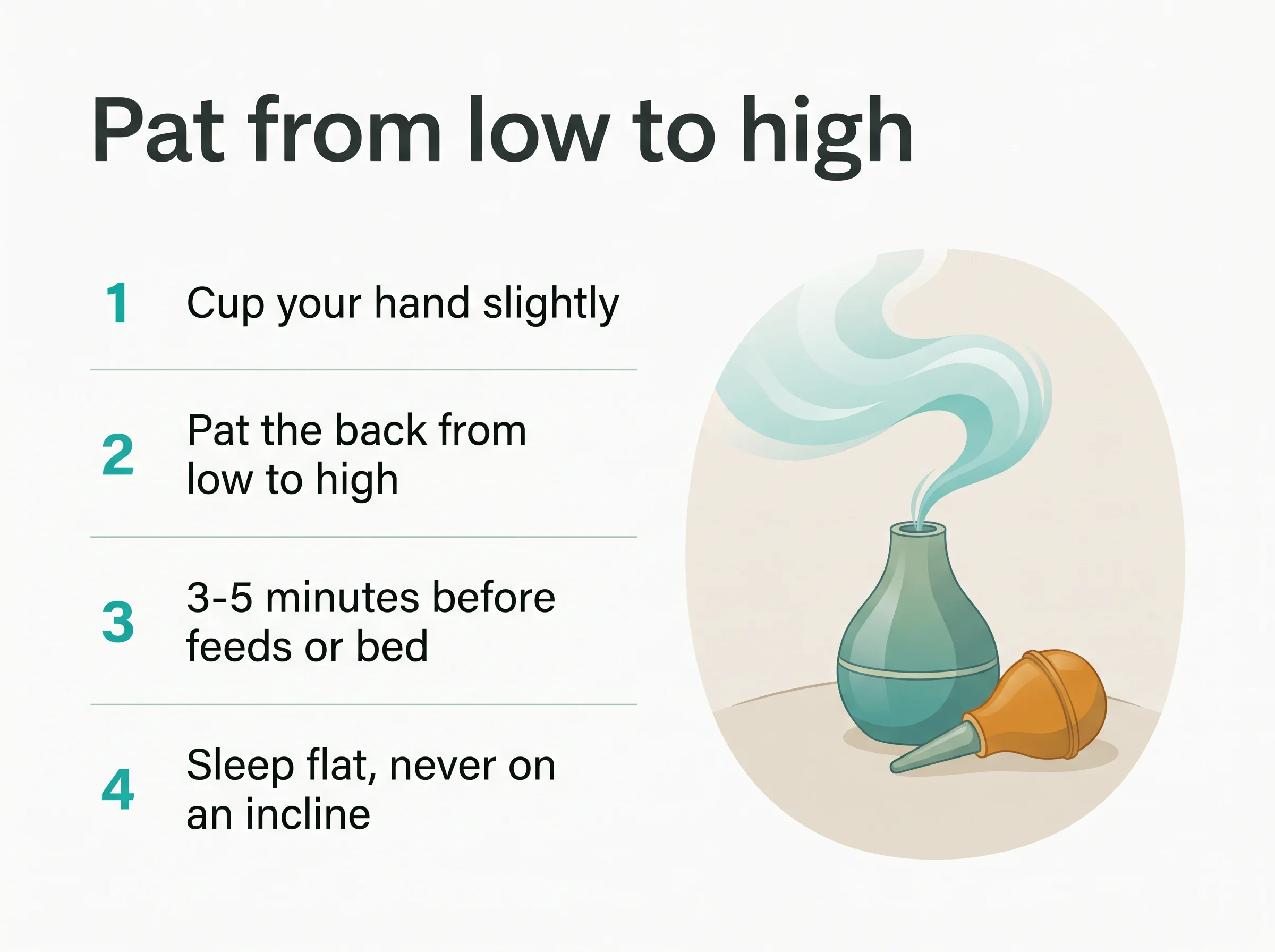
3. Back patting (postural drainage)
- Hold your baby face-down on your lap or angled slightly in your arms
- Cup your hand slightly and gently pat from lower back to upper back
- Do this for 3-5 minutes before feedings or bedtime
4. Position management
- Lay your baby flat on their back to sleep. Don't tilt the mattress or prop it up with a towel or pillow; the AAP says any incline over 10 degrees isn't safe for sleep
- When coughing, hold your baby upright with their chest against yours
5. Nebulizer (prescribed by a doctor)
- Inhaling saline solution via a nebulizer loosens thick mucus
- Use only under medical guidance
- Typically administered 2-3 times daily for 5-10 minutes per session
Are Cough Medicines Safe for Babies?
This is one of the most common questions parents ask. The short answer: OTC cough medicines are not safe for young children.
Key safety guidelines:
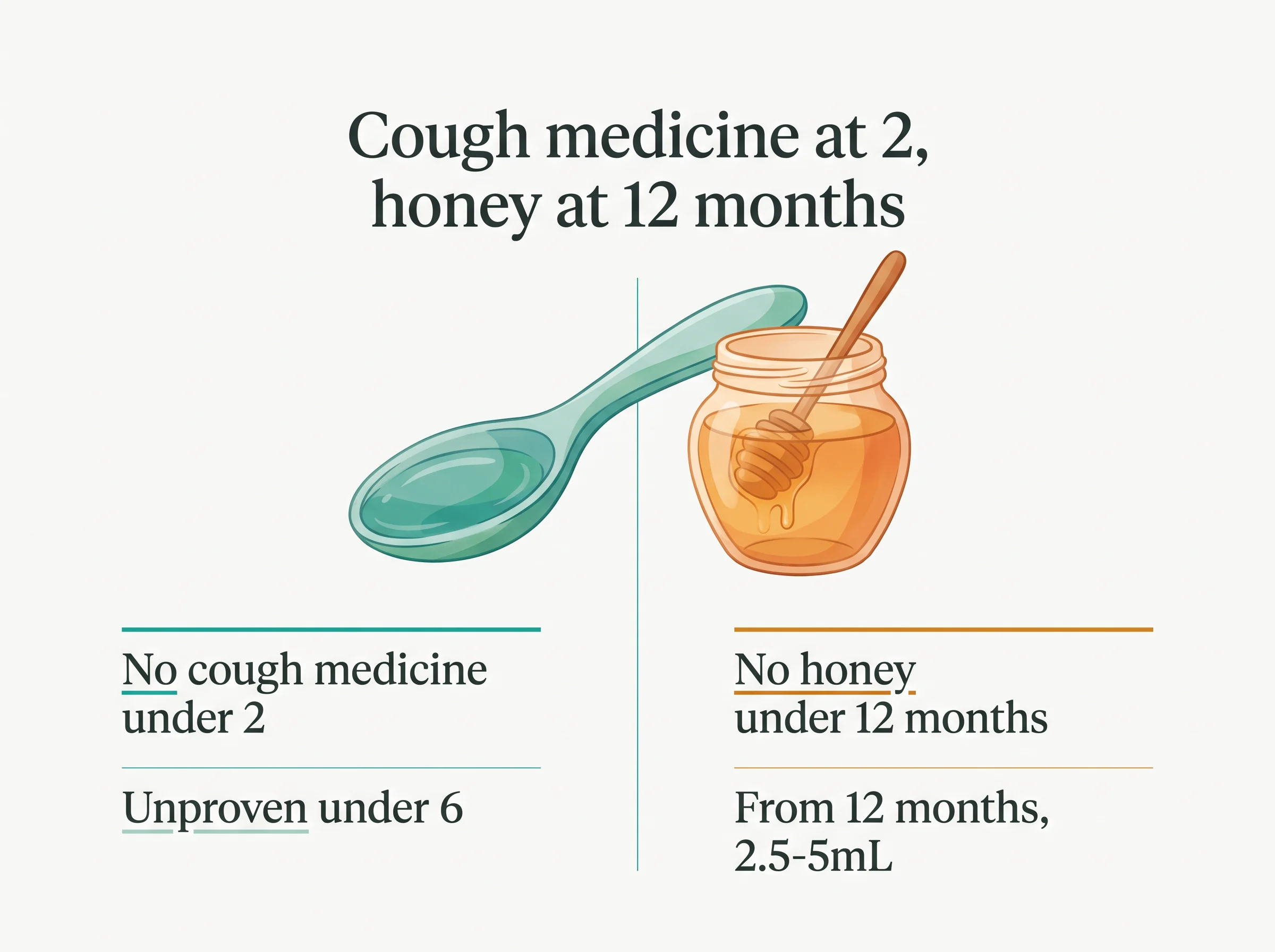
- FDA recommendation: Do not give OTC cough and cold medicines to children under 2 years old. They can cause serious side effects, including slowed breathing
- Manufacturer labeling: Most cough medicines are now labeled "do not use in children under 4 years of age"
- Expert consensus: For children under 6 years, OTC cough medicines have no proven efficacy and carry more risk than benefit
- Honey: For babies 12 months and older, 2.5-5 mL of honey before bedtime can effectively soothe a cough. Never give honey to babies under 12 months (risk of infant botulism)
Prescription medications (when a doctor determines they are needed):
- Bronchodilators (for asthma)
- Antibiotics (for whooping cough or bacterial pneumonia)
- Steroids (dexamethasone for croup)
Why Coughing Gets Worse at Night & What to Do
Many parents notice their baby coughs more at night than during the day. There are clear reasons for this.
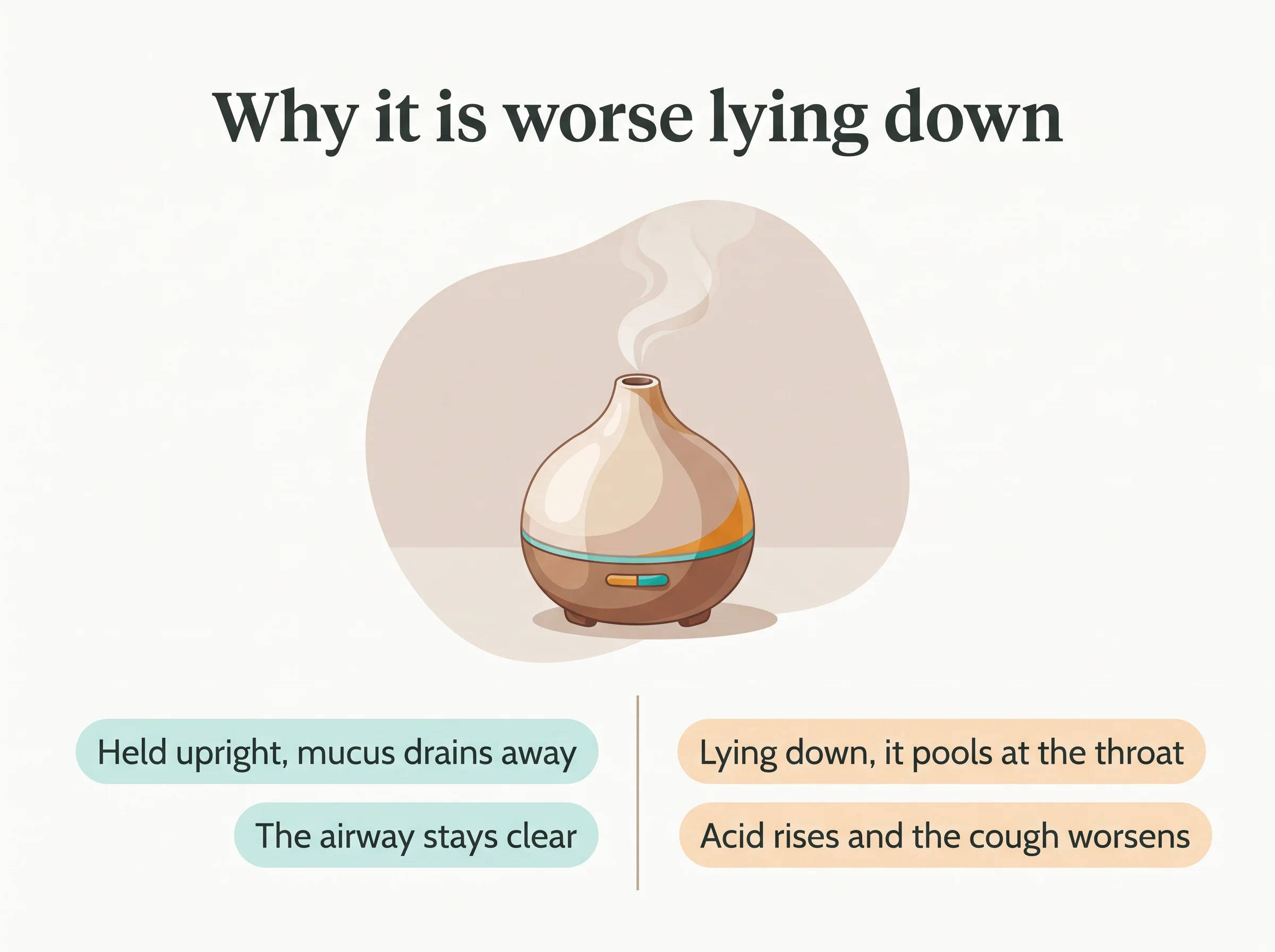
Why nighttime coughing worsens:
- Postnasal drip: When lying down, mucus drains from the nose and sinuses into the back of the throat, triggering the cough reflex
- Gravity: Secretions that drain naturally while upright pool in the airways when lying flat
- Dry indoor air: Heating systems lower humidity, drying out airway membranes
- Gastroesophageal reflux: Acid reflux increases in a lying position, irritating the airway
- Temperature changes: A slight drop in body temperature at night can make airways more sensitive
Nighttime cough relief strategies:
- Saline rinse and suction before bed
- Keep the room at 50-60% humidity (run a humidifier)
- Keep the crib mattress flat and lay your baby on their back
- Offer fluids before sleep (breast milk, formula, or lukewarm water)
- For babies 12 months and older, a spoonful of honey (2.5-5 mL)
- Ventilate the room for 10 minutes before bedtime for fresh air circulation
When to See a Doctor: Emergency Warning Signs
Seek immediate medical attention if any of the following occur. If your baby stops breathing, is struggling to breathe, turns blue, or is limp or hard to rouse, call 911:
Go to the emergency room right away if:
- Breathing difficulty: ribs visibly pulling inward with each breath (chest retractions)
- Lips or fingernails turning blue (cyanosis)
- Baby stops breathing or has apnea episodes
- Unusual drowsiness or limpness
- Barking cough with stridor at rest (high-pitched sound even when calm)
See your pediatrician the same day if:
⚠️ For babies under 3 months, any fever of 38°C (100.4°F) or higher requires an immediate emergency room visit regardless of cough; it could signal serious infections like sepsis or meningitis.- Any cough in a baby under 3 months old
- Fever of 38°C (100.4°F) or higher lasting more than 3 days
- Cough lasting more than 2 weeks
- Blood in the mucus
- Baby refuses to eat due to coughing
- Wheezing sounds heard during breathing
- Repeated vomiting after coughing episodes
Track Cough Symptoms and Get Guidance With BebeSnap
Record your baby's cough patterns and get expert guidance.
- AI Health Chatbot: Type "my baby has a barking cough at night" and get tailored advice on the type of cough and what to do
- Health Logging: Record when the cough started, the type, and accompanying symptoms: invaluable information for your pediatrician visit
- AI Stool Analysis: Worried about stool changes after cold medication? Snap a photo for instant AI health analysis
- Multilingual support: Access parenting information in English, Korean, and Japanese
Frequently Asked Questions (FAQ)
Q: Can I give my baby cough medicine?
A: No. Over-the-counter cough and cold medicines should not be given to children under 2, as they can cause serious side effects like slowed breathing. Most are labeled "do not use under 4 years," and they have no proven benefit under 6 years. Treating the underlying cause matters more than suppressing the cough.
Q: Can I give honey for my baby's cough?
A: For babies 12 months and older, 2.5-5 mL of honey before bedtime can effectively soothe a cough. Never give honey to babies under 12 months because of the risk of infant botulism.
Q: Why does my baby cough more at night?
A: Several factors combine: postnasal drip drains into the throat when lying down, secretions pool in the airway due to gravity, heating dries the air, and acid reflux increases. A saline rinse before bed and keeping humidity at 50-60% both help. Keep the crib mattress flat rather than raising the head.
Q: What should I do at home for a barking (croup) cough?
A: Take your child into cool night air for 5-10 minutes to help the swollen airway shrink. Soothe them upright, since crying narrows the airway further. But if you hear stridor even when they are at rest, go to the emergency room immediately.
References
- AAP HealthyChildren - A Parent's Guide to Safe Sleep
- AAP HealthyChildren - Coughs and Colds
- Mayo Clinic - Croup
- FDA - Should You Give Kids Medicine for Coughs and Colds?
- CDC - Pertussis (Whooping Cough) Signs and Symptoms
- Children's Hospital Colorado - Types of Coughs in Kids
- Boston Children's Hospital - Cough
- Nemours KidsHealth - Whooping Cough
Check Your Baby's Health from One Photo
AI stool analysis reads color and texture, and keeps every health record in one place.
See what the app does firstMedical Disclaimer: This article is for informational purposes only and does not replace professional medical advice. If you have concerns about your baby's health, please consult a pediatrician.
You Might Also Like
Tomato for Babies: When to Start, Skin and Seeds, and Why Cherry Tomatoes Are Never Served Whole
Apple for Babies: Stage-by-Stage Portions and When Raw Apple Is Safe
Spinach for Babies: When to Start, Why Boiling Matters, and the One Time to Skip It
Potato for Babies: When to Start, Safe Shapes, and Why Never to Blend It
You Might Also Like
Baby Impetigo: Golden Crusts, Antibiotic Treatment, and When Nursery Is Safe Again
Golden-brown crusts spreading across your baby's skin? Impetigo is a common, highly contagious bacterial skin infection in young children. It stops being contagious 48 hours after treatment starts. Here is how to recognise it and when nursery is safe again.
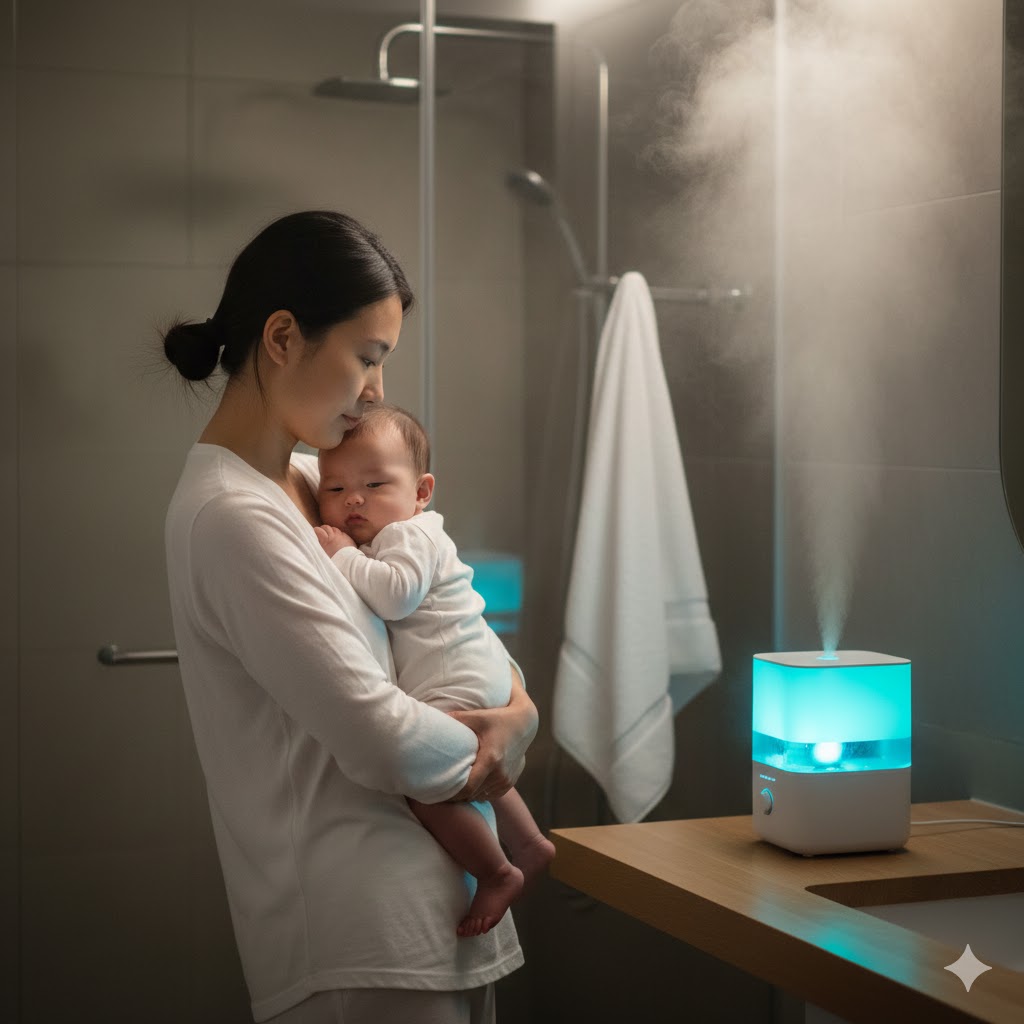
Baby Croup Guide: Barking Cough Symptoms, Home Treatment & When to Go to the ER
Is your baby making a seal-like barking cough in the middle of the night? Croup peaks in children aged 6 months to 3 years and usually resolves in 3-5 days. Learn severity signs and when to head to the ER.
Gassy Baby Relief: Causes, Massage Techniques & Home Remedies Guide
Is your baby fussy with a bloated tummy? Most newborns experience gas issues. Learn the I Love U massage, bicycle legs exercise, and proper burping techniques that can often provide quick relief.