Baby RSV and Bronchiolitis: Symptoms, When to Go to the ER & Prevention Guide
Check Your Baby's Health from One Photo
Get Started FreeYour baby started with a runny nose and mild cough, and now they are wheezing with every breath and struggling to eat. Could it be more than a cold? It might be RSV (Respiratory Syncytial Virus) one of the most common causes of serious lower respiratory infections in infants. Nearly all children are infected with RSV by age 2, and while most cases are mild, RSV can progress to bronchiolitis or pneumonia, especially in babies under 6 months. This guide covers what you need to know: how RSV differs from a common cold, when to rush to the ER, the exact numbers hospitals use when deciding whether to admit a baby, how to care for your baby at home, what research does and does not say about asthma later on, and how to lower the risk in the first place.
How Are RSV and Bronchiolitis Connected?
Bronchiolitis is an infection of the bronchioles, the smallest airways in the lungs. When these tiny passages become inflamed and filled with mucus, they narrow, and that is exactly why your baby is working so hard to breathe.
Most cases are caused by a virus, and by far the most common culprit is RSV (Respiratory Syncytial Virus), which accounts for approximately 80% of infant bronchiolitis cases. Almost every child contracts RSV at least once before their second birthday. Symptoms usually begin about 4 to 6 days after exposure, and roughly 20 to 30 percent of those infections progress to bronchiolitis or pneumonia. In other words, most babies get through RSV like a bad cold: but for infants under 6 months, the story can be very different.
RSV Season Patterns
- In temperate climates (including the US and most of Europe), RSV typically peaks from October through March
- In recent years, RSV season timing has shifted, with some outbreaks occurring in spring and summer
- RSV spreads rapidly in daycare centers, nurseries, and other group settings
RSV vs Common Cold: Key Differences
Early RSV symptoms look almost identical to a common cold, which is why so many parents miss the warning signs. However, within a few days, RSV reveals itself through distinctive symptoms. The single most useful clue is when the illness gets worse. A cold is roughest on the first day or two and then eases off, while bronchiolitis peaks on day 3 to 5. "It looked like a normal cold for two days, and today she suddenly can't breathe well" is the classic pattern.
| Feature | Common Cold | RSV Infection (Bronchiolitis) |
|---|---|---|
| Breathing sounds | Nasal congestion, sniffles | Wheezing, rattling, grunting |
| Breathing pattern | Normal | Rapid breathing, rib retractions, nostril flaring |
| Cough pattern | Mild, occasional cough | Persistent, worsening cough (sometimes in fits) |
| Fever | Low-grade or none | Can reach 38–39°C (100.4–102.2°F) or higher |
| Feeding | Mostly normal | Refuses to eat, feeds much less than usual |
| Duration | 5–7 days | Cough usually improves within 3 weeks |
| Worst day | Usually day 1–2 | Peaks around day 3–5 of illness |
Symptoms by Severity Level
RSV symptoms typically start mild and can worsen progressively. Knowing which stage your baby is in helps you make the right decisions.
Mild (Monitor at home)
- Clear runny nose, sneezing
- Light cough
- Low-grade fever (37.5–38°C / 99.5–100.4°F)
- Slightly reduced appetite
- Generally content and alert
Moderate (See your pediatrician)
- Audible wheezing
- Cough becoming more frequent and forceful
- Breathing faster than normal (over 50–60 breaths per minute)
- Feeding less than half of their usual amount
- Fussy, trouble sleeping
- Fever of 38.5°C (101.3°F) or higher
Severe (Go to the ER immediately)
- Visible rib retractions (ribs pulling in with each breath)
- Nostril flaring with every breath
- Grunting sound when breathing out
- Blue or gray color on lips, tongue, or fingernails (cyanosis)
- No wet diaper for 8 or more hours (dehydration)
- Lethargic, difficult to wake, unresponsive
- Apnea (pauses in breathing)
High-Risk Groups: Babies Who Need Extra Vigilance
Any baby can contract RSV, but certain groups face a much higher risk of developing severe illness.
High-Risk Categories
- Infants under 6 months old (especially under 3 months)
- Premature babies (born before 37 weeks of gestation)
- Babies with congenital heart disease
- Babies with chronic lung disease (such as bronchopulmonary dysplasia)
- Babies with weakened immune systems
- Babies with chromosomal conditions such as Down syndrome
If your baby belongs to any of these groups, contact your pediatrician at the first sign of RSV symptoms, even if the symptoms seem mild. These babies can deteriorate quickly.
When to Go to the Emergency Room
If you notice any one of the following signs, take your baby to the ER immediately. Do not wait.
Call 911 or go to the ER if your baby:
- Has blue or gray lips, tongue, or fingernails
- Stops breathing for any period (apnea episodes)
- Is working very hard to breathe with visible rib retractions
- Refuses to eat at all, or stops eating mid-feed because they cannot breathe
- Has had no wet diaper for 8 or more hours (dehydration)
- Is extremely lethargic, limp, or unresponsive
- Is under 3 months old with a fever of 38°C (100.4°F) or higher
See your pediatrician promptly if your baby:
- Has wheezing that is getting worse
- Is breathing more than 60 times per minute
- Is feeding less than half of their normal amount
- Has had a high fever for 3 or more days
- Was getting better but suddenly worsened again
The Numbers Hospitals Use to Decide on Admission
"Is this bad enough to be admitted?" is the question almost every parent asks. The UK's NICE bronchiolitis guideline puts actual numbers on that decision. The first thing clinicians check is oxygen saturation, and the threshold depends on your baby's age and medical history.
| Baby's situation | Oxygen saturation that warrants admission |
|---|---|
| 6 weeks or older, no underlying condition | Persistently below 90% |
| Under 6 weeks old, or has an underlying condition | Persistently below 92% |

The threshold is stricter for the youngest babies because they have far less reserve to draw on. Their airways are narrower and their breathing muscles tire faster, so the same saturation reading can tip into exhaustion and apnea much more quickly. Feeding is the other number that counts: NICE advises considering admission when a baby is taking 50 to 75% or less of their usual intake, because a drop that steep signals both dehydration risk and a baby who is too tired to feed.
One important caveat; these are measurements taken in a clinical setting. Do not use a consumer pulse oximeter to talk yourself out of a visit. "It reads 91%, so we're fine" is not a safe conclusion. If your baby looks like they are struggling to breathe, they need to be seen regardless of what a device says.
⚠️ If any of the following is present, you are past the point of weighing admission, call 911 or your local emergency number for immediate transfer. Apnea (any pause in breathing), severe respiratory distress (grunting, marked chest wall recession, or a respiratory rate above 70 breaths per minute), or central cyanosis (blue lips and tongue).Home Care and Treatment
There is no specific antiviral medication for RSV. In most cases, treatment focuses on relieving symptoms and supporting your baby's immune system as it fights off the virus.
Managing Nasal Congestion
- Use saline nasal drops or spray to loosen mucus
- Gently suction the nose with a bulb syringe or nasal aspirator (especially before feeds)
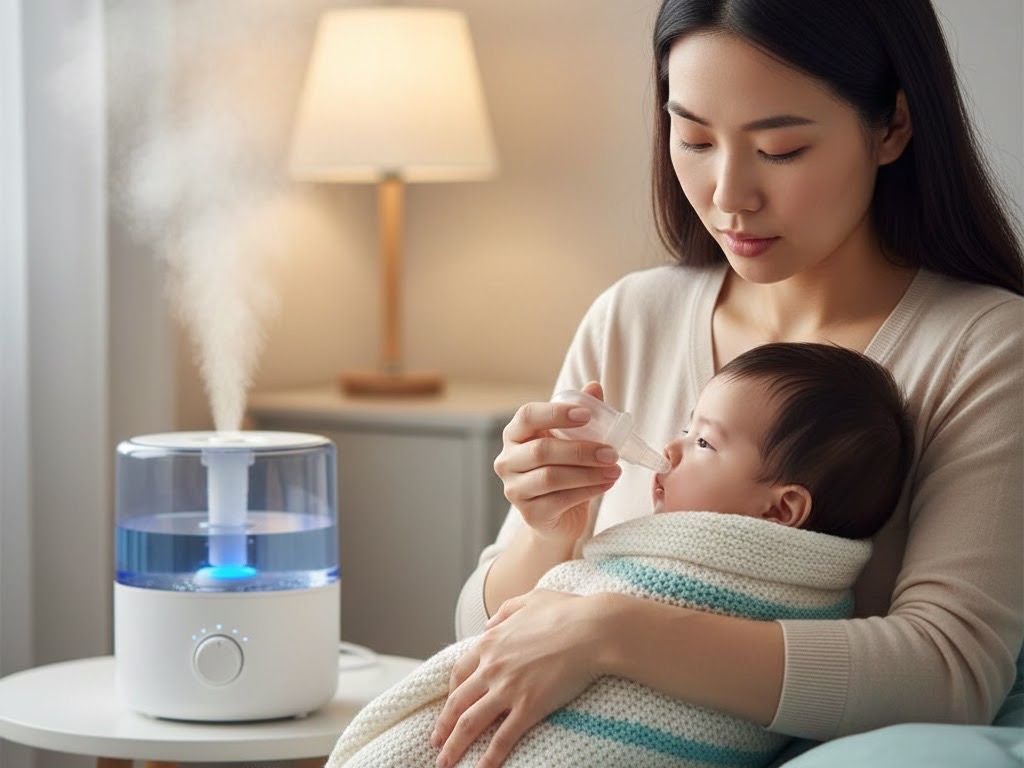
- Run a cool-mist humidifier in the room to keep air moisture at 50–60%
Staying Hydrated
- Offer breast milk or formula in small, frequent feeds
- If your baby cannot take a full feed, offer smaller amounts more often; this is key
- For babies over 6 months, you can offer small sips of water between feeds
- Watch carefully for dehydration signs: fewer wet diapers, dry mouth, crying without tears
Managing Fever
- Use infant acetaminophen or ibuprofen (6 months and older) as directed by your pediatrician
- Dress your baby in light clothing and keep the room at a comfortable temperature (20–22°C / 68–72°F)
Sleep Position
- Always place your baby on their back to sleep (to prevent SIDS)
- Don't raise the head of the mattress or prop your baby up with pillows or towels; use a firm, flat sleep surface (the AAP says any incline over 10 degrees isn't safe for sleep)
What NOT to Do
- Do NOT give over-the-counter cough or cold medicines to infants; they are dangerous for babies
- Do NOT give honey to babies under 1 year old (botulism risk)
- Do NOT request antibiotics. RSV is a virus, and antibiotics only work against bacteria
Will My Baby Develop Asthma After This?
Just as the cough finally starts to settle, this question tends to surface: "She was so sick this time, does that mean asthma later?"
Across multiple review studies, 20 to 40% of babies who have had bronchiolitis go on to experience recurrent wheezing in the following years. That is not a small number, and it is completely understandable if it worries you.
Here is the part that matters, though: the cause-and-effect relationship is still unsettled. Two explanations are competing in the research right now.
- Severe bronchiolitis leaves a lasting mark on developing airways, which later shows up as recurrent wheezing or asthma
- Babies born with more reactive airways (allergic tendency, family history) were always more likely to wheeze, and that same predisposition is why this particular infection hit them so hard
In other words, it is genuinely unclear whether bronchiolitis caused the wheezing, or whether a child already predisposed to it simply had a harder time with bronchiolitis. This distinction matters because it means one severe illness does not seal your baby's respiratory future.
💡 What helps right now is observation, not prediction. If wheezing returns with every cold, if a night-time or early-morning cough runs past 3 weeks, or if your child is repeatedly short of breath while playing, tell your pediatrician about this bronchiolitis episode; that history is the starting point for diagnosis and management.RSV Prevention Strategies
While you cannot completely eliminate the risk of RSV, these steps significantly reduce your baby's chances of infection.
Daily Prevention Habits
- Wash your hands with soap for at least 20 seconds before touching your baby
- Keep anyone with cold symptoms away from your baby
- During RSV season (October–March), avoid crowded indoor spaces
- Do not allow smoking anywhere near your baby (secondhand smoke increases respiratory infection risk)
- Clean and disinfect your baby's pacifiers, toys, and frequently touched surfaces
- Be extra cautious when older siblings bring home colds from school or daycare
Immunization for High-Risk Infants
- Nirsevimab: A long-acting monoclonal antibody given as a single injection that provides approximately 5 months of protection against severe RSV disease
- Palivizumab (Synagis): For high-risk infants, given as monthly injections during RSV season
- The two are for different groups. Palivizumab is limited to high-risk infants (prematurity, congenital heart disease, chronic lung disease, immune deficiency) and is repeated monthly through the season. Nirsevimab is a single dose covering one season, and eligibility is not limited to high-risk infants: it is offered to babies entering their first RSV season.
- Ask your pediatrician which one applies to your baby and when to give it. Eligibility and insurance coverage differ by country and are updated each season.
Breastfeeding Protection
- Antibodies in breast milk help protect against RSV and other respiratory infections
- Breastfeeding for at least 6 months is recommended when possible
Frequently Asked Questions
Q: Does my baby develop immunity after getting RSV once?
A: Unfortunately, RSV does not create lasting immunity. Reinfection is common throughout childhood. The good news is that repeat infections tend to be milder than the first one.
Q: How is RSV tested?
A: A rapid antigen test, done with a quick nasal swab, can confirm RSV with results in about 15 to 30 minutes, and your pediatrician or the emergency room can perform this simple test. Keep in mind that since there is no specific antiviral for RSV, testing mainly confirms the cause and guides supportive care rather than changing the treatment.
Q: If an older sibling has RSV, will my baby get it too?
A: The risk is very high. Older children often experience RSV as a mild cold, but the same virus can cause bronchiolitis in a younger sibling. Enforce strict handwashing for the older child and minimize close contact with the baby.
Q: How sick does a baby have to be to be admitted for bronchiolitis?
A: The NICE guideline uses oxygen saturation as the main threshold: persistently below 90% for babies 6 weeks and older, and below 92% for those under 6 weeks or with an underlying condition. Admission is also considered when feeding falls to 50–75% or less of normal. Care in the hospital is supportive: oxygen, IV fluids and suctioning.
Q: When can my baby return to daycare after RSV?
A: Wait until the fever has resolved and breathing symptoms have improved for at least 24 hours. Keep in mind that babies can shed the virus for 1 to 2 weeks after symptoms improve, so inform the daycare about the situation.
Track Your Baby's Health with BebeSnap
During RSV season, careful health tracking can make all the difference. BebeSnap helps you stay organized and prepared.
- Health Tracking: Record your baby's temperature, cough frequency, feeding amounts, and sleep patterns daily: so you have accurate data to share with your doctor
- AI Health Consultation: "My baby is wheezing," "Could this be RSV?", get instant answers from our AI chatbot whenever health concerns arise
- Growth & Development Tracking: Monitor your baby's overall health and developmental milestones in one organized place
References
- NICE NG9 - Bronchiolitis in Children: Diagnosis and Management
- CDC - RSV in Infants and Young Children
- AAP - RSV Prevention Recommendations
- Mayo Clinic - Respiratory Syncytial Virus
- AAP HealthyChildren - A Parent's Guide to Safe Sleep
- Seattle Children's Hospital - RSV Bronchiolitis
- Healthline - RSV: When to Visit the ER
- PMC - Bronchiolitis and Subsequent Wheezing or Asthma Risk Review
- PMC - RSV Bronchiolitis and the Link to Later Asthma
- The Journal of Infectious Diseases - Asthma Risk After RSV Bronchiolitis
Check Your Baby's Health from One Photo
AI stool analysis reads color and texture, and keeps every health record in one place.
See what the app does firstMedical Disclaimer: This article is for informational purposes only and does not replace professional medical advice. If you have concerns about your baby's health, please consult a pediatrician.
You Might Also Like
Tomato for Babies: When to Start, Skin and Seeds, and Why Cherry Tomatoes Are Never Served Whole
Apple for Babies: Stage-by-Stage Portions and When Raw Apple Is Safe
Spinach for Babies: When to Start, Why Boiling Matters, and the One Time to Skip It
Potato for Babies: When to Start, Safe Shapes, and Why Never to Blend It
You Might Also Like
Baby Impetigo: Golden Crusts, Antibiotic Treatment, and When Nursery Is Safe Again
Golden-brown crusts spreading across your baby's skin? Impetigo is a common, highly contagious bacterial skin infection in young children. It stops being contagious 48 hours after treatment starts. Here is how to recognise it and when nursery is safe again.

Baby Screen Time Guide: AAP & WHO Guidelines and Smart Media Use
Is screen time okay for babies? The AAP advises against screens other than video chat under 18 months, and WHO advises against screen time before age 2. Age-by-age guidelines and smart media use tips.
Baby Vomiting vs Spit-Up: Differences & When to See a Doctor
Baby threw up! Spit-up and vomiting are different. Projectile vomiting or dehydration? Call your pediatrician right away. Green vomit? Go to the ER.