Baby Separation Anxiety | Stranger Anxiety Signs & Daycare Transition Tips
Keep Every Growth Milestone
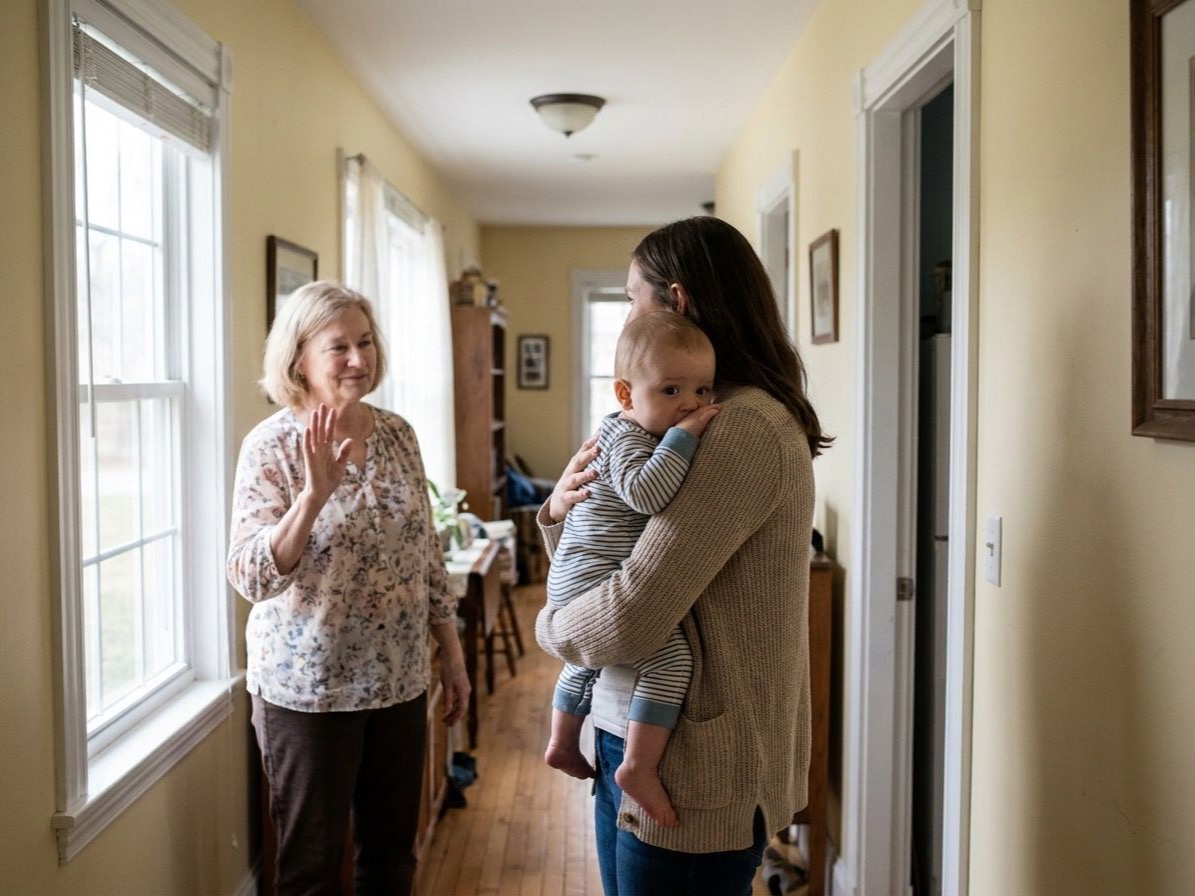
Get Started FreeHas your baby suddenly started crying when anyone but mom holds them? This is separation anxiety and stranger anxiety, a normal part of development. Many parents wonder "When does separation anxiety end?" and "How do I help my baby adjust to daycare?" This guide covers separation anxiety symptoms, when it peaks, and effective coping strategies.
What Is Separation Anxiety?
Separation anxiety is the fear and distress babies feel when separated from their primary caregiver (usually mom). It's actually a healthy sign that your baby has formed a strong attachment.
| Type | Separation Anxiety | Stranger Anxiety |
|---|---|---|
| Definition | Distress when separated from caregiver | Wariness of unfamiliar people |
| Starts | 6-8 months | 6-9 months |
| Peaks | 10-18 months | 8-12 months |
| Eases | Around 2-3 years | 18-24 months |
Separation Anxiety by Age
Separation anxiety looks different at various stages of development.
6-8 Months: Beginning Stage
- Gets upset when caregiver leaves their sight
- Is learning "object permanence" (people still exist when out of sight), so knows mom is somewhere else
- Has little sense of time, so can't tell when mom will come back
8-10 Months: Intensifying Stage
- Separation anxiety becomes more pronounced
- May reject even dad, wanting only mom
- Cries or hides when seeing strangers
10-18 Months: Peak Stage
- Separation anxiety is at its strongest
- Daycare adjustment can be challenging
- May wake at night calling for mom
18 Months-3 Years: Easing Stage
- Language development helps express feelings
- Understands that caregiver will return
- Growing independence
Separation Anxiety Symptoms
Separation anxiety manifests in various ways:
Behavioral Signs
- Cries when mom leaves the room
- Cries or turns away when strangers hold them
- Clings to mom's legs
- Grabs mom's clothes or hair
- Wants to follow mom everywhere, even to bathroom
Sleep-Related Signs
- Wakes frequently at night
- Refuses to sleep alone
- Cries for mom in the middle of night
- Resists naps
Physical Symptoms(Severe Cases)
- Vomiting when separated (repeated vomiting or vomiting with a fever may be illness rather than separation anxiety, so see your doctor; if your baby is limp or hard to wake, call 911 or your local emergency number)
- Complains of headaches or stomach aches
- Decreased appetite
Why Some Babies Have Severe Stranger Anxiety
Some babies show particularly strong stranger anxiety. Several factors can contribute:
Temperament Factors
- Naturally sensitive personality
- Slow-to-warm-up temperament
- Introverted nature
Environmental Factors
- Spending most time alone with primary caregiver
- Limited exposure to different people
- Recent stressful changes (moving, new sibling)
Developmental Factors
- Faster cognitive development
- Strong memory for distinguishing unfamiliar faces
How to Handle Separation Anxiety
While you can't eliminate separation anxiety, you can help your baby feel secure:
1. Practice Short Separations
- Start with just a few minutes apart
- Gradually increase the time
- Always say goodbye with a smile
2. Play Peek-a-Boo
- Teaches object permanence
- Cover and reveal your face
- Hide and seek games
3. Maintain Consistent Routines
- Keep predictable daily schedules
- Create a goodbye ritual
- Never sneak away
4. Use Transitional Objects
- Give something with mom's scent
- Favorite stuffed animal or blanket
- For babies under 12 months, use these and anything with mom's scent only while awake, and keep them out of the sleep area (suffocation risk)
- Show family photos
5. Build Strong Attachment
- Be fully present during time together
- Lots of physical affection
- Hugs before and after separation
| Helpful Approaches | What to Avoid |
|---|---|
| Short, positive goodbyes | Sneaking away |
| Reassure you'll return | Long, drawn-out goodbyes |
| Stay calm if baby cries | Overreacting to crying |
| Maintain regular routines | Leaving without warning |

Daycare Transition Guide
Starting daycare can be challenging during peak separation anxiety.
Typical Adjustment Period(1-2 Weeks)
- Day 1: 1-2 hours only (parent stays)
- Days 2-3: Short separations
- Week 1: Stay until lunch
- Week 2: Stay through nap
- Adjusted: Full day
Tips for Easier Transition
- Meet teachers beforehand
- Bring familiar items from home (blanket, toy), but for babies under 12 months keep them out of the nap area and ask the child care provider about its safe sleep policy
- Show pictures of teachers at home
- Extra cuddles and playtime after pickup
If Adjustment Is Difficult
- Extend the adjustment period
- Communicate regularly with teachers
- Keep consistent morning routines
- Consider professional consultation (if severe after 2-3 weeks)
When Does Separation Anxiety End?
Separation anxiety typically starts to fade around the second birthday and has eased significantly by age 3 for most children, though there's individual variation.
When Separation Anxiety Improves
- 18 months-2 years: Gradually improves with language development
- 2-3 years: Understands mom will return
- 3-4 years: Mostly resolved, forming peer relationships
Persistent Separation Anxiety(Consult a Professional)
- Severe separation anxiety after age 4
- Interferes with daily life
- Accompanied by physical symptoms
- School/daycare refusal
Track Baby Development with BebeSnap
Separation anxiety is a normal part of development. Use BebeSnap to carefully track your baby's developmental milestones.
- Development Records: Track when separation anxiety and stranger anxiety began
- Sleep Records: Monitor nighttime waking patterns
- AI Consultation: Ask our AI about separation anxiety concerns
Frequently Asked Questions (FAQ)
Q: When does separation anxiety start and end?
A: Separation anxiety typically begins at 6-8 months, peaks between 10-18 months, starts to fade around the second birthday, and has eased significantly for most children by around age 3. It's actually a healthy sign that your baby has formed a strong attachment to you, so there's no need to worry.
Q: My baby only wants mom and cries when dad holds them, is this normal?
A: Yes, dad anxiety is completely normal. It helps for dad to spend one-on-one playtime daily, even briefly, and take charge of special activities like bath or play while approaching at the baby's pace. Starting by playing together while mom is present, then gradually staying alone, also works well.
Q: How long does it take for a baby to adjust to daycare?
A: Most children adjust within 2-4 weeks. A gradual 1-2 week adjustment period works best, starting with just 1-2 hours with a parent present, then slowly increasing the time. Bringing familiar items like a blanket or toy from home can help. For babies under 12 months, keep them out of the sleep area to avoid suffocation risk.
Q: Is it better to sneak away when leaving my baby?
A: No, sneaking away should be avoided because it can actually increase anxiety. Instead, give a short, positive goodbye and reassure your baby that you'll return. Stay calm even if they cry, and maintain consistent daily routines.
References
Keep Every Growth Milestone
Log height, weight, and milestones. The growth curves are drawn for you.
See what the app does firstYou Might Also Like
Tomato for Babies: When to Start, Skin and Seeds, and Why Cherry Tomatoes Are Never Served Whole
Apple for Babies: Stage-by-Stage Portions and When Raw Apple Is Safe
Spinach for Babies: When to Start, Why Boiling Matters, and the One Time to Skip It
Potato for Babies: When to Start, Safe Shapes, and Why Never to Blend It
You Might Also Like
Wonder Weeks Calculator: Your Baby's 10 Mental Leaps From the Due Date
Enter your due date and get all 10 leap dates. They land at weeks 5, 8, 12, 19, 26, 37, 46, 55, 64 and 75, each lasting 1 to 2 weeks.
Baby Only Naps 30 Minutes? 5 Steps to Lengthen Short Naps
A 30-minute nap isn't broken; your baby slept exactly one sleep cycle (30–45 min). Here are 5 steps to stretch short catnaps into restorative sleep.
Baby Toys by Age: The Complete Guide to Choosing Developmental Toys from 0 to 18 Months
What toys does your baby actually need? Age-by-age toy recommendations from 0-18 months, Montessori principles, safety guidelines, and budget-friendly household alternatives.