Baby Vomiting vs Spit-Up: Differences & When to See a Doctor

Check Your Baby's Health from One Photo
Get Started FreeWhen a baby vomits, parents naturally feel worried and concerned. However, most baby vomiting is either normal or caused by minor issues. Learn the difference between spitting up and vomiting, how to respond to different causes, and when to seek medical care.
Spitting Up vs Vomiting: The Difference
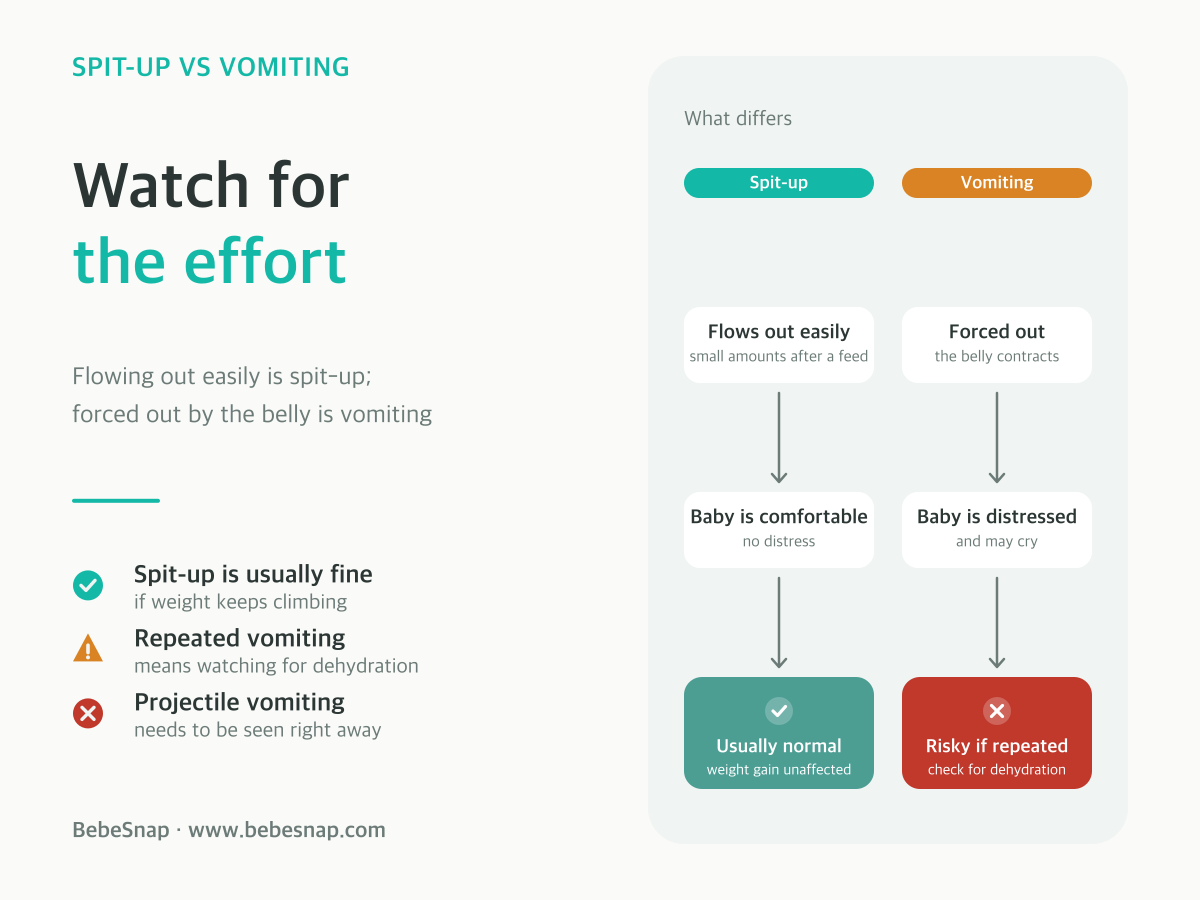
First, it's important to distinguish between 'spitting up' and 'vomiting.'
Spitting Up (Reflux)
- Small amount of milk flows out during or after feeding
- Comes up effortlessly and naturally
- Baby doesn't seem uncomfortable
- No impact on weight gain
- Usually normal
Vomiting
- Stomach contents forcefully expelled
- Abdominal muscles contract with effort
- Baby seems distressed and may cry
- Risk of dehydration if repeated
- Cause needs to be identified
Common Causes of Baby Vomiting
1. Overfeeding
Baby's stomach is small, so overfeeding can cause overflow vomiting.
2. Swallowing Air During Feeding
Swallowing too much air during bottle feeding can cause vomiting along with burping.
3. Gastroesophageal Reflux
The muscle at the stomach entrance is immature, causing stomach contents to flow back up. Usually improves with growth.
4. Gastroenteritis (Stomach Flu)
Viral or bacterial infection causing vomiting with diarrhea.
5. Food Allergy/Intolerance
Reaction to specific foods can cause vomiting.
6. Cold/Flu
Swallowing mucus from congestion or coughing fits can trigger vomiting.
7. Motion Sickness
Vomiting due to dizziness during travel.
Symptoms by Cause
| Cause | Characteristic Symptoms | Accompanying Symptoms |
|---|---|---|
| Overfeeding/Air | One-time after feeding | None, happy baby |
| Reflux | Repeated after feeds | Arching back, fussiness |
| Gastroenteritis | Repeated vomiting | Diarrhea, fever, fussiness |
| Food Allergy | After specific foods | Rash, hives |
| Cold/Flu | Vomiting after coughing | Runny nose, fever, cough |

Basic Response to Vomiting
Immediate Actions
1. Position Adjustment
- Lay baby on side or hold upright
- Prevent vomit from entering airway
- Never lay flat on back
2. Clean Around Mouth
- Wipe around mouth with soft cloth
- Remove vomit from nose
3. Fluid Replacement
- Wait 30 minutes to 1 hour after vomiting before giving small amounts of fluid
- If breastfeeding, nurse briefly but frequently
- Can use oral rehydration solution (ORS)
4. Observation
- Record vomiting frequency, amount, color
- Check temperature
- Monitor wet diapers (dehydration tracking)
Preventing Vomiting
Feeding Related
- Don't overfeed at once
- Always burp after feeding
- Adjust bottle angle to minimize air swallowing
- Keep upright for 30 minutes after feeding
Solid Food Related
- Introduce new foods in small amounts
- Watch high-risk allergy foods
- Control eating speed
General Prevention
- Don't lay down immediately after feeding
- Don't feed immediately after heavy crying
- Use clean bottles and nipples
When to See a Doctor
Emergency - Seek Immediate Care
- Projectile vomiting (shoots out forcefully)
- Blood or bile (green/yellow) in vomit
- Abdomen hard and swollen
- Severe dehydration (sunken eyes, dry lips, decreased urine)
- Lethargic or unresponsive
- Vomiting after head injury
- No urination for 8+ hours
See Doctor Within 24 Hours
- Vomiting continues for 24 hours
- Fever over 38°C (100.4°F)
- Diarrhea present
- Refuses fluids
- Visible weight loss
- Repeated vomiting in infants under 6 months
Checking for Dehydration
If vomiting continues, dehydration is a concern. Check for these signs.
Mild Dehydration
- Less urine than usual
- Lips and mouth slightly dry
- Fewer tears
Severe Dehydration (Seek Immediate Care)
- No urination for 6+ hours
- No tears when crying
- Sunken eyes
- Skin stays pinched when released
- Very lethargic and unresponsive
- Rapid breathing
Special Concern: Projectile Vomiting
If projectile vomiting (shooting out forcefully) occurs repeatedly after feeding between 2-8 weeks of age, suspect pyloric stenosis.
Pyloric Stenosis Characteristics
- Projectile vomiting within 30 minutes of feeding
- Still hungry after vomiting
- Poor weight gain
- More common in boys
Seek immediate pediatric care in this case.
Track Health with BebeSnap
BebeSnap app helps record and manage your baby's vomiting patterns.
- Record vomiting time, frequency, amount
- Analyze alongside feeding records
- Monitor dehydration with temperature and diaper logs
- Share records at doctor visits
👉 Get parenting advice from BebeSnap AI Chatbot
Frequently Asked Questions (FAQ)
Q: What's the difference between spitting up and vomiting?
A: Spitting up (reflux) is a small amount of milk flowing out effortlessly during or after feeding; the baby isn't uncomfortable and weight isn't affected, so it's usually normal. Vomiting is the forceful expulsion of stomach contents with abdominal muscle contractions; the baby seems distressed, and repeated vomiting risks dehydration, so the cause needs to be identified.
Q: How do I rehydrate my baby after vomiting?
A: Giving large amounts right after vomiting can trigger more vomiting. Wait 30 minutes to 1 hour, then give one spoonful at a time every 5-10 minutes. If breastfeeding, nurse briefly but frequently, and you can use an oral rehydration solution (ORS).
Q: What position should my baby be in while vomiting?
A: Lay your baby on their side or hold them upright so vomit doesn't enter the airway, never lay them flat on their back. Wipe vomit from around the mouth and nose with a soft cloth, and record the frequency, amount, color, temperature, and wet diaper count to monitor for dehydration.
Q: When should I see a doctor about vomiting?
A: Seek immediate care for projectile vomiting, blood or green/yellow bile in the vomit, a hard swollen abdomen, severe dehydration (sunken eyes, dry lips, no urine for 8+ hours), or vomiting after a head injury. In particular, repeated projectile vomiting right after feeding between 2-8 weeks of age suggests pyloric stenosis and needs prompt evaluation.
References
Check Your Baby's Health from One Photo
AI stool analysis reads color and texture, and keeps every health record in one place.
See what the app does firstMedical Disclaimer: This article is for informational purposes only and does not replace professional medical advice. If you have concerns about your baby's health, please consult a pediatrician.
You Might Also Like
Apple for Babies: Stage-by-Stage Portions and When Raw Apple Is Safe
Spinach for Babies: When to Start, Why Boiling Matters, and the One Time to Skip It
Potato for Babies: When to Start, Safe Shapes, and Why Never to Blend It
Wonder Weeks Calculator: Your Baby's 10 Mental Leaps From the Due Date
You Might Also Like

Baby Impetigo: Golden Crusts, Antibiotic Treatment, and When Nursery Is Safe Again
Golden-brown crusts spreading across your baby's skin? Impetigo is a common, highly contagious bacterial skin infection in young children. It stops being contagious 48 hours after treatment starts. Here is how to recognise it and when nursery is safe again.

Baby Wake Windows by Age: Complete Guide to Optimal Awake Time
Optimal baby wake windows range from 40-60 minutes for newborns to 3-4 hours at 12 months. Learn the complete wake window chart by age plus how to read sleepy cues.

Baby Stuffy Nose Guide: Causes, Solutions, and Prevention
Is your baby struggling with a stuffy nose? Learn the causes of newborn nasal congestion, safe solutions, and how to use nasal aspirators based on pediatric guidelines.