Baby Cup Training Guide: When to Start, Cup Types & Bottle Weaning Tips
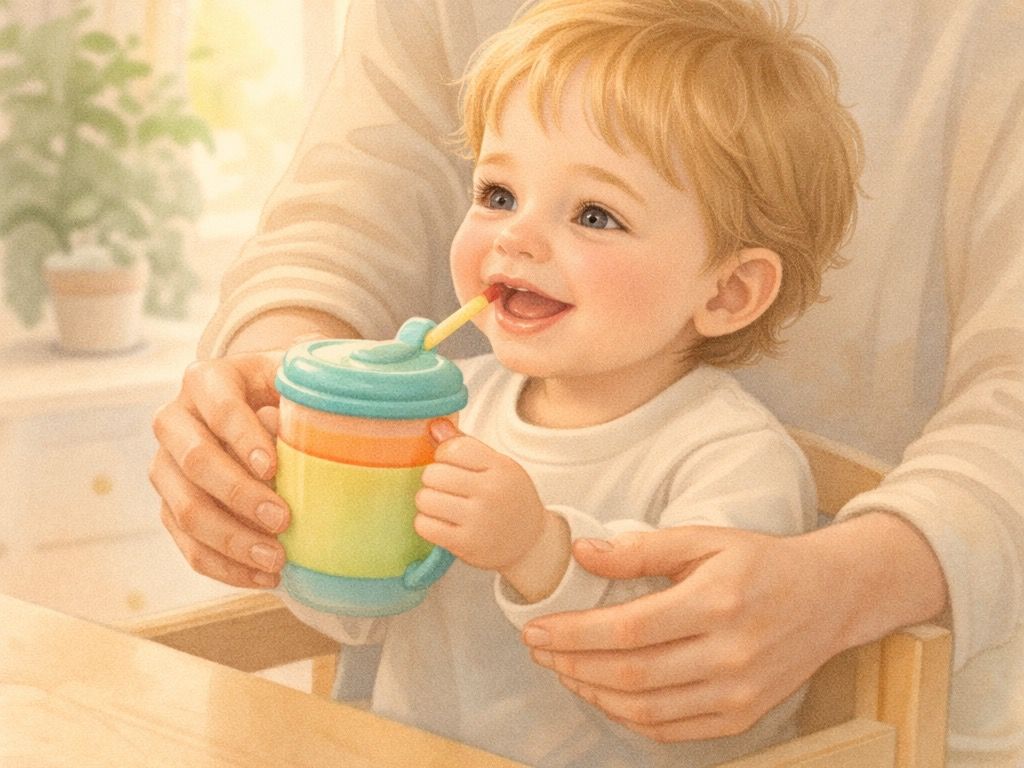
Stop Trying to Remember Feed Times
Get Started FreeWhen your baby turns 6 months old, it is time to start cup training alongside solid foods. Transitioning from a bottle to a cup is not just about switching vessels -- it is a crucial developmental milestone that directly impacts your baby's oral development, dental health, and even speech development. This comprehensive guide covers everything from cup type comparisons to age-by-age training steps and proven bottle weaning strategies.
Why Cup Transition Matters
Prolonged bottle use can lead to several problems for your baby.
Dental Health Concerns
- Bottle feeding exposes teeth to lactose (milk sugar) for extended periods
- This is a leading cause of baby bottle tooth decay (early childhood caries)
- The American Academy of Pediatric Dentistry(AAPD) recommends stopping bottles by 12-15 months
Oral Development Impact
- Bottle nipples keep the tongue in a forward, immature suckle pattern
- Extended use can contribute to malocclusion (bite misalignment) and jaw development issues
Connection to Speech Development
- Cup drinking exercises the lips, tongue, and cheek muscles evenly
- Open cups and straw cups promote a mature swallowing pattern that supports speech development
When to Start Cup Training
Six months is the ideal time to begin cup training. Introducing a cup alongside solid foods creates a natural, seamless transition.
Signs Your Baby Is Ready
- Can sit upright with support or independently
- Grasps objects and brings them to their mouth
- Has started eating solid foods with a spoon
- Shows interest in your cup or water bottle
Recommended Timeline
- 6 months: Introduce an open cup (parent-assisted)
- 6-9 months: Begin straw cup practice
- 9-12 months: Encourage self-held cup drinking
- 12-15 months: Gradually reduce bottle feedings
- 15-18 months: Complete bottle graduation
Cup Types: A Detailed Comparison
There are four main types of baby cups. Understanding each one helps you make the best choice for your child.
| Cup Type | Best Age | Pros | Cons | Expert Rating |
|---|---|---|---|---|
| Open Cup | 6 months+ | Most natural swallow pattern, best for oral development | Spilling is inevitable, needs parent help | ★★★★★ |
| Straw Cup | 6-9 months+ | Strengthens lip, tongue & cheek muscles; portable | Straw cleaning can be tedious | ★★★★★ |
| Sippy Cup | 6 months+ | Spill-proof, easy transition step | Maintains immature suckle pattern like a bottle | ★★★☆☆ |
| 360 Cup | 6 months+ | Spill-proof, looks like an open cup | Requires strong suction, unnatural tongue position | ★★☆☆☆ |

Cup Types: In-Depth Guide
Open Cup
- The most natural way for humans to drink liquids
- Teaches the lips to seal around the rim, developing a mature swallow pattern
- Start with small amounts of water (15-30ml / 0.5-1 oz) and gradually increase
- A parent holds the cup at first; the baby progressively takes over
- Choose a small, lightweight cup that fits little hands
Straw Cup
- The sucking motion strengthens lip, tongue, and cheek muscles
- These same muscles play a crucial role in speech development later on
- Begin with a short, soft silicone straw
- Dip the straw in water and place it in your baby's mouth so they learn that sucking produces liquid
Sippy Cup
- Features a hard spout with a lid to prevent spills
- However, the rigid spout keeps the tongue in a forward, immature position similar to bottle feeding
- If you use one, choose a valve-free version
- Limit to a transitional tool rather than a long-term solution
360 Cup
- Appears convenient because the baby can drink from any edge
- However, it requires the baby to press down hard with the upper lip, causing excessive facial muscle activation
- The head-tilt-back motion differs from a natural swallowing pattern
- Best reserved for occasional on-the-go use only
Step-by-Step Cup Training by Age
6 Months: First Introduction
Goal: Get familiar with the cup as an object
- Offer a small amount of water (15-30ml / 0.5-1 oz) in an open cup during mealtimes
- Hold the cup for your baby and gently tilt it to their lips
- Spilling is completely normal -- use a waterproof bib and mat
- Practice 1-2 times per day for just 1-2 minutes
- If your baby refuses, stay calm and try again another day
9 Months: Active Practice
Goal: Practice both straw cup and open cup skills
- Begin straw cup training in earnest
- Dip the straw in liquid and place it in your baby's mouth to trigger the suck reflex
- Encourage your baby to hold the open cup independently
- Offer a cup during snack times to increase practice opportunities
- Replace one daytime bottle feeding with a cup
12 Months: Accelerating the Transition
Goal: Reduce daytime bottle use significantly
- Switch all daytime feedings to cups
- Always provide a cup alongside meals
- Let your baby practice holding and drinking from the cup independently
- Limit bottles to bedtime feeding only
- Offer various liquids (water, breast milk, formula) in cups
15 Months and Beyond: Bottle Graduation
Goal: Fully wean from the bottle
- Eliminate the bedtime bottle
- Create a new bedtime routine without the bottle (books, songs, cuddling)
- Serve all beverages in cups
- Celebrate your baby's progress with praise and encouragement
Common Challenges and Solutions
"My baby throws the cup!"
- This is a normal developmental behavior -- babies learn cause and effect by dropping objects
- Try suction-base cups or cups with a tether strap
- Calmly say "Cups are for drinking" and place it back
"Water goes everywhere!"
- Spilling is expected in the beginning. Use waterproof bibs and a splash mat
- Put only a small amount of liquid in the cup to minimize mess
- Practice right before bath time so spills do not matter
"My baby just chews the straw!"
- Try a slightly firmer straw instead of a very soft silicone one
- Dip the straw in liquid and place it in their mouth to trigger sucking
- Gently squeeze a juice box to show the baby that liquid comes through the straw
"My baby refuses anything but the bottle!"
- Put your baby's favorite drink in the cup
- Model cup drinking yourself -- babies love to imitate parents
- Gradually reduce the number of daily bottle feedings
"I cannot drop the bedtime bottle!"
- Gradually dilute the bedtime bottle formula until it is just water
- Replace the bottle with a new bedtime routine (warm milk in a cup, then brush teeth, then a story)
- Take a gradual approach over 1-2 weeks rather than stopping cold turkey
Bottle Weaning: A Practical Strategy
A step-by-step approach works better than quitting the bottle all at once.
Step 1: Daytime Transition (around 12 months)
- Start by replacing the feeding your baby cares about least with a cup
- Lunchtime is usually the easiest to switch first
- Replace one bottle every 3-5 days
Step 2: Morning Bottle Transition
- Replace the wake-up bottle with a cup of warm milk
- Serving it alongside breakfast makes the transition feel natural
Step 3: Bedtime Bottle Transition (the hardest step)
- Save this one for last
- Create a brand-new bedtime routine to replace the bottle
- Warm milk in a cup, then toothbrushing, then a story and lights out
Cup Selection Checklist
Here is what to look for when choosing your baby's cup:
- BPA-free materials are a must
- Appropriate size and weight for your baby's hands
- Two-handle design makes it easier for small hands to grip
- Easy to clean and disassemble (check for mold-prone crevices)
- A lid option for portability and spill control
- Silicone straws are gentle on developing gums
- Start with a small capacity (under 150ml / 5 oz) to reduce spill volume
Track Your Cup Transition with BebeSnap
Systematically recording your cup training journey helps you identify your baby's unique transition patterns. BebeSnap makes this easy!
- Feeding Records: Log bottle, breast, and cup feedings separately to see the transition unfold
- Volume Tracking: Watch bottle volumes decrease and cup volumes increase over time
- AI Chatbot: Get instant answers to your cup training questions from the AI assistant
- Growth Tracking: Monitor feeding pattern changes alongside your baby's overall development
Frequently Asked Questions (FAQ)
Q: When should I start cup training?
A: Six months is the ideal time. Introduce an open cup with parental assistance alongside solid foods for a natural transition. Your baby is ready if they can sit up with support, grasp objects and bring them to their mouth, and have started eating solids with a spoon.
Q: By what age should my baby give up the bottle?
A: The AAP recommends fully weaning from the bottle by 12-18 months, and the AAPD recommends stopping bottles by 12-15 months. Prolonged bottle use can lead to baby bottle tooth decay and bite misalignment, which is why the timeline matters.
Q: Which cup type is best?
A: Speech therapists and feeding specialists recommend open cups and straw cups most, because they support the most natural swallow pattern and develop the lip, tongue, and cheek muscles. Sippy cups and 360 cups maintain an immature suckle pattern similar to a bottle, so use them only as backup for on-the-go situations.
Q: How do I drop the bedtime bottle?
A: The bedtime bottle is the hardest step, so save it for last. Gradually dilute the formula until it is just water, and create a new bedtime routine -- warm milk in a cup, then brushing teeth and a story. Take a gradual approach over 1-2 weeks rather than stopping cold turkey.
References
- AAP HealthyChildren - From Bottle to Cup
- AAP - Weaning From the Bottle
- Cleveland Clinic - When and How To Wean Your Baby Off the Bottle
- Speech Sisters - The Ultimate Guide to Transitioning From a Bottle to a Cup
- Feeding Littles - The Ultimate Guide to Cup Drinking
- North Valley Pediatric Therapy - The 360 Cup: the Good, the Bad and the Ugly
Stop Trying to Remember Feed Times
Log time, amount, and intervals. BebeSnap turns them into your baby's daily pattern.
See what the app does firstMedical Disclaimer: This article is for informational purposes only and does not replace professional medical advice. If you have concerns about your baby's health, please consult a pediatrician.
You Might Also Like
Wonder Weeks Calculator: Your Baby's 10 Mental Leaps From the Due Date
Baby Weight Gain Calculator: Grams Per Day From Two Weigh-Ins
Baby Impetigo: Golden Crusts, Antibiotic Treatment, and When Nursery Is Safe Again
Baby Mouth Sores (Stomatitis): Causes, How to Tell Them Apart, and Dehydration Signs
You Might Also Like
Tomato for Babies: When to Start, Skin and Seeds, and Why Cherry Tomatoes Are Never Served Whole
Tomato can start at 5-6 months once the skin and seeds are removed and it is cooked. Portions run 20-30g at 7-8 months and 30-40g at 9-11 months, counted together with fruit. Cherry tomatoes are the one vegetable Japan's childcare guidance names by name as something not to serve whole.
When Can Babies Have Yogurt & Cheese? | Starting Dairy Foods Safely
Plain yogurt and low-salt cheese can start around 7-8 months: 50-70g at 7-8 months, 80g at 9-11 months. But cow's milk as a drink waits until 12 months.
When Can Babies Drink Water? Safe Hydration Guide by Age
Babies can start drinking water at 6 months; the AAP suggests about 4-8 oz (120-240 ml) a day until age 1. Before 6 months, water poses a water intoxication risk. Learn safe water types, age-appropriate amounts, cup introduction tips, and dehydration warning signs.