Baby-Proofing Your Home: Room-by-Room Safety Checklist Before Baby Starts Crawling
All Your Baby Records in One App
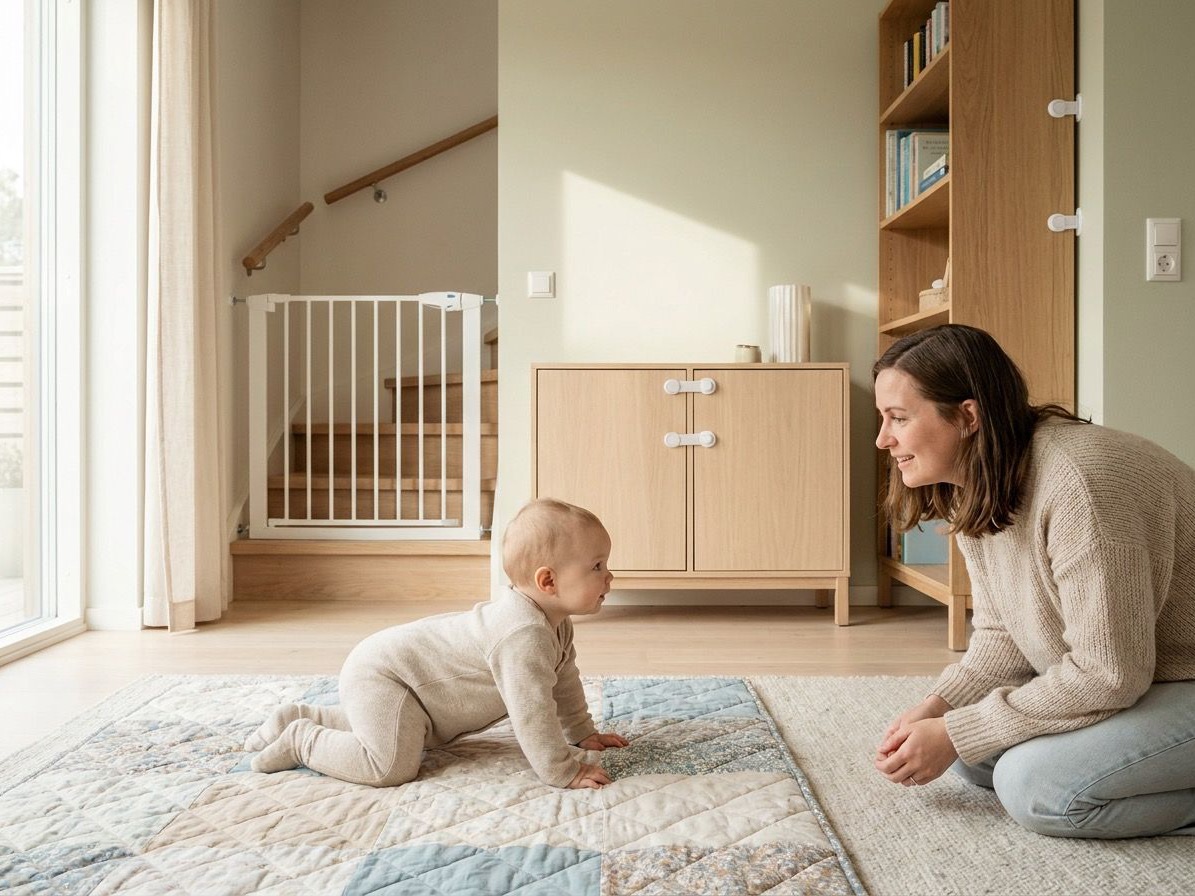
Get Started FreeOnce your baby starts crawling, your home transforms from a safe haven into an obstacle course of hidden dangers. One moment they are lying peacefully on a play mat, and the next they are pulling themselves toward an uncovered electrical outlet or reaching for the edge of a hot coffee mug. In the United States, at least one child an hour is rushed to the emergency room after a piece of furniture or a TV tips over, according to the American Academy of Pediatrics (AAP). The encouraging news? An anti-tip device takes just minutes to install. This comprehensive guide walks you through a room-by-room baby-proofing checklist, age-based safety milestones, and essential emergency tips to keep your little explorer safe.
Why Baby-Proofing Is Essential
Babies are naturally curious and completely unaware of danger. They will grab, pull, mouth, and climb anything within reach, and their developing motor skills often outpace their ability to judge risk. Falls are the number one cause of pediatric ER visits, and household poisoning calls to poison control centers exceed 2 million annually in the U.S.
💡 Start baby-proofing at 4 to 6 months, when your baby begins rolling over. By the time crawling starts (6 to 8 months), it may already be too late to catch every hazard. Get on your hands and knees and see the world from your baby's perspective; you will spot dangers you never noticed before.When to start baby-proofing by developmental stage:
- 4 to 6 months: Rolling begins, basic safety review
- 6 to 8 months: Crawling starts, full baby-proofing needed
- 9 to 12 months: Pulling to stand, cruising, higher-level hazards
- 12 to 18 months: Walking and running, doors, stairs, and furniture need re-checking
Living Room and Bedroom Safety Checklist
The living room is where families spend the most time and where the majority of household injuries occur for young children.
| Hazard | Risk | Solution |
|---|---|---|
| Electrical outlets | Electrocution | Install outlet covers or sliding plate covers |
| Table and furniture corners | Bruises, cuts from impact | Attach silicone corner protectors |
| TV and heavy appliances | Tip-over injuries | Secure with wall anchors or anti-tip straps |
| Blind cords | Strangulation | Switch to cordless blinds or use cord cleats |
| Small objects on the floor (coins, buttons, button batteries, magnets) | Choking; swallowed batteries and magnets can cause severe internal injury | Remove anything small enough to fit in your child's mouth (under about 4 cm, or 1.6 in, across) and keep batteries and magnets out of reach |
| Windows | Fall risk | Install window guards or stops (max 10 cm opening) |
Additional tips:
- Keep cords from lamps, chargers, and electronics bundled and out of reach
- Place houseplants out of reach as many common varieties are toxic if ingested
- Secure heavy bookcases and dressers to the wall, even in bedrooms
Kitchen Safety Checklist
The kitchen combines hot surfaces, sharp objects, and toxic substances, making it one of the most dangerous rooms for babies and toddlers.
| Hazard | Risk | Solution |
|---|---|---|
| Lower cabinets and drawers | Access to cleaners and knives | Install magnetic or adhesive child-safety locks |
| Stove and oven | Burns, fire | Use stove knob covers and a stove guard; turn pot handles inward |
| Cleaning products and detergents | Poisoning, chemical burns | Store up high or in locked cabinets |
| Knives, scissors, forks | Cuts, punctures | Keep in locked or latched drawers |
| Refrigerator | Finger pinching in door | Install a refrigerator door lock |
| Trash can | Contact with hazardous waste, choking | Use a locking trash can or store inside a locked cabinet |

Bathroom Safety Checklist
Water and slippery surfaces make the bathroom a high-risk zone for babies and toddlers.
| Hazard | Risk | Solution |
|---|---|---|
| Bathtub and floor | Slipping, drowning | Use non-slip mats; never leave baby unattended |
| Water temperature | Scalding from hot tap water | Set water heater to 48°C (120°F) or below; use a bath thermometer |
| Medications and cosmetics | Poisoning | Store in a locked medicine cabinet |
| Toilet | Drowning, falling in | Install a toilet lock |
| Electrical appliances (hair dryer, etc.) | Electrocution | Unplug after every use; store away from water |
Stairs and Entryway Safety Checklist
Stairs are the leading location for childhood fall injuries. Babies who learn to crawl up stairs cannot yet figure out how to come down safely, which makes stairways extremely dangerous.
Essential safety measures:
- Install baby gates at both the top and bottom of every staircase
- At the top of stairs, use only hardware-mounted gates (pressure-mounted gates can be pushed over)
- Gate slat spacing must be 7.5 cm (3 inches) or less to prevent head entrapment
- Install double locks on exterior doors
- Secure shoe racks, umbrella stands, and other items that can tip over
Door safety:
- Install finger-pinch guards on the hinge side of doors
- Use door stoppers to prevent doors from slamming shut in drafts
- Ensure your child cannot lock themselves inside a room
Firearm safety (U.S.-specific):
- If you own firearms, store them unloaded in a locked safe, with ammunition stored separately
- Always verify gun storage safety when visiting other homes with your child
Furniture and Appliance Safety
Heavy furniture and appliances tipping over can cause life-threatening injuries. According to the CPSC, approximately 15,000 children are treated in U.S. emergency rooms every year for furniture and TV tip-over injuries.
Preventing tip-overs:
- Anchor all bookshelves, dressers, and TV stands to the wall using L-brackets or anti-tip straps
- Mount TVs on the wall whenever possible, or secure with a dedicated TV safety strap
- Install drawer locks because babies will pull out drawers and use them as steps to climb
- Do not place heavy objects (vases, clocks, picture frames) on top of tall furniture
Appliance safety:
- Bundle and conceal all cords and charging cables behind furniture or inside cord covers
- Place humidifiers and air purifiers on elevated surfaces out of reach
- Use fans with fine-mesh covers to prevent finger injuries
- Activate the hot water lock on water dispensers
Age-Based Safety Risk Checkpoints
Your baby's safety risks evolve with each developmental milestone. Staying one step ahead of your baby's development is the key to effective childproofing.
| Age | Developmental Milestone | Primary Risks | Key Safety Actions |
|---|---|---|---|
| 6 months | Rolling, sitting up | Falls from beds, swallowing small objects | Check crib rails, clear small items from floor |
| 9 months | Crawling, pulling to stand | Outlets, corners, drawers, stairs | Outlet covers, corner guards, baby gates |
| 12 months | Cruising, first steps | Items on tables, hot foods, door pinching | Clear table edges, install door guards |
| 18 months | Walking, running, climbing | Furniture tip-overs, window falls, access to chemicals | Re-check anchors, window locks, medicine locks |
Essential Safety Products: Top 5
These are the must-have baby-proofing products that every home with a crawler needs.
| Rank | Product | Purpose | Price Range (USD) |
|---|---|---|---|
| 1 | Baby gate | Block access to stairs, kitchen, bathroom | $25 - $70 |
| 2 | Outlet covers | Prevent electrocution | $5 - $10 |
| 3 | Corner protectors | Cushion table and furniture edges | $5 - $15 |
| 4 | Furniture anchors (L-brackets) | Prevent tip-overs of dressers and TVs | $5 - $10 |
| 5 | Cabinet and drawer locks | Block access to chemicals and sharp objects | $5 - $15 |
What to Do in an Emergency
Even with thorough baby-proofing, accidents can still happen. Knowing basic first aid can make a critical difference in those first few minutes.
⚠️ In any emergency, call 911 immediately. First aid is a temporary measure until professional help arrives. We strongly recommend all parents and caregivers take an infant CPR certification course.Burns:
- Cool the burn under cool running water for 10 to 20 minutes
- Do not apply ice directly (risk of frostbite)
- Do not pop blisters; seek medical attention
- Call 911 for burns larger than the baby's palm or that look deep, and for any burn on the face, genitals, or bottom or caused by electricity or chemicals (including detergent), even a small one
Falls:
- Do not move the baby; check for consciousness
- If vomiting, turn baby on their side (to protect the airway)
- Within 24 hours of a head injury, get medical care right away for vomiting, and call 911 at once for a seizure or decreased consciousness
Choking and swallowed objects:
- If the baby is conscious and coughing, encourage coughing
- If they can't cough, cry, or breathe, shout for help and have someone call 911 right away. Under 1 year, give 5 back blows + 5 chest thrusts; from 1 year, give 5 back blows + 5 abdominal thrusts. Repeat until the object comes out
- If unconscious: call 911 immediately (if no one has yet) and begin CPR
Poisoning:
- Call Poison Control at 1-800-222-1222 (U.S.) or 911 immediately
- Do not induce vomiting (risk of secondary injury)
- Bring the container of the ingested substance to the hospital
Swallowed button batteries or magnets:
- If you think your child swallowed a button battery, go to the emergency room right away, even if they seem fine. It can cause severe burns inside the body within 2 hours
- If you think your child swallowed a magnet, contact your pediatrician or the nearest emergency department right away
👉 Baby Choking First Aid and CPR Guide
Related Articles
- 👉 SIDS Prevention: Safe Sleep Guide
- 👉 Baby 7-8 Month Development Guide
- 👉 Baby Walking Development Guide
- 👉 Newborn Bath Guide
Track Development and Stay Ahead with BebeSnap
Understanding your baby's developmental stage is the key to timely baby-proofing. BebeSnap helps you monitor milestones so you can prepare for each new safety challenge before it arrives.
- Developmental Milestone Tracking: Record rolling, crawling, walking, and other gross motor milestones to know exactly when to upgrade your safety measures
- AI Health Consultation: Ask our AI chatbot any questions about baby safety and development, anytime
- All-in-One Parenting: Track growth, feeding, sleep, and diapers in a single app
Frequently Asked Questions
Q: When should I start baby-proofing?
A: Begin basic safety checks at 4 to 6 months when your baby starts rolling. Aim to have full baby-proofing in place by 6 to 8 months, before crawling begins. It is always better to be early than too late.
Q: What are the must-have safety products?
A: At a minimum, you need baby gates, outlet covers, corner protectors, furniture anchors, and cabinet locks. These five essentials cost roughly $50 to $120 combined and can prevent the majority of household accidents.
Q: Can I baby-proof a rental apartment?
A: Absolutely. Adhesive outlet covers, stick-on corner guards, and pressure-mounted baby gates (for the bottom of stairs) require no drilling. For furniture anchors and top-of-stairs gates that need wall mounting, talk to your landlord since most will allow small holes for child safety.
Q: What is the most dangerous room in the house?
A: Statistically, the living room (falls and collisions) and kitchen (burns and poisoning) are the highest risk areas. The bathroom (slipping and drowning) and stairs (falls) also require special attention. In homes with pools, the pool area is the leading cause of drowning for children under 5, so install a fence with a self-closing, self-latching gate.
References
- CPSC - Childproofing Your Home
- AAP HealthyChildren - Childproofing Your Home
- AAP HealthyChildren - Button and Lithium Coin Batteries
- NHS - How to Stop a Child from Choking
- NHS - Burns and Scalds
- CDC - Child Injury Prevention
- National Safety Council - Childproofing
- Poison Control Center - 1-800-222-1222
All Your Baby Records in One App
Feeding, sleep, diapers, growth: every daily record in one place.
See what the app does firstYou Might Also Like
Tomato for Babies: When to Start, Skin and Seeds, and Why Cherry Tomatoes Are Never Served Whole
Apple for Babies: Stage-by-Stage Portions and When Raw Apple Is Safe
Spinach for Babies: When to Start, Why Boiling Matters, and the One Time to Skip It
Potato for Babies: When to Start, Safe Shapes, and Why Never to Blend It
You Might Also Like

Decoding Baby Cries: Reading Hunger, Sleepy, Discomfort, and Pain by Sound and Body Cues
Baby cries can be read through sound patterns and body cues. Here's how to tell hunger, sleepy, discomfort, and pain apart, the pre-cry signals, why crying peaks around 6 weeks, and 5 soothing moves.

Baby Reflux (GER vs GERD): Spit-Up vs Vomiting, Causes & Treatment Guide
67% of 4-month-olds experience reflux. Learn the difference between GER and GERD, when spit-up is normal vs concerning, and evidence-based remedies. 90% resolve by 12 months.
Baby Car Seat Guide: How to Choose the Safest Seat by Age and Type
Car seats reduce infant crash fatality risk by 71%. Compare infant-only, convertible, all-in-one, and booster types, plus rear-facing guidelines, ISOFIX/LATCH tips, and country-specific laws.