Baby Sleep Behaviors: Snoring, Sleep Talking & Night Terrors - When to Worry
See Your Baby's Sleep Pattern Emerge
Get Started FreeThere's nothing quite like the heart-stop moment when your baby suddenly snores like a freight train, mumbles something in their sleep, or bolts upright screaming in the middle of the night. Your first thought is always, "Is something wrong with my baby?" Take a breath, because you're far from alone. Noisy, odd sleep behaviors are incredibly common among babies and toddlers. And the great news is that most of it is just a normal part of growing up. A few things, like loud snoring with breathing pauses or night terrors, are worth a closer look. So let's go through the things your baby might do at night one by one, so you'll know exactly when to relax and when to call the doctor.
The Noises Babies Make at Night Are Usually Normal
Newborns and young babies are way louder sleepers than you'd ever expect. They make all kinds of startling sounds, and it's simply because their breathing and digestive systems are still under construction. They haven't learned to sleep quietly like grown-ups do yet.
The most common one is grunting. Their tummy muscles are still immature, so they grunt and strain when they poop, even though they're perfectly fine. The snuffly, congested sounds from their narrow little noses, the sighs and whimpers as they shift through sleep, all of that is completely natural too. You may also notice them take several quick breaths, pause for under 10 seconds, then start again. That's a normal part of their nervous system maturing, so try not to panic when you see it.
💡 Most of these sleep sounds fade on their own by 3 to 4 months. If your newborn seems alarmingly loud at night and you're thinking "is it really okay to sleep this noisily?", it usually is.Snoring: Can You Just Let It Be?
Snoring is one of the sounds that worries parents most. About 10-12% of children snore regularly, and in some of them it is tied to sleep apnea, where breathing briefly stops during sleep. So snoring on its own isn't always a problem, but understanding why it happens will put your mind at ease.
The most common cause is simple congestion. A cold, allergies, or dry air in the room can make your baby snore for a little while. For that temporary kind of stuffiness, our stuffy nose management guide can help you clear things up. A longer-lasting cause is enlarged tonsils and adenoids, which usually grow biggest between ages 2 and 6 and can narrow the airway enough to cause both snoring and sleep apnea. Beyond that, extra weight around the neck can narrow the airway, and allergic rhinitis, increasingly seen even in little ones, can be a culprit too.
Ordinary Snoring vs. Snoring to Watch
| Feature | Normal (Monitor) | Concerning (See a Doctor) |
|---|---|---|
| Frequency | Occasional, during colds | 3+ nights per week consistently |
| Volume | Soft, quiet congestion sounds | Loud enough to hear outside the room |
| Breathing pattern | Regular and steady | Pauses, gasping, or choking sounds |
| Sleep quality | Sleeps well, wakes refreshed | Restless, difficult to wake in morning |
| Daytime behavior | Normal activity level | Excessive sleepiness, irritability, mouth breathing |
So which kind of snoring is a red flag? Call your pediatrician or an ENT if you spot any of these. Moments where breathing seems to pause for 10 seconds or more, gasping or choking-type sounds, or the chest pulling inward with each breath. Sweating heavily through sleep, a potty-trained child suddenly wetting the bed again (which can signal serious airway blockage), or trouble waking in the morning paired with daytime drowsiness all belong on this list too.
💡 If your baby's snoring worries you, record a short video of them sleeping to show the doctor. It helps far more than describing it from memory.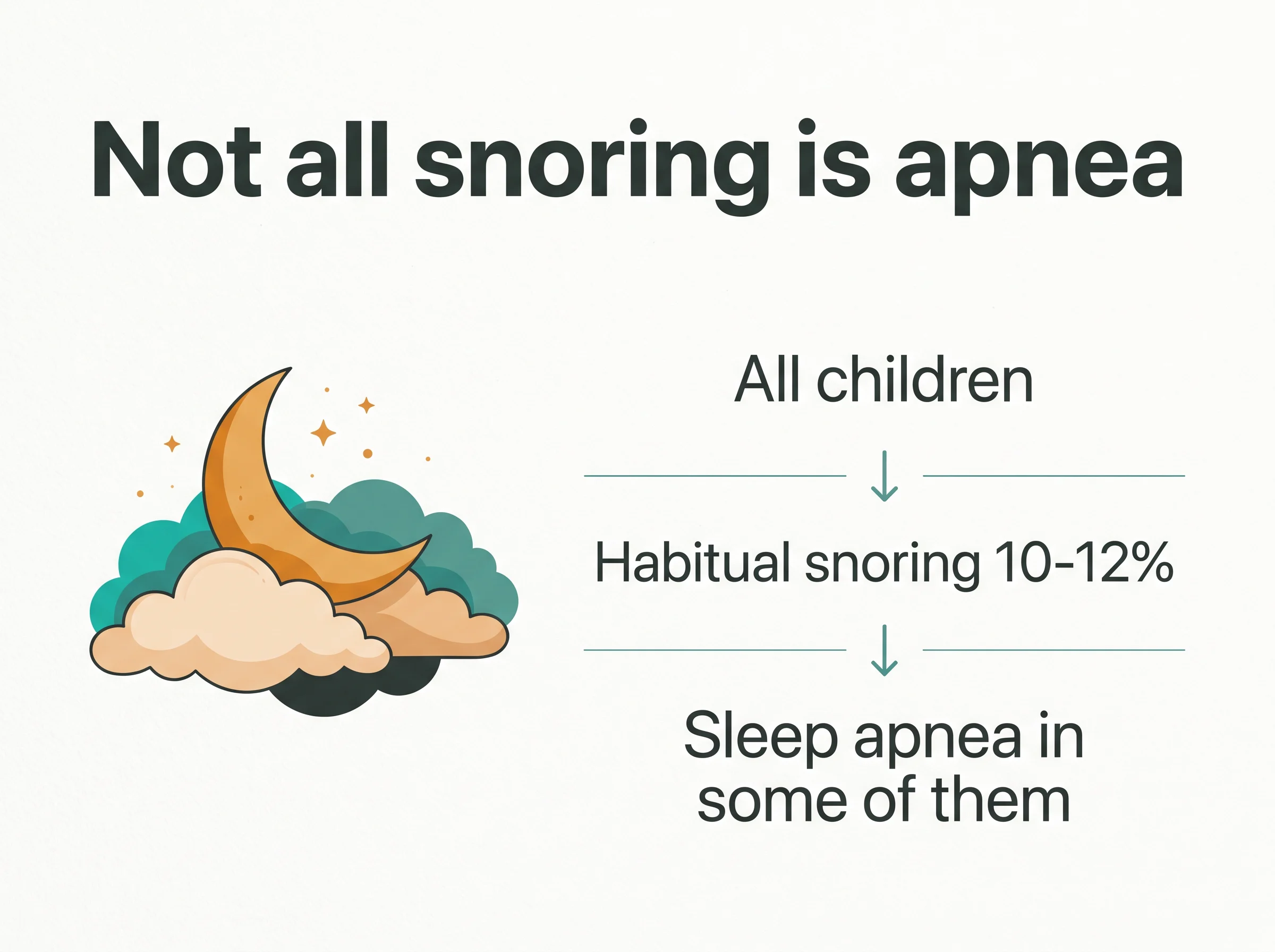
Sleep Talking and Giggling Are Just Fine
Catching your baby mumble something mid-sleep is equal parts adorable and slightly unsettling. But sleep talking is a totally natural part of a developing brain. It's very common in kids ages 2 to 12 and needs no treatment at all. Usually it's just a few seconds to about 30 seconds of babbling, it can happen at any stage of sleep, and your child won't remember a thing the next morning.
Some nights it ramps up more than others. Sleep talking tends to spike when your child is short on sleep or overtired, stressed or wound up, running a fever, or processing a day packed with new sights and sounds. So if it's been happening more lately, it's worth asking yourself whether your little one has been extra tired or overstimulated.
And that sweet little smile in their sleep? It melts you every time. It's a reflexive response during REM sleep, when dreaming happens, and it's especially common in newborns. It's actually a good sign that the brain is busy developing, so soak it up.
💡 That said, if sleep talking becomes very frequent alongside vigorous limb movements or snoring, check in with your pediatrician, it could point to an underlying sleep issue.Night Terrors Aren't the Same as Nightmares
Watching your child suddenly scream in panic during sleep is genuinely terrifying for a parent. That's a night terror. It usually strikes 2 to 3 hours after falling asleep, during deep (non-REM) sleep, shows up mostly between ages 2 and 12, and affects about 3-6% of kids. It can look a lot like a nightmare, but the two are actually quite different, so here's a table to sort out how.
How Night Terrors and Nightmares Differ
| Feature | Night Terrors | Nightmares |
|---|---|---|
| Timing | 2–3 hours after falling asleep (first half of the night) | Early morning hours (second half of the night, during REM sleep) |
| Sleep stage | Non-REM (deep sleep) | REM (dream sleep) |
| Child's state | Eyes may be open, but the child is not truly awake | Fully wakes up |
| Response to comfort | Does not recognize parents; cannot be consoled | Seeks comfort from parents and responds to soothing |
| Memory | No memory of the episode the next day | Can recall the scary dream |
| Duration | 5–30 minutes | Ends once the child wakes up |
| Physical symptoms | Dilated pupils, sweating, rapid heartbeat | Mild pounding heart |

What to Do During a Night Terror
When a night terror is in full swing, safety comes first. Clear away anything nearby your child could thrash into and hurt themselves on. Then, rather than trying to wake them, just quietly keep watch. Most episodes wind down in 5 to 30 minutes and your child drifts back to sleep on their own. Sitting close and murmuring a soft "you're okay" is all that's needed. Keeping a steady sleep schedule and making sure they nap enough helps a lot too, because being short on sleep is the single biggest trigger for night terrors.
There are also a few things to avoid. Don't force them awake by shaking them, it can actually make things worse. Don't shout or grab at them either. And don't quiz them about it the next morning, asking about something they can't even remember just stirs up needless worry.
💡 Night terrors almost always disappear on their own before puberty. But see your pediatrician if they happen more than twice a week, run longer than 10 minutes, or start affecting your child's daytime life.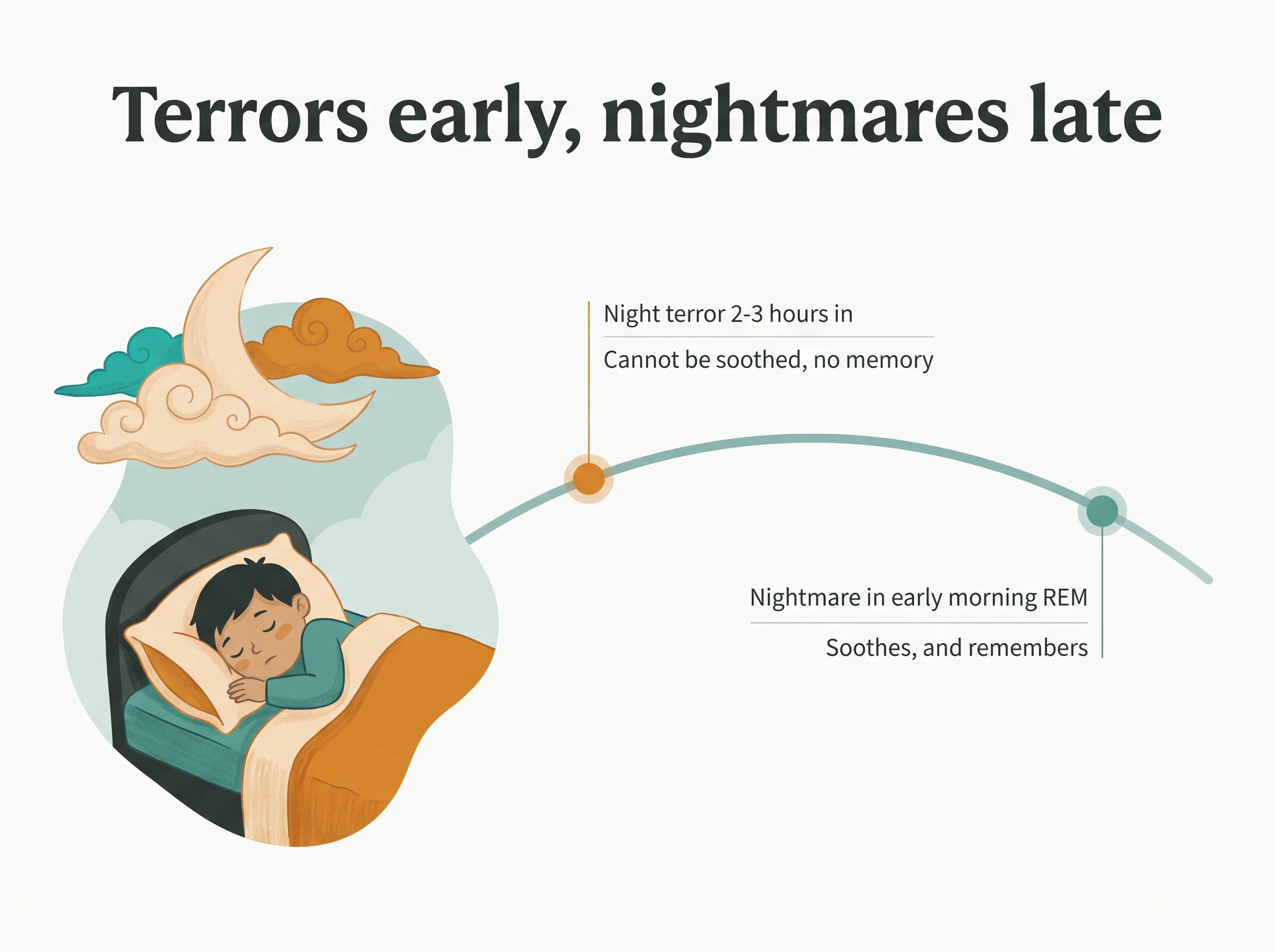
All the Ways Babies Move in Their Sleep
When They Shake or Bang Their Head
It's startling to see your baby shake their head side to side or bonk it rhythmically against the mattress before or during sleep. But this is more common than you'd think, it's a self-soothing habit, a way babies rock themselves to sleep. About 60% of infants do something like this by around 9 months. Head banging typically starts around 9 months, body rocking around 6 months, and most kids naturally grow out of it by age 3 to 4, so try not to worry.
That said, if they bang hard enough to bruise or hurt themselves, if it keeps going past age 3 to 4, or if you see similar repetitive movements during the day too, it's worth having a doctor take a look.
When They Jerk Their Arms and Legs
You may also catch your newborn suddenly jerking or twitching their limbs in their sleep. This has an intimidating name, benign neonatal sleep myoclonus, but it's almost always harmless. It only happens during sleep and stops the instant you wake them. The arms, legs, or torso jerk quickly and repeatedly, but unlike a seizure, there's no change in consciousness. It usually fades away by about 6 months of age.
💡 This twitching never happens while your baby is awake. If it shows up during waking hours, lasts more than 5 minutes during sleep, or appears on only one side of the body, call your pediatrician right away. If it doesn't stop even when you wake your baby, it may be a seizure: call 911 right away.When They Grind Their Teeth
Teeth grinding during sleep is common between 6 months and 3 years, right when teeth are coming in. Most of the time it resolves as your child grows, but if it's severe and lingers, a dental consult is worth considering.
When Their Breathing Seems Off in Sleep
It's normal for a newborn to take a few quick breaths, pause for under 10 seconds, then start again. This is just their still-developing breathing center finding its rhythm, and it usually settles down by 3 to 6 months. So this particular pattern isn't cause for alarm.
If you hear a high-pitched, squeaky, or rattling sound when your baby breathes, it could be laryngomalacia. The baby's voice box is still soft, so a bit of tissue gets drawn inward with each breath and makes the sound. It's the most common congenital larynx trait in infants. It usually improves by 12 to 18 months, but if your baby is struggling to feed or not gaining weight well, get it checked.
⚠️ The following are emergencies. If breathing pauses for 15 to 20 seconds or more, if the skin or lips turn blue (cyanosis), if the nostrils flare with each breath, if the spaces between the ribs pull inward, or if there's grunting with every single breath (not just now and then), go to the ER right away. In the US, call 911.Warning Signs at a Glance
Out of everything we've covered, here are the signs that truly need medical attention. First, the ones that mean calling 911 right away, even in the middle of the night: breathing that stops for 15 seconds or more, lips or skin turning blue, the chest caving in with each breath, or any struggle to breathe like flaring nostrils and worsening grunting.
Then there are the ones that aren't emergencies but deserve an appointment soon. Habitual snoring 3 or more nights a week, snoring paired with breathing pauses or gasping, night terrors happening more than twice a week or lasting over 10 minutes, or sleep talking with violent limb movements. Injuries from head banging, twitching movements while awake, extreme trouble waking with daytime sleepiness, or new or worsening bed-wetting all belong here too.
💡 Whenever something about your baby's sleep worries you, record a video. Showing the footage in the exam room helps your doctor judge far more accurately than memory ever could.Track Sleep Patterns with BebeSnap
To really get a handle on your baby's unusual sleep behaviors, the key is tracking them consistently. It's hard to keep it all straight in your head, but a quick note in the BebeSnap app makes the patterns jump right out.
- Sleep logs: Record bedtime, wake time, and naps so you can tell at a glance whether sleep is running short
- Sleep notes: Jot down when snoring, sleep talking, or night terrors happen to spot the patterns
- AI chatbot: Ask about your baby's sleep behaviors anytime, 24/7
- Growth tracking: See how overall development ties in with sleep patterns
- Pair it with our sleep environment optimization guide for the best results
Frequently Asked Questions (FAQ)
Q: My newborn grunts and makes noisy sounds while sleeping, is this normal?
A: Yes, it's normal. Newborns have immature respiratory and digestive systems, so they make various sounds like grunting, congestion noises, and whimpering. Most sleep sounds naturally decrease by 3 to 4 months of age.
Q: When should I see a doctor about my baby's snoring?
A: About 10-12% of children snore habitually, and some of them may have sleep apnea. See a pediatrician or ENT specialist if snoring persists 3+ nights per week, is loud enough to hear outside the room, or comes with breathing pauses of 10+ seconds or gasping sounds.
Q: How can I tell the difference between night terrors and nightmares?
A: Night terrors occur 2-3 hours after falling asleep during non-REM sleep; the child doesn't recognize parents and has no memory of it the next day. Nightmares happen during early-morning REM sleep, the child fully wakes, and they can recall the scary dream. Night terrors affect about 3-6% of children and usually resolve before puberty.
Q: My baby bangs or rocks their head during sleep, is that okay?
A: This is a relatively common self-soothing behavior called Rhythmic Movement Disorder. About 60% of infants experience it by 9 months, and most outgrow it by age 3 to 4. However, see a doctor if the banging is forceful enough to cause bruising or injury, or if it persists beyond age 3 to 4.
References
- AAP HealthyChildren - Nightmares and Night Terrors
- Sleep Foundation - Snoring in Children
- Cleveland Clinic - Baby Grunting in Sleep
- Sleep Foundation - Benign Neonatal Sleep Myoclonus
- Nemours KidsHealth - Night Terrors
- Cleveland Clinic - Rhythmic Movement Disorder
- Stanford Children's Health - Nightmares and Night Terrors
- Lurie Children's Hospital - Snoring in Children
See Your Baby's Sleep Pattern Emerge
Track sleep and watch wake windows and night stretches appear as clear graphs.
See what the app does firstMedical Disclaimer: This article is for informational purposes only and does not replace professional medical advice. If you have concerns about your baby's health, please consult a pediatrician.
You Might Also Like
Wonder Weeks Calculator: Your Baby's 10 Mental Leaps From the Due Date
Baby Weight Gain Calculator: Grams Per Day From Two Weigh-Ins
Baby Impetigo: Golden Crusts, Antibiotic Treatment, and When Nursery Is Safe Again
Baby Mouth Sores (Stomatitis): Causes, How to Tell Them Apart, and Dehydration Signs
You Might Also Like
Baby Sleep While Traveling: Settling Them in a New Place and Resetting After
Worried a trip will wreck your baby's sleep? The first night is the hardest, and most babies reset within 3-7 days at home. What to pack, naps on the move, and safe sleep away.
Baby Sleep Environment Guide: Ideal Temperature, Humidity & Lighting
Baby tossing and turning at night? Learn AAP-recommended sleep settings: temperature (68-72°F), humidity (40-60%), and lighting tips.
Baby Wake Windows by Age: Complete Guide to Optimal Awake Time
Optimal baby wake windows range from 40-60 minutes for newborns to 3-4 hours at 12 months. Learn the complete wake window chart by age plus how to read sleepy cues.