When Can a Newborn Use a Pacifier? Sleep Time, SIDS, Falling Out and When to Stop
See Your Baby's Sleep Pattern Emerge
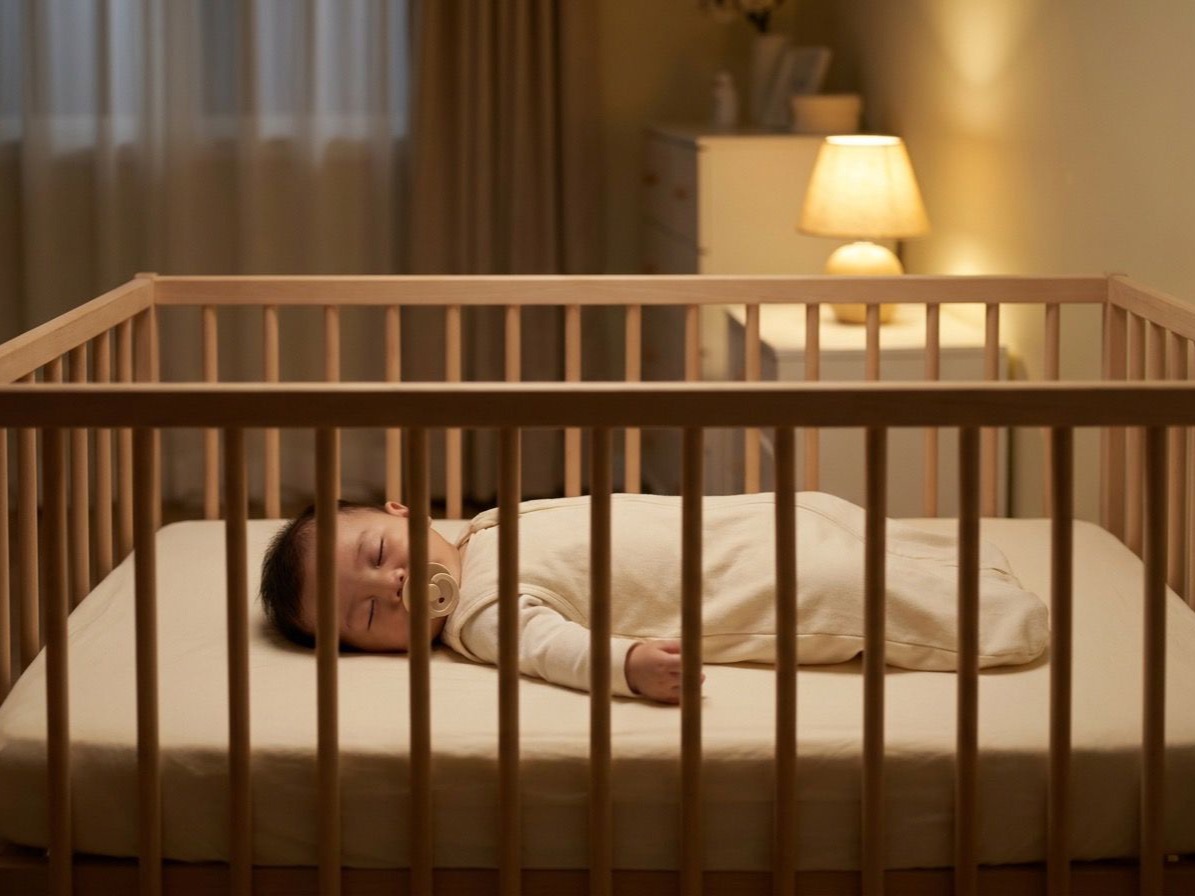
Get Started FreeWhen your baby wants to keep sucking long after a feed, a pacifier can help, and the best time to use one is sleep time. The American Academy of Pediatrics (AAP) recommends offering a pacifier at naps and bedtime because it helps lower the risk of sudden infant death syndrome (SIDS). Formula-fed babies can start right away; breastfed babies should wait until breastfeeding is going well, which usually takes 3 to 4 weeks. Below: what to do when it falls out, how to handle night waking, and when to stop.
💡 Offer the pacifier at naps and bedtime. Breastfed babies: wait until feeding is going well, usually 3 to 4 weeks. Formula-fed babies: anytime. If it falls out after your baby is asleep, you don't need to put it back, and never clip it to clothing or hang it around the neck (AAP).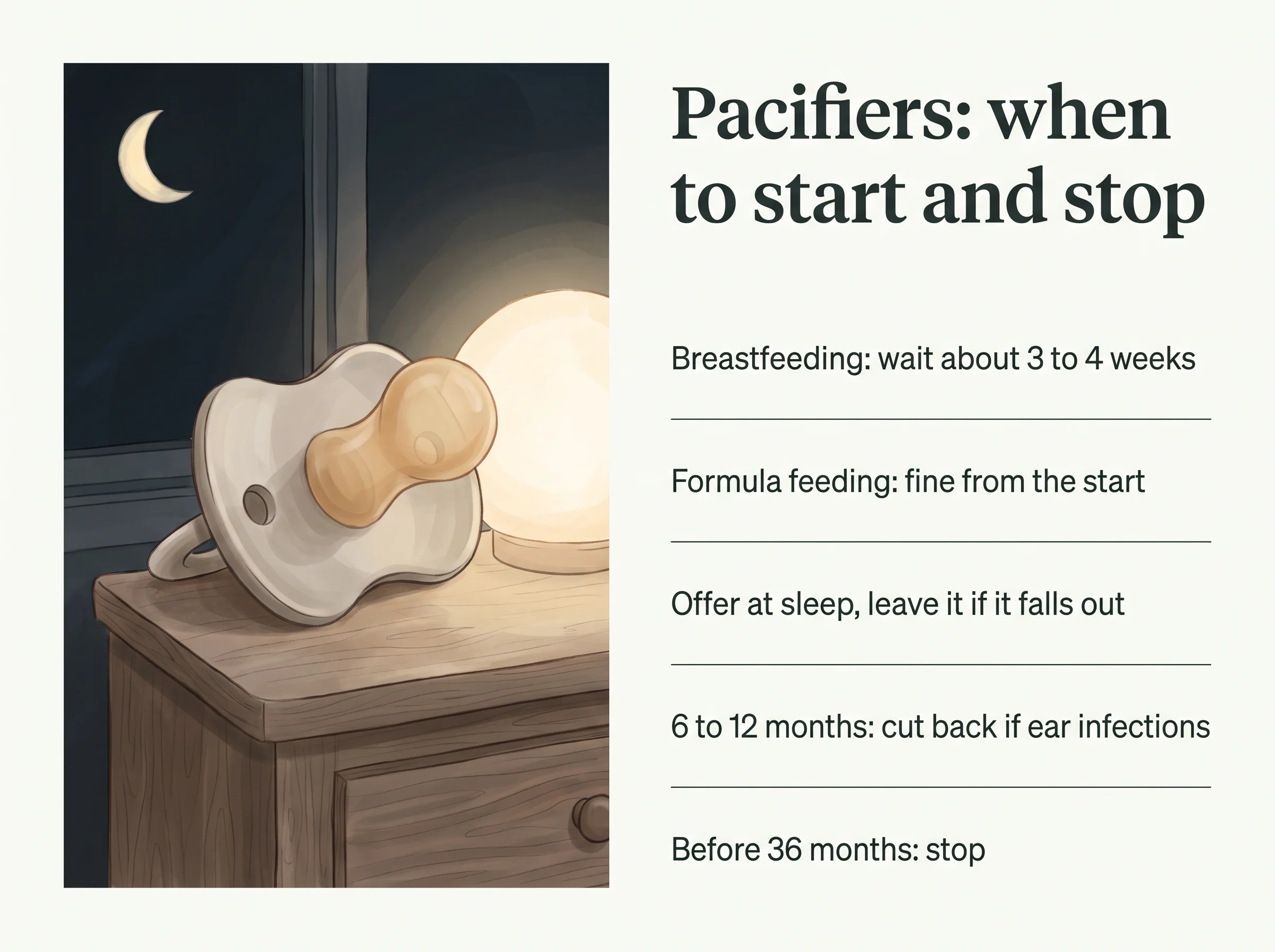
When Can a Newborn Have a Pacifier?
The AAP's advice depends on how you feed your baby. If you breastfeed, wait until breastfeeding is established: your milk supply is good, feeds are comfortable and consistent, your baby latches well and is gaining weight as expected. This usually takes about 3 to 4 weeks. If you formula-feed, you can start a pacifier whenever you like.
| Feeding | When to start |
|---|---|
| Breastfeeding | Once breastfeeding is going well, usually 3 to 4 weeks |
| Formula | Any time, even from the start |
If your baby gets both breast milk and formula, follow the breastfeeding advice.
Will a pacifier get in the way of breastfeeding?
Many parents worry about "nipple confusion." A 2016 systematic review cited by the American Academy of Pediatric Dentistry (AAPD) found that in healthy full-term babies, pacifier use did not change how many babies were breastfeeding, or for how long, up to 4 months of age, whether the pacifier was started at birth or after breastfeeding was established. The AAP still advises waiting until breastfeeding is going well. Never use a pacifier to replace or delay a feeding; offer it only when you are sure your baby is not hungry.
If your baby refuses it
Don't force it. You can offer it again later, but some babies simply don't like pacifiers, and that's fine (AAP).
Why Pacifiers Help at Sleep Time
The AAP recommends offering a pacifier at nap time and bedtime because it helps reduce the risk of SIDS, and the protection holds even if the pacifier falls out after your baby is asleep. The AAPD's 2024 pacifier policy points to the same recommendation and adds that a pacifier should not be forced on a baby who resists it.
Pacifiers have downsides too. The AAPD lists pacifier use as a risk factor for ear infections (otitis media). That is one more reason to treat the pacifier as a sleep-time tool rather than something to offer at every fuss.
If It Falls Out, Leave It
Once your baby is asleep, you don't have to put the pacifier back in if it slips out (AAP). Help your baby fall asleep with it, then let it go.
Night Waking and the Pacifier Run
Babies who rely on a pacifier to fall asleep may wake up when it falls out, the AAP notes. If your baby is too young to put it back in their own mouth, or can't find it, you may need to get up and help.
- Leave it out once your baby is asleep, and offer it again only if they wake and cry.
- Once babies can grab the pacifier and bring it to their mouth, they can start putting it back in themselves.
- In the first year, the pacifier at sleep helps protect against SIDS, so before taking it away altogether, try simply leaving it out after your baby falls asleep.
- If frequent night waking keeps going, look at how your baby falls asleep. See how to help your baby sleep through the night and sleep training methods compared.
Pacifier Safety for Sleep
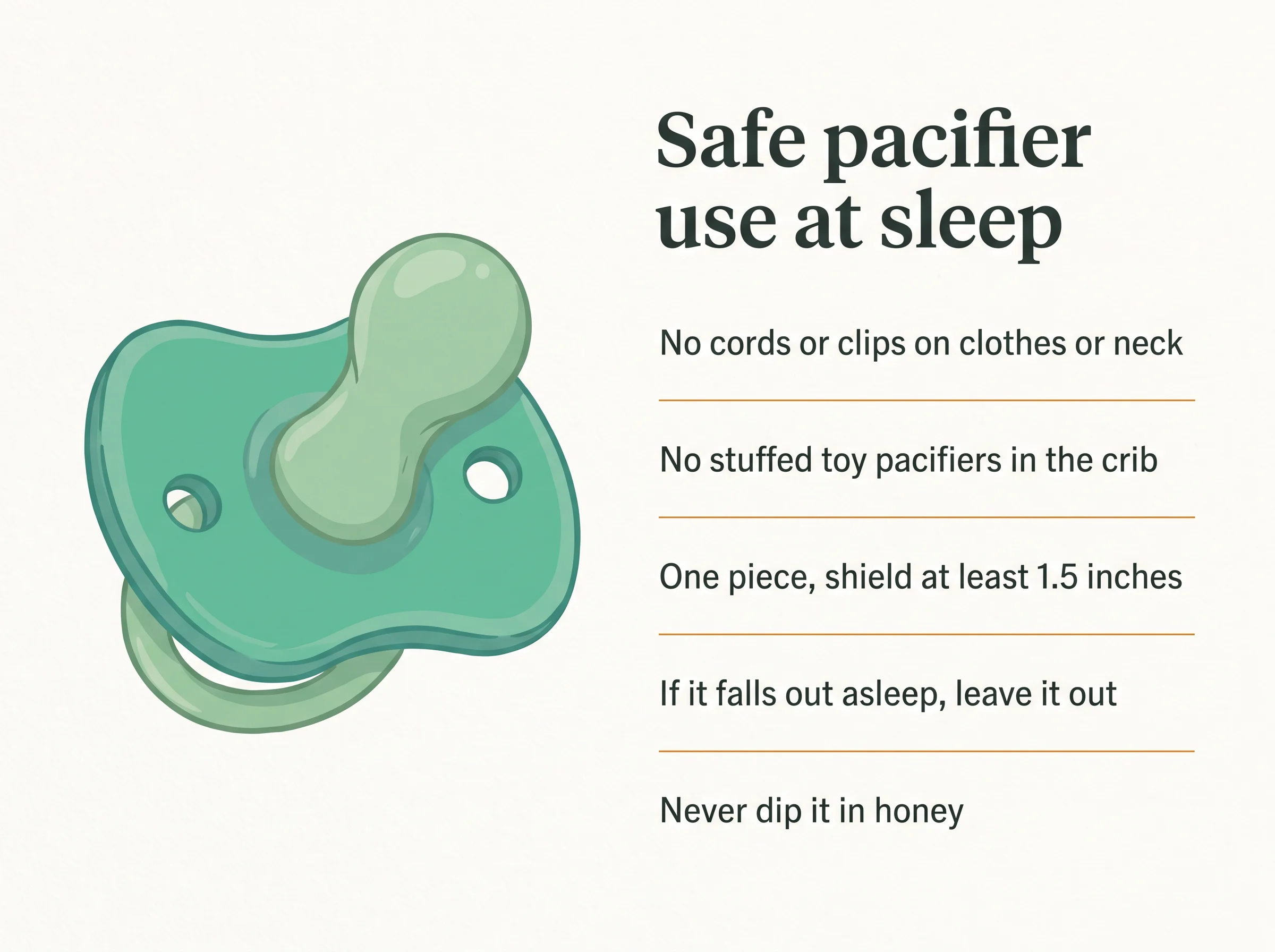
- Never attach it: Don't tie a pacifier to the crib or hang it around your baby's neck or hand; the AAP warns this can cause serious injury or even death. Don't clip it to clothing during sleep.
- No stuffed-toy pacifiers in the crib: Pacifiers attached to clothing, blankets or stuffed toys can be a suffocation or choking risk (AAP).
- One piece, big shield: Choose a one-piece pacifier with a soft nipple. The shield should be at least 1.5 inches (3.8 cm) across so your baby can't fit it all in their mouth, and made of firm plastic with air holes (AAP).
- No bottle nipples: A bottle nipple used as a pacifier can pop out of the ring and choke your baby.
- No honey: Don't give a pacifier that contains or is dipped in honey. Honey can carry spores of the bacteria that cause infant botulism, which can lead to breathing trouble, paralysis and even death (AAPD, citing the FDA).
- Clean it: Boil it or run it through the dishwasher before first use, and squeeze the hot water out of the nipple with clean hands. Clean it this way often until 6 months; after that, soap and water is enough (AAP). More in our bottle sterilization guide.
- Replace worn ones: If the rubber changes color or tears, replace it, and follow any expiration date. Keep a few spares, since pacifiers get lost.
Cutting Back During the Day
The AAPD calls pacifier use a risk factor for ear infections. Cutting back or stopping between 6 and 12 months of age may lower the chance of acute ear infections, and using a pacifier after 12 months can raise that risk. Worries about speech delay are not well supported by the evidence.
When to Stop: Aim for Before 36 Months
The AAPD recommends ending pacifier and other non-nutritive sucking habits by 36 months. Children who used a pacifier for 36 months or longer had much more anterior open bite, a gap between the upper and lower front teeth, and an open bite tends to improve once the pacifier stops before age 3. Because use beyond 18 months can start to affect the jaw and teeth, cutting back or stopping around 18 months, when the canine teeth come in, has also been recommended. The AAP adds that strong sucking beyond ages 2 to 4 may change the shape of the mouth and how the teeth line up.
Forcing a very early stop can backfire: it has been linked to longer finger-sucking (AAPD). Skip scolding, teasing and punishment; praise, star charts and small daily rewards work better (AAP).
| Age | Pacifier |
|---|---|
| First 3 to 4 weeks | Formula-fed: fine from the start. Breastfed: wait until feeding is going well |
| First year | Offer at naps and bedtime; leave it if it falls out |
| 6 to 12 months | Cut back if ear infections are frequent |
| Around 18 months | Start cutting back or stopping |
| Before 36 months | Stop |

For step-by-step weaning tips, see our thumb-sucking and pacifier weaning guide.
Track Night Sleep with BebeSnap
If you've decided to keep the pacifier for sleep, try logging how often your baby wakes at night. With the BebeSnap app you can record when your baby falls asleep and wakes up, and see how total sleep and night wakings change over time.
- Sleep log: Record sleep and wake times in a tap
- Sleep stats: Total daily sleep and the number of night wakings
- Family sharing: Everyone taking night shifts sees the same log
👉 Learn more about BebeSnap sleep tracking
Frequently Asked Questions (FAQ)
Q: When can a newborn start using a pacifier?
A: If your baby is formula-fed, you can start whenever you like. If you breastfeed, the AAP suggests waiting until breastfeeding is going well, which usually takes about 3 to 4 weeks: a good milk supply, comfortable feeds, a good latch and steady weight gain. If your baby refuses the pacifier, don't force it; simply try again later.
Q: Should I put the pacifier back in if it falls out while my baby sleeps?
A: No. The AAP says you don't have to put it back in once your baby is asleep, and the lower SIDS risk holds even if it falls out. If your baby wakes and cries, you can offer it again. Never clip it to clothing or hang it around your baby's neck during sleep.
Q: Does a pacifier interfere with breastfeeding?
A: A 2016 systematic review cited by the American Academy of Pediatric Dentistry found no difference in how many healthy full-term babies were breastfeeding, or for how long, up to 4 months of age, whether pacifiers were started at birth or later. The AAP still advises waiting until breastfeeding is established, usually about 3 to 4 weeks.
Q: When should my child stop using a pacifier?
A: The American Academy of Pediatric Dentistry recommends stopping by 36 months. Using a pacifier for 36 months or longer is linked to an open bite, which usually improves if use ends before age 3. Use after 12 months can also raise the risk of ear infections, so after the first birthday keep it mainly for sleep and cut back gradually with praise.
References
- AAP HealthyChildren - Baby Pacifiers & Thumb Sucking: What Parents Need to Know
- AAP HealthyChildren - Safe Sleep: 9 Ways to Reduce a Baby's Risk of SIDS and Suffocation
- AAP HealthyChildren - How to Keep Your Sleeping Baby Safe: AAP Policy Explained
- American Academy of Pediatric Dentistry - Policy on Pacifiers (Revised 2024)
See Your Baby's Sleep Pattern Emerge
Track sleep and watch wake windows and night stretches appear as clear graphs.
See what the app does firstMedical Disclaimer: This article is for informational purposes only and does not replace professional medical advice. If you have concerns about your baby's health, please consult a pediatrician.
You Might Also Like
Kaup Index (Baby BMI): How to Calculate It and What's Normal by Age
Wonder Weeks Calculator: Your Baby's 10 Mental Leaps From the Due Date
Baby Weight Gain Calculator: Grams Per Day From Two Weigh-Ins
Baby Impetigo: Golden Crusts, Antibiotic Treatment, and When Nursery Is Safe Again
You Might Also Like
When Can Baby Sleep in Their Own Room? Room-Sharing, Pillows, Blankets and Moving to a Bed
The AAP advises room-sharing on a separate sleep surface for at least the first 6 months, when sleep-related deaths are highest. Keep pillows and blankets out until 12 months, and move to a bed at about 3 feet tall.

Newborn Poop Color Chart: Health Guide by Color
Worried about your baby's poop color? Use this newborn stool color chart to check if it's normal or needs medical attention.
Baby Sleep While Traveling: Settling Them in a New Place and Resetting After
Worried a trip will wreck your baby's sleep? The first night is the hardest, and most babies reset within 3-7 days at home. What to pack, naps on the move, and safe sleep away.